
生态环境治理

Search documents
水质监测仪器迎来新机遇:《生态环境法典》即将施行
仪器信息网· 2026-03-18 09:02
Core Viewpoint - The newly published "Ecological Environment Code" systematically integrates various regulations in the field of ecological environment protection, marking a new phase of legal and systematic governance in China's ecological environment management [2][10]. Group 1: Regulatory Responsibilities - The Code provides a comprehensive definition of "ecological environment," covering various natural elements and their interactions, including air, water, marine, land, forests, wetlands, wildlife, and urban-rural areas [3]. - It establishes a principle of "unified supervision management" combined with "division of responsibilities," where local governments are responsible for unified supervision of ecological environment protection within their jurisdictions [3]. Group 2: Water Resource Management - Water resource protection and management are core components of the Code, which implements a rigid water resource management system, emphasizing the need to align urban and industrial development with water resource capacity [4]. - The Code promotes water conservation and the establishment of a groundwater reserve system, with strict controls on water usage and the encouragement of recycled water in sectors like landscaping and sanitation [4]. Group 3: Water Pollution Prevention - A dedicated chapter on "water pollution prevention" prioritizes the protection of drinking water sources and imposes strict controls on industrial and urban pollution, as well as agricultural non-point source pollution [5]. Group 4: Drinking Water Source Protection - The Code mandates the delineation of drinking water source protection areas, requiring risk assessments and pollution prevention measures around these zones [7]. - Local governments are required to monitor and publicly disclose drinking water safety information at least quarterly, ensuring public awareness [7]. Group 5: Targeted River Basin Management - The Code emphasizes comprehensive, systematic, and source-oriented governance for key river basins, allowing local governments to set stricter emission standards for specific pollutants and industries [8]. - It prohibits the transfer of heavily polluting enterprises upstream in key river basins [8]. Group 6: Monitoring Network Development - The Code outlines the establishment of a comprehensive water quality monitoring network, including specific regulations for industrial parks and river discharge outlets, aiming for full coverage of monitoring by 2028 [9]. - A digital management system for river discharge outlets will be implemented, with water quality data becoming a key assessment criterion for river basin management [9]. Group 7: Legal Foundation for Environmental Improvement - The introduction of the "Ecological Environment Code" provides a solid legal foundation for improving ecological environment quality and ensuring national water security, emphasizing source prevention, full-process supervision, and social governance [10].


北京市多处水域发现成群银鸥停留
Xin Lang Cai Jing· 2026-02-27 23:35
Core Viewpoint - The large gathering of Siberian gulls in Beijing's Tongzhou District is attributed to improved water quality and ecological conditions in the Chaobai River and North Canal, making them important stopover points for migratory birds [1][2]. Group 1: Ecological Improvements - The presence of Siberian gulls is linked to the enhanced water quality in the Chaobai River, which has been maintained at surface water Class II or above due to systematic management efforts by the Beijing water authorities [2]. - Measures such as ecological replenishment, water quality enhancement, and wetland restoration have contributed to a healthier ecosystem, resulting in increased fish and shrimp populations, which attract migratory birds [2]. - The Chaobai River benefits from ecological replenishment from multiple high-quality water sources, including the Miyun Reservoir, which has improved the water conditions significantly [2]. Group 2: Birdwatching and Public Engagement - There is a growing trend of birdwatching along the riverbanks, with the public encouraged to observe the birds respectfully without feeding or disturbing them [3].
速办民意诉求 打造宜居环境——深圳罗湖区以“民声”为哨向“民生”而行
Zhong Guo Huan Jing Bao· 2026-02-25 01:08
Core Insights - The article emphasizes the importance of a good ecological environment as a fundamental public good and a key aspect of people's well-being, highlighting the initiatives taken by the Luohu Management Bureau in Shenzhen to improve environmental quality and address public complaints effectively [1] Group 1: Complaint Handling Mechanism - The Luohu Management Bureau has implemented an innovative "Three Personnel Package Case" mechanism, dividing the district into 10 complaint handling grids, each staffed with enforcement officers, grid workers, and case handlers to streamline the complaint process [2] - A classification system for complaints has been established, categorizing them into easy, medium, and difficult cases, with resolution timelines compressed to 1-5 working days, enhancing efficiency [2] - A regular follow-up mechanism has been instituted to ensure satisfaction with resolved cases, allowing for feedback and continuous improvement in handling complaints [2] Group 2: Risk Prevention and Analysis - The bureau has established a "Daily Reporting, Weekly Analysis, Monthly Review" system to monitor and analyze complaint trends, ensuring timely and organized responses to issues [3] - A proactive prevention mechanism has been introduced, focusing on legal awareness and early resolution of environmental disputes to control the increase in complaints [3] Group 3: Pollution Control Initiatives - Targeted efforts are being made to address noise, oil smoke, and waste gas pollution, with specific measures such as remote monitoring systems for construction sites and a tiered management approach for noise control [4] - The implementation of a "Red, Yellow, Green" zoning system for restaurant oil smoke management has been initiated, along with real-time monitoring systems for emissions [4] - Continuous environmental monitoring and communication with residents are being prioritized to ensure compliance and address community concerns effectively [4] Group 4: Future Plans - Looking ahead, the Luohu district is planning to innovate mechanisms and leverage technology to modernize its ecological governance system, aiming to set an example in the construction of a beautiful China [5]
全国政协委员余国东: 以脚步丈量责任担当 用实干守护好绿水青山
Xin Lang Cai Jing· 2026-02-24 18:21
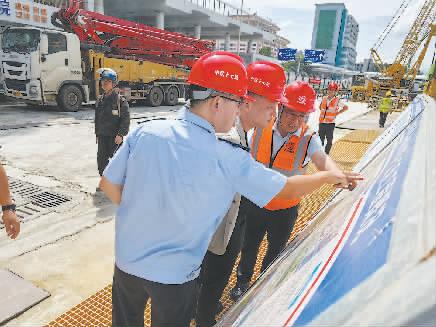
Group 1 - The core focus of the article is on the efforts of Yu Guodong, a member of the National Committee of the Chinese People's Political Consultative Conference and the Director of the Chongqing Ecological Environment Bureau, in promoting ecological environment governance through practical actions and proposals [1] - Over the past year, Yu has conducted more than 30 grassroots investigations across various districts and counties in Chongqing, emphasizing the importance of integrating professional expertise with practical responsibilities [1] - Yu has submitted three personal proposals addressing key issues such as the construction of an integrated ecological environment monitoring system, high-quality development of livestock farming, and green development in the shale gas extraction industry [1] Group 2 - In 2026, which marks the beginning of the 14th Five-Year Plan, Yu aims to focus on enhancing urban sludge treatment capacity and strengthening monitoring of new pollutants in the Three Gorges Reservoir area [1] - These focus areas are considered critical for advancing pollution prevention efforts and ensuring regional ecological safety [1]
“十四五”期间共计2.4万个生态环境治理工程实施
Xin Hua She· 2026-02-19 09:03
Group 1 - The core viewpoint of the articles highlights the significant progress made in ecological environment governance during the "14th Five-Year Plan" period, with 24,000 projects implemented to reduce major pollutant emissions and improve environmental quality nationwide [1][2] - A total of 940 million tons of crude steel capacity, 470 million tons of cement clinker capacity, and 360 million tons of coking capacity were completed, along with the transformation of 1.7 million kilowatts of coal power units to ultra-low emissions [1] - The urban sewage treatment capacity has been increased to 23.4 million cubic meters per day, and the length of sewage pipelines has reached 534,000 kilometers, indicating substantial improvements in urban environmental infrastructure [1] Group 2 - The "15th Five-Year Plan" will focus on strategic projects related to air, water, and soil protection, solid waste and new pollutant management, ecosystem optimization, and climate change response [2] - The plan includes optimizing the total pollutant discharge control system, emphasizing management in key regions and river basins, and expanding the scope of major reduction projects to ensure continuous decrease in major pollutant emissions [2]
33个项目48项成果守护春城生态
Xin Lang Cai Jing· 2026-02-14 23:02
Core Insights - The Kunming Ecological Environment Science Research Institute (referred to as "the Institute") has released its annual research report, outlining its focus on key ecological issues such as water, air, and biodiversity, with plans to complete 33 research projects and produce 48 public results by 2025 [1] Group 1: Research and Findings - The Institute has systematically completed an investigation and risk assessment of new pollutants in the Dianchi Lake basin, providing a basis for proactive prevention [1] - A solution combining technical standards has been developed to address the challenge of non-point source pollution during the rainy season [1] - The Institute has established a smart system for the main city's drainage, enabling dynamic evaluation and precise management of underground drainage network efficiency [1] Group 2: Monitoring and Management - The monitoring and early warning system for blue-green algae blooms in Dianchi Lake has been upgraded, enhancing its monitoring and warning capabilities [1] - An innovative model for fine-grained source tracing and control of pollution weather has been constructed to protect "Kunming Blue" [1] Group 3: Biodiversity Protection - In the past year, the Institute collaborated with management departments to complete the site selection and planning for 50 urban microhabitats ("Symbiotic Gardens"), providing living spaces for urban wildlife such as birds and insects [1] - A two-year research effort has culminated in the compilation of a "List of Invasive Alien Plants in Kunming," serving as a practical tool for identifying and managing invasive species [1]
“十四五”时期,我国生态环境治理成绩亮眼
Zhong Guo Neng Yuan Wang· 2026-02-05 03:08
Core Insights - The "14th Five-Year Plan" period has seen significant achievements in ecological environment governance, with a focus on reducing major pollutant emissions and enhancing the green and low-carbon transformation of industrial structures [3][4]. Group 1: Major Projects and Emission Reduction - A total of 24,000 ecological environment governance projects have been planned and implemented, leading to a substantial decrease in emissions of nitrogen oxides, volatile organic compounds, chemical oxygen demand, and ammonia nitrogen [4]. - The cumulative completion of production capacity reductions includes 940 million tons of crude steel, 470 million tons of cement clinker, 360 million tons of coking capacity, and 1.7 billion kilowatts of coal-fired power units undergoing ultra-low emission transformations [4]. Group 2: Environmental Tax and Financial Policies - The total amount of environmental protection tax collected during the "14th Five-Year Plan" period is nearly 120 billion yuan, with companies benefiting from tax reductions exceeding 80 billion yuan for meeting pollution discharge standards and other environmental initiatives [7]. - Financial support mechanisms for green development have been established, including a project promotion mechanism for "Beautiful China," which guides social capital towards green and low-carbon sectors [8]. Group 3: Urban and Rural Environmental Infrastructure - Urban wastewater treatment capacity has been enhanced to 23.4 million cubic meters per day, with a total of 534,000 kilometers of sewage pipeline networks [5]. - In rural areas, 110,000 administrative villages have completed environmental remediation, with the rural domestic sewage treatment rate doubling to 55% compared to the end of the "13th Five-Year Plan" [5]. Group 4: Risk Control and Pollution Management - A total of 124 major projects for soil pollution source control have been implemented, and the capacity for hazardous waste disposal has reached 22 million tons per year, a 60% increase since 2020 [6]. - Significant progress has been made in the management of tailings and heavy metal pollution, with over 1,800 tailings pollution remediation projects completed in the Yangtze River Economic Belt and nearly 400 in the Yellow River Basin [6].
海东市谋划“十五五”生态领域重大项目71个
Xin Lang Cai Jing· 2026-02-03 19:46
Core Viewpoint - The ecological environment bureau of Haidong City has planned a significant project library for the "14th Five-Year Plan" period, focusing on enhancing ecological environment quality and regulatory capabilities, with a total estimated investment of 4.065 billion yuan [1][2]. Group 1: Project Planning - A total of 71 major projects have been planned, with an estimated total investment of 4.065 billion yuan [1]. - The projects include deep governance and transformation of enterprises, rural clean heating transformation, new pollutant and VOCs governance facilities, and low-nitrogen transformation subsidies for gas boiler pollutants [1]. - 13 projects are planned for air pollution prevention, with an application for special funds of 882 million yuan [1]. Group 2: Water Pollution Prevention - 35 projects are planned in the areas of recycled water utilization, comprehensive ecological governance and restoration of river basins, standardized construction of water sources, and groundwater pollution investigation [1]. - The planned application for water pollution prevention special funds amounts to 1.907 billion yuan, making it the category with the most projects and the largest funding amount [1]. Group 3: Regulatory Capacity Building - Seven projects are planned to enhance air quality precision control, mobile pollution source regulatory capacity, and ecological environment law enforcement [1]. - An application for provincial special funds of 69 million yuan is planned for these projects [1]. Group 4: Rural Environment Improvement - 15 projects are planned for rural environment comprehensive improvement, with an application for rural environment improvement special funds of 1.127 billion yuan [1]. - Additionally, one project for agricultural land soil remediation is planned, with an application for rural environment improvement special funds of 80 million yuan [1]. Group 5: Overall Impact - The project planning covers all areas of air, water, soil, rural environment, and regulatory capacity building, ensuring a structured approach to ecological environment quality enhancement and governance capability improvement in Haidong City [2].
“十四五”时期,我国生态环境治理成绩亮眼
中国能源报· 2026-02-02 02:06
Core Viewpoint - During the "14th Five-Year Plan" period, China has made significant progress in ecological and environmental governance, with a notable reduction in major pollutant emissions and a substantial advancement in the green and low-carbon transformation of industrial structures [2][4]. Group 1: Major Projects and Pollution Reduction - A total of 24,000 ecological and environmental governance projects have been planned and implemented, leading to a significant decrease in emissions of nitrogen oxides, volatile organic compounds, chemical oxygen demand, and ammonia nitrogen [5]. - The cumulative completion of production capacity reductions includes 940 million tons of crude steel, 470 million tons of cement clinker, 360 million tons of coking capacity, and 1.7 billion kilowatts of coal-fired power units undergoing ultra-low emission transformations [5]. Group 2: Urban and Rural Environmental Infrastructure - Urban wastewater treatment capacity has been enhanced to 23.4 million cubic meters per day, with a sewage pipeline length of 534,000 kilometers, resulting in a reduction of chemical oxygen demand and ammonia nitrogen emissions by approximately 3.2 million tons and 350,000 tons, respectively [7]. - In rural areas, 110,000 administrative villages have completed environmental remediation, with the rural domestic sewage treatment rate increasing to 55%, effectively supporting the elimination of black and odorous water bodies [7]. Group 3: Environmental Economic Policies - The total amount of environmental protection tax collected during the "14th Five-Year Plan" period is nearly 120 billion yuan, with companies benefiting from tax reductions exceeding 80 billion yuan for meeting pollution discharge standards and other environmental initiatives [9][10]. - Financial support mechanisms for "Beautiful China" construction have been established, promoting social capital investment in green and low-carbon sectors, and enhancing the market environment for environmentally compliant enterprises [10].
“十四五”时期 我国实施2.4万个生态环境治理工程
Ren Min Ri Bao· 2026-01-30 00:31
Group 1 - The Ministry of Ecology and Environment has implemented 24,000 ecological environment governance projects during the 14th Five-Year Plan period, significantly reducing emissions of major pollutants such as nitrogen oxides and volatile organic compounds, exceeding the planned targets and supporting the continuous improvement of national ecological environment quality [1] - Focus on source governance to enhance pollution reduction capabilities in key industries, including the completion of 940 million tons of crude steel capacity, 470 million tons of cement clinker capacity, and 360 million tons of coking capacity, along with the ultra-low emission transformation of 1.7 million kilowatts of coal power units [2] - Urban sewage treatment capacity has increased to 23.4 million cubic meters per day, with sewage pipeline length reaching 534,000 kilometers, while rural sewage treatment rate has doubled to 55% compared to the end of the 13th Five-Year Plan [2] Group 2 - The Ministry of Ecology and Environment has accelerated the construction of a framework for building a Beautiful China, with a comprehensive "1+1+N" work layout and 23 sector-specific actions being effectively promoted [3] - The ecological status assessment of nine key regions, including the Yellow River Basin and the Yangtze River Economic Belt, has shown that the trend of ecological system deterioration is being initially curbed, with significant improvements in ecological quality and vegetation coverage [4] - Groundwater levels in the Beijing-Tianjin-Hebei region have risen by 2.59 meters and 7.06 meters for shallow and deep layers respectively since 2018, indicating positive ecological recovery trends [4]