候鸟迁徙

Search documents
北京市多处水域发现成群银鸥停留
Xin Lang Cai Jing· 2026-02-27 23:35
Core Viewpoint - The large gathering of Siberian gulls in Beijing's Tongzhou District is attributed to improved water quality and ecological conditions in the Chaobai River and North Canal, making them important stopover points for migratory birds [1][2]. Group 1: Ecological Improvements - The presence of Siberian gulls is linked to the enhanced water quality in the Chaobai River, which has been maintained at surface water Class II or above due to systematic management efforts by the Beijing water authorities [2]. - Measures such as ecological replenishment, water quality enhancement, and wetland restoration have contributed to a healthier ecosystem, resulting in increased fish and shrimp populations, which attract migratory birds [2]. - The Chaobai River benefits from ecological replenishment from multiple high-quality water sources, including the Miyun Reservoir, which has improved the water conditions significantly [2]. Group 2: Birdwatching and Public Engagement - There is a growing trend of birdwatching along the riverbanks, with the public encouraged to observe the birds respectfully without feeding or disturbing them [3].
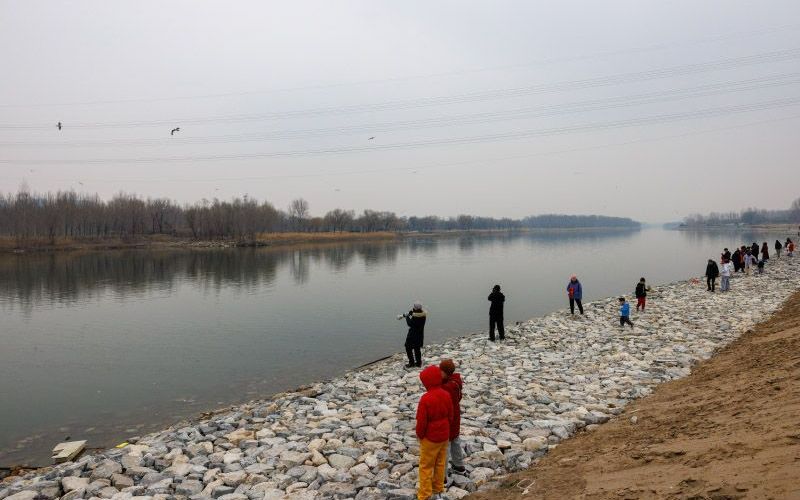
北京通州区宋庄镇迎来大量银鸥 动保人士:人为投喂会耽误其迁徙
Xin Lang Cai Jing· 2026-02-26 17:40
Core Viewpoint - The recent appearance of a large number of silver gulls in Songzhuang Town, Tongzhou District, Beijing, has attracted many visitors, raising concerns about the impact of feeding these migratory birds on their natural behavior and migration patterns [1][2]. Group 1: Bird Observation and Community Impact - The influx of silver gulls has made the small village of Yaobudong lively, with increasing numbers of visitors causing parking issues [2]. - Visitors are walking approximately one kilometer from public transport to the riverbank to observe the gulls, often bringing food to feed them, although the gulls are not very friendly and only catch food thrown from the air [2][5]. - Local authorities have deployed security personnel to maintain order among the birdwatchers [2]. Group 2: Ecological Insights - The silver gulls, measuring 50 to 70 centimeters in length, are opportunistic feeders primarily consuming small fish, shrimp, and crustaceans [2]. - These birds are migratory, breeding in Siberia and Mongolia, and wintering in coastal areas south of the Yangtze River in China, with Beijing being part of their migratory route [2]. - The recent appearance of the gulls is attributed to improved ecological conditions, including wetland restoration and increased biodiversity, which provide ample food sources [5]. - Changes in water levels in the river may have created suitable deep-water areas for feeding and shallow zones for resting, making it an ideal stopover for the gulls [5]. - The silver gulls tend to gather in large numbers when food is abundant, and their stay can last from half a month to a month [5].

今年,鸟儿又来过冬了
He Nan Ri Bao· 2026-02-01 23:31
Group 1 - The core viewpoint of the articles highlights the increasing population of migratory waterbirds in Henan Province, with a recorded 157 species and 381,815 individuals, marking a 13% and 6.8% increase compared to the same period in 2025 [2][3] - The geographical location of Henan, situated at the transition between the second and third tiers of China's topography and along the East Asia-Australasia migratory route, makes it a crucial stopover for migratory birds [3] - The ecological improvements in Henan, such as wetland restoration and habitat protection, have led to the return of various rare bird species, indicating successful conservation efforts [3][4] Group 2 - In 2025, Henan organized the restoration of 11,800 acres of wetland in the Yellow River basin, implementing measures like water system connectivity, returning farmland to wetlands, and vegetation restoration to support migratory birds [4] - The presence of migratory birds in Henan serves as a testament to the province's ecological restoration achievements, embodying the principle that "green mountains and clear waters are as valuable as mountains of gold and silver" [5]
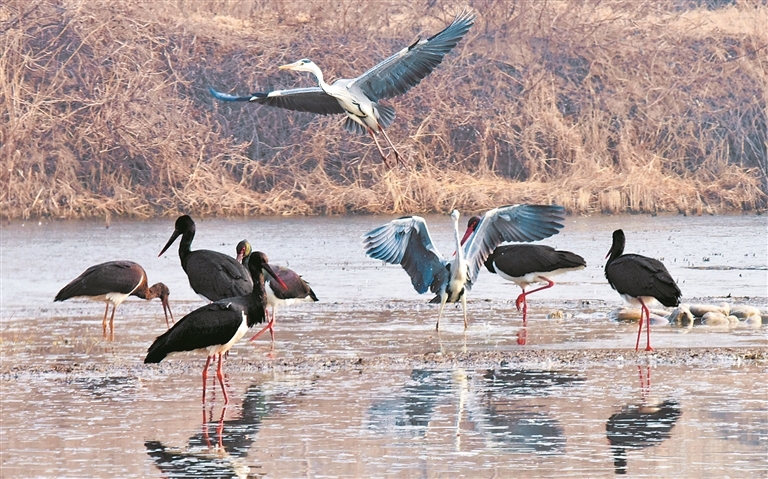
中国黄(渤)海候鸟栖息地:人与自然的和谐交响
Xin Lang Cai Jing· 2026-01-31 19:28
Core Viewpoint - The article emphasizes the ecological significance of the Yellow (Bohai) Sea migratory bird habitats, highlighting their role in supporting over 5 million waterbirds, including at least 45 globally endangered species, during migration seasons [1][2]. Group 1: Ecological Importance - The Yellow (Bohai) Sea migratory bird habitats are crucial for approximately 10% of the East Asia-Australasia migratory flyway, providing essential stopover sites for migratory birds [1]. - These habitats serve as a vital link for birds migrating from Arctic breeding grounds to wintering areas in the Southern Hemisphere [1]. Group 2: Cultural Heritage - The theme for World Wetlands Day this year is "Wetlands and Traditional Knowledge: A Tribute to Cultural Heritage," underscoring the connection between wetlands and human civilization [1]. - Local communities have integrated traditional ecological knowledge into their practices, reflecting a deep cultural relationship with the wetlands [1]. Group 3: Conservation Efforts - The goal of declaring these habitats as a World Natural Heritage site is to protect them as a shared resource for humanity and ensure their preservation for future generations [2].

白尾海雕现身嘉陵江畔
Xin Lang Cai Jing· 2026-01-21 21:34
Core Viewpoint - The discovery of the national first-class protected wild animal, the white-tailed eagle, in Nanchong City indicates an improvement in the local ecological environment and highlights the area's role as a habitat for migratory birds [2] Group 1: Species Discovery - The white-tailed eagle, a rare raptor, has been recorded for the first time in the Longmen Street area along the Jialing River in Nanchong City [2] - This species typically inhabits northern and plateau regions and migrates to lower altitudes during winter when food becomes scarce [2] Group 2: Ecological Significance - The presence of the white-tailed eagle suggests a healthy ecosystem and a complete food chain in the area [2] - The local ecological environment has been improving, making the Jialing River section in Nanchong a stopover for an increasing number of migratory birds [2] Group 3: Bird Species Diversity - Nanchong City has recorded a total of 337 species of wild birds, belonging to 18 orders and 67 families [2]

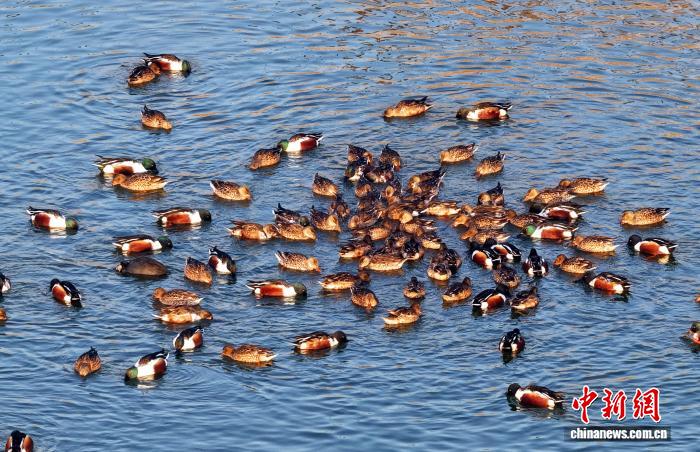
“扎堆转圈圈”只为觅食?逾千只琵嘴鸭衡水湖上演“集体智慧”
Zhong Guo Xin Wen Wang· 2026-01-18 03:25
Core Viewpoint - The article highlights the unique collective foraging behavior of the spoon-billed sandpiper at Hengshui Lake, showcasing the ecological significance of the area for migratory birds and the successful conservation efforts that have improved the habitat [1][3]. Group 1: Ecological Significance - Hengshui Lake is a national nature reserve that maintains a complete wetland ecosystem, including marshes, water bodies, mudflats, meadows, and forests, playing a crucial role as a stopover and energy replenishment station for migratory birds along the East Asia-Australasia flyway [3]. - The area has recorded 337 bird species, with over 60 species wintering annually, peaking at more than 100,000 individuals [3]. Group 2: Conservation Efforts - Recent conservation measures, including ecological water replenishment, shoreline restoration, and the release of aquatic species, have led to continuous improvements in water quality and significant increases in aquatic biodiversity [3]. - The unique ecological environment of open shallow water areas provides optimal foraging conditions for the spoon-billed sandpiper, facilitating their distinctive collective foraging strategy [3].
越冬候鸟增至10万只,云南拉市海进入年度最佳观鸟季
Xin Lang Cai Jing· 2026-01-17 04:23
Core Insights - The Lashi Lake in Yunnan has become a prime wintering site for migratory birds, with the number of birds increasing to 100,000, marking the peak of the annual migration season [2] Group 1: Ecological Importance - Lashi Lake serves as a crucial stopover and wintering ground for migratory birds along the western migration route in China, featuring abundant water and grassland that provide natural food sources for the birds [2] - The area has seen a significant increase in bird species, from 57 species in 1998 to 341 species currently, representing 22% and 33% of the national and provincial bird species, respectively [5] Group 2: Conservation Efforts - Since 2018, local government has implemented strict ecological protection measures, including banning tourism activities in core areas, restoring wetlands, and conducting ecological restoration projects, leading to improved water quality and habitat for birds [7] - The area has transitioned from "human retreating, birds advancing" to a state of "coexistence between humans and birds" due to these conservation efforts [7] Group 3: Tourism Impact - The birdwatching tourism around Lashi Lake is expected to thrive, with projected tourist numbers exceeding 2 million and total tourism revenue reaching 467 million yuan in 2024 [9]
客从北方来
Xin Lang Cai Jing· 2026-01-11 22:26
Core Viewpoint - Sichuan serves as a crucial stopover for migratory birds due to its strategic location at the intersection of two major migratory routes, with ongoing ecological restoration efforts enhancing bird populations and diversity [7][8]. Group 1: Migratory Bird Patterns - Sichuan is located at the convergence of two global migratory routes: East Asia-Australasia and Central Asia-India, attracting numerous migratory birds during the autumn and winter seasons [7]. - A total of 798 species of wild birds have been recorded migrating through Sichuan, with expectations for increased numbers due to improved ecological conditions [8]. Group 2: Ecological Restoration Efforts - The province has shifted its bird conservation strategy from isolated protection to a systematic restoration of the entire ecosystem, including mountains, waters, forests, fields, lakes, and grasslands [8]. - The example of Qionghai illustrates successful wetland restoration, where the area saw a significant increase in bird species from 20 to 310 following ecological improvements [8]. Group 3: Technological Innovations in Bird Conservation - Sichuan has implemented advanced monitoring technologies, including drone surveillance ("Sky Eye") and over 3,000 infrared-triggered cameras ("Earth Ear"), to enhance real-time tracking and analysis of bird habitats [8]. - These technologies facilitate a proactive approach to conservation, allowing for better understanding of bird locations and habitat conditions [8].
万里远行,是“驿站”也是家园
Xin Lang Cai Jing· 2025-12-27 19:43
Core Insights - Xinjiang serves as a crucial intersection for migratory bird routes, with three out of four major migratory pathways in China linked to the region, facilitating the movement of over one million birds from approximately 300 species [1] Group 1: Migratory Routes and Bird Species - The West Asia-East Africa migratory route covers a significant portion of Xinjiang, with birds gathering along major water systems such as the Ili River and the Ertix River, waiting for favorable conditions to migrate south [1] - Various ecosystems in Xinjiang, including forests, lakes, grasslands, and mountains, provide essential shelter and energy for migratory birds during their long wait [1] Group 2: Conservation Efforts - Collaborative efforts between military and local authorities have led to the establishment of 28 nature reserves at the autonomous region level, covering over 199,800 square kilometers, along with four provincial-level reserves totaling approximately 1,003 square kilometers [2] - Measures such as wetland restoration, habitat recovery, and ecological water replenishment have been implemented to expand wetland areas and support bird populations [2] Group 3: Ecological Health Indicators - Migratory patterns and habitat choices of birds serve as indicators of ecological health, reflecting the success of large-scale conservation and restoration efforts in Xinjiang [3] - Over the past decade, more than 30 new bird species have been recorded in Xinjiang, contributing to a total of over 490 bird species in the region, which represents about one-third of the total bird species in China [3]
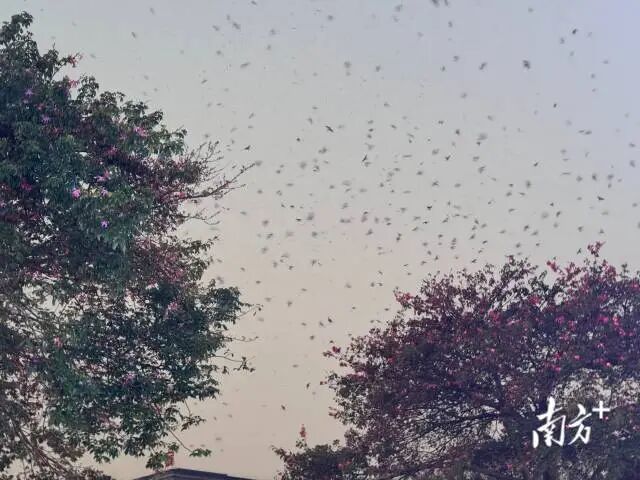
广东佛山一地天降大量“鸟屎雨”,官方回应:系家燕迁徙,属正常现象
Guang Zhou Ri Bao· 2025-12-11 01:17
Core Viewpoint - Residents in Shunde, Foshan have been facing issues due to a large gathering of swallows, causing disturbances in daily life with their droppings, referred to as "bird droppings rain" [1][4][6] Group 1: Bird Gathering Issue - The birds causing the disturbance are identified as house swallows, which are a protected species in China, and their gathering is a normal phenomenon during the migratory season [2] - The local natural resources bureau has confirmed that this occurrence is not unique to Shunde and happens in other towns and cities as well [2] Group 2: Recommendations for Mitigation - The bureau has proposed humane and practical measures to mitigate the impact of bird droppings: 1. Constructing movable, lightweight canopies in areas where swallows roost at night to intercept droppings [5] 2. Adjusting lighting near roosting sites to reduce insect attraction, thereby decreasing the swallows' presence [5] 3. Implementing a cleaning mechanism that includes daily and weekly deep cleaning of affected areas to prevent droppings from drying and creating dust [5] 4. Installing signage to inform residents to avoid certain areas during peak times [5] - This phenomenon also indicates the ongoing improvement of the ecological environment in Shunde, providing favorable conditions for bird habitation [5]