党政机关过紧日子

Search documents
国务院部署今年财政改革发展七大工作,有何看点?
第一财经· 2026-03-15 03:29
Core Viewpoint - The article discusses the key points of China's fiscal reform and development priorities for 2026 as outlined in the budget report approved by the National People's Congress, emphasizing a more proactive fiscal policy to stimulate economic growth and manage public finances effectively [3][4]. Group 1: Fiscal Policy Implementation - China will continue to implement a more proactive fiscal policy, issuing 11.89 trillion yuan in new government bonds to expand fiscal spending, with total public budget expenditure expected to grow by 4.6% year-on-year [4]. - Local government bond issuance has reached approximately 2.77 trillion yuan as of March 15, 2026, primarily for major project construction, reflecting the rapid implementation of proactive fiscal policies [5]. - The budget report emphasizes the need for strict execution of fiscal policies and responsibilities at local and departmental levels to ensure timely funding and project implementation [5]. Group 2: Cost Management in Government - The budget report stresses the importance of government agencies living frugally, with a reduction of over 7% in central government "three public" expenses and a 10% cut in meeting and training expenses [6][7]. - The report outlines measures to manage official travel, receptions, and other expenditures, aiming to prevent wasteful projects and ensure efficient use of public funds [6][7]. Group 3: Efficiency in Fiscal Spending - Improving the efficiency of fiscal fund usage is highlighted as a key focus, with initiatives to enhance scientific management and performance evaluations for new policies and projects [7]. - The report indicates that the government will prioritize effective allocation of resources to support consumption, investment in people, and social welfare [8]. Group 4: Tax System Reform - The budget report outlines key reforms in the tax system, including increasing the proportion of state-owned capital revenue, expanding zero-based budgeting trials, and optimizing consumption tax structures [8]. - The government aims to enhance revenue collection from state-owned enterprises to better support public welfare and social programs [8]. Group 5: Social Welfare Priorities - The report emphasizes the importance of ensuring basic social welfare, including safeguarding basic livelihoods, salaries, and operational stability at the grassroots level [9]. - Local governments are encouraged to enhance their financial capabilities to support these welfare priorities and ensure smooth fiscal operations [9]. Group 6: Debt Management - Strengthening local government debt management is a key focus, with measures to mitigate hidden debt risks and reform financing platforms to prevent the creation of new debt [10]. - The report calls for strict adherence to financial discipline and enhanced supervision of fiscal activities to prevent mismanagement and ensure accountability [10].


财政部:用党政机关的紧日子,换老百姓的好日子
21世纪经济报道· 2026-03-06 09:46
Group 1 - The Ministry of Finance emphasizes the need for government agencies to tighten their budgets to improve the living standards of the public [1] - This year, the central government's "three public" expenditures will be reduced by over 7%, and expenses for meetings and training will be cut by 10% [1] - 20 provinces have saved over 12 billion yuan, reallocating funds to support key areas and critical sectors [1] Group 2 - The central government has allocated 100 billion yuan to stimulate domestic demand [2]

蓝佛安:用党政机关的紧日子换老百姓的好日子
证券时报· 2026-03-06 09:40
Group 1 - The core viewpoint emphasizes the need for government agencies to adopt frugal spending practices to improve the living standards of the general public [2][3] - The Ministry of Finance plans to reduce the central government's "three public" expenditures by over 7% this year, with a 10% reduction in meeting and training expenses [3] - Local governments are also tightening their budgets, with 20 provinces saving over 12 billion yuan, reallocating funds to support key areas and critical sectors [3]

31省份部署政府过紧日子,有何看点?
Di Yi Cai Jing· 2026-02-27 02:21
Core Viewpoint - Local governments across China are implementing strict budgetary measures to reduce general expenditures, including administrative costs and non-essential spending, in order to allocate more resources for economic development and improving people's livelihoods [1][2]. Group 1: Budgetary Measures - All 31 provinces have reported their budget execution for 2025 and draft budgets for 2026, emphasizing the need for government agencies to live frugally [1][2]. - The term "living frugally" refers to the reduction of administrative expenses, unnecessary expenditures, and the "three public expenditures" (official overseas trips, official receptions, and official vehicle expenses) [2][3]. - For instance, Tianjin plans to cut non-essential expenditures by 5.87 billion yuan in 2025, while Jiangxi reported a 21% decrease in "three public expenditures" and significant reductions in other spending categories [2][3]. Group 2: Challenges and Compliance - Some provinces have acknowledged challenges in fully implementing frugality measures, citing issues like excessive spending without budget approval and non-compliance with fiscal discipline [3]. - The central government has reiterated the importance of strict financial discipline and adherence to frugality in its economic policy meetings [3]. Group 3: Future Budget Plans - For 2026, local governments are continuing to prioritize the reduction of general expenditures, with specific targets such as a 5.5% decrease in office expenses and a 13.7% decrease in printing costs in Jiangxi [4]. - Some regions are shifting from a strict reduction approach to controlling expenditures to ensure stability in government operations [4]. - Provinces are also focusing on managing government procurement and new asset allocations, linking them to existing asset evaluations to optimize resource use [6]. Group 4: Asset Management and Oversight - The establishment of a national asset adjustment and sharing platform aims to enhance the efficiency of public asset management across administrative units [5]. - Local governments are encouraged to conduct financial capacity assessments for major projects to avoid overextending fiscal resources [6]. - There is an emphasis on strengthening oversight of frugality measures, with evaluations tied to budget allocations to ensure compliance [6].
中纪委网站:推动党政机关带头过紧日子
Xin Lang Cai Jing· 2026-02-07 03:12
Group 1 - The article emphasizes the importance of frugality and opposition to waste as a traditional value of the party, reinforced by the implementation of the "Regulations on Frugality and Opposition to Waste" in May 2025, which calls for strict budget management and cost control [1] - The article highlights the efforts of the Ji'an Economic and Technological Development Zone's disciplinary inspection and supervision committee in reducing unnecessary expenditures, resulting in a 26.23% year-on-year decrease in service purchase projects in 2025 [1] - The article discusses the establishment of a long-term mechanism for promoting frugality and preventing waste within party and government agencies, aiming to tighten regulations and ensure compliance [2] Group 2 - The article outlines the use of information technology to address systemic issues in frugality, with the Shenzhen Municipal Commission for Discipline Inspection promoting cost reduction and efficiency in state-owned enterprises, achieving a 47.8% savings rate in centralized procurement [3] - The article describes the implementation of a digital asset management system in Chongqing, which has led to the collection of over 16,600 items of idle assets and a cumulative savings of over 22 million yuan since its launch in October 2024 [3] - The article stresses the need for continuous reform and the establishment of effective supervision mechanisms to combat luxury and wasteful behaviors, ensuring that relevant departments adhere to frugality guidelines [2][3]
推动党政机关带头过紧日子
Zhong Yang Ji Wei Guo Jia Jian Wei Wang Zhan· 2026-02-07 01:35
Group 1 - The core principle of the article emphasizes the importance of frugality and opposition to waste within party and government agencies, reinforced by the implementation of the "Regulations on Practicing Frugality and Opposing Waste" issued in May 2025 [1] - Various levels of disciplinary inspection and supervision have been strengthened to ensure the effective implementation of frugality measures, focusing on budget management, expenditure, and public activities to prevent financial leakage [2][3] Group 2 - The article highlights the need for strict budget management, with specific examples from Jiangxi Jiujiang Economic and Technological Development Zone, where the number of government service purchase projects decreased by 26.23% year-on-year in 2025 [2] - It discusses the establishment of a long-term mechanism for promoting frugality, with Shenzhen's state-owned enterprises implementing centralized procurement strategies that achieved a cost-saving rate of 47.8% for low-value consumables [4][5] - The article also mentions the digital management of fixed assets in Chongqing, where the "Public Goods Warehouse Online" system has saved over 22 million yuan since its launch, facilitating the centralized management of idle and excess assets [5]
做好元旦春节期间正风肃纪工作 对不正之风露头就速查严处
Xin Lang Cai Jing· 2025-12-25 01:01
Group 1 - The article emphasizes the need for strict supervision and enforcement against "Four Winds" issues during the holiday season, including improper eating, gift-giving, and exploiting personal events for financial gain [1] - It calls for the implementation of frugality in government operations, particularly in areas such as public receptions, training meetings, and festive events, to prevent last-minute spending sprees [1] - The article highlights the importance of monitoring the timely and full distribution of social welfare funds, including pensions and unemployment benefits, while addressing issues of corruption and misappropriation of these funds [1] Group 2 - The focus is on enhancing governance in key areas such as employment, social security, housing, and healthcare, while tackling issues that harm the business environment [1] - There is a call to address the problem of unpaid wages to migrant workers and outstanding corporate debts, as well as to rectify improper law enforcement practices [1]
长春市委常委会召开会议
Xin Lang Cai Jing· 2025-12-03 12:36
Core Points - The meeting emphasized the importance of establishing a long-term mechanism for network ecological governance and improving the quality of online content supply to create a clean and positive online environment [1][4] - The meeting highlighted the need to deeply understand Xi Jinping's thoughts on the rule of law and to promote the construction of a law-based society, government, and community in Changchun [1][4] - The meeting stressed the necessity of adhering to the principle of "tightening the belt" in government operations to free up more funds for development and public welfare [5] Summary by Sections Network Governance - The meeting called for optimizing network content supply and enhancing the use of the internet to understand public sentiment and respond to concerns [1][4] - It aimed to improve the information technology level of network governance [1] Rule of Law - The meeting underscored the importance of Xi Jinping's legal thought and its role in guiding legislation, enforcement, and judicial processes [1][4] - It aimed to provide a solid legal guarantee for revitalization and breakthroughs in the region [1] Economic Development - The meeting focused on aligning actions with the provincial committee's directives for the "14th Five-Year Plan" and planning for the "15th Five-Year Plan" [2][5] - Key areas of focus include accelerating the construction of a modern urban area, promoting high-quality development, and enhancing technological innovation [2][5] - The meeting also discussed the importance of boosting consumption and organizing major events like the National Ice and Snow Season and the Vasa International Ski Festival [2][5] Event Preparation - The meeting reviewed preparations for the Winter Games and emphasized the integration of winter sports events with tourism activities [6] - It highlighted the need for meticulous management of facilities and services to ensure a successful event [6] Infrastructure Development - The meeting received updates on rural road construction and maintenance efforts, indicating ongoing infrastructure development initiatives [6]

学习贯彻习近平总书记重要指示精神 严格落实党政机关习惯过紧日子要求部署社会救助和经济稳增长等工作
Xi An Ri Bao· 2025-11-21 03:02
Group 1 - The meeting emphasized the importance of deeply studying and implementing Xi Jinping's legal thought to accelerate the establishment of a scientific and complete legal system in the city [2] - The meeting highlighted the need to integrate and leverage Xi'an's cultural, tourism, education, and cultural relic resources to innovate cultural exchanges and enhance international communication [2] - The meeting stressed the necessity of adhering to the requirement for party and government agencies to live frugally, reinforcing institutional constraints and promoting good habits [2] Group 2 - The meeting called for a people-centered development approach, focusing on improving the social governance system and conducting thorough investigations of special difficult groups [2] - The meeting underscored the importance of effectively managing petition work, enhancing problem tracking, and ensuring coordinated responses from various departments [2] - The meeting outlined the need for practical and efficient measures to stabilize economic growth, focusing on real enterprise needs and optimizing service methods [3]
过紧日子 炼好作风(前沿观察)
Ren Min Ri Bao· 2025-11-18 00:31
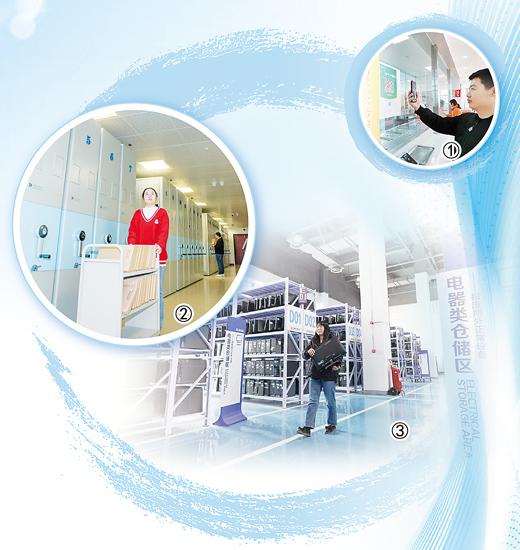
Core Insights - The article discusses the implementation of new regulations aimed at promoting frugality and reducing waste within government agencies, highlighting the positive changes observed in various regions [4]. Group 1: Public Asset Management - The "Public Goods Warehouse Online" system in Shapingba District, Chongqing, has facilitated the efficient allocation of idle assets, allowing for the transfer of 9,728 items across 91 units, resulting in a cost saving of 20.07 million yuan [7]. - A mechanism has been established to prioritize the use of existing assets before making new purchases, with strict controls on over-purchasing and redundant procurement [8]. - The system has improved transparency and accountability in asset management, helping to prevent misuse and loss of public property [7]. Group 2: Public Reception and Hospitality - The "Xiangban Tong" application in Hunan Province has streamlined the process of managing official receptions, leading to a 94.4% reduction in public reception expenditures [11]. - The system allows for real-time tracking of expenses and ensures that all costs are covered by the respective departments, eliminating the need for upfront payments by individuals [11]. Group 3: Vehicle Management - The Guangdong Province has implemented a centralized public vehicle management platform that tracks vehicle usage and maintenance, significantly reducing the risk of misuse [12]. - The province has adopted a "unified procurement and separate signing" model for purchasing new energy vehicles, resulting in a cost saving of approximately 38 million yuan across 1,336 vehicles [13]. Group 4: Space Utilization - In Changzhou, Jiangsu Province, the consolidation of archives into a centralized storage facility has freed up 2,400 square meters of office space, enhancing operational efficiency [14]. - The local government has actively sought to repurpose idle properties, transforming them into innovation hubs that generate rental income and support local startups [16].