
境内企业境外上市资金管理

Search documents
央行、外汇管理局:境内企业境外上市募集资金应汇回境内
Sou Hu Cai Jing· 2025-12-28 10:17
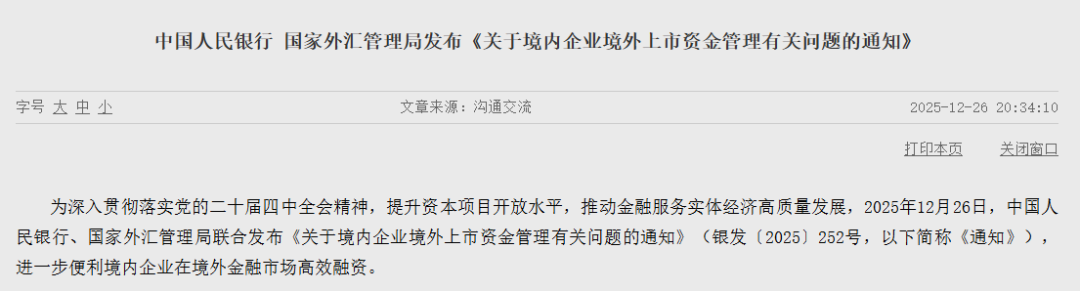
Core Viewpoint - The People's Bank of China and the State Administration of Foreign Exchange issued a notification to facilitate domestic enterprises in efficiently financing in overseas financial markets, effective from April 1, 2026 [1] Group 1: Fund Management Regulations - Domestic enterprises raising funds through overseas listings are required to repatriate the funds to China in principle [1] - Funds raised for overseas direct investment, securities investment, or lending must receive approval or filing from relevant authorities before the end of the overseas issuance or completion of any over-allotment [1] - The notification standardizes the management of raised funds, stating that proceeds from share reductions or transfers should generally be returned to China [1] Group 2: Currency Management Policies - The notification unifies the management policies for domestic and foreign currency, allowing proceeds from overseas listings and share reductions to be repatriated in either foreign currency or RMB [1] - Companies participating in H-shares "full circulation" must distribute dividends to domestic shareholders in RMB [1] Group 3: Simplification of Procedures - The notification supports banks in directly handling the registration of domestic enterprises for overseas listings, simplifying management procedures [2] - It also relaxes the time limits for registration related to issuance, additional issuance, and share reductions [2]
事关境外上市!央行、外汇局联合发布
Xin Lang Cai Jing· 2025-12-27 07:23
Core Viewpoint - The People's Bank of China and the State Administration of Foreign Exchange have issued a new notification to facilitate domestic companies in raising funds in overseas markets, marking a significant step towards a more streamlined and flexible management of overseas listing funds [1][6]. Group 1: Policy Changes - The new regulation allows for more flexible timing in the registration of share reductions by domestic shareholders, changing the deadline from "within 30 working days after reduction" to "within 30 working days before or after reduction," thus granting companies greater operational autonomy [2][6]. - The process for changing registration has been simplified by removing the requirement for banks to "simultaneously retrieve the original business registration certificate," which reduces unnecessary paperwork [2][6]. - The terminology in the "Overseas Shareholding Change Registration Form" has been updated to "China Securities Regulatory Commission filing or approval number," enhancing the policy's continuity and inclusiveness for companies listed before the new regulations [2][7]. Group 2: Fund Management - The notification unifies the management of foreign and domestic currency funds, clarifying that proceeds from overseas fundraising and share transfers can be repatriated in either foreign currency or RMB, with H-share companies required to distribute dividends to domestic shareholders in RMB [3][8]. - Companies are allowed to autonomously convert foreign currency funds for use, while RMB funds can either enter a capital project settlement account or a domestic RMB bank settlement account [3][8]. - The new regulation establishes a clear funding pathway for H-share "full circulation" business, requiring all related fund transfers to go through a specialized account at China Securities Depository and Clearing Corporation [3][8]. Group 3: Special Provisions - For state-owned shareholders, the regulation stipulates that the domestic company will handle the remittance of proceeds from share reductions to the National Social Security Fund, requiring documentation to be submitted through the capital project settlement account or domestic RMB bank settlement account [4][9].
境内企业境外上市募集资金应汇回境内
Zheng Quan Shi Bao· 2025-12-26 23:13
Core Viewpoint - The People's Bank of China and the State Administration of Foreign Exchange issued a notification on December 26 to facilitate domestic enterprises in efficiently financing in overseas financial markets, mandating that funds raised from overseas listings, as well as proceeds from share reductions or transfers, should generally be repatriated to China [1] Group 1: Fund Management Regulations - The notification clarifies that funds raised from overseas listings and proceeds from share reductions or transfers should primarily be returned to the domestic market [1] - Shareholders must promptly repatriate any remaining funds or uncompleted transactions from outbound investments [1] - Certain qualified enterprises are allowed to retain raised funds for use outside of China [1] Group 2: Currency Management Policies - The notification standardizes the management policies for both domestic and foreign currency, allowing funds from overseas listings and share proceeds to be repatriated in either foreign currency or RMB [1] - Companies participating in H-shares "full circulation" must distribute dividends to domestic shareholders in RMB [1] Group 3: Risk Management and Simplification - To facilitate the use of raised funds domestically and manage exchange rate risks, the notification allows for self-conversion of foreign currency raised from overseas listings [1] - Listed entities in China can independently choose methods for managing exchange rate risks [1] - The notification supports banks in directly handling the registration of domestic enterprises for overseas listings and relaxes the time limits for issuance, listing, and share reduction registrations [1]
两部门出台境内企业 境外上市资金管理新规
Zhong Guo Zheng Quan Bao· 2025-12-26 23:11
Core Viewpoint - The People's Bank of China and the State Administration of Foreign Exchange have issued a notice to facilitate domestic companies in raising funds efficiently in overseas financial markets [1] Group 1: Currency Management - The notice standardizes foreign currency fund management policies, allowing funds raised from overseas listings, share reductions, or transfers to be repatriated in either foreign currency or RMB [1] - Companies participating in H-shares "full circulation" must distribute dividends to domestic shareholders in RMB [1] Group 2: Fund Utilization and Risk Management - Companies can autonomously settle and use foreign currency funds raised from overseas listings, with the option to choose their own methods for managing exchange rate risks [1] Group 3: Administrative Simplification - The notice simplifies management procedures, allowing banks to directly handle the registration of domestic companies for overseas listings and easing the time limits for issuing, increasing, or reducing shares [1] Group 4: Fund Management Regulation - Funds raised from overseas listings or from share reductions or transfers should generally be repatriated to the domestic market, with any surplus or uncompleted transactions needing to be returned promptly [1] - Certain qualified companies are permitted to retain raised funds for use outside of China [1] Group 5: Future Financial Support - The People's Bank of China and the State Administration of Foreign Exchange plan to enhance financial support for the real economy and continue optimizing cross-border fund management policies to facilitate cross-border investment and financing [1]
两部门联合发文 便利境内企业在境外金融市场高效融资
Yang Shi Xin Wen· 2025-12-26 23:08
Core Viewpoint - The People's Bank of China and the State Administration of Foreign Exchange have issued a notice to facilitate efficient financing for domestic enterprises in overseas financial markets [1] Group 1: Policy Changes - The notice standardizes foreign currency fund management policies, allowing funds raised from overseas listings, as well as proceeds from share reductions or transfers, to be repatriated in either foreign currency or RMB [1] - It clarifies that funds raised from overseas listings can be autonomously converted for use in the domestic market, and that listing entities can independently choose methods for managing exchange rate risks [1] Group 2: Administrative Simplification - The management procedures have been simplified, and the registration time limits have been relaxed, supporting banks to directly handle the registration of domestic enterprises for overseas listings [1] - The notice further regulates the management of raised funds, stating that proceeds from overseas listings, as well as funds from share reductions or transfers, should generally be repatriated to the domestic market [1]
境内企业境外上市 募集资金应汇回境内
Sou Hu Cai Jing· 2025-12-26 22:16
Core Viewpoint - The People's Bank of China and the State Administration of Foreign Exchange have issued a notification to facilitate domestic companies in efficiently financing in overseas financial markets, emphasizing that funds raised from overseas listings, as well as proceeds from share reductions or transfers, should generally be repatriated to China [1] Group 1: Fund Management Regulations - The notification clarifies that funds raised from overseas listings and proceeds from share reductions or transfers should primarily be returned to the domestic market [1] - Shareholders who remit funds for increasing their holdings must return any remaining funds or those from unsuccessful transactions to the domestic market in a timely manner [1] - Certain qualified companies are allowed to retain raised funds for use outside of China [1] Group 2: Currency Management Policies - The notification standardizes the management policies for both domestic and foreign currency, allowing funds from overseas listings and share reductions to be repatriated in either foreign currency or Renminbi [1] - Companies participating in H-shares' "full circulation" must distribute dividends to domestic shareholders in Renminbi [1] Group 3: Risk Management and Simplified Procedures - To facilitate the use of raised funds domestically and manage exchange rate risks, the notification allows for the autonomous settlement of repatriated funds in foreign currency, with companies able to choose their own methods for managing exchange rate risks [1] - The notification supports banks in directly handling the registration of domestic companies for overseas listings and relaxes the time limits for issuance, listing, and share reductions [1]
两部门出台境内企业境外上市资金管理新规
Zhong Guo Zheng Quan Bao· 2025-12-26 21:05
Core Viewpoint - The People's Bank of China and the State Administration of Foreign Exchange have issued a notice to facilitate domestic companies in raising funds efficiently in overseas financial markets [1] Group 1: Currency Management - The notice standardizes foreign currency fund management policies, allowing funds raised from overseas listings, share reductions, or transfers to be repatriated in either foreign currency or RMB [1] - Companies participating in H-shares "full circulation" must distribute dividends to domestic shareholders in RMB [1] Group 2: Fund Utilization and Risk Management - Companies can autonomously settle and use foreign currency funds raised from overseas listings, with the option to choose their own methods for managing exchange rate risks [1] Group 3: Administrative Simplification - The notice simplifies management procedures, allowing banks to directly handle the registration of domestic companies for overseas listings and easing the time limits for registration related to issuance, additional issuance, and share reductions [1] Group 4: Fund Management Regulation - Funds raised from overseas listings, as well as proceeds from share reductions or transfers, should generally be repatriated to the domestic market, with any surplus or uncompleted transactions needing to be returned promptly [1] - Certain qualified companies are permitted to retain raised funds for use outside of China [1] Group 5: Future Financial Support - The People's Bank of China and the State Administration of Foreign Exchange plan to enhance financial support for the real economy and continue optimizing cross-border fund management policies to improve the convenience of cross-border investment and financing [1]
最新发布!事关境内企业境外上市资金管理
Zhong Guo Zheng Quan Bao· 2025-12-26 14:28
Core Viewpoint - The People's Bank of China and the State Administration of Foreign Exchange have issued a notification to facilitate domestic enterprises in raising funds efficiently in overseas financial markets, effective from April 1, 2026 [1] Group 1: Fund Management Policies - Domestic enterprises can use both overseas and domestic funds to repurchase their overseas shares [5] - Funds raised from overseas listings, share reductions, or transfers can be returned to China in either foreign currency or RMB, with dividends to domestic shareholders distributed in RMB [3][4] - The notification standardizes foreign currency fund management policies for overseas listings and allows for self-managed foreign exchange risk [3][4] Group 2: Simplification of Procedures - The notification simplifies management procedures and relaxes registration time limits for issuing, increasing, or reducing shares [4] - Banks are encouraged to assist enterprises in directly handling registration for overseas listings [4] Group 3: Regulations on Fund Usage - Funds raised from overseas listings should generally be returned to China, with specific conditions allowing certain enterprises to retain funds abroad for direct investments or other approved activities [5] - Any surplus funds from share repurchases must be returned to China promptly if the transaction does not occur [5] Group 4: H-share "Full Circulation" Regulations - Funds related to H-share "full circulation" must be transferred through designated accounts managed by China Securities Depository and Clearing Corporation [6] - Dividends for domestic shareholders from companies participating in H-share "full circulation" must be distributed in RMB through domestic channels [6]

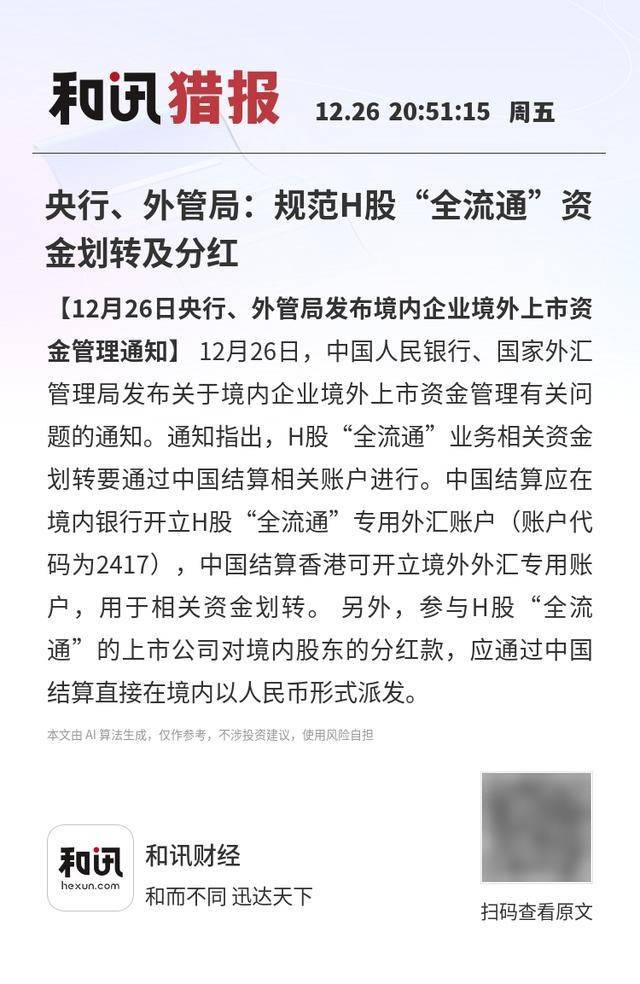
央行、外管局:规范H股“全流通”资金划转及分红
Sou Hu Cai Jing· 2025-12-26 14:17
Group 1 - The People's Bank of China and the State Administration of Foreign Exchange issued a notification regarding the management of funds for domestic enterprises listed overseas on December 26 [1][2] - The notification specifies that funds related to H-share "full circulation" must be transferred through relevant accounts managed by China Securities Depository and Clearing Corporation [1][2] - China Securities Depository is required to open a special foreign exchange account for H-share "full circulation" in domestic banks, with the account code being 2417 [1][2] Group 2 - China Securities Depository can also establish a special foreign exchange account in Hong Kong for related fund transfers [1][2] - Dividends for domestic shareholders from companies participating in H-share "full circulation" must be distributed in RMB directly within the domestic market through China Securities Depository [1][2]
人民银行、外汇局:参与H股“全流通”的上市主体对境内股东的分红款应在境内以人民币形式派发
Bei Jing Shang Bao· 2025-12-26 14:07
Core Viewpoint - The People's Bank of China and the State Administration of Foreign Exchange have issued a notification to facilitate domestic companies in raising funds efficiently in overseas financial markets [1] Group 1: Unified Currency Management Policies - The notification standardizes foreign currency fund management policies, allowing funds raised from overseas listings, share reductions, or transfers to be repatriated in either foreign currency or RMB [1] - For H-share companies, dividends to domestic shareholders must be distributed in RMB within the domestic market [1] Group 2: Fund Utilization and Risk Management - Companies can autonomously settle foreign currency for funds raised overseas, and they have the flexibility to choose methods for managing exchange rate risks [1] Group 3: Simplified Management Procedures - The notification simplifies management procedures and relaxes registration time limits, enabling banks to directly handle the registration for domestic companies listing abroad [1] - It also eases the registration time limits for issuance, additional issuance, and share reductions [1] Group 4: Fund Management Regulations - Funds raised from overseas listings and proceeds from share reductions or transfers are generally required to be repatriated to the domestic market [1] - If shareholders have surplus funds from additional share purchases or if transactions do not materialize, these funds should be promptly returned to the domestic market [1] - Certain qualified companies are allowed to retain raised funds for use outside of China [1] Group 5: Future Financial Support - The People's Bank of China and the State Administration of Foreign Exchange will continue to enhance financial support for the real economy and optimize cross-border fund management policies [2] - The aim is to improve the convenience of cross-border investment and financing, providing strong support for high-quality economic development [2]