
太赫兹技术

Search documents
太赫兹显微镜直接观测微观量子振动
Ke Ji Ri Bao· 2026-02-05 23:13
Core Insights - A new type of terahertz microscope developed by a research team at MIT has broken the diffraction limit of terahertz light, enabling direct observation of microscopic quantum vibrations in superconducting materials [1][2] - This breakthrough allows scientists to observe electronic behaviors that have been hidden for decades, providing new tools for studying high-temperature superconducting mechanisms and future terahertz communication devices [1] Group 1: Terahertz Microscope Development - The new terahertz microscope focuses terahertz light to a microscopic scale, overcoming the challenge of imaging micro-scale samples due to the typically large wavelength of terahertz light [1] - The research team introduced a spintronic emitter, which generates sharp terahertz pulses when excited by laser, allowing for localized terahertz light that can observe previously inaccessible quantum details [1] Group 2: Applications and Implications - The microscope has potential applications in understanding key properties of superconducting materials, which could advance research into room-temperature superconductors [2] - The technology can also be used to screen materials capable of emitting and receiving terahertz radiation, laying the groundwork for future terahertz frequency wireless communication, which may achieve higher data transmission rates compared to current microwave-based technologies [2] - Terahertz radiation is non-ionizing and safe for biological tissues, with the ability to penetrate materials like fabric, plastic, and ceramics, making it valuable in security imaging, medical imaging, and communication fields [2]
太赫兹芯片,速度72Gbps
半导体行业观察· 2026-02-03 01:35
Core Viewpoint - The sixth-generation wireless network (6G) is expected to achieve terabit-level transmission speeds using the terahertz frequency band, facilitated by advanced topological materials that enable multiple high-speed connections [2][3]. Group 1: Technology and Innovation - Researchers have developed an experimental device that achieves a data transmission rate of 72 gigabits per second while covering over 75% of the surrounding three-dimensional space [2]. - The new "leaky wave antenna" design allows for controlled leakage of terahertz radiation, ensuring smooth signal transmission without significant loss or distortion, thus enhancing bandwidth and data transfer rates [3]. - Compared to previous non-topological terahertz antennas, the new device increases coverage in three-dimensional space by 30 times and improves data transmission speed by approximately 275 times [3]. Group 2: Practical Applications - The new microchip can function as both a receiver and transmitter, allowing for bidirectional communication along the same path without interference [4]. - The antenna's radiation efficiency reaches between 90% and 100%, enabling the simultaneous transmission of uncompressed high-definition video while maintaining a high-speed wireless data link of 24 Gb/s [4]. - The envisioned TeraFi (terahertz Wi-Fi) technology is expected to provide speeds far exceeding current standards, making it suitable for environments requiring multiple reliable connections, such as vehicles, factories, and robotic platforms [4]. Group 3: Future Prospects - Terahertz technology presents significant opportunities in sensing applications, including terahertz radar (TeDAR), which can accurately detect objects, distances, and shapes, opening potential applications in autonomous systems, smart infrastructure, and industrial monitoring [4]. - The research team plans to integrate the antenna, radiation source, detector, and signal processing functions into a single chip to create a complete terahertz system, aiming to test networks of multiple collaborating devices [4].


从6G产业前瞻布局透视未来产业如何成为新经济增长点
Yang Shi Wang· 2025-11-30 04:20
Core Insights - China's "14th Five-Year Plan" emphasizes the strategic development of future industries, including the promotion of 6G technology as a new economic growth driver [1] Group 1: 6G Technology Overview - 6G technology is currently in the experimental phase, with specific technologies being tested in certain scenarios [1] - The terahertz communication system is a key component of 6G, offering transmission speeds that are 100 times faster than 5G, capable of transmitting 1 terabyte in one second [3] - Unlike 5G, which focuses on ground coverage, 6G aims to integrate communication and intelligence, creating a comprehensive network that covers air, space, land, and sea [3] Group 2: Current Developments and Future Goals - China has completed the first phase of 6G technology testing, developing over 300 key technology reserves [5] - The goal for 6G is to achieve a transmission delay of less than 100 microseconds and a reliability of 99.99999%, enabling precise coordination of industrial devices in smart factories [7] - During the "14th Five-Year Plan" period, China will focus on 6G standard development and industrial research, with commercial applications expected to start around 2030 and large-scale deployment by 2035 [7]
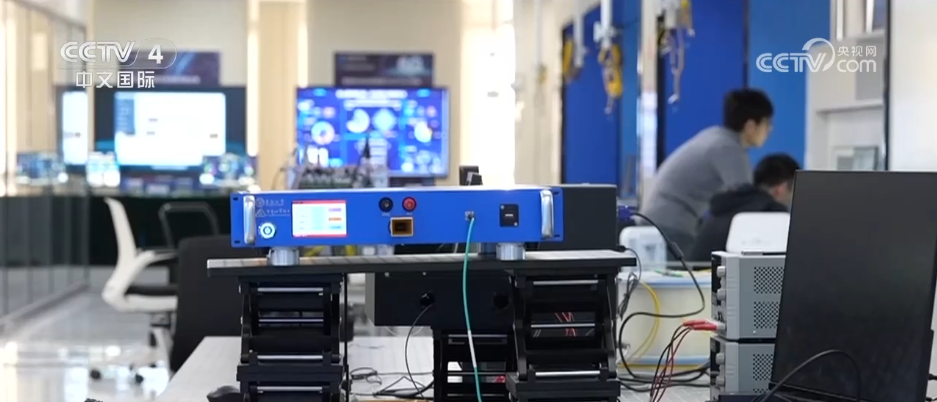
加快绿电节能产业协同发展!琴澳联合研发太赫兹节能装置
Nan Fang Du Shi Bao· 2025-11-07 11:26
Core Viewpoint - The "Qin-Ao Environmental Protection and Energy Saving Green Electricity Industry Innovation Development Forum" emphasizes the importance of green innovation and collaboration between Macau and Hengqin in advancing the green electricity sector [1][2]. Group 1: Forum Highlights - The forum showcased the "Terahertz Energy-Saving Power Harmony IoT Device," a collaborative development between Hengqin Power Supply Bureau and an Australian enterprise, marking a significant achievement in the Qin-Ao demonstration application [1]. - Key topics included terahertz 5G IoT smart energy-saving systems, energy-saving green electricity devices, and integrated new energy storage and charging solutions, aimed at accelerating the collaborative development of the green electricity industry [1][2]. - The event featured experts, scholars, and government representatives discussing innovative technologies and market applications through keynote speeches, result releases, roundtable discussions, and site visits [1]. Group 2: Expert Insights - The President of the Macau Environmental Protection Industry Association highlighted that green development is a key aspect of China's modernization, with the "14th Five-Year Plan" promoting green transformation through carbon peak and carbon neutrality goals [2]. - A professor from the Zhuhai Energy Conservation Association described the revolutionary significance of terahertz technology in power saving, emphasizing its integration with the Power Harmony system as crucial for new power system construction [2]. - The Vice President of the Zhuhai University of Science and Technology shared insights on the emerging global carbon-centric trade rules, suggesting that Qin-Ao's unique geographical advantages position it well to seize opportunities in the green industry [2]. Group 3: Collaborative Initiatives - Experts at the forum advocated for the establishment of a unified green electricity foundation in Qin-Ao, leveraging innovative technologies such as the Power Harmony IoT system, V2G and energy storage collaboration, and terahertz communication [3]. - The forum aimed to create a long-term cooperation mechanism for industry collaboration, technology sharing, and market linkage between the two regions, showcasing the innovation and development potential of the Qin-Ao green electricity industry [3].
我国下一代光伏技术取得新进展,光电转化效率突破30%
Xin Hua She· 2025-11-05 23:05
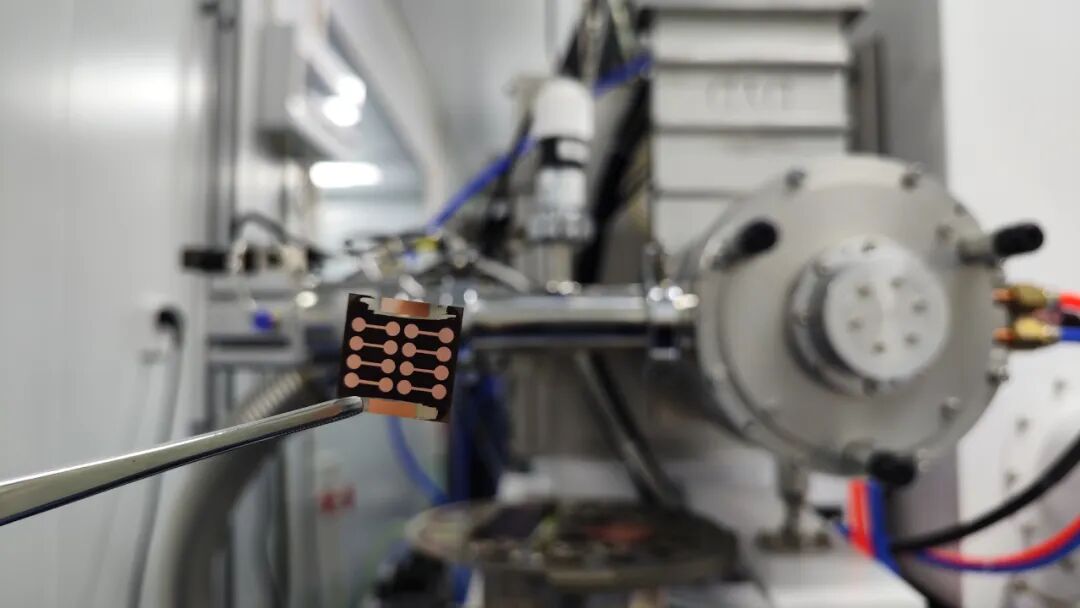
Core Insights - The research teams from Nanjing University and the National Defense Science and Technology Innovation Research Institute have made significant advancements in next-generation photovoltaic technology, achieving a breakthrough in the efficiency of all-perovskite tandem solar cells, which now exceeds 30% [1][5] Group 1: Technological Advancements - The newly developed all-perovskite tandem solar cells have achieved a power conversion efficiency of 30.1%, marking the first time this type of solar cell has surpassed the 30% efficiency threshold [5] - The research utilized terahertz technology to enable precise, non-destructive detection of carrier transport within the perovskite solar cells, addressing previous challenges in enhancing efficiency [3][5] Group 2: Research Methodology - The terahertz radiation detection technique developed by the research teams allows for the specific detection of free carrier concentration in perovskite materials without interference from band-to-band transitions [3] - The study identified that the interface between the perovskite light-absorbing layer and the hole transport layer is a significant area for carrier loss, leading to the design of a dipole passivation layer to enhance carrier movement [3][5] Group 3: Experimental Results - The passivation treatment resulted in an increase of over 68% in total carrier mobility and an extension of nearly 30% in carrier diffusion length for the perovskite films [3] - The findings highlight the unique advantages of terahertz spectroscopy in revealing intrinsic physical properties of carriers, providing a new technical pathway for designing efficient materials in the future [5]
我国下一代光伏技术,取得新进展
Zhong Guo Zheng Quan Bao· 2025-11-02 14:46
Core Insights - The research teams from Nanjing University and the National Defense Science and Technology Innovation Research Institute have achieved a breakthrough in perovskite solar cell technology, with a power conversion efficiency exceeding 30%, as published in the prestigious journal Nature on October 28 [1][5]. Group 1: Technological Advancements - The newly developed non-contact, non-destructive terahertz radiation detection technology effectively addresses the challenges in accurately detecting and controlling charge carriers in perovskite materials [3]. - The terahertz photons possess sub-bandgap energy characteristics, allowing for specific detection of free carrier concentration in perovskite without causing interband transition interference [3]. - The research identified that the interface between the perovskite light-absorbing layer and the hole transport layer is a significant area of carrier loss, leading to the design of a dipole passivation layer to enhance carrier movement [3]. Group 2: Performance Metrics - The newly developed perovskite solar cells, utilizing the passivation treatment technology, achieved a power conversion efficiency of 30.1%, marking the first time this efficiency threshold has been surpassed for such cells [5]. - Experimental data indicated that the passivated perovskite films exhibited over a 68% increase in total carrier mobility and nearly a 30% extension in carrier diffusion length [3][5]. Group 3: Future Implications - The research highlights the unique advantages of terahertz spectroscopy in revealing intrinsic physical properties of charge carriers, providing a new technical pathway for designing efficient materials in the future [5].
探讨光学前沿应用潜能 “好望角科学沙龙”超快光学专场活动举行
Zheng Quan Ri Bao Wang· 2025-10-28 11:13
Group 1: Core Insights - The event "Good Hope Cape Science Salon" focused on ultrafast optics, highlighting its significance in precision measurement, strong field physics, biological imaging, and information processing [1] - Researchers discussed the rapid advancements in time scale exploration, from femtoseconds to attoseconds, emphasizing the acceleration of scientific discovery [1] - The development of three-dimensional chips using femtosecond laser-based nano-printing technology is expected to significantly enhance data processing capabilities [2] Group 2: Technological Advancements - Terahertz technology is gaining attention for its unique advantages in detecting large organic molecules, particularly in cancer diagnostics [2] - The high intensity characteristics of lasers, particularly ultra-strong lasers, are noted for their important scientific and strategic value [2] - The salon aimed to promote the integration of ultrafast optical technology with academic research and industrial capital, facilitating discussions on China's photon industry transitioning from "technology catching up" to "industry leading" [3] Group 3: Event Overview - The "Good Hope Cape Science Salon" serves as a platform for cross-disciplinary exchange among professionals from technology, industry, and investment sectors [3] - The event gathered over 40 experts, including scholars, tech entrepreneurs, and investment leaders, to discuss trends in artificial intelligence, photon science, quantum computing, and more [3] - The theme of the salon was "Ultrafast Light: From Laser Pulses to a New Era in the Photon Industry," aiming to foster collaboration and innovation in cutting-edge technologies [3]
我国下一代光伏技术取得新进展!
中国能源报· 2025-10-28 07:00
Core Viewpoint - China's next-generation photovoltaic technology has made significant progress with the development of a perovskite tandem solar cell that achieves a power conversion efficiency of over 30%, as published in the prestigious journal "Nature" [1][5]. Group 1: Technological Advancements - The research teams from Nanjing University and the National Defense Science and Technology Innovation Research Institute utilized terahertz technology to accurately and non-destructively detect the carrier transport behavior within perovskite solar cells [1][3]. - The newly developed non-contact terahertz radiation detection technique effectively addresses the long-standing challenge of improving the power conversion efficiency of perovskite solar cells by allowing precise detection of free carrier concentration without interference from band-to-band transitions [3][5]. Group 2: Experimental Findings - The study identified that the interface between the perovskite light-absorbing layer and the hole transport layer is a significant area for carrier loss. To mitigate this, the researchers designed a dipole passivation layer that facilitates carrier movement towards the hole transport layer [3][5]. - Experimental results indicated that the passivated perovskite films exhibited an increase in total carrier mobility by over 68% and an extension of carrier diffusion length by nearly 30% [3]. Group 3: Recognition and Future Implications - The new perovskite tandem solar cell, certified by an international third-party organization, has achieved a power conversion efficiency of 30.1%, marking the first time this type of cell has surpassed the 30% efficiency threshold, and it has been included in the international "Solar Cell Efficiency Table" [5]. - The research highlights the unique advantages of terahertz spectroscopy in revealing intrinsic physical properties of carriers, providing a new technical pathway for the design of efficient materials in the future [5].
太赫兹光波实现纳米级压缩
Ke Ji Ri Bao· 2025-09-18 00:01
Core Insights - The collaboration between Vanderbilt University and Dresden University of Technology has successfully compressed terahertz waves from wavelengths over 50 micrometers to less than 250 nanometers, which could significantly enhance the performance of optoelectronic devices [1][2] Group 1: Terahertz Technology Advancements - Terahertz waves, with frequencies between 0.1 to 10 terahertz and wavelengths ranging from 0.03 to 3 millimeters, have shown potential in various applications such as 6G communication, radar systems, biomedical imaging, and sensing [1] - The challenge of integrating terahertz waves into compact devices has been addressed by using a layered material composed of hafnium and chalcogen elements, achieving low energy loss during the compression process [1] Group 2: Future Implications and Research Directions - This breakthrough is expected to revolutionize optoelectronic integration, leading to the development of ultra-compact terahertz resonators and waveguides, which will be crucial in environmental monitoring and security imaging [2] - Integrating hafnium disulfide into van der Waals heterostructures may open new avenues for research in two-dimensional materials, paving the way for nanoscale optoelectronic integration [2] - The research establishes hafnium disulfide as an ideal platform for terahertz applications and lays the groundwork for exploring new physical phenomena in strong coupling states [2]
2025 年通信理论与技术学术会议在无锡开幕
Zhong Guo Jing Ji Wang· 2025-08-19 01:35
Group 1 - The "2025 Communication Theory and Technology Academic Conference" was held in Wuxi, Jiangsu, with over 400 attendees from the communication field and nearly 30,000 online participants [1] - The conference featured keynote reports on various topics, including the challenges and advancements in 6G networks, IoT standards, and terahertz technology applications [2][3] - The conference provided a platform for cross-disciplinary communication and collaboration, focusing on innovative technologies and industry applications in the communication sector [4] Group 2 - Keynote presentations included topics such as multi-modal intelligent network environments, IoT standardization challenges, and advancements in terahertz communication technology [2][3] - The conference organized ten specialized forums covering various aspects of communication technology, facilitating academic exchanges and industry upgrades [4] - The event aimed to promote technological innovation, industry application, and business model innovation within the communication industry [4]