
失信被执行人

Search documents
男子借款1910万未还法院悬赏征集线索
Xin Lang Cai Jing· 2026-02-04 09:12
Core Viewpoint - A court in Henan Province has issued a reward of up to 1 million yuan for information leading to the whereabouts of a debtor, Gu, who owes 19.1 million yuan in principal and interest to a lender, Chen, since 2013 [1] Group 1 - The court has published multiple announcements to solicit tips on locating Gu, who has been identified as a dishonest debtor [1] - The civil judgment from 2021 by the Henan Provincial High Court mandated Gu and a company to repay the loan amounting to 19.1 million yuan [1] - Chen has not received any repayment despite the loan being issued 13 years ago, and efforts to locate Gu have been unsuccessful [1]
被“限高”人员竟然还能乘坐高铁、飞机?记者调查
Xin Lang Cai Jing· 2026-01-25 07:58
Core Viewpoint - The article discusses the enforcement of "high consumption restriction orders" by courts in China, highlighting recent violations and the emergence of a gray market for circumventing these restrictions. Group 1: Legal Framework and Enforcement - Courts issue "high consumption restriction orders" to prevent individuals from engaging in non-essential high spending behaviors, such as flying or staying in luxury hotels, to protect creditors' rights [1][2] - Violations of these orders have been reported, with courts in various regions announcing cases of individuals who have illegally purchased plane tickets despite being under such restrictions [3] Group 2: Case Studies and Penalties - A specific case from Henan Province involved an individual, Hu, who was found to have flown while under a high consumption restriction due to a business necessity, resulting in a fine of 500 yuan [2] - In total, courts in Fujian Province penalized 282 individuals for violating these orders, with 438 facing detention, indicating a significant enforcement effort [3] Group 3: Gray Market and Circumvention Methods - Reports indicate a rise in intermediaries offering services to help individuals bypass high consumption restrictions, including using old passports or other identification methods to book tickets [6][14] - Some individuals have successfully used their own identification to purchase regular train tickets while having friends or family buy high-speed train tickets, showcasing the loopholes in the enforcement system [13][15] Group 4: Regulatory Challenges and Recommendations - Experts highlight the need for improved inter-departmental collaboration among courts, police, and transportation authorities to close loopholes in the enforcement of high consumption restrictions [15] - Recommendations include enhancing real-time monitoring of identification systems and increasing penalties for those who assist in circumventing these restrictions [15]

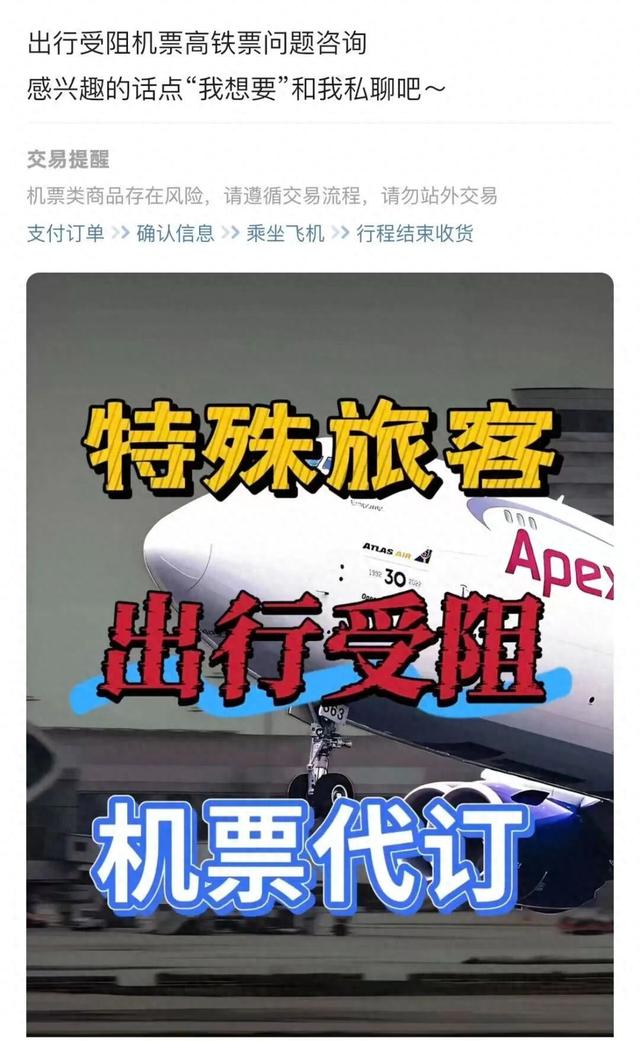
多人违反“限高令”乘机被拘留,他们是如何坐上高铁和飞机的?
Xin Lang Cai Jing· 2026-01-25 05:55
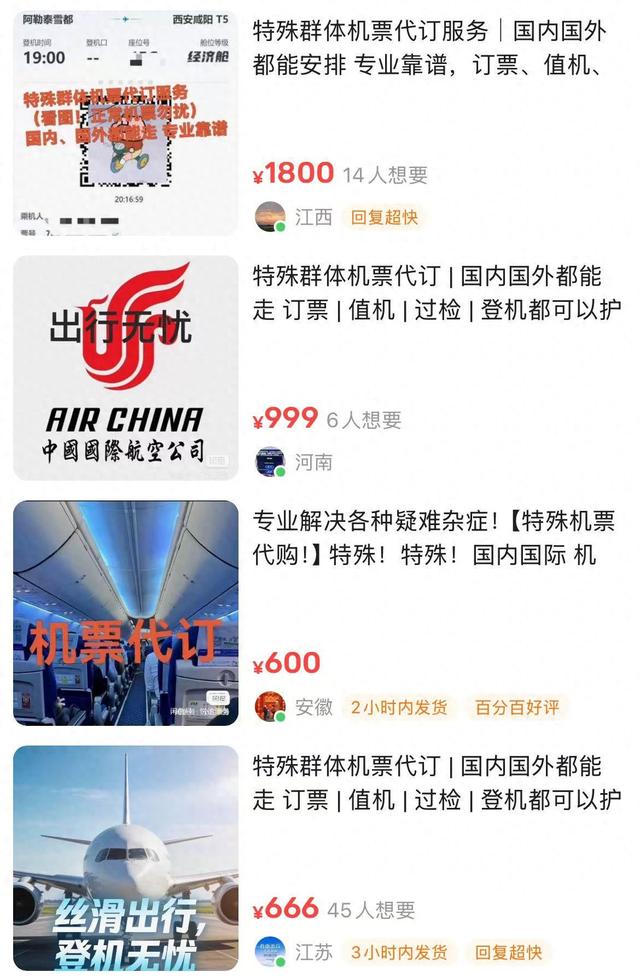
Core Viewpoint - The article discusses the enforcement of "consumption restriction orders" by courts in China, aimed at preventing high consumption behaviors of individuals who have not fulfilled their legal obligations, highlighting recent violations and the emergence of a gray market for circumventing these restrictions [1][2]. Group 1: Legal Framework and Enforcement - Courts issue "consumption restriction orders" to limit high spending behaviors of individuals who fail to comply with legal obligations, including actions like flying, staying in luxury hotels, and purchasing real estate [1]. - The Supreme People's Court has outlined nine high consumption behaviors that are restricted, with the primary focus on travel by air or high-class train services [1]. - Recent cases reveal that individuals, such as Hu, have violated these orders, prompting courts to impose fines and other penalties [2]. Group 2: Circumvention Methods - Reports indicate that individuals are finding ways to bypass these restrictions, including using old passports or third-party intermediaries to book flights [11][12]. - Some intermediaries claim to exploit time gaps in the updating of passport information to facilitate ticket purchases without detection [11]. - There are also methods involving the use of friends' identification to board trains while circumventing restrictions [11][12]. Group 3: Regulatory Challenges - The ability of individuals to bypass consumption restrictions highlights significant gaps in the regulatory framework, particularly in information sharing between courts, police, and transportation authorities [13]. - Experts suggest that improving inter-departmental collaboration and enhancing legal penalties for those who assist in circumventing these orders is essential for effective enforcement [12][13].
职工工资存入天瑞集团旗下APP遇取现难?天瑞集团称账上没有钱
Di Yi Cai Jing· 2025-12-30 11:38
Group 1 - The core issue involves Tianrui Xinke being listed as a dishonest executor due to disputes over private entrusted contract financial management [1] - Tianrui Xinke is a high-tech enterprise and software company primarily engaged in information technology services, software development, and industrial internet platform operations, with 90% ownership by Tianrui Group [1] - Tianrui Group has a diverse business portfolio including green building materials, casting (intelligent manufacturing), internet technology, and cultural tourism, previously ranking 380th in China's top 500 enterprises and 195th in China's top 500 manufacturing companies [1] Group 2 - The difficulties faced by Tianrui Xinke in financial management raise questions about how a high-tech enterprise could become embroiled in financial disputes [1] - Multiple attempts to contact Tianrui Xinke's offices resulted in messages indicating the numbers were "disconnected" [1]
前国脚戴琳被曝欠款辱骂球迷,最低一笔还款仅7元,涉事球迷如今重病昏迷,进入ICU,每日治疗费3万元,正急售房和车
Mei Ri Jing Ji Xin Wen· 2025-12-14 13:33
Core Viewpoint - The situation involves former professional football player Dai Lin, who is accused of owing money to a fan, leading to severe health issues for the fan and raising concerns about Dai Lin's financial and legal responsibilities [3][10]. Group 1: Financial Obligations - Dai Lin has reportedly failed to repay a total of 70,000 yuan to a fan, with only 34,000 yuan repaid so far, including payments as low as 7 yuan [8][10]. - The fan's family is struggling to cover medical expenses, which exceed 10,000 yuan daily, with total costs reaching at least 30,000 yuan per day due to necessary treatments [8]. Group 2: Legal Implications - Dai Lin's failure to repay the debt constitutes a civil breach of contract, and he has previously been listed as a dishonest debtor due to an outstanding debt of 280,000 yuan [10]. - Legal experts suggest that the fan should gather evidence of the debt and consider filing a lawsuit to freeze Dai Lin's assets to prevent further asset transfer [12].

同德化工,沦为失信被执行人
Shen Zhen Shang Bao· 2025-12-01 02:08
Group 1 - The company Tongde Chemical has been listed as a dishonest executor by the Shanghai Pudong New District People's Court due to a financing lease contract dispute with Ping An International Leasing Co., Ltd, with an obligation amount of 11.54 million yuan that remains unpaid [1] - The company claims that this situation has not significantly impacted its normal production and operations, and it is in communication with relevant parties to resolve the issue promptly [1] - In a previous announcement on November 1, the company disclosed that both it and its wholly-owned subsidiary received an execution notice, with the involved amount being 11,542,889.2 yuan and execution costs of 78,942.88 yuan [1] Group 2 - Tongde Chemical's wholly-owned subsidiary, Tongde Kexin, has also been listed as a dishonest executor by the same court [2] - The company, established in 2006 and listed on the Shenzhen Stock Exchange in 2010, is a leading enterprise in the national civil explosives industry, focusing on the research, production, and sales of civil explosives and providing overall blasting solutions [2] - Financial performance has declined, with a revenue of 331 million yuan in the first three quarters of this year, representing a year-on-year decrease of 20.53%, and a net profit attributable to shareholders of -9.937 million yuan, down 125.28% year-on-year [2]


涉嫌串通投标罪,ST岭南遭起诉!
Shen Zhen Shang Bao· 2025-11-05 09:11
Group 1 - The company, Lingnan Ecological Culture Tourism Co., Ltd. (ST Lingnan), has been indicted for collusion in bidding and is scheduled for a court hearing on October 31, 2025 [1][4] - As of now, the incident has not significantly impacted the company's operations, but the potential effects on its financial performance remain to be determined pending the court's judgment [4] - The company has faced financial difficulties, reporting net losses of 1.554 billion yuan in 2022, 1.092 billion yuan in 2023, and 984 million yuan in 2024 [4] Group 2 - In the first three quarters of 2025, the company achieved revenue of 253 million yuan, a year-on-year decrease of 68.75%, while the net profit attributable to shareholders was -206 million yuan, an increase of 23.34% year-on-year [4] - The company has been listed as a dishonest executor due to construction contract disputes, which has affected its ability to secure new orders and collect payments [4] - As of November 4, the company's stock price closed at 1.93 yuan per share, down 3.02%, with a total market capitalization of 3.513 billion yuan, reflecting a year-to-date decline of 40.25% [5]


除了不能坐高铁,王健林还有这些事情做不了——
Xin Jing Bao· 2025-09-28 10:19
Core Viewpoint - The news highlights the recent restriction on high consumption imposed on Wang Jianlin of Wanda Group, reigniting public discussion on the issue of creditworthiness and the consequences of being a "dishonest debtor" in China [1]. Group 1: Definition and Scope of Dishonesty - As of September 28, 2023, there are 8.449 million individuals classified as dishonest debtors in China [10]. - The concept of being a dishonest debtor arises when individuals fail to fulfill their obligations, leading to restrictions on their consumption [1][6]. - Individuals who have the ability to repay but refuse to comply with court orders are categorized as dishonest debtors, commonly referred to as "laolai" [7][8]. Group 2: Restrictions on High Consumption - The Supreme People's Court of China has outlined specific consumption behaviors that are prohibited for those under high consumption restrictions, including: - Traveling by airplane or soft sleeper train, and staying in star-rated hotels [11]. - Purchasing real estate or luxury vehicles [12]. - Enrolling children in high-fee private schools and engaging in leisure travel [12]. - Individuals under these restrictions must seek court approval for necessary high consumption related to work or life [22]. Group 3: Consequences and Enforcement - Violating the high consumption restriction can lead to penalties such as detention or fines, and in severe cases, criminal charges may apply [16]. - The public is encouraged to monitor the activities of those under consumption restrictions, with courts providing channels for reporting violations [21]. Group 4: Lifting Restrictions - To lift a high consumption restriction, individuals must either fulfill their legal obligations, provide valid guarantees, or negotiate with the creditor to alleviate concerns [23][24].

罗永浩实控的锤子科技回应被列为失信被执行人
Zhong Guo Xin Wen Wang· 2025-09-18 10:38
Core Viewpoint - Smartisan Technology (Chengdu) Co., Ltd. has been listed as a dishonest executor due to a loan dispute with Suzhou Zihui Shengwang Venture Capital, amounting to a total of 21.42 million yuan that remains unpaid [1][2] Group 1: Company Response - Smartisan Technology clarified that the debt of 15 million yuan owed to Zihui Venture Capital is a company liability, not a personal debt of its founder, Luo Yonghao [1] - Luo Yonghao expressed willingness to repay the debt personally, but has delayed the matter due to ongoing defamation and attacks from Zihui Venture Capital's representative, Zheng Gang [1] Group 2: Legal and Financial Context - The company was officially listed as a dishonest executor on the China Execution Information Disclosure Network, indicating a complete failure to fulfill the court's ruling regarding the loan dispute [1] - In August, Smartisan Technology and its legal representative, Guan Zhiliang, were already executed for over 21.42 million yuan due to the same case and faced restrictions on high consumption [1]
罗永浩实控的锤子科技再成“老赖”?内部人士回应
Mei Ri Jing Ji Xin Wen· 2025-09-18 08:11
Core Viewpoint - Recently, Smartisan Technology (Chengdu) Co., Ltd. has been listed as a "dishonest executor" due to unresolved loan disputes with Suzhou Zihui Shengwang Venture Capital Co., Ltd. [1] Group 1: Company Financial Issues - Smartisan Technology has reportedly borrowed a total of 15 million yuan from Zihui Venture Capital, which is classified as company debt rather than personal debt of its founder, Luo Yonghao [1] - An internal source from Smartisan stated that the information regarding the loan disputes is outdated [1] Group 2: Management and Control - Luo Yonghao remains the chairman and actual controller of Smartisan Technology, holding 22.6667% of the company's shares [1] - Luo has expressed willingness to repay the debt to Zihui Venture Capital personally, but has decided to delay addressing the debt due to past conflicts with Zihui's management [1]