
跨部门协同监管

Search documents
大连:“一表通查+结果互认”提升协同监管效能
Xin Hua She· 2026-02-02 00:45
Core Viewpoint - The Dalian Municipal Market Supervision Administration and Dalian Customs have launched a pilot program for a new regulatory model in the food production sector, aimed at enhancing regulatory efficiency and reducing the burden on enterprises, thereby promoting high-quality development in the local food industry [1][2]. Group 1: Regulatory Model - The new regulatory model features "one inspection, mutual recognition" and includes 115 specific inspection items covering key areas such as personnel management, production process control, and product inspection [1]. - A cross-departmental mutual recognition supervision checklist has been developed based on relevant inspection standards from the National Market Supervision Administration and the General Administration of Customs, forming a two-tier inspection system of "recognized items + accepted items" [1]. Group 2: Pilot Implementation - The pilot program will initially involve 30 enterprises that hold both food production licenses and export food production enterprise registration certificates, selected from specific local areas [2]. - After one party completes the on-site inspection, they will send the inspection report and related forms to the other party, which must complete the review and confirmation within five working days without conducting a duplicate inspection [2]. - Based on the effectiveness of the pilot, the local authorities plan to gradually expand the scope of collaborative regulation and normalize the collaborative regulatory work [2].
被“限高”人员竟还能坐高铁飞机?
Xin Lang Cai Jing· 2026-01-25 18:15
Core Viewpoint - The article discusses the issue of individuals under "consumption restriction orders" (限高令) being able to bypass these restrictions to purchase tickets for flights and trains, revealing a gray industry that facilitates such actions [5][8]. Group 1: Legal Framework and Violations - Courts issue "consumption restriction orders" to prevent high spending by individuals who have not fulfilled legal obligations, which includes prohibiting actions like flying or staying in luxury hotels [4][5]. - Recent cases from various courts highlight violations of these orders, with specific examples of individuals, such as one named Hu, who managed to fly despite being restricted [5][6]. - In 2025, courts in Fujian province penalized 282 individuals for violating flight restrictions and made detention decisions for 438 others [7]. Group 2: Methods of Bypassing Restrictions - Individuals have found ways to circumvent these restrictions, such as using foreign systems to book tickets or leveraging friends' identification to purchase train tickets [8][9]. - Social media and second-hand trading platforms have become venues for intermediaries offering services to help individuals bypass these restrictions, indicating a systemic issue in enforcement [8][9]. Group 3: Regulatory Challenges and Recommendations - Experts emphasize the need for improved coordination among courts, police, and aviation authorities to enhance regulatory oversight and address the loopholes that allow these violations [9]. - Recommendations include strengthening inter-departmental collaboration, integrating identification systems for real-time monitoring, and increasing penalties for violations to deter such behaviors [9].

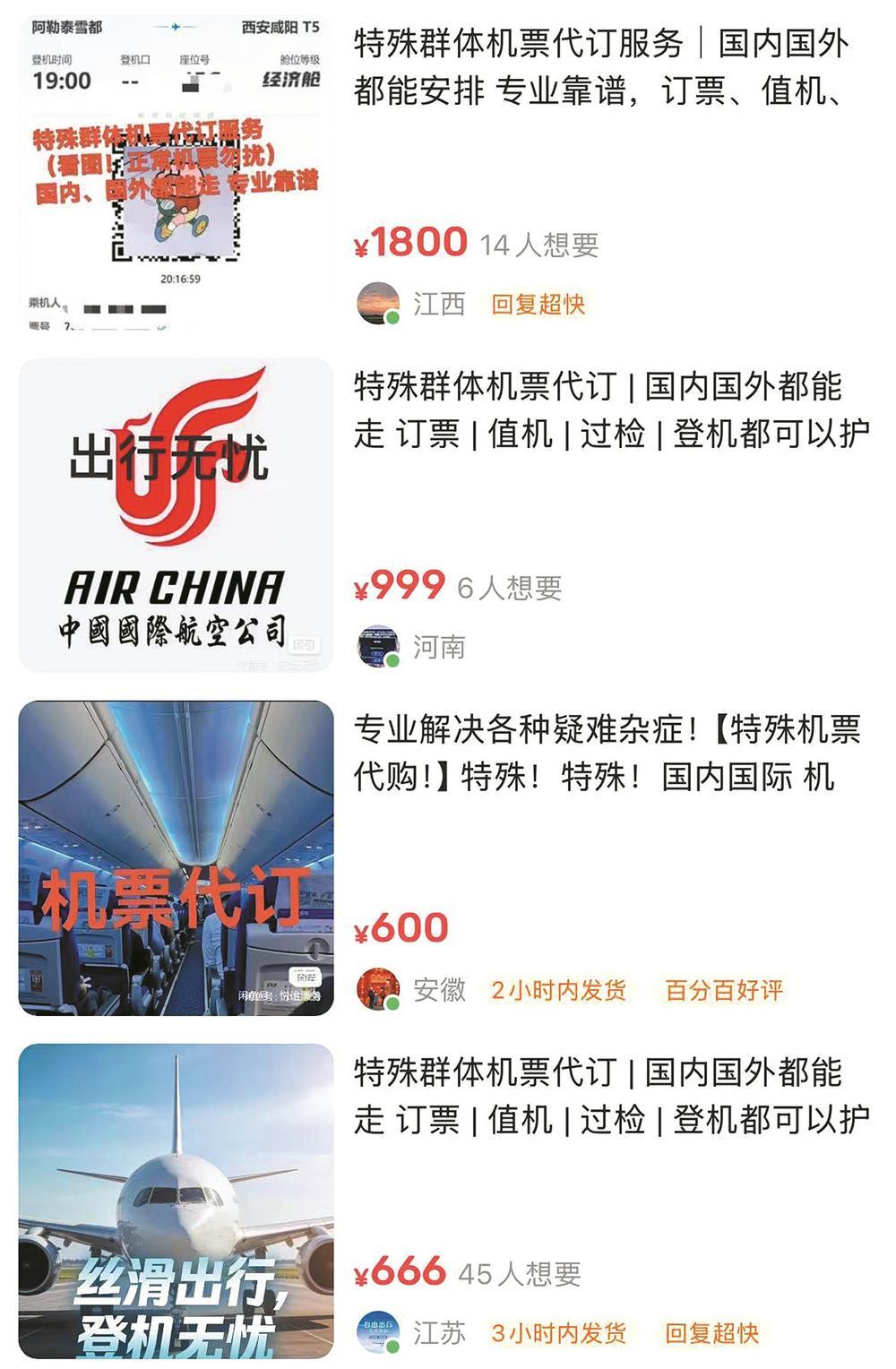
被“限高”人员竟还能坐高铁、飞机?这是咋回事儿→
Xin Lang Cai Jing· 2026-01-25 13:05
Core Viewpoint - The article discusses the enforcement of consumption restrictions on individuals who fail to comply with legal obligations, highlighting recent cases of violations and the underlying issues in the enforcement system [1][3]. Group 1: Legal Framework and Enforcement - Courts issue "restriction orders" to limit high consumption behaviors of individuals who have not fulfilled legal obligations, including actions like flying, staying in star-rated hotels, and purchasing real estate [1]. - Recent cases from various courts, including a notable one from Henan Province, reveal that individuals continue to violate these restrictions, with one case involving a person who flew despite being listed as a defaulter [1][2]. Group 2: Methods of Circumvention - Reports indicate that individuals have found ways to bypass these restrictions, such as using overseas systems to purchase tickets or leveraging friends' identification to board trains [3][6]. - Social media and second-hand platforms have become avenues for individuals to seek assistance from intermediaries who claim to help them circumvent the restrictions [3][8]. Group 3: Legal Consequences and Recommendations - Violating a restriction order can lead to fines of up to 100,000 yuan and detention for up to 15 days, with severe cases potentially resulting in criminal charges [3]. - Experts emphasize the need for improved inter-departmental collaboration among courts, police, and civil aviation authorities to enhance regulatory oversight and address the loopholes that allow these violations to occur [3].
被“限高”人员竟然还能乘坐高铁、飞机?记者调查
Xin Lang Cai Jing· 2026-01-25 07:58
Core Viewpoint - The article discusses the enforcement of "high consumption restriction orders" by courts in China, highlighting recent violations and the emergence of a gray market for circumventing these restrictions. Group 1: Legal Framework and Enforcement - Courts issue "high consumption restriction orders" to prevent individuals from engaging in non-essential high spending behaviors, such as flying or staying in luxury hotels, to protect creditors' rights [1][2] - Violations of these orders have been reported, with courts in various regions announcing cases of individuals who have illegally purchased plane tickets despite being under such restrictions [3] Group 2: Case Studies and Penalties - A specific case from Henan Province involved an individual, Hu, who was found to have flown while under a high consumption restriction due to a business necessity, resulting in a fine of 500 yuan [2] - In total, courts in Fujian Province penalized 282 individuals for violating these orders, with 438 facing detention, indicating a significant enforcement effort [3] Group 3: Gray Market and Circumvention Methods - Reports indicate a rise in intermediaries offering services to help individuals bypass high consumption restrictions, including using old passports or other identification methods to book tickets [6][14] - Some individuals have successfully used their own identification to purchase regular train tickets while having friends or family buy high-speed train tickets, showcasing the loopholes in the enforcement system [13][15] Group 4: Regulatory Challenges and Recommendations - Experts highlight the need for improved inter-departmental collaboration among courts, police, and transportation authorities to close loopholes in the enforcement of high consumption restrictions [15] - Recommendations include enhancing real-time monitoring of identification systems and increasing penalties for those who assist in circumventing these restrictions [15]

国家能源局党组成员、副局长宋宏坤:深化“四个监管”机制创新 全面提升能源治理效能
Zhong Guo Dian Li Bao· 2025-12-09 08:52
Core Viewpoint - The article emphasizes the importance of enhancing the "Four Regulatory" mechanisms to improve energy governance efficiency, ensuring energy security and supporting the transition to a clean, low-carbon energy system in China [1][6]. Group 1: Regulatory Mechanism Development - The "Four Regulatory" framework has led to significant progress in establishing rules, processes, and standards across key areas such as major engineering projects, electricity market order, energy supply security, and source-network coordination [3]. - A comprehensive regulatory framework has been formed, including a closed-loop mechanism for monitoring, early warning, supervision, and rectification of 134 major electricity projects [3]. - Digital regulation has been optimized, with 134 monitoring indicators established, resulting in over 60,000 monitored trading behaviors and 230 early warnings, effectively maintaining market order [3][4]. Group 2: Regulatory Effectiveness Improvement - The "Four Regulatory" approach has enhanced the ability to identify and address issues in energy supply and transformation, with real-time monitoring systems established for national electricity and gas networks [4]. - A new regulatory system in Yunnan has reduced the need for public visits by over 860,000 and saved more than 800 million yuan for small businesses [4]. - The regulatory framework has effectively addressed longstanding issues in major projects, ensuring compliance with policies and improving the overall regulatory impact [5]. Group 3: Strategic Importance and Modernization - The ongoing development of the "Four Regulatory" mechanisms is a strategic choice to modernize energy governance and enhance regulatory capabilities, aligning with national energy strategies [6][7]. - The approach aims to address the complexities of energy transition and market reforms, advocating for a digital, process-oriented, and collaborative regulatory system [7]. - The initiative is seen as a necessary evolution in response to the challenges posed by increased market participants and data complexity in the energy sector [7]. Group 4: Focus on Key Areas and Mechanism Strengthening - The regulatory focus will target critical areas such as energy supply, electricity market safety, and service quality, integrating information systems to enhance decision-making capabilities [9]. - Emphasis will be placed on optimizing regulatory methods, ensuring effective collaboration across various regulatory dimensions to enhance overall governance [10]. - Mechanisms will be strengthened to ensure legal compliance and data security, enhancing the capacity of regulatory bodies to fulfill their responsibilities effectively [11]. Group 5: Systematic Approach to Regulatory Enhancement - The initiative to deepen the "Four Regulatory" mechanisms is recognized as a systematic project, aiming to innovate mechanisms and improve efficiency in energy governance [12].
民航局与国家市场监管总局签订数据共享合作协议
Zhong Guo Min Hang Wang· 2025-07-18 12:28
Core Points - The Civil Aviation Administration of China (CAAC) and the State Administration for Market Regulation (SAMR) signed a data-sharing cooperation agreement, marking the establishment of a normalized cooperation mechanism for data resource sharing and credit regulation [2][3] - This cooperation is a key practice to implement the central government's decisions on developing general aviation and the low-altitude economy, as well as accelerating the development of the digital economy [2] - The partnership aims to create a more efficient and precise cross-departmental regulatory service system through data sharing, enhancing governance capabilities [2] Group 1 - The cooperation will provide strong data support for CAAC's tasks, including qualification information verification for traditional general aviation enterprises and emerging drone companies, joint punishment, credit evaluation, and regulatory actions [2] - For SAMR, expanding the application of enterprise credit information will enhance the quality and efficiency of tasks such as information collection and public disclosure, big data monitoring and analysis, credit risk classification, index research, and credit evaluation [2] - Both parties expressed commitment to fully implement the agreement and leverage data-sharing effectiveness to optimize the business environment and contribute to the high-quality development of general aviation and the low-altitude economy [3]