纪检监察工作规范化法治化正规化建设

Search documents
中管高校纪检监察机构加强规范化法治化正规化建设以更高标准更严要求打造铁军
Zhong Yang Ji Wei Guo Jia Jian Wei Wang Zhan· 2026-02-26 23:49
Core Viewpoint - The article emphasizes the importance of strengthening the internal mechanisms and capabilities of disciplinary inspection and supervision institutions in Chinese universities to ensure effective governance and adherence to the rule of law. Group 1: Strengthening Political and Theoretical Foundations - The disciplinary inspection institutions in central-managed universities are focusing on enhancing political construction, capability building, and integrity through a three-year action plan and a year dedicated to standardizing and legalizing their work [1] - The China People's University emphasizes theoretical training as a primary political task, aligning actions with the central leadership's directives and enhancing political loyalty among inspection teams [2] - Beijing Institute of Technology has implemented a three-tiered learning mechanism to promote theoretical education among its disciplinary inspection staff, fostering loyalty through collective learning [3] Group 2: Capacity Building through Training - Wuhan University has organized training sessions for disciplinary inspection staff, focusing on enhancing their professional capabilities and understanding of legal issues relevant to their work [4] - Northwest A&F University combines internal and external training approaches, ensuring that all young staff participate in practical training sessions to improve their skills [5] - The China Agricultural University has established a learning mechanism that includes case reviews and practical exercises to enhance the political and legal competencies of its staff [5] Group 3: Improving Internal Mechanisms and Quality Control - Sun Yat-sen University has conducted a comprehensive self-inspection of completed cases to identify common issues and improve the effectiveness of its disciplinary inspection processes [6] - The article highlights the importance of a robust internal mechanism to ensure that disciplinary inspection powers operate within the legal framework, with a focus on standardizing procedures and enhancing governance effectiveness [6] - The China People's University and other institutions are working to strengthen the construction of secondary disciplinary organizations to enhance the supervisory chain and improve case handling efficiency [7]
中国共产党海南省第八届纪律检查委员会第五次全体会议决议
Hai Nan Ri Bao· 2026-02-02 04:19
中国共产党海南省第八届纪律检查委员会 第五次全体会议决议 全会指出,2025年,省委深入学习贯彻习近平总书记关于党的自我革命的重要思想,有力推动全面 从严治党向纵深发展,保障全岛封关运作顺利实施。全省各级纪检监察机关深学细悟笃行习近平新时代 中国特色社会主义思想,着力推进政治监督具体化精准化常态化,扎实开展深入贯彻中央八项规定精神 学习教育,系统施治铲除腐败滋生的土壤和条件,持续推进群众身边不正之风和腐败问题集中整治,坚 定不移深化政治巡视,坚持不懈深化制度集成创新,强力推进"纪检监察工作规范化法治化正规化建设 年"行动,推动全省纪检监察工作高质量发展取得新进展新成效。在肯定成绩的同时,实事求是分析了 当前我省全面从严治党形势以及纪检监察工作和队伍建设存在的问题,要求高度重视、切实加以解决。 全会强调,全省纪检监察机关要深刻领悟习近平总书记提出的"三个更加"重要要求,切实把思想和 行动统一到以习近平同志为核心的党中央对形势的准确判断、对任务的科学部署上来,深刻把握实 现"十五五"时期目标任务对维护党的团结统一、把权力关进制度笼子、保持党的先进性纯洁性、激励担 当作为提出的更高要求,始终做到忠诚干净担当、敢于善 ...
落实五次全会精神见行动丨锻造纯度更高、成色更足的纪检监察铁军
Zhong Yang Ji Wei Guo Jia Jian Wei Wang Zhan· 2026-01-28 23:32
中央纪委国家监委网站 赵博闻 习近平总书记在二十届中央纪委五次全会上指出,要按照政治过硬、能力过硬、作风过硬、廉洁过硬的 要求,着力锻造忠诚干净担当、敢于善于斗争的纪检监察铁军。中央纪委五次全会贯彻落实习近平总书 记重要讲话精神,在部署2026年工作时强调,强化铁军意识,不断提高纪检监察工作规范化法治化正规 化水平。 近日,黑龙江、四川、陕西等地纪委全会相继召开,传达学习习近平总书记重要讲话精神,落实中央纪 委五次全会工作部署,强调要切实把思想和行动统一到党中央重大决策部署上来,加强纪检监察工作规 范化法治化正规化建设,把全会部署抓深抓实抓到位。 黑龙江—— 聚焦锻造"四个过硬"铁军队伍,深化推进"纪检监察工作规范化法治化正规化建设年"行动 1月27日举行的中国共产党黑龙江省第十三届纪律检查委员会第五次全体会议强调,全省纪检监察机关 要在自我革命中勇毅前行,把标准立得更高,把责任扛得更牢,以铁的信念铸忠诚、以铁的担当抓落 实、以铁的纪律护发展、以铁的作风强保障,以全面从严治党新成效推动谱写中国式现代化龙江实践新 篇章。 会议部署,聚焦锻造"四个过硬"铁军队伍,深化推进"纪检监察工作规范化法治化正规化建设年"行 ...
总结经验做法 加强培训交流深度关注丨多措并举提升审查调查工作本领
Zhong Yang Ji Wei Guo Jia Jian Wei Wang Zhan· 2026-01-28 00:20
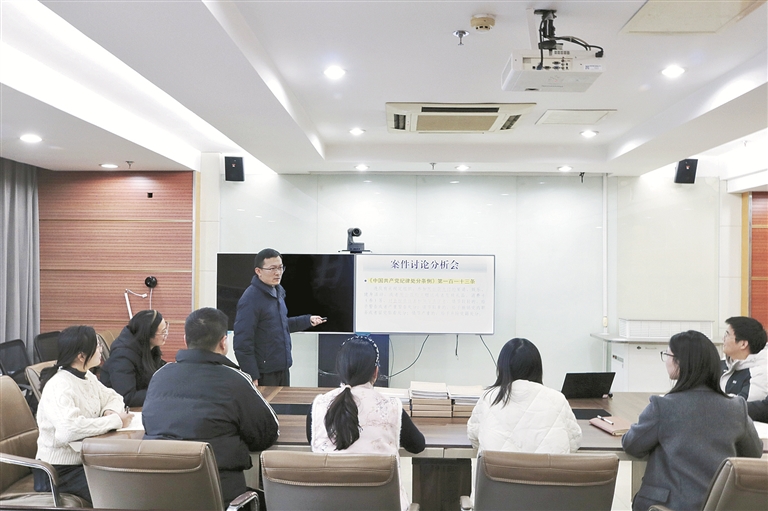
中央纪委国家监委网站 鲍爽 案件质量评查是保障和提高案件质量的重要举措,各地纪检监察机关牢牢抓住案件质量评查这个有效抓手, 常态化开展评查,为案件质量精准"把脉问诊"。 重庆市开州区纪委监委构建"审查调查组内审、协作片区初审、审理组复审、审理室务会联审、区纪委常委会 审核"的五级案件质量审核机制,形成层层递进的质量管控体系。 "办案单位首先依据《审查调查阶段案件质量自查表》进行自查;随后,协作片区指派内审员对案件关键事 实、证据、定性量纪及法规适用等进行重点复核;进入审理阶段后,由审理小组开展精细化审核,确保事实 清楚、定性准确、处理恰当;最终,由区纪委常委会进行把关和审议。"该区纪委监委有关负责同志介绍,五 级审核的核心在于压实责任、集体把关,构筑案件质量审核的完整"闭环"。 安徽省和县纪委监委围绕案件查办关键环节,组织办案人员复盘取证突破、定性量纪、文书制作等工作,总 结提炼可复制、可推广的办案思路与方法,切实提升干部的专业素养和攻坚能力。图为近日,该县纪检监察 干部在案件讨论分析会上开展交流研讨。罗凡 摄 习近平总书记在二十届中央纪委五次全会上强调,要持续加强纪检监察工作规范化法治化正规化建设,不断 提 ...

中央纪委国家监委通报
中国基金报· 2026-01-22 02:18
据 中央纪委国家监委网站1月22日消息, 2025年,各级纪检监察机关以习近平新时代中国 特色社会主义思想为指导,深学细悟习近平总书记关于党的自我革命的重要思想,坚决践行 关于纪检监察队伍自身建设的重要要求,深入学习贯彻党的二十届四中全会精神,全面落实 中央纪委四次全会工作部署,扎实开展深入贯彻中央八项规定精神学习教育,纵深推进"纪检 监察工作规范化法治化正规化建设年"行动,持之以恒深化正风肃纪反腐,着力打造忠诚干净 担当、敢于善于斗争的纪检监察铁军。 les & FR 点击下载中国基金报客户端 ■ 中国基金报内容矩阵 ■ 来 源 : 中央纪委国家监委网站 巅峰对话 投资热点说 ETF风向标 IPO情报站 fe o 1 ■ a a - 444 and 4 4 CHINAFUND CHINAFUND CHINAFUND CHINAFUND 开盘速递 港股日报 全球早班车 数说人物 √ � [ 8 a 4 a g a d 4 4 4 CHINAFUND CHINAFUND CHINAFUND CHINAFUND ●微信搜一搜( 〔 〔 中国基金报 〕即刻获取财经资讯 全国纪检监察机关共接收涉及纪检监察干部问题线索 ...
中央纪委国家监委通报2025年对纪检监察干部监督检查审查调查情况
Xin Jing Bao· 2026-01-21 23:07
新京报讯据中央纪委国家监委网站消息,2025年,各级纪检监察机关以习近平新时代中国特色社会主义 思想为指导,深学细悟习近平总书记关于党的自我革命的重要思想,坚决践行关于纪检监察队伍自身建 设的重要要求,深入学习贯彻党的二十届四中全会精神,全面落实中央纪委四次全会工作部署,扎实开 展深入贯彻中央八项规定精神学习教育,纵深推进"纪检监察工作规范化法治化正规化建设年"行动,持 之以恒深化正风肃纪反腐,着力打造忠诚干净担当、敢于善于斗争的纪检监察铁军。 全国纪检监察机关共接收涉及纪检监察干部问题线索或反映4.02万余件次,处置涉及纪检监察干部问题 线索3.50万余件,谈话函询纪检监察干部10840人次,对纪检监察干部立案4119人,处分3763人,移送 司法机关234人。其中,处分省部级干部4人、厅局级干部116人、县处级干部746人。 全国纪检监察机关运用"四种形态"批评教育和处理纪检监察干部1.39万余人次。其中,运用第一种形态 批评教育和处理9937人次,运用第二种形态处理3217人次,运用第三种形态处理465人次,运用第四种 形态处理282人。 ...
中投公司机关纪委:抓实培训 巩固提升案件查办质效
Zhong Yang Ji Wei Guo Jia Jian Wei Wang Zhan· 2026-01-19 00:30
中央纪委国家监委网站 陈昊 岁末年初,中投公司机关纪委正结合新印发的《机关纪委监督执纪工作指引(2025年版)》,对问题线 索进行调查核实,对已办结案件开展复盘分析。这本由该机关纪委编制的近300页的工作指引,涵盖了 信访举报受理、问题线索处置、谈话函询、立案审查等9个方面的内容,是该公司机关纪委加强纪检监 察工作规范化法治化正规化建设的一项重要举措。 中投公司机关纪委以提升案件查办质效为抓手,加强以学促干、深化实战实训,不断推动监督实起来、 执纪硬起来、作用发挥强起来。 编制监督执纪工作指引:以学促干提升业务能力 在集思广益中,张立刚带领团队反复推敲谈话疑点,在外查中进一步完善证据链条,同时还在驻中投公 司纪检监察组的指导协助下,顺藤摸瓜发现了该职工其他违纪行为,最终给予该职工开除党籍、开除处 分。 "以前提到办案,心里有点没底。经过这几次实战锻炼,我对监督执纪工作更有经验,也更有信心 了。"正如参加该案查办的机关纪委干部所说,履职能力的提升,直观反映在案件查办工作中。据统 计,2025年以来中投公司机关纪委已办结问题线索4件,实现问题线索清零。 "我们在2024年首版工作指引的基础上,结合最新法规制度和实 ...
锻造纯度更高 成色更足铁军队伍
He Nan Ri Bao· 2026-01-17 23:05
Core Viewpoint - The article emphasizes the importance of strengthening the internal capabilities of the disciplinary inspection and supervision agencies to effectively oversee others, highlighting the need for a robust and professional workforce in this sector [1]. Group 1: Theoretical and Political Education - Strengthening theoretical education and political awareness is identified as a primary task for the disciplinary inspection agencies, focusing on enhancing political recognition and commitment to the Party's leadership [2][3]. - The agencies have implemented mechanisms for continuous learning, such as the "Five Learning Interactions" and "Daily Learning for One Hour," to ensure that staff are well-versed in the latest directives and theories from the Party [3]. Group 2: Innovation and Technology in Supervision - The article discusses the use of innovation as a catalyst for advancing the standardization, legalization, and normalization of disciplinary inspection work, with a focus on institutional and technological innovations [4]. - The establishment of a comprehensive information platform is highlighted as a key initiative to enhance efficiency and effectiveness in supervision, utilizing big data and technology [4]. Group 3: Development of a Professional Workforce - The article outlines the necessity for high-quality, professional personnel within the disciplinary inspection agencies, emphasizing rigorous training and practical experience to enhance their capabilities [5][6]. - Initiatives such as comprehensive training programs and real-case learning are being implemented to ensure that staff are well-prepared to fulfill their responsibilities effectively [6].
持续加强纪检监察工作规范化法治化正规化建设锻造忠诚干净担当、敢于善于斗争的纪检监察铁军
Zhong Yang Ji Wei Guo Jia Jian Wei Wang Zhan· 2026-01-16 00:24
Group 1 - The core message emphasizes the significant responsibility and glorious mission of the disciplinary inspection and supervision agencies in promoting the Party's self-revolution and strict governance [1][2] - The focus is on strengthening the standardization, legalization, and normalization of disciplinary inspection work, aiming to improve the quality and effectiveness of supervision and enforcement [1][3] - There is a call for the cultivation of a loyal, clean, and responsible disciplinary inspection team that is capable of fighting and skilled in governance [1][2] Group 2 - The importance of high standards and quality in the construction of standardized, legalized, and normalized disciplinary inspection work is highlighted as both a major political task and an important development opportunity [2][3] - Continuous efforts will be made to enhance the theoretical and professional skills of disciplinary inspection personnel, as well as to improve mechanisms and systems for better effectiveness [2][3] - The need for a systematic approach to the construction of standardized, legalized, and normalized disciplinary inspection work is emphasized, focusing on key areas and addressing existing issues [3][4] Group 3 - The establishment of a comprehensive disciplinary inspection team within state-owned enterprises has been achieved, aiming to enhance the capabilities of inspection personnel [4] - There is a commitment to improve internal power restriction mechanisms and management supervision systems to ensure that all actions are conducted within the legal framework [4] - Strict management and supervision of disciplinary inspection personnel's behavior outside of work hours will be enforced to prevent corruption and abuse of power [4]
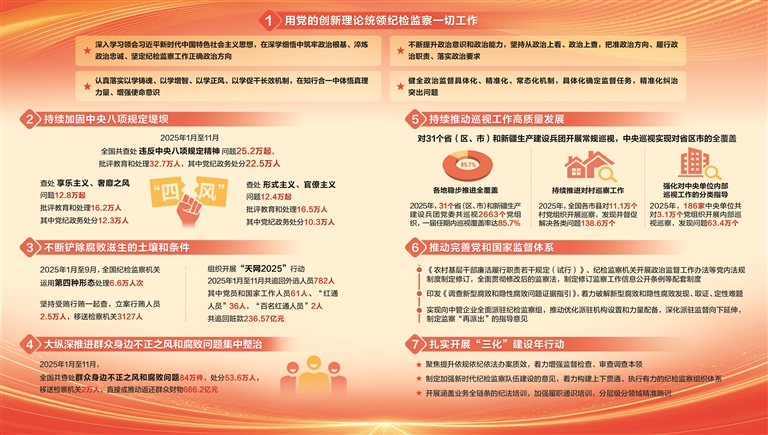
特别报道|2025:纪检监察工作高质量发展取得新进展新成效
Zhong Yang Ji Wei Guo Jia Jian Wei Wang Zhan· 2026-01-11 01:58
Core Viewpoint - The article emphasizes the importance of political supervision in ensuring the implementation of the Party's political line and maintaining a high-pressure stance against corruption and misconduct within the Party and government institutions [3][20]. Group 1: Political Supervision - Political supervision is crucial for maintaining the centralized leadership of the Party and ensuring that major decisions and directives from the Party are implemented effectively [3][4]. - The focus of political supervision should be on specific tasks and responsibilities, ensuring that the directives from the Party are translated into actionable plans [4][6]. - Various regions, such as Beijing and Zhejiang, have implemented targeted political supervision measures to ensure compliance with Party directives and enhance governance [5][6]. Group 2: Anti-Corruption Efforts - The article highlights the ongoing efforts to combat corruption, particularly in local governance, by addressing both minor and major corruption issues [20][28]. - There is a strong emphasis on the need for collaboration among different departments to effectively tackle corruption and misconduct [24][29]. - The article notes that significant progress has been made in addressing corruption linked to public services, with various regions reporting successful interventions [32][33]. Group 3: Integration of Supervision Mechanisms - The integration of various supervisory mechanisms is essential for enhancing the effectiveness of anti-corruption efforts, with a focus on collaboration between different supervisory bodies [39][40]. - The establishment of clear communication and coordination among supervisory entities is emphasized to ensure a unified approach to governance and oversight [41][42]. - The article discusses the importance of grassroots supervision in extending the reach of anti-corruption measures and ensuring accountability at all levels of government [43][44]. Group 4: Continuous Improvement and Education - Continuous education and training for supervisory personnel are highlighted as vital for maintaining high standards of governance and accountability [45][46]. - The article stresses the need for ongoing learning and adaptation of supervisory practices to meet the evolving challenges in governance and corruption prevention [47].