
脱贫攻坚成果巩固

Search documents
独龙族县长李勇的“幸福升级账”
Xin Lang Cai Jing· 2026-02-23 08:22
Core Viewpoint - The article highlights the significant development and transformation of Gongshan County, particularly focusing on the economic upliftment and cultural heritage revival of the Dulong ethnic group, showcasing a shift from poverty to a more prosperous lifestyle through tourism and local craftsmanship [1][3]. Economic Development - Gongshan County has implemented over 12,000 measures for industrial support and employment assistance during the 14th Five-Year Plan period, achieving a risk elimination rate of 53.1% for three monitored groups [3]. - The county's GDP increased from 1.923 billion yuan in 2020 to 2.629 billion yuan in 2025, indicating robust economic growth [3]. Tourism Growth - By 2025, Gongshan County is expected to receive a cumulative total of 1.9595 million tourists, generating a total tourism expenditure of 1.288 billion yuan [4]. - The establishment of the Gongdang Mountain Paragliding Base and the first China Nujiang Bingzhonglu Paragliding Carnival are anticipated to significantly boost the low-altitude tourism industry [3]. Cultural Heritage and Craftsmanship - The traditional Dulong blanket, once used for warmth, has gained popularity and is now sold in major cities like Shanghai and Guangzhou, as well as internationally in countries like the UK and the Netherlands [4]. - By 2025, over 500 women from cooperatives will be involved in the weaving of Dulong blankets, transforming traditional skills into tangible income [4]. Community Engagement and Development - The county has established 13 upgraded "border happiness villages" and one ethnic unity progress demonstration town, focusing on community involvement in development discussions [5]. - The local government aims to consolidate and expand the achievements of poverty alleviation while effectively connecting them with rural revitalization efforts [5].

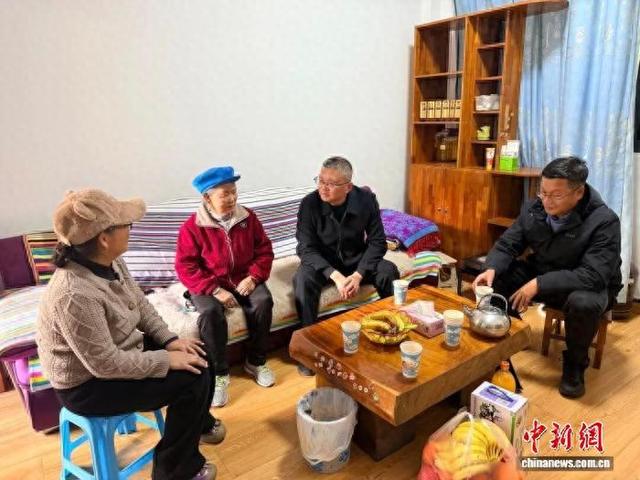
刘国中在贵州调研时强调扎实抓好常态化帮扶各项工作持续巩固拓展脱贫攻坚成果
Xin Hua She· 2026-01-23 11:55
Core Insights - The central government emphasizes the importance of implementing Xi Jinping's directives on rural work and ensuring the continuity of poverty alleviation efforts as part of the rural revitalization strategy [1][2] Group 1: Policy Implementation - Liu Guozhong stresses the need for a smooth transition in policies and work to prevent large-scale poverty and ensure effective monitoring and assistance [2] - The focus is on scientifically and accurately identifying assistance targets and categorizing support measures to enhance the effectiveness of monitoring and assistance [2] - There is a call to develop assistance industries based on local resources and market demand, while also improving asset supervision of assistance projects [2] Group 2: Infrastructure and Public Services - Continuous improvement of infrastructure conditions and public service levels in key rural revitalization counties is highlighted as essential for supporting local economic development [2] - The government aims to strengthen post-relocation support in areas such as industry development, grassroots governance, and public services [2] Group 3: Long-term Commitment - Liu Guozhong emphasizes that consolidating and expanding poverty alleviation achievements is a long-term task that requires maintaining overall policy stability and preventing complacency [2] - The importance of a five-level leadership approach to regular assistance and enhancing social support mechanisms is reiterated [2]
事关粮食生产与“菜篮子”产品供应 发布会最新剧透
Jing Ji Guan Cha Wang· 2026-01-22 02:09
Group 1 - The core focus of the press conference is on accelerating agricultural modernization and promoting rural revitalization, with specific attention to grain production stability and poverty alleviation efforts [1][2] - China's grain production has remained stable at over 1.4 trillion jin for two consecutive years, raising questions about the strategies for maintaining this high level of output in 2023 [1] - The government aims to integrate various agricultural practices and implement a new round of actions to enhance grain production capacity, emphasizing the need for effective measures to ensure food security [1] Group 2 - The transition from poverty alleviation to rural revitalization has entered a new phase, with a focus on maintaining support for vulnerable households to prevent a return to poverty [1] - The government is expected to adjust existing support policies based on new circumstances to ensure continuous assistance for households facing challenges due to health issues, accidents, or natural disasters [1] - The impact of recent cold weather on the production of essential food items, such as meat, eggs, milk, fruits, and vegetables, is a key concern as the market prepares for the upcoming Spring Festival [2]
保障困难群众近300万人次
Xin Lang Cai Jing· 2026-01-17 17:41
Core Insights - The province has made significant progress in improving the social assistance system during the "14th Five-Year Plan" period, transitioning from basic survival support to risk prevention and development promotion [1][2] - A comprehensive and efficient social assistance framework has been established, covering various levels and categories of support [1] Group 1: Social Assistance Improvements - The dynamic adjustment mechanism for assistance standards has been established, with urban minimum living standards reaching an average of 739 yuan per month, and rural standards at 5,808 yuan per year, representing increases of 15.5% and 21% respectively compared to the end of the "13th Five-Year Plan" [1] - The basic living standard for severely disabled individuals has averaged 1,108 yuan per month, with a growth rate of 15.4% [1] - Temporary assistance has been significantly enhanced, with a 12-hour response and 24-hour assistance mechanism established, and the annual assistance cap raised to five times the urban minimum living standard [1] Group 2: Financial Commitment and Impact - A total of approximately 15.9 billion yuan has been invested in various types of assistance over the past five years, benefiting nearly 3 million individuals and ensuring a solid social safety net [2] - The province aims to include 122,900 individuals who have been lifted out of poverty and 47,000 at risk of falling back into poverty into the minimum living and special assistance programs by the end of December 2025, thereby preventing large-scale poverty recurrence [2]
加快农业农村现代化扎实推进乡村全面振兴为全市高质量发展现代化建设提供坚实支撑
Xi An Ri Bao· 2026-01-16 02:44
Core Viewpoint - The meeting emphasized the importance of modernizing agriculture and rural areas, aligning with Xi Jinping's directives for the "Three Rural Issues" work, and aims to enhance urban-rural integration and rural revitalization efforts [1][2]. Group 1: Agricultural Modernization - The meeting highlighted the need to firmly uphold food security responsibilities and maintain arable land boundaries while advancing key agricultural industry chains [2]. - There is a focus on improving the efficiency of technology transfer and application to enhance overall agricultural production capacity and quality [2]. Group 2: Poverty Alleviation and Support Systems - The meeting stressed the importance of consolidating and expanding the achievements of poverty alleviation, optimizing the regular support system, and ensuring that large-scale poverty does not reoccur [2]. - It was noted that a development-oriented support approach should be prioritized [2]. Group 3: Rural Development and Environment - The meeting called for the application of the "Ten Million Project" experience to optimize rural land use and improve living conditions in rural areas [2]. - There is a commitment to deepen rural reforms and accelerate the establishment of a modern agricultural management system [2]. Group 4: Political Responsibility and Planning - The meeting underscored the necessity of implementing political responsibilities for rural revitalization at all levels and selecting capable leaders for village committees [2]. - A high-quality plan for the agricultural and rural sectors for the 14th Five-Year Plan period is to be developed, with a focus on key tasks for the year ahead [2].
传达学习习近平总书记重要指示精神 研究“十五五”规划《纲要草案》编制等工作
Zheng Zhou Ri Bao· 2026-01-09 00:50
Group 1 - The meeting emphasized the importance of modernizing agriculture and rural areas, aiming for comprehensive rural revitalization and urban-rural integration [1] - It highlighted the need to ensure food security, maintain arable land boundaries, and enhance agricultural production capacity and quality [1] - The meeting discussed the importance of consolidating poverty alleviation achievements and implementing policies to increase farmers' income while preventing large-scale poverty [1] Group 2 - The meeting addressed the preparation of the city's "14th Five-Year" planning outline, stressing the incorporation of national and local strategic intentions [2] - It called for setting indicators, arranging policies, and planning projects to achieve qualitative and reasonable quantitative economic growth [2] - The meeting focused on addressing wage arrears, emphasizing a people-centered development approach and the need for coordinated actions to resolve wage disputes [2]
筑牢根基补齐短板守牢底线
Xin Lang Cai Jing· 2026-01-05 20:49
Core Viewpoint - Yunnan province is focusing on consolidating and expanding the achievements of poverty alleviation while effectively connecting with rural revitalization, emphasizing policy support, employment, and monitoring to ensure sustainable development in previously impoverished areas [1][2]. Group 1: Economic Development and Employment - Over the past five years, Yunnan has aimed to increase income for the population by developing 2 to 3 leading industries in each poverty-stricken county, resulting in an average annual growth of 8.6% in per capita disposable income for rural residents in these counties, projected to exceed 16,000 yuan in 2024 [2]. - The introduction of the "leading enterprises + village collective economy + farmers" model in Nujiang Lisu Autonomous Prefecture has transformed local natural conditions into industrial advantages, particularly through the grass fruit industry, which has expanded to 1.114 million acres [2]. - The establishment of diverse industries in villages, such as tourism in Deqen County, has led to significant income increases, with projected tourism revenue reaching 8.7 million yuan in 2024 for the village of Laomudeng [2]. Group 2: Social Welfare and Healthcare - Yunnan has maintained a medical insurance coverage rate of over 99% for the impoverished population, benefiting 160 million rural low-income individuals and reducing medical expenses by nearly 56.6 billion yuan [4]. - The province has prioritized education to break the cycle of poverty, with over 26.3% of fiscal expenditure allocated to education, resulting in the establishment of multiple schools in resettlement areas [5]. - Housing and water safety improvements have been significant, with rural self-supply water coverage reaching 93.6%, ensuring better living conditions for the population [5]. Group 3: Monitoring and Support Mechanisms - Yunnan has established a dynamic monitoring and support mechanism to prevent poverty, with 25,000 monitoring grids covering 263,500 individuals, leading to the elimination of risks for over 235,400 individuals [6][7]. - The implementation of the "1223" work mechanism in Nujiang focuses on low-income groups and those at risk of falling back into poverty, providing targeted assistance through various programs [7]. - The province has adopted innovative monitoring methods, including a three-tier grid governance model, to ensure early detection and intervention for at-risk households [7].
视频丨交卷!脱贫地区大变样 这份答卷超亮眼
Xin Lang Cai Jing· 2025-12-27 02:14
Core Insights - The article emphasizes the successful transition from poverty alleviation to rural revitalization in China, highlighting the achievements over the past five years in maintaining stability and preventing large-scale poverty [1] Group 1: Achievements in Poverty Alleviation - A comprehensive safety net has been established, with over 7 million monitoring subjects identified and supported to eliminate poverty risks by the end of September [1] - The total output value of industries in poverty-stricken counties has surpassed 1.7 trillion yuan, with nearly three-quarters of the impoverished population linked to new agricultural business entities [3] - The employment scale for the impoverished population has remained stable at over 30 million, with various channels facilitating local employment and improving job quality and income levels [5] Group 2: Income Growth and Financial Support - The per capita disposable income of rural residents in poverty-stricken counties has increased from 12,588 yuan in 2020 to 17,522 yuan in 2024, with growth rates exceeding the national average for four consecutive years [7] - A total of 850.5 billion yuan has been allocated by the central government for rural revitalization, focusing on infrastructure and public services in 160 key support counties and 35,000 resettlement areas [9] Group 3: Future Support and Policy Continuity - Post-transition, support policies will not abruptly cease; they will be integrated into the rural revitalization strategy for ongoing implementation [11] - The approach will combine stable baseline support with targeted adjustments, ensuring a mix of safety net measures and developmental assistance [13] - Data-driven strategies will be employed to identify households at risk of falling back into poverty due to unforeseen circumstances, providing tailored support packages [15] - Developmental assistance will focus on empowering the impoverished population through industry and employment support, fostering self-reliance and motivation for a better life [17]
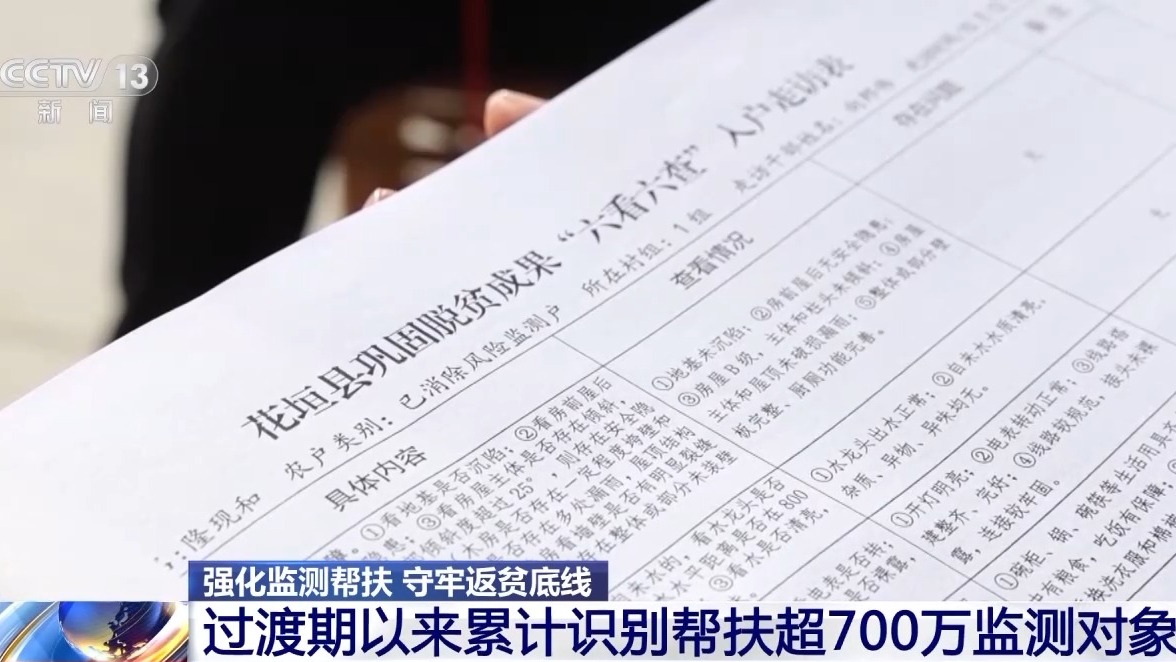
因地制宜发展乡村特色产业(编辑手记)
Ren Min Ri Bao· 2025-12-24 22:18
Group 1 - The core viewpoint emphasizes the need to sustain and expand poverty alleviation efforts, integrating regular support into the rural revitalization strategy to prevent large-scale poverty recurrence [1] - The article highlights that nearly one-third of the labor force in poverty alleviation areas is employed flexibly, facing issues such as job instability and insufficient protection, indicating ongoing risks of poverty [1] - As of the end of October this year, over 7 million monitoring subjects have been identified for support, successfully eliminating poverty risks, with the scale of employed labor from poverty alleviation areas maintained at over 30 million annually [1] Group 2 - The strategy involves consolidating, upgrading, revitalizing, and adjusting projects to enhance the quality and comprehensive benefits of supporting industries, thereby improving the overall industrial development [2] - The focus is on developing local characteristic industries tailored to specific regions, ensuring that the livelihoods of the impoverished population continue to improve [2]
德令哈市力推驻村帮扶工作提质效
Xin Lang Cai Jing· 2025-12-23 20:11
Group 1 - The core viewpoint emphasizes the importance of village assistance work in consolidating poverty alleviation achievements and promoting comprehensive rural revitalization in Delingha City, Haixi Mongolian and Tibetan Autonomous Prefecture [1] - A total of 65 village cadres have been selected, with 66% holding a bachelor's degree or higher and 68% being party members [1] - The city has implemented a "four-in-one" management system for village cadres, enhancing the quality and efficiency of assistance work through regular meetings and reminders [1] Group 2 - A training program for village first secretaries and work team members has been organized to improve their capabilities, with 29 first secretaries receiving additional training [2] - Regular supervision of 22 village work teams is conducted to ensure adherence to regulations and responsibilities [2] - Financial support includes a daily subsidy of 60 yuan, totaling 632,000 yuan, along with insurance purchases at 1,600 yuan per person per year and 132,000 yuan in慰问金 [2]