城乡融合

Search documents
好书推荐·赠书|《前瞻“十五五”》
清华金融评论· 2026-03-27 10:02
Core Viewpoint - The article emphasizes the importance of the "14th Five-Year Plan" period as a critical phase for achieving socialist modernization and addressing the challenges posed by global changes, focusing on innovation, consumption, and structural reforms to drive economic growth [3][4]. Summary by Sections Introduction: New Framework for Growth - The need for a new growth framework is highlighted, focusing on innovation and consumption as key drivers for economic expansion [6]. Chapter 1: Innovation and Consumption - Emphasizes the potential for greater growth through embracing innovation and enhancing consumption [6]. Chapter 2: Systemic Structural Transformation - Discusses the transition towards modernization through systemic structural changes, including supply-side and demand-side transformations [7][10]. Chapter 3: Key to Boosting Consumption Demand - Analyzes why demand remains insufficient despite stimulus efforts, referencing Keynesian theory and historical contexts [8][10]. Chapter 4: Achieving Consumption Prosperity - Outlines strategies for promoting consumption during the "14th Five-Year Plan" period, including international experiences and macro policy adjustments [9][10]. Chapter 5: Industrial Upgrading Beyond $10,000 Income - Examines the challenges and experiences of industrial transformation as income levels exceed $10,000 per capita [10][11]. Chapter 6: High-Level Opening for High-Income Status - Reviews the role of openness in driving rapid economic development and enhancing international competitiveness [11][13]. Chapter 7: Income Distribution Reform for Inclusive Growth - Discusses the importance of income distribution reforms in promoting inclusive economic growth [11][13]. Chapter 8: Coordinated Reforms for Consumption, Social Security, and Stock Market Stability - Proposes a coordinated approach to enhance consumption rates and stabilize the stock market [11][12]. Chapter 9: Financing Transformation and Industrial Upgrading - Explores the mechanisms through which financial markets can support economic and social development [12][13]. Chapter 10: Exchange Rate Mechanism Reform and RMB Internationalization - Discusses the current state and future recommendations for RMB internationalization during the "14th Five-Year Plan" [12][13]. Chapter 11: Capital Market Development Strategies - Highlights the strategic significance of developing capital markets and the challenges faced [12][13]. Chapter 12: AI and Deep Integration with the Real Economy - Reviews the significant advancements in AI and its implications for the real economy [12][19]. Chapter 13: Pathways to Green Growth - Identifies innovation as a fundamental driver for green transformation and outlines structural challenges [12][19]. Chapter 14: Building New Urban-Rural Integration - Discusses the characteristics and policy choices for achieving urban-rural integration in China [12][19].


刘世锦谈“十五五”:消费须引领,打破供强需弱困局|宏观经济
清华金融评论· 2026-03-06 10:37
Core Viewpoint - The "15th Five-Year Plan" period is crucial for China's economic growth to cross the threshold of high-income countries and to lay a solid foundation for the basic realization of socialist modernization. This period requires a shift from the existing growth framework to a new one, with significant changes in the internal and external environment, demand-supply conditions, and growth dynamics [1][7]. Group 1: Addressing Shortcomings and Strengthening Advantages - The urgent task is to address the issue of insufficient consumer demand, which has been a persistent contradiction since the Industrial Revolution. Historical patterns show that income disparity and an inadequate social security system contribute to this consumption shortfall [3][4]. - Emphasis is placed on leveraging advantages such as catch-up potential, new technological revolutions characterized by digital and green technologies, and the advantages of a super-large market economy. These advantages are crucial for maintaining and enhancing China's position in the new technological revolution [4][5]. Group 2: Structural Upgrades in Consumption and Industry - The consumption structure needs to shift from being investment-driven to consumption-led, aiming to close the gap where consumption accounts for about 20 percentage points less of GDP compared to the international average. This includes increasing domestic and international consumption, particularly in sectors like education, healthcare, and cultural services [8][9]. - The industrial structure will not necessarily see a stable or increased share of manufacturing; instead, the focus will be on developing high-tech and knowledge-intensive service industries that complement manufacturing. The transition will require a significant reduction in overcapacity, particularly in heavy industries [9]. Group 3: Trade and Financial Structure Transformation - In foreign trade, maintaining a strong export momentum is essential, but a large trade surplus indicates reduced domestic consumption, which is unsustainable. A strategy for balanced trade is necessary, emphasizing increased imports and the use of the Renminbi for payments [10][11]. - The financial structure is evolving from a traditional banking focus to a modern capital market orientation, with an increased role for capital markets in supporting innovation and addressing the needs of an aging population through institutional investments [12]. Group 4: Urban-Rural Integration and Income Distribution - Urbanization is slowing as the urban population approaches 70%, leading to a need for reforms that address disparities in public services and rights between urban and rural populations. This integration is vital for enhancing economic growth and efficiency [13][14]. - Efforts to reduce income inequality are highlighted, with a goal to lower the Gini coefficient to 0.4 or below and to double the size of the middle-income group to 800-900 million people, ensuring they constitute over half of the total population [14][15]. Group 5: Role of Macroeconomic Policy and Establishing a New Growth Framework - While macroeconomic policies have adopted a loose stance, they are only effective in the short term and cannot provide the foundational momentum for economic growth. Structural reforms are necessary to address deeper issues within the economy [16][18]. - The new growth framework should transition from investment and export-driven growth to innovation and consumption-driven growth, addressing the structural bias of insufficient demand while leveraging China's strengths in innovation and industrial development [18].
淳安县深化“水”和“山”的价值转化 靶向发力缩小“三大差距”
Hang Zhou Ri Bao· 2026-02-28 02:05
Group 1 - The core message emphasizes the importance of a proactive work atmosphere and quick execution in achieving development goals, particularly in the context of the "Six Major Actions" and narrowing the "Three Major Gaps" [1] - In the past year, the region has shown significant progress in ecological protection and economic development, with key economic indicators performing better than the previous year and exceeding provincial and municipal averages [1] - The current year is seen as a critical period for the region, focusing on environmental protection and transforming ecological value into economic benefits [1] Group 2 - The region plans to enhance industrial development by focusing on strengthening characteristic industries and promoting collaboration among the primary, secondary, and tertiary sectors [2] - Urban-rural integration is identified as a core development path, with initiatives aimed at improving living standards and reducing disparities through various measures [2] - The release of the "No. 1 Document" outlines 104 key tasks aimed at promoting urban-rural integration, narrowing the "Three Major Gaps," and advancing common prosperity [2]
苏州市政协欢送住苏州全国政协委员赴京
Su Zhou Ri Bao· 2026-02-28 00:30
Core Viewpoint - The National Committee of the Chinese People's Political Consultative Conference (CPPCC) will convene its fourth session on March 4 in Beijing, with representatives from Suzhou attending to discuss key issues and contribute to national development strategies [1] Group 1 - The Suzhou representatives, Zhang Qiao, Song Qing, and Wu Depei, are tasked with bringing the voices and concerns of the local populace to the national stage [1] - The chairman of the Suzhou Municipal Committee, Zhu Min, emphasized the importance of the CPPCC meeting in the political life of the country and encouraged the representatives to actively participate in discussions [1] - The focus areas for the representatives include Suzhou's new industrialization, "AI + manufacturing," and the integration of the Yangtze River Delta region, aiming to position Suzhou as a national advanced manufacturing base and a regional hub for technological innovation [1] Group 2 - The representatives expressed their commitment to fulfilling their duties, adhering to meeting protocols, and ensuring that the concerns of Suzhou's citizens are effectively communicated at the conference [1] - They aim to contribute practical suggestions and insights on topics such as industrial upgrading, social welfare, and urban-rural integration [1]
雪国慢火车 “流动中国”里的最美风景
Zhong Guo Jing Ji Wang· 2026-02-27 14:49
Core Viewpoint - The article highlights the significance of slow trains in enhancing connectivity and supporting rural development, particularly in remote areas like the snow-covered villages of Northeast China, showcasing their role in promoting both urban and rural prosperity [1][2]. Group 1: Slow Train Impact - The slow train from Tonghua to Linjiang (4349/4350) serves as a vital link for local villagers, facilitating their travel and carrying local products to urban markets, thus enriching city dwellers' dining experiences [1]. - The slow train fosters a two-way flow of goods and information between urban and rural areas, contributing to rural revitalization and urban prosperity, while transforming the ecological resources of the countryside into developmental benefits [1][2]. Group 2: Community and Infrastructure - Each small station along the slow train route acts as a warm hub for basic life needs, ensuring that remote communities have access to essential services such as education and healthcare, thereby embodying a people-centered approach to modernization [2]. - The extension of transportation routes symbolizes a broader vision for national development, with the slow train driving tourism in the snowy villages and converting ecological beauty into tangible benefits for local residents [2]. Group 3: Future Outlook - The ongoing development of slow trains reflects a commitment to improving the quality of life for citizens, emphasizing that national progress is measured through the happiness and unity of the people [3].
一图读懂丨西安市2026年“账本”安排情况
Xin Lang Cai Jing· 2026-02-27 10:37
Core Viewpoint - The budget report emphasizes a focus on zero-based budgeting, performance enhancement, and strict fiscal discipline to ensure sustainable economic development and social welfare [12][11]. Budget Overview - General public budget revenue is set at 100.9 billion, reflecting a 3% increase, while expenditures are planned at 170.069 billion [14]. - Government fund budget revenue is projected at 124.55 billion, with expenditures of 112.582 billion [14]. - State-owned capital operating budget revenue is estimated at 0.0596 billion, with expenditures of 0.0831 billion [14]. - Social insurance fund budget revenue is expected to be 56.017 billion, with expenditures of 49.132 billion [14]. Key Expenditure Areas - Education spending is budgeted at 29.17354 million, with an increase of 3.3% [15]. - Science and technology spending is set at 7.95808 million, reflecting a 2.5% increase [15]. - Cultural, tourism, sports, and media spending is budgeted at 3.11146 million, with a 7.1% increase [15]. - Social security and employment spending is planned at 24.12619 million, with a 2.2% increase [15]. - Health spending is budgeted at 13.94311 million, with an 8.8% increase [15]. - Resource exploration and industrial information spending is set at 10.00070 million, with an 8.8% increase [15]. - Business services spending is projected at 5.22084 million, showing a significant increase of 33.8% [15]. Strategic Measures - The budget aims to support consumption and investment to consolidate economic recovery [5][16]. - It emphasizes the cultivation of new productive forces and the construction of a modern industrial system [5][16]. - The budget also focuses on promoting urban-rural integration and improving living standards for citizens [5][17]. - There is a commitment to enhance urban capabilities and accelerate urban governance modernization [5][17]. Fiscal Management - The report highlights the importance of strict fiscal management and collaboration between fiscal and tax policies [18]. - It includes measures to activate various financial resources and deepen fiscal reforms for better management [18]. - The implementation of zero-based budgeting and performance management is emphasized to ensure effective allocation of resources [18].

新春连开两场大会,阳江打出一套重磅“组合拳”
Nan Fang Nong Cun Bao· 2026-02-26 12:35
Core Viewpoint - Yangjiang is launching a series of initiatives aimed at high-quality development through the integration of manufacturing and service industries, as well as enhancing agricultural productivity and rural development [8][10][28]. Group 1: High-Quality Development Initiatives - The city held two significant meetings focused on high-quality development and rural work, emphasizing a dual approach of urban and rural integration [4][5][6]. - The first meeting highlighted the importance of promoting the synergy between manufacturing and service industries, which is seen as essential for achieving industrial advancement and embracing technological trends [10][11][16]. - Yangjiang's strategy includes three major actions: "Establishing Pillars," "Renewing," and "Cultivating," aimed at strengthening key industries such as green energy, advanced materials, and modern agriculture [17][18][24]. Group 2: Agricultural Development - The second meeting underscored the significance of agricultural development, aiming to enhance the strength of agriculture, beautify rural areas, and increase farmers' wealth [28][29]. - Yangjiang's agricultural sector is projected to achieve a total output value growth of 6.4% by 2025, marking the highest growth rate in nearly 20 years [30][31]. - The city is recognized for its leading production of specialty agricultural products, including oysters and seawater fish seedlings, which positions it favorably within the province [33]. Group 3: Service Quality Enhancement - The year 2024 is designated as "Service Quality Year," focusing on improving the business environment and enhancing service efficiency across the city [42][45]. - Various districts are implementing specific measures to enhance service quality, such as streamlining processes and improving responsiveness to business needs [47][48][51]. - The shift from merely expediting approvals to providing comprehensive support throughout the project lifecycle is a key focus, aiming to elevate the business environment from "convenient" to "satisfactory" [54][55]. Group 4: Economic Growth Targets - Each district has set specific GDP growth targets, with the Yangjiang Binhai New District aiming for over 7% growth by 2026, while other districts target growth rates between 5% and 6% [58][60]. - Initiatives include industrial action plans and the development of new industries such as laser additive manufacturing and smart appliances, alongside traditional sectors [61][62]. - The focus on integrating cultural and ecological resources with new industrialization and tourism is expected to enhance product value and drive economic growth [68].

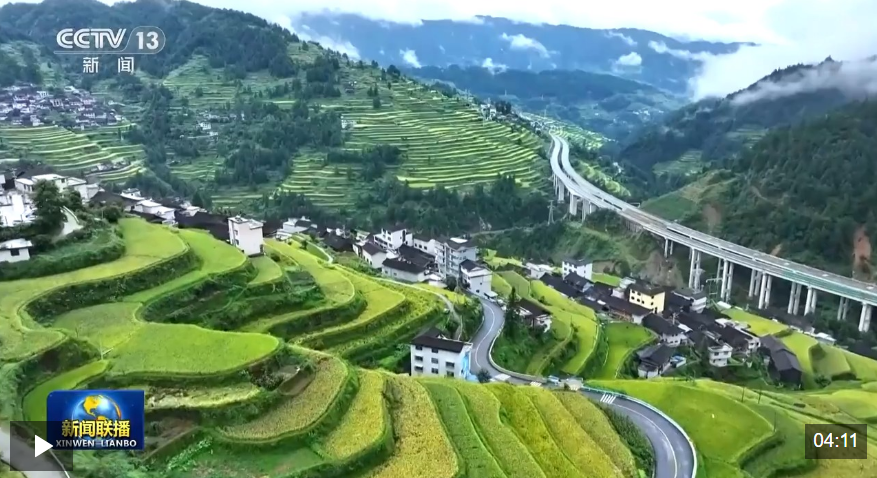
新思想引领新征程·非凡“十四五”丨“四好农村路”赋能城乡融合 助力乡村全面振兴
Yang Shi Xin Wen Ke Hu Duan· 2026-02-25 07:01
Core Viewpoint - The development of rural roads in China is crucial for promoting rural revitalization, enhancing connectivity between urban and rural areas, and stimulating domestic consumption and demand [3][5][21]. Group 1: Rural Road Development - The "Four Good Rural Roads" initiative aims to ensure high-quality development of rural roads, which are essential for both economic growth and the well-being of farmers [5][9]. - Since the 18th National Congress, significant progress has been made in rural road construction, with a focus on building, managing, maintaining, and operating these roads sustainably [5][11]. - During the "14th Five-Year Plan" period, rural road construction has seen the largest investment in five years, with approximately 850,000 kilometers of new and renovated rural roads, enhancing safety and convenience for rural travel [11][17]. Group 2: Economic Impact - Improved rural roads have transformed previously remote villages into popular tourist destinations, effectively linking rural areas to national markets and revitalizing local economies [6][19]. - The total length of rural roads in China has surpassed 4.64 million kilometers, making it the largest rural transportation infrastructure network globally, serving the most people and providing significant public benefits [15][21]. - The annual maintenance funding for rural roads has reached around 100 billion yuan, with over 94.8% of rural roads rated as good or medium quality, reflecting a shift towards more collaborative and efficient road management [17][22]. Group 3: Future Directions - The "15th Five-Year Plan" emphasizes the need to integrate traditional and new infrastructure development, continuing the push for high-quality rural road construction to support common prosperity and modernization of agriculture and rural areas [22].
95亿人次里的“新”年味儿(每周经济评论)
Ren Min Ri Bao· 2026-02-24 22:18
Core Insights - The 2026 Spring Festival travel period is expected to see a record high of 9.5 billion trips, reflecting a strong economic pulse and the vast potential of China's domestic market [1][2][3] Group 1: New Trends in Travel - Reverse Spring Festival travel is emerging as a new trend, with many young people bringing their parents to big cities for the holiday. The booking volume of flights for travelers aged 60 and above has increased by over 35% year-on-year, with a preference for first-tier and new first-tier cities [1] - The focus has shifted from material satisfaction to spiritual resonance, with a growing interest in cultural and tourism experiences. For instance, the popularity of the "Only Henan·Drama Fantasy City" event during the Spring Festival has surged by 2.5 times year-on-year [1] Group 2: New Consumption Trends - The consumption landscape is evolving, with a stronger presence of domestic trends. Events like the Shanghai Yuyuan Lantern Festival are incorporating trendy IPs, and non-heritage market activities in Shaanxi and Henan are attracting visitors [2] - The demand for diverse travel experiences is rising, with significant growth in duty-free shopping during the Spring Festival. The Haikou Customs reported over 1.1 billion yuan in duty-free shopping and more than 190,000 shoppers, representing increases of 6.3% and 26% respectively [2] Group 3: Enhanced Service Quality - The Spring Festival travel period poses challenges for transportation capacity and service quality. In response, various measures have been implemented to improve convenience, such as a new phone booking service for elderly travelers and expanded pet transport services [3] - The introduction of "green trains" and "slow trains" aims to meet the travel needs of people in remote areas, enhancing accessibility and service inclusivity [3]
农业农村现代化要抓住农民这个关键
Xin Lang Cai Jing· 2026-02-18 04:59
Core Viewpoint - The essence of modernization in China is "human modernization," focusing on the comprehensive development of people, particularly farmers, which is crucial for achieving agricultural and rural modernization [1][2]. Group 1: Achievements in Agricultural and Rural Modernization - Significant historical achievements have been made in agricultural and rural modernization, including improved irrigation facilities, enhanced mechanization, and increased coverage of quality seed promotion [2]. - The transition from food scarcity to food choice freedom has been accomplished, with approximately 20% of the world's population being fed by only 9% of global arable land [2]. - Rural infrastructure improvements, such as road hardening, electricity upgrades, and access to safe drinking water, have transformed rural living conditions [2]. Group 2: Challenges Faced by Farmers - Farmers face slow improvements in mindset, skills, and rights protection, which hampers their integration into modern economic systems [3]. - Many farmers struggle with adapting to digital economy and modern agricultural practices due to a lack of skills and knowledge [3]. - The dual urban-rural structure creates barriers for farmers, limiting their opportunities for development and integration into urban areas [4][10]. Group 3: Systemic Barriers and Inequalities - The urban-rural dual structure perpetuates systemic barriers, affecting farmers' access to public services, social security, and property rights [10]. - Farmers often experience difficulties in accessing equal opportunities in education, healthcare, and housing, leading to a sense of marginalization [4][7]. - The lack of a comprehensive social security system for rural residents exacerbates inequalities, particularly for migrant workers [10]. Group 4: Need for Human-Centric Development - The focus of agricultural modernization is shifting from material accumulation to the comprehensive development of people, necessitating increased investment in human capital [13][19]. - Policies should prioritize the enhancement of farmers' rights, skills, and overall development to foster sustainable agricultural modernization [19]. - A robust training system is essential to equip farmers with the necessary skills for modern agricultural practices and digital economy [15][19]. Group 5: Policy Recommendations - Reforming the household registration system and improving access to public services for rural residents is crucial for equitable development [14]. - Establishing a lifelong vocational training system tailored to market needs can significantly enhance farmers' skills and adaptability [15]. - Encouraging the flow of financial resources into rural areas and supporting new agricultural business models can help bridge the gap between urban and rural economies [18][19].