Diffusion Policy

Search documents
具身智能之心技术交流群成立了!
具身智能之心· 2025-11-26 10:00
Group 1 - The establishment of a technical exchange group focused on embodied intelligence, covering areas such as VLA, VLN, remote operation, Diffusion Policy, reinforcement learning, VLA+RL, sim2real, multimodal large models, simulation, motion control, target navigation, mapping and localization, and navigation [1] - Interested individuals can add the assistant's WeChat AIDriver005 to join the community [2] - To expedite the joining process, it is advised to include a note with the institution/school, name, and research direction [3]

从纯小白到具身算法工程师的打怪之路
具身智能之心· 2025-11-20 04:02
Core Insights - The article discusses the evolution and research directions in Visual Language Action (VLA), Visual Language Navigation (VLN), and reinforcement learning in robotics, highlighting the importance of these technologies in enhancing robot capabilities and performance [1][2][5][9]. VLA Direction - VLA systems consist of visual perception processing, language instruction understanding, and action strategy networks, categorized into three paradigms: explicit end-to-end VLA, implicit end-to-end VLA, and hierarchical end-to-end VLA [1][2]. - Explicit end-to-end VLA compresses visual and language information into a joint representation, which is then mapped to action space, leveraging various architectures and models to achieve good performance [1]. - Implicit end-to-end VLA focuses on interpretability by predicting future states using video diffusion models, enhancing the potential for scaling VLA models [2]. - Hierarchical end-to-end VLA aims to utilize the characteristics of large models to improve generalization while maintaining efficiency for downstream execution [2]. VLN Direction - VLN systems are composed of visual language encoders, environmental history representation, and action strategies, requiring effective information compression from visual and language inputs [5][6]. - The choice of encoder and whether to project visual and language representations into a common space are critical issues, with current trends favoring pre-trained models on large datasets and the use of large language models (LLM) for instruction decomposition [6]. - VLN robots operate in a sequential decision-making task, accumulating historical information to inform future actions, with implicit methods representing past information as latent variables [6]. - Object Navigation within VLN emphasizes identifying target objects based on category information, reducing the need for detailed instructions and enhancing exploration capabilities [7]. Reinforcement Learning & Legged Robots - Reinforcement learning is crucial for legged robots, covering various aspects such as kinematics, dynamics, multi-modal sensor fusion, and advanced algorithms for task adaptation [9][10]. - Key areas include gait planning, balance control for bipedal robots, and the application of deep reinforcement learning and imitation learning for multi-task training [10]. - Techniques like domain randomization and safety mechanisms are essential for ensuring successful real-world deployment of robotic systems [10]. Diffusion Policy - The introduction of diffusion models in robotics has led to significant advancements, with the Diffusion Policy achieving an average performance improvement of 46.9% in various simulation environments [21][22]. - The Robotic Diffusion Transformer (RDT), with 1.2 billion parameters, showcases strong zero-shot generalization capabilities and the ability to learn new skills with minimal examples [22]. - The application of diffusion strategies is expanding beyond robotic manipulation to areas like autonomous navigation and dexterous grasping, enhancing task success rates through real-time environmental adaptation [22][23]. - Recent developments in diffusion strategies include advancements in 3D applications and the integration of safety and online reinforcement learning, opening new research avenues [23].
从世界模型到VLA再到强化,具身大小脑算法原来是这样的!
具身智能之心· 2025-10-26 04:02
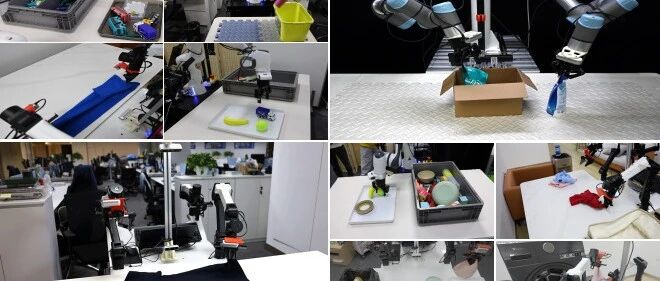
Core Insights - The article discusses the evolution and current state of embodied intelligence, focusing on the roles of the brain and cerebellum in robotics, where the brain handles perception and planning, while the cerebellum is responsible for execution [3][10]. Technical Evolution - The development of embodied intelligence has progressed through several stages, starting from grasp pose detection, moving to behavior cloning, and now advancing to diffusion policy and VLA models [7][10]. - The first stage focused on static object grasping with limited decision-making capabilities [7]. - The second stage introduced behavior cloning, allowing robots to learn from expert demonstrations but faced challenges in generalization and error accumulation [8]. - The third stage, marked by the introduction of diffusion policy, improved stability and generalization by modeling action sequences [8]. - The fourth stage, emerging in 2025, explores the integration of VLA models with reinforcement learning and world models to enhance robots' predictive and interactive capabilities [9][10]. Current Trends and Applications - The integration of VLA with reinforcement learning enhances robots' trial-and-error learning and self-improvement abilities, while the combination with world models allows for future prediction and better planning [10]. - The article highlights the growing demand for embodied intelligence applications across various sectors, including industrial, home, restaurant, and medical rehabilitation, leading to increased job opportunities and research interest in the field [10]. Educational Initiatives - The article outlines a structured learning program aimed at equipping individuals with comprehensive knowledge of embodied intelligence algorithms, including practical applications and real-world projects [11][14]. - The course targets individuals with a foundational understanding of embodied intelligence and aims to bridge the gap between theoretical knowledge and practical deployment [18][24].
我们正在找具身领域的合伙人......
具身智能之心· 2025-10-08 02:49
Core Viewpoint - The company is seeking collaboration with global practitioners in the embodied intelligence field to enhance capabilities in various areas such as technical services, training, course development, and research guidance [1]. Group 1: Collaboration Opportunities - There is an increasing demand from partners and small companies for the company to empower them through solutions, data collection, technology upgrades, and corporate training [1]. - The company is inviting outstanding partners to join in driving significant industry progress [1]. Group 2: Compensation and Resources - The company will offer high compensation and abundant industry resources to collaborators [2]. Group 3: Focus Areas - Key focus areas for collaboration include but are not limited to: VLA, VLN, Diffusion Policy, Reinforcement Learning, VLA+RL, remote operation, motion capture, sim2real, multimodal large models, simulation, motion control, end-to-end systems, and 3D perception [3]. Group 4: Job Description - The positions are primarily aimed at embodied course development, solution research and development, hardware development, and training collaboration, targeting both B-end (enterprises, universities, research institutes) and C-end (students, job seekers) [4]. Group 5: Contact Information - Interested parties can add WeChat oooops-life for further inquiries [5].
具身的这几个方向,组成了所谓的大小脑算法
具身智能之心· 2025-09-19 00:03
Core Viewpoint - The article discusses the evolution and current trends in embodied intelligence technology, emphasizing the integration of various models and techniques to enhance robotic capabilities in real-world environments [3][10]. Group 1: Technology Development Stages - The development of embodied intelligence has progressed through several stages, starting from grasp pose detection to behavior cloning, and now to diffusion policy and VLA models [7][10]. - The first stage focused on static object grasping with limited decision-making capabilities [7]. - The second stage introduced behavior cloning, allowing robots to learn from expert demonstrations but faced challenges in generalization and error accumulation [7]. - The third stage, marked by the introduction of diffusion policy methods, improved stability and generalization by modeling action sequences [8]. - The fourth stage, beginning in 2025, explores the integration of VLA models with reinforcement learning and world models to enhance predictive capabilities and multi-modal perception [9][10]. Group 2: Key Technologies and Techniques - Key technologies in embodied intelligence include VLA, diffusion policy, and reinforcement learning, which collectively enhance robots' task execution and adaptability [5][10]. - VLA models combine visual perception, language understanding, and action generation, enabling robots to interpret human commands and perform complex tasks [8]. - The integration of tactile sensing with VLA models expands the sensory capabilities of robots, allowing for more precise operations in unstructured environments [10]. Group 3: Industry Implications and Opportunities - The advancements in embodied intelligence are leading to increased demand for engineering and system capabilities, transitioning from theoretical research to practical deployment [10][14]. - There is a growing interest in training and deploying various models, including diffusion policy and VLA, on platforms like Mujoco and IsaacGym [14]. - The industry is witnessing a surge in job opportunities and research interest, prompting many professionals to shift focus towards embodied intelligence [10].
具身智能之心技术交流群成立了!
具身智能之心· 2025-08-28 08:36
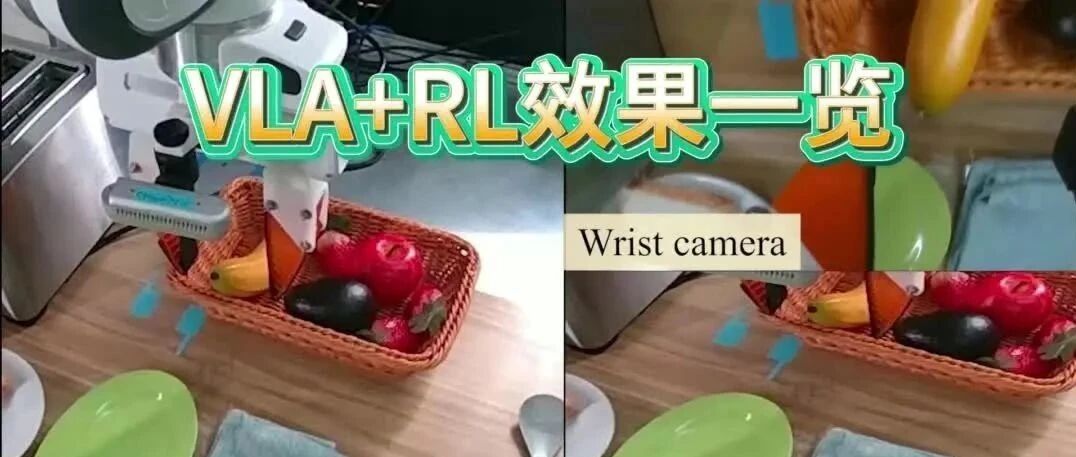
Group 1 - The establishment of the Embodied Intelligence Heart Technology Exchange Group focuses on various advanced technologies including VLA, VLN, remote operation, Diffusion Policy, reinforcement learning, VLA+RL, sim2real, multimodal large models, simulation, motion control, target navigation, mapping and localization, and navigation [1] - Interested individuals can add the assistant's WeChat AIDriver005 to join the community [2] - To expedite the group entry process, it is advised to include a note with the institution/school, name, and research direction [3]
具身智能之心B端和C端培训老师招募来啦~
具身智能之心· 2025-08-28 01:20
Group 1 - The article announces the recruitment of teachers for embodied intelligence training, targeting both B-end (business) and C-end (consumer) training services, with compensation above industry standards [1] - The training covers various advanced topics including VLA, VLN, remote operation, Diffusion Policy, reinforcement learning, sim2real, multimodal large models, simulation, motion control, and target navigation [2] - B-end training is aimed at enterprises, universities, and research institutions, while C-end training focuses on students and job seekers, with responsibilities including curriculum design and material preparation [3] Group 2 - Candidates are required to have a doctoral degree or higher (including those currently enrolled), with a preference for those who have published two papers in A-level or Q1 journals/conferences, or have two years of industry experience [3] - Interested individuals can add a specified WeChat contact for further inquiries [4]
从方法范式和应用场景上看强化与VLA/Flow Matching/机器人控制算法
具身智能之心· 2025-08-19 01:54
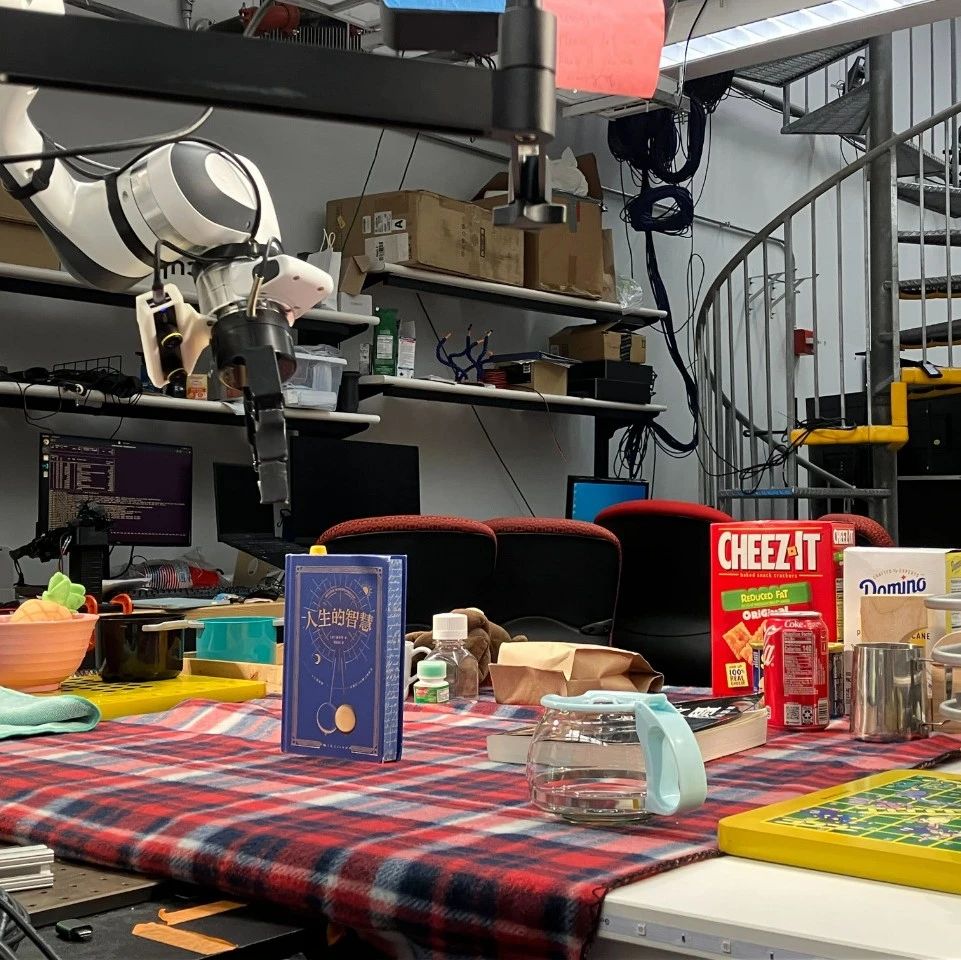
Core Viewpoint - The article discusses recent advancements in reinforcement learning (RL) and its applications in robotics, particularly focusing on the VLA (Vision-Language Action) models and diffusion policies, highlighting their potential to handle complex tasks that traditional RL struggles with [2][4][35]. Method Paradigms - Traditional RL and imitation learning combined with Sim2Real techniques are foundational approaches in robotics [3]. - VLA models differ fundamentally from traditional RL by using training data distributions to describe task processes and goals, allowing for the execution of more complex tasks [4][35]. - Diffusion Policy is a novel approach that utilizes diffusion models to generate continuous action sequences, demonstrating superior capabilities in complex task execution compared to traditional RL methods [4][5]. Application Scenarios - The article categorizes applications into two main types: basic motion control for humanoid and quadruped robots, and complex/long-range operational tasks [22][23]. - Basic motion control primarily relies on RL and Sim2Real, with current implementations still facing challenges in achieving fluid motion akin to human or animal movements [22]. - For complex tasks, architectures typically involve a pre-trained Vision Transformer (ViT) encoder and a large language model (LLM), utilizing diffusion or flow matching for action output [23][25]. Challenges and Future Directions - The article identifies key challenges in the field, including the need for better simulation environments, effective domain randomization, and the integration of external goal conditions [35]. - It emphasizes the importance of human intention in task definition and the limitations of current models in learning complex tasks without extensive human demonstration data [35][40]. - Future advancements may involve multi-modal input predictions for task goals and the potential integration of brain-machine interfaces to enhance human-robot interaction [35].
具身智能之心技术交流群成立了!
具身智能之心· 2025-08-11 06:01
Group 1 - The establishment of a technical exchange group focused on embodied intelligence technologies, including VLA, VLN, remote operation, Diffusion Policy, reinforcement learning, VLA+RL, sim2real, multimodal large models, simulation, motion control, target navigation, mapping and localization, and navigation [1] - Interested individuals can add the assistant's WeChat AIDriver005 to join the community [2] - To expedite the joining process, it is recommended to include the organization/school, name, and research direction in the remarks [3]
具身智能之心技术交流群成立了!
具身智能之心· 2025-08-07 02:38
Group 1 - The establishment of the Embodied Intelligence Heart Technology Exchange Group focuses on various advanced technologies including VLA, VLN, remote operation, Diffusion Policy, reinforcement learning, VLA+RL, sim2real, multimodal large models, simulation, motion control, target navigation, mapping and localization, and navigation [1] - Interested individuals can add the assistant's WeChat AIDriver005 to join the community [2] - To expedite the joining process, it is recommended to include a note with the institution/school, name, and research direction [3]