Free Cash Flow Yield

Search documents
We're in a new era of energy, electricity is the new oil, says Tortoise's Rob Thummel
CNBC Television· 2026-02-17 19:58
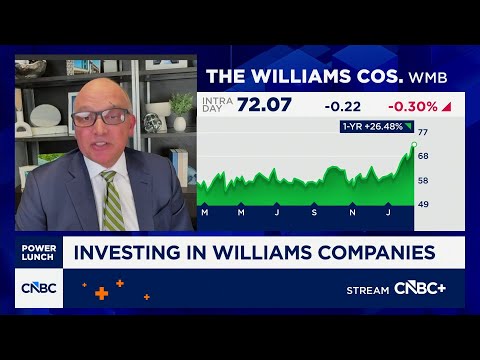
All right, time now for a power check and today we are honing in on the energy sector and the recent upper performance that we have seen from some key names. Don't believe us. Well, in 2026 alone, we know the year is still early, but the energy sector is up 19%.This year, that makes it the best performing sector in the S&P 500 by far, outpacing the broader index and pretty much every other sector group. So, let's take a look at some of the names that are in the group that maybe should still be on your radar ...


Energy Stocks Are Printing Cash — So Why Are They Still Cheap?
Benzinga· 2026-02-16 17:11
Core Viewpoint - Energy companies are generating strong cash flows, yet their valuations reflect recession-level pessimism, with the S&P 500 Energy sector trading at approximately 12.5x forward earnings compared to 21x for the broader S&P 500 [1] Group 1: Valuation and Performance - The S&P 500 Energy sector's forward earnings multiple is significantly lower than the broader market, indicating a disconnect between cash flow generation and market valuation [1] - Major companies like Exxon and Chevron have higher forward earnings multiples at 20x and 24x respectively, suggesting that some individual firms are valued more favorably [1] - The energy sector's average free cash flow yield is estimated between 7% and 9%, more than double the broader market average, highlighting its strong cash generation capabilities [3] Group 2: Sector Size and Institutional Ownership - The energy sector constitutes only 4% of the S&P 500, a decline from over 13% in 2008, indicating a shrinking presence in the index [2] - Institutional ownership of energy stocks remains below historical averages, attributed to ESG-driven divestment and the tech sector's outperformance, despite the sector's strong fundamentals [5] Group 3: Financial Health and Market Dynamics - Balance sheets of major oil producers have strengthened, with leverage ratios declining significantly from previous cycle peaks, indicating improved financial health [4] - Despite the strong fundamentals and rising global energy demand, energy stocks are not behaving like a declining sector but rather as one that the market has yet to fully reprice [6]

Energy Stocks Still Cheap Despite Record Cash Flow - Chevron (NYSE:CVX), Vanguard Energy ETF (ARCA:VDE), State Street Energy Select Sector SPDR ETF (ARCA:XLE), Exxon Mobil (NYSE:XOM)
Benzinga· 2026-02-16 17:11
Core Viewpoint - Energy companies are generating strong cash flows, yet their valuations reflect recession-level pessimism, with the S&P 500 Energy sector trading at approximately 12.5x forward earnings compared to 21x for the broader S&P 500 [1] Group 1: Valuation and Performance - The S&P 500 Energy sector trades at about 12.5x forward earnings, while Exxon and Chevron trade at 20x and 24x respectively [1] - Energy's free cash flow yield is estimated between 7% and 9%, more than double the broader market average [3] - Balance sheet leverage among major oil producers has significantly declined from prior-cycle peaks, indicating stronger financial health [4] Group 2: Market Position and Demand - The energy sector accounts for only 4% of the S&P 500, down from over 13% in 2008, indicating a smaller market presence [2] - Institutional ownership of energy stocks remains below historical averages due to ESG-driven divestment and tech sector outperformance [5] - Global energy demand is expected to rise, with U.S. Energy Information Administration forecasting oil consumption to reach a record 104 million barrels per day by 2026 [5] Group 3: Market Sentiment - Energy stocks are not behaving like a declining sector; instead, they are acting as if the market has not fully repriced them yet [6]


Precision Drilling(PDS) - 2025 Q4 - Earnings Call Presentation
2026-02-12 18:00
PRECISION DRILLING CORPORATION February 2026 - Investor Presentation FORWARD-LOOKING STATEMENT Certain statements contained in this report, including statements that contain words such as "could", "should", "can", "anticipate", "estimate", "intend", "plan", "expect", "believe", "will", "may", "continue", "project", "potential" and similar expressions and statements relating to matters that are not historical facts constitute "forward-looking information" within the meaning of applicable Canadian securities ...

InPlay Oil (IPOOF): Production Gains Create A 15% Free Cash Flow Yield With Upside
Seeking Alpha· 2026-02-11 07:16
Core Insights - InPlay Oil has achieved significant productivity gains, positioning the company strongly in a challenging crude oil market [1] - The company reported a production of over 19,000 barrels of oil equivalent per day (boe/d) in the third quarter, indicating robust operational performance [1] Financial Performance - The recent productivity improvements have strengthened InPlay Oil's financial standing despite adverse market conditions [1] - The production levels suggest that the company is nearing a critical operational milestone [1]
InPlay Oil: Production Gains Create A 15% Free Cash Flow Yield With Upside
Seeking Alpha· 2026-02-11 07:16
Core Insights - InPlay Oil has achieved significant productivity gains, positioning the company strongly in a challenging crude oil market [1] - The company reported a production level exceeding 19,000 barrels of oil equivalent per day (boe/d) in the third quarter, indicating robust operational performance [1] Company Performance - InPlay Oil's recent production figures suggest that the company is nearing a critical operational milestone, reflecting its ability to navigate the current market conditions effectively [1]

Teekay Tankers: A 20% FCF Yield Should Reward Investors, Even With Fleet Renewal
Seeking Alpha· 2026-01-13 14:42
Core Viewpoint - Teekay Tankers Ltd. (TNK) has high operational leverage and offers a free cash flow (FCF) yield exceeding 20% at current rates, indicating strong financial performance potential [1] Financial Performance - The company is experiencing limited distributions, but increasing vessel values are expected to support stock price growth [1] Investment Strategy - The analysis reflects a focus on cyclical industries, which are believed to provide significant returns during economic recovery and growth phases [1]


4 Generous Stocks Set to Beat the Market
Benzinga· 2025-12-08 17:55
Group 1: Investment Strategy - The combination of high free cash flow yield and dividends is a powerful investment strategy that has been proven over 30 years of data across multiple market cycles [2][26][27] - From 1990 to 2016, stocks in the top quintile for both dividend yield and free cash flow yield generated an annual excess return of 6.03% compared to the market [3][16] - High dividend yield stocks without free cash flow produced only a 0.10% excess return, while high free cash flow yield stocks without dividends achieved 3.57% [4][16] Group 2: Importance of Free Cash Flow - Free cash flow is a more reliable indicator than earnings, as it reflects actual cash available for dividends [8][10] - Companies that generate strong free cash flow but do not pay dividends often waste cash on unproductive projects, which can destroy shareholder value [9][10] - High free cash flow dividend payers have shown superior characteristics, including lower leverage and higher returns on equity [10][11] Group 3: Payout Ratios and Dividend Growth - The optimal payout ratio for dividends is around 40 to 50% of free cash flow, allowing for sustainable dividend growth [12][13] - Companies with a 40 to 50% payout ratio can maintain dividends during economic downturns, while those with higher ratios are at risk of cuts [15][21] - The Pacer Cash Cows Index, focusing on high free cash flow yield companies, has delivered annual dividend growth of 9.2% while maintaining a sustainable payout ratio [13][18] Group 4: Performance During Market Cycles - High free cash flow dividend payers recover faster from market downturns, averaging 15 months compared to 28 months for non-payers [11][22] - The S&P study from 1990 to 2017 found that the top quintile combining dividend yield and free cash flow yield outperformed 75% of the time [16] - During bear markets, this strategy provided meaningful downside protection, outperforming 50% of the time [16] Group 5: Company Examples - Archer-Daniels-Midland (ADM) has a dividend yield of 3.4% and a payout ratio of 24%, demonstrating stability and strong free cash flow generation [28][31] - HNI Corp. has a dividend yield of approximately 3.3% with a payout ratio of 43 to 45%, showing resilience despite market uncertainties [33][37] - OneSpan operates in digital security with a dividend yield of 4.03% and a low payout ratio under 8%, indicating strong cash flow and growth potential [39][41] - Luxfer Holdings has a dividend yield of approximately 4.3% and a payout ratio of 43%, focusing on high-performance materials with steady demand [45][48]

Electronic Arts Inc. (EA): A Bear Case Theory
Yahoo Finance· 2025-12-04 17:17
Core Thesis - Electronic Arts Inc. (EA) is viewed as a steady compounder rather than a high-growth tech stock, with modest returns over the past five years compared to the S&P 500 [2] Financial Performance - EA's trailing and forward P/E ratios are 58.73 and 24.39 respectively, indicating a premium valuation [1] - The company has maintained a 10-year median Return on Invested Capital (ROIC) of 16%, supported by strong franchises like FIFA/EA Sports FC and Madden [3] - EA's debt-to-equity ratio is approximately 32%, suggesting manageable leverage [3] - The current free cash flow yield is around 4%, indicating that investors are paying for reliability rather than deep value [3] Revenue and Market Position - EA's revenue growth has historically been in the mid-single digits and is expected to remain steady, which is modest compared to faster-growing peers like Activision Blizzard and Take-Two [3] - The company maintains unmatched market dominance in sports gaming globally, with recurring revenue from live services strengthening its portfolio [4] Strategic Initiatives - The recent rebranding from FIFA to EA Sports FC is seen as a potential growth catalyst, allowing for flexibility in partnerships and monetization [4] - EA prioritizes consistency over rapid expansion, with stable guidance and resilient margins [5] Valuation Insights - The stock trades at a premium around $172 versus a fair value estimate of $150, reflecting market willingness to pay for brand strength and dependable cash flows [5] - Despite the quality and stability of the shares, they appear overvalued, offering limited upside [5] Historical Context - Since a previous bullish thesis in January 2025, EA's stock price has appreciated approximately 73.32%, as investors rewarded the company's reliability [6]

It Ultimately Comes Down To Free Cash Flow Yield
Seeking Alpha· 2025-11-17 19:10
Core Insights - The current market environment is characterized as a "golden age of active investing," driven by mispricings and opportunities in smaller market cap securities and international stocks [10][14][61] - There is a significant disparity in market capitalization among the largest companies, with some reaching valuations of over $4 trillion, while smaller companies like American Airlines have market caps around $15 billion [12][13] - The focus on free cash flow yields is emphasized, with many large-cap tech companies exhibiting low yields compared to smaller or undervalued companies [19][90] Market Trends - Active investing has gained traction since 2020, largely due to the dominance of large-cap technology companies and the distortions caused by passive investing [10][11] - International markets, particularly in Europe, have shown strong performance, with the Italian ETF up 52.7% this year, indicating opportunities outside the U.S. [14][57] - The S&P 500's P/E ratio is currently around 31, which, while high, is not unprecedented compared to historical peaks [35][36] Investment Strategies - The strategy of being contrarian is highlighted, suggesting that investors should look for mispriced opportunities and consider free cash flow yields as a critical metric for investment decisions [9][89] - REITs, particularly Realty Income, are suggested as potentially undervalued due to a long period of underperformance, setting the stage for future gains [32][34] - The importance of starting valuation is reiterated, with a focus on companies that have high free cash flow yields as attractive investment opportunities [94] Valuation Metrics - Price-to-sales ratios are discussed as a key valuation metric, with many companies trading at multiples significantly above historical norms, indicating potential overvaluation [45][46] - The current market environment shows a bifurcation where some stocks are highly valued while others remain undervalued, suggesting a need for careful selection [47][61] Macro Economic Factors - The U.S. dollar's performance is noted as a significant factor influencing market dynamics, with a weaker dollar benefiting international investments and commodities [85][86] - The potential for interest rate cuts by the Federal Reserve is anticipated, which could impact various sectors differently, particularly those reliant on economic growth [68][71]