
Patent cliff

Search documents
Merck & Co to create a separate cancer unit as patent cliff looms
The Economic Times· 2026-02-24 18:31
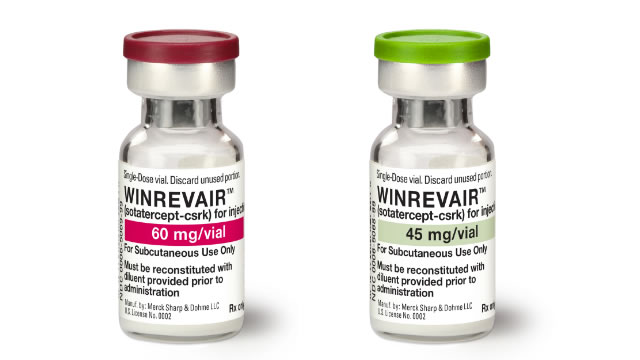
Keytruda's been driving Merck's growth for nearly a decade, accounting for almost half of the company's total sales last year. But new US federal drug pricing policies will bring lower-priced competitors into the market within the next few years. The drug giant has been working hard to diversify its pipeline and has some promising new treatments, including a more effective pneumonia vaccine Capvaxive and a novel lung disease treatment Winrevair.To help the performance of its new products stand out, Merck w ...



Merck reportedly ready to the splits as Keytruda patent cliff looms. Market shrugs
Proactiveinvestors NA· 2026-02-23 13:27
About this content About Ian Lyall Ian Lyall, a seasoned journalist and editor, brings over three decades of experience to his role as Managing Editor at Proactive. Overseeing Proactive's editorial and broadcast operations across six offices on three continents, Ian is responsible for quality control, editorial policy, and content production. He directs the creation of 50,000 pieces of real-time news, feature articles, and filmed interviews annually. Prior to Proactive, Ian helped lead the business outpu ...
Down 25%, Should You Buy the Dip on Bristol Myers Squibb?
The Motley Fool· 2026-02-21 19:00
Core Viewpoint - The pharmaceutical industry is facing significant challenges due to patent expirations, particularly impacting Bristol Myers Squibb, which is experiencing a steep patent cliff that is affecting its stock performance [1][2][4]. Patent Cliff Impact - Bristol Myers Squibb's stock is down over 25% from its peak due to the impending patent expirations of key drugs, leading to a potential decline in sales [2][4]. - The company anticipates a 48.9% drop in Revlimid sales to $2.9 billion and a 61.7% decrease in Sprycel sales to $493 million by 2025 [4]. - The patents for top-selling drugs Eliquis and Opdivo will expire between 2027 and 2029, which together generated $24.4 billion in sales in 2025, approximately half of the company's total revenue [4]. Growth Potential - Excluding Opdivo, Bristol Myers Squibb's growth portfolio saw a 23% increase in sales, reaching $16.3 billion in 2025 [5]. - Cobenfy, a new antipsychotic drug for schizophrenia, is in phase 3 trials for Alzheimer's-related psychosis, with potential annual sales of $3.4 billion by 2030 if approved [5]. Financial Metrics - Bristol Myers Squibb has a market capitalization of $124 billion, with a current stock price of $60.66 and a dividend yield of 4.10% [6][7]. - Analysts project a decline in total sales from $48.2 billion in 2025 to $45.2 billion by the end of 2027, with earnings expected to remain flat in 2026 [7][8]. Investment Considerations - The current dividend is considered safe, costing less than half of the company's earnings, which may provide stability during business contractions [8]. - The stock is trading at less than 10 times this year's earnings estimates, reflecting the market's awareness of the patent cliff [8]. - If Cobenfy succeeds, it could offset the lost sales from Eliquis and Opdivo, potentially leading to business growth and a rise in stock valuation [9].


Prices, pipelines and patent cliffs: Inside pharma's big reset
CNBC· 2026-02-13 11:13
Core Insights - The earnings season for Europe's largest pharmaceutical companies showed mixed results, but the focus is shifting towards future developments, particularly in 2026, which is expected to be a pivotal year following significant changes in 2025 [1][2] Industry Trends - Companies are facing a "patent cliff," where major drugs will lose exclusivity, leading to increased competition from generics [3] - There is a heightened emphasis on drug pipelines as companies aim to reassure investors about future growth despite impending patent expirations [4] Company Strategies - Novartis anticipates a loss of $4 billion in sales and profits in the first half of the year due to patent expirations but remains optimistic about growth driven by a strong pipeline [5] - AstraZeneca is confident in its pipeline, projecting 25 new blockbuster medicines by 2030 and aiming for $80 billion in revenue, up from $59 billion in 2025 [8] - Companies are increasingly looking towards mergers and acquisitions (M&A) to replenish their pipelines, with a focus on both smaller and larger deals [9][11] Market Dynamics - China is emerging as a significant source of innovation for pharmaceutical companies, with increased collaboration and deal-making with Chinese firms [13][15] - The market is evolving in terms of pricing strategies, particularly in response to U.S. and European pricing pressures, with companies considering various approaches to manage drug launches [16][17] Obesity Drug Market - The obesity drug market is becoming more consumer-oriented, with companies like Novo Nordisk and Eli Lilly facing increasing competition as new players enter the space [20] - AstraZeneca and Roche are developing new treatments to differentiate themselves in the crowded obesity market, focusing on convenience and improved tolerability profiles [21][23][24]


Eli Lilly Is Partnering with Gene-Editing Start-up Seamless Therapeutics. Here's What Investors Need to Know.
Yahoo Finance· 2026-02-10 14:35
Core Insights - Eli Lilly is currently the leading manufacturer of GLP-1 drugs, experiencing a significant stock price increase of 225% over the past three years, which has resulted in a high price-to-earnings ratio of 49 and a low yield of 0.6% [2] Group 1: Current Performance - Sales of Mounjaro increased by 99% in 2025, while Zepbound sales surged by 175%, indicating strong performance in the GLP-1 market [3] - Mounjaro and Zepbound together accounted for 56% of Eli Lilly's total sales in 2025, highlighting the company's reliance on these two products for revenue [4] Group 2: Future Challenges - The company faces a potential "patent cliff," where the expiration of patent protection for Mounjaro and Zepbound could lead to a significant decline in sales as generic alternatives enter the market [5] Group 3: Strategic Initiatives - To mitigate long-term risks, Eli Lilly is investing its GLP-1 revenue into new opportunities, including a partnership with Seamless Therapeutics to develop gene editing technology for treating hearing loss [6] - The company has also agreed to acquire Ventyx Biosciences, which is focused on developing oral treatments for inflammation, further diversifying its portfolio [7]


Pfizer Stock Slides Despite Q4 Earnings Beat and New Obesity Drug Data
ZACKS· 2026-02-03 17:35
Core Insights - Pfizer reported fourth-quarter 2025 adjusted earnings per share of 66 cents, exceeding the Zacks Consensus Estimate of 57 cents, with a year-over-year earnings increase of 5% [1] - Total revenues for the quarter were $17.6 billion, a decline of 1% year-over-year on a reported basis and 3% on an operational basis, primarily due to decreased revenues from COVID-19 products [2] Revenue Breakdown - International revenues decreased by 4% on an operational basis to $8.44 billion, while U.S. revenues fell by 1% to $9.1 billion [2] - The Primary Care segment saw a 13% operational decline in sales to $7.94 billion, while Specialty Care recorded a 6% increase to $4.77 billion, and Oncology sales rose by 8% to $4.44 billion [3] Product Performance - Eliquis sales in Primary Care rose by 8% to $2.02 billion, although alliance revenues fell short of the Zacks Consensus Estimate of $2.14 billion [4] - Global revenues from the Prevnar family increased by 8% to $1.71 billion, surpassing the Zacks Consensus Estimate of $1.65 billion [5] - Comirnaty sales were $2.27 billion, down 35% year-over-year, but still beat the Zacks Consensus Estimate of $2.0 billion [6] - Paxlovid revenues dropped by 70% year-over-year to $218 million, missing the Zacks Consensus Estimate of $289 million [7] Full-Year Results - For the full year 2025, Pfizer's sales declined by 2% to $62.6 billion, exceeding the Zacks Consensus Estimate of $61.94 billion [14] - Adjusted earnings for 2025 were $3.22 per share, a 4% increase year-over-year, beating the Zacks Consensus Estimate of $3.13 [14] 2026 Guidance - Pfizer expects total revenues for 2026 to be between $59.5 billion and $62.5 billion, reflecting a decline from 2025 due to lower COVID product revenues and an impending patent cliff [16] - COVID sales are projected to be around $5 billion in 2026, down from approximately $6.7 billion in 2025 [17] - Adjusted earnings per share for 2026 are expected to be in the range of $2.80-$3.00, a decrease from 2025's EPS of $3.22 [17] Research and Development - Pfizer plans to initiate 20 pivotal studies in 2026, including 10 for ultra-long-acting obesity candidates from the Metsera acquisition [26] - Positive top-line data from a phase IIb study on PF-08653944 showed significant weight reduction, positioning Pfizer competitively against other weight loss therapies [20][21]

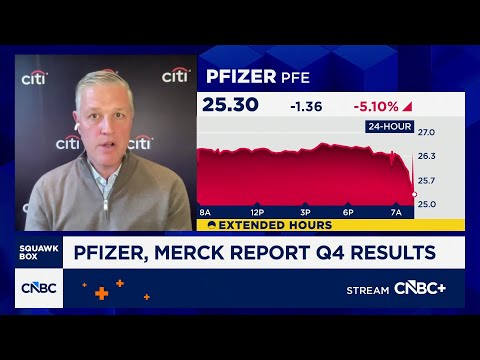
Pfizer, Merk report Q4 results: Citi's Geoff Meacham on key takeaways
CNBC Television· 2026-02-03 16:17
Fizer and Merc reported earlier today. Join us right now with his reaction to the results is Jeff Meum. He's the head of healthcare research US pharmaceuticals and biotechnology at city.Good morning to you. Uh we've seen both of these stocks. Fizer down by the way 5%.Merc holding in a lot a lot better. But why don't we just go through the headlines here and what your your reaction was. >> Yeah. Yeah.Thanks Andrew for having me. Yeah, I would say for for Merc the guidance was a big worry going into uh the fo ...
3 Headwinds Facing Pfizer in 2026
Yahoo Finance· 2026-02-02 11:52
Core Viewpoint - Pfizer is facing significant challenges that could impact its attractiveness as an investment, particularly in relation to its dividend yield and upcoming patent expirations [1] Group 1: GLP-1 Drug Development - Pfizer's stock has fallen over 50% from its 2021 highs, partly due to its lack of a GLP-1 drug, which is crucial for diabetes management and weight loss [2] - The company previously had an internal GLP-1 candidate that was dropped, leaving it behind competitors like Eli Lilly and Novo Nordisk, which have successful GLP-1 drugs on the market [3] - Pfizer is attempting to catch up by acquiring a company with a promising GLP-1 pipeline and has agreed to distribute a GLP-1 pill for a Chinese company pending approval [3][4] Group 2: Patent Expirations - Pfizer is approaching key patent cliffs, with its oncology drug Ibrance expected to face generic competition in 2027, followed by cardiovascular drugs Eliquis and Vyndaqel in 2028 [5] - The timing of new drug development and patent expirations does not always align, but 2026 is critical as it is the last year before revenues from key drugs may start to decline [6] Group 3: Dividend Concerns - Pfizer's dividend payout ratio is around 100%, raising concerns about its ability to sustain dividends amidst setbacks in GLP-1 development and upcoming patent cliffs [7] - Although dividends are paid from cash flow rather than earnings, the high payout ratio, combined with recent acquisitions and the capital-intensive nature of the pharmaceutical sector, adds to the worry [8]
Here's Why Pfizer Stock Is Still a Buy
The Motley Fool· 2026-02-01 11:00
Company Overview - Pfizer is one of the world's largest pharmaceutical companies with a long history of innovation, operating in a capital-intensive industry that requires significant research and development spending [2] - The company faces a heavy regulatory burden as new drugs must prove both effective and safe before being sold [2] Competitive Landscape - Pfizer operates in a highly competitive environment with many industry giants striving to develop new drugs within the same treatment niches [3] - The costs associated with developing new drugs are prohibitive, leading to a limited period of exclusivity for new drugs once they are approved [3] Patent Challenges - Patent protections can lead to significant profits from blockbuster drugs, but the expiration of these patents can result in rapid declines in revenue as generic versions enter the market, known as a patent cliff [4] - Pfizer is currently facing approaching patent cliffs, which have contributed to a decline in stock value following the pandemic [5][6] Recent Developments - The company abandoned its internally developed GLP-1 weight loss drug, signaling potential weaknesses in its development pipeline and raising concerns about the lack of new blockbuster drugs to offset impending patent cliffs [6] - Despite these challenges, Pfizer has acquired a company with a promising GLP-1 drug pipeline and has agreed to distribute a GLP-1 therapy for a Chinese company pending approval [7] Financial Metrics - Pfizer's current market capitalization is $150 billion, with a current stock price of $26.44 and a gross margin of 69.12% [7] - The company offers a dividend yield of 6.51%, which is a result of a 100% dividend payout ratio, indicating that all profits are devoted to dividend payments [8] Investment Perspective - Pfizer is viewed as a turnaround story, potentially appealing to aggressive investors willing to adopt a long-term perspective [9] - The stock has risen nearly 20% since its 52-week low in early April, indicating growing investor interest in Pfizer's turnaround potential [10]
How Big Pharma is navigating a $300 billion patent cliff
Yahoo Finance· 2026-01-30 08:00
Industry Overview - The pharmaceutical industry is facing a potential loss of $300 billion, which represents one-sixth of its overall revenue, by 2030 due to a patent cliff [1] - Companies that can adapt quickly will be better positioned to navigate this challenge [1] Company-Specific Insights - Eli Lilly and Novo Nordisk are well-positioned with limited patent exposure and significant earnings from GLP-1 weight loss drugs [2] - Bristol Myers Squibb faces a significant challenge with a projected growth gap of about $38 billion, primarily due to the loss of patent protection for its top drugs, Eliquis and Opdivo, which together account for over half of its earnings [3] - Merck & Co. and Pfizer are also facing substantial gaps of $23 billion and $21 billion, respectively [3] Strategic Responses - Successful companies are employing multi-faceted strategies to mitigate losses, including mergers and acquisitions (M&A) to strengthen their drug pipelines [4] - Beyond M&A, companies are also focusing on delaying patent expirations, exploring new drug development areas, and refocusing efforts to generate growth [5] Johnson & Johnson's Position - Johnson & Johnson is positioning itself as a success story amid the patent cliff, despite facing challenges such as biosimilar competition for its drug Stelara, which could lead to a $15 million revenue gap [6] - The company’s drug Darzalex, with projected sales of almost $18 billion in 2024, will soon encounter its own patent cliff [6] - J&J reported over $24 billion in quarterly sales with a 6% increase in annual sales, surpassing market expectations, and is framing 2025 as a pivotal year for growth [7]