
人民城市理念

Search documents
马明龙调研城市工作时强调 自觉践行人民城市理念 着力建设现代化人民城市
Zhen Jiang Ri Bao· 2025-08-28 23:57
Group 1 - The city emphasizes the importance of implementing Xi Jinping's important discourse on urban work and aims to promote the connotative development of cities, focusing on building a modern, innovative, livable, beautiful, resilient, civilized, and smart people's city [1] - The Zhenjiang China Resources Gas Dispatch and Emergency Command Center is highlighted as a core hub for ensuring the safe and stable supply of urban gas, with a fully integrated and intelligent gas management system [1] - The transformation project under the Jiefang Bridge aims to repurpose idle spaces into multifunctional sports areas, enhancing urban aesthetics and meeting community needs for culture, leisure, and fitness [1] Group 2 - The Xiangshan Street Xiangjiamen Enjoy Garden project enhances an existing park with new fitness trails and facilities, creating a high-quality urban park for local residents [2] - The Jinshan Lake CSO Overflow Pollution Comprehensive Treatment Project employs advanced technical solutions to address drainage and water environment issues, aiming to protect the water quality of the Yangtze River and improve the ancient canal's water quality [2]
赵一德在西安市调研城市工作时强调以内涵式发展建设现代化人民城市 让城市更有温度群众生活更加幸福
Shan Xi Ri Bao· 2025-08-28 23:19
Core Viewpoint - The emphasis is on the need for modern urban development that prioritizes the well-being of citizens and enhances the quality of life in cities, as articulated by the provincial secretary Zhao Yide during his visit to Xi'an [1][2]. Group 1: Urban Development Strategy - The transition from large-scale expansion to quality improvement and efficiency enhancement in urban development is highlighted, with a focus on optimizing urban structure and promoting green transformation [2]. - The importance of integrating planning with public feedback and ensuring effective execution of urban plans is stressed, aiming for a well-coordinated allocation of resources and services [2][3]. Group 2: Community and Property Management - The role of property management in enhancing community living standards is underscored, with a call for improved coordination among community committees, property companies, and local authorities [3]. - There is a focus on addressing community concerns and enhancing the quality of property services to ensure residents feel comfortable and secure in their living environments [3].
以更大力度提升公共服务品质和超大城市治理现代化水平!龚正调研为民办实事项目
Di Yi Cai Jing· 2025-08-28 11:47
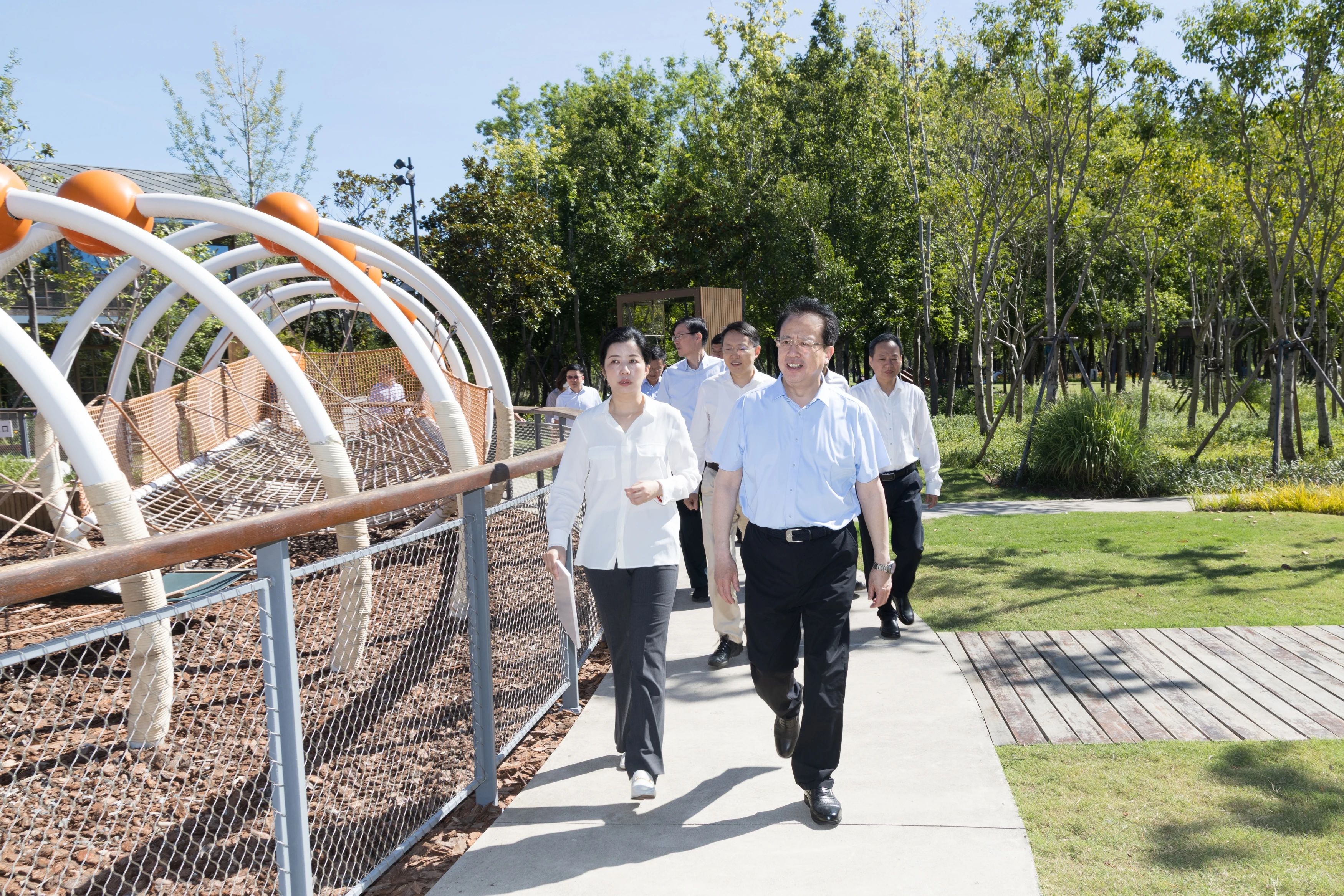
Group 1 - The overall progress of the "people's livelihood" projects in Shanghai is on track, with expectations to be fully completed by the end of the year [1] - Shanghai has implemented over 1,100 "people's livelihood" projects in nearly 40 years, with this year's initiatives comprising 34 projects across 10 categories [1] - The city aims to enhance public service quality and modern governance to increase citizens' sense of gain, happiness, and security [1] Group 2 - The West Bank Natural Art Park is the 1,000th park in Shanghai, integrating urban habitat, all-age experiences, child-friendly spaces, and nature education [4] - The city is focusing on improving the quality of park construction, transitioning from quantity growth to quality enhancement, to meet citizens' diverse and personalized needs [4] - More tangible and enjoyable "people's livelihood" projects will be introduced to enrich service content and elevate service levels [4] Group 3 - Shanghai has equipped all ordinary classrooms in primary and secondary schools with air conditioning ahead of the new school year [7] - The city is committed to addressing citizens' needs and transforming public feedback into high-quality livelihood projects [7] - A long-term management mechanism will be established to ensure effective operation and maintenance of these facilities [7] Group 4 - The "New Era Urban Builders' Management Home" project in Jing'an District provides 1,310 beds for urban construction workers [10] - The city is exploring sustainable operation models to better serve the needs of urban builders and managers [10] - Continuous improvement in urban management and social governance is emphasized to create a warm and harmonious social atmosphere [10]

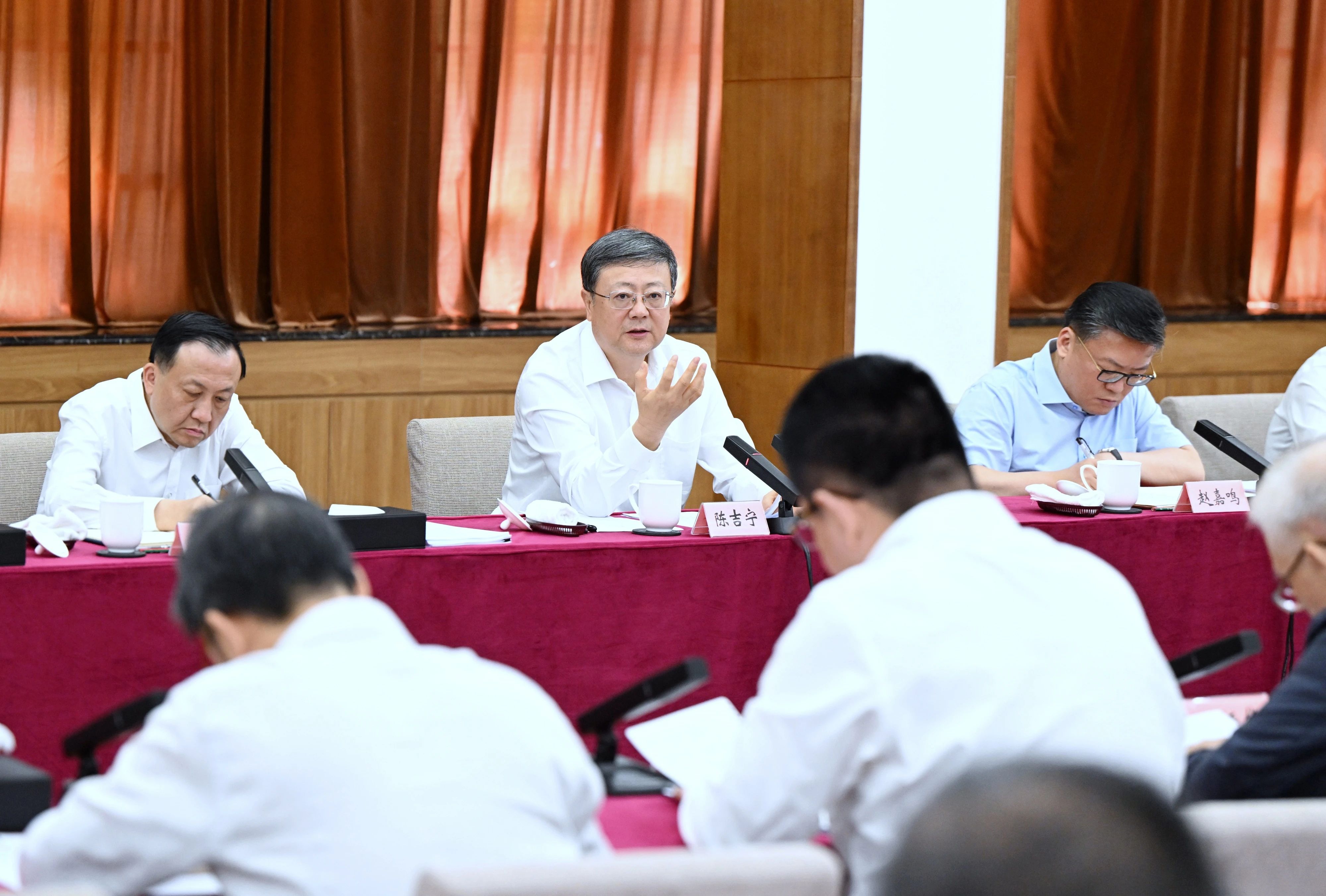
深入开展高质量理论研究和决策咨询!陈吉宁主持召开上海哲学社会科学专家座谈会,听取意见建议
Di Yi Cai Jing· 2025-08-28 11:01
Core Viewpoint - The meeting emphasizes the importance of leveraging the wisdom of social science experts to contribute to Shanghai's future economic and social development, aligning with the strategic goals of building a world-class socialist modern international metropolis [4][10]. Group 1: Strategic Development - The Shanghai government is focused on deepening the construction of "five centers" and aims to enhance its global influence as a socialist modern international metropolis [4][8]. - The next five years are identified as a critical period for Shanghai's development, requiring a systematic understanding of Xi Jinping's important speeches and directives regarding Shanghai [8][10]. - The government aims to maintain strategic agility and proactively implement national strategies while ensuring national interests and security [8]. Group 2: Expert Contributions - Experts from various institutions provided targeted suggestions on adapting to external environmental changes, enhancing reform and opening-up, and fostering a first-class business environment [5][10]. - Discussions included the need for strategic industrial ecosystems, urban space restructuring, and innovative grassroots governance to boost the core competitiveness of the metropolitan area [5][10]. - The meeting highlighted the importance of conducting in-depth field research to produce actionable decision-making results that address both macro and micro-level issues [10].
任平:党的创新理论如何内化为取之不竭的营养
Ren Min Ri Bao· 2025-08-28 00:14
Group 1 - The core viewpoint emphasizes the importance of internalizing the Party's innovative theories as a source of nourishment for transforming subjective worlds, particularly in the context of urban work [1][4][17] - The recent Central Urban Work Conference highlighted the significance of understanding the latest theoretical and practical issues related to urban development, with a focus on the "People's City" concept [2][3][6] - The article discusses the need for a systematic understanding of the Party's innovative theories to avoid fragmented and one-sided interpretations, especially in promoting high-quality urban development [5][8][11] Group 2 - The article outlines the historical context of urban development in China, noting the rapid industrialization and urbanization compared to Western countries, which necessitates forward-thinking strategies [3][10] - It emphasizes the shift from rapid growth to stable development and from large-scale expansion to quality improvement, marking a significant transition in urban development strategies [3][7] - The "People-Centered" approach is highlighted, focusing on innovation, livability, beauty, resilience, civilization, and intelligence as key goals for urban development [3][8][10] Group 3 - The article stresses the importance of integrating various aspects of urban life, including production, living, ecology, culture, and safety, to create a vibrant and sustainable urban environment [8][9] - It discusses the necessity of promoting urban-rural integration to address common urban issues and enhance overall development, providing a unique Chinese solution to global urban challenges [10][11] - The article calls for practical application of the Party's innovative theories to improve work capabilities and better serve the people's needs [11][16][17]
徐曙海主持召开市国土空间规划委员会会议 更好发挥规划统筹引领作用 着力构建宜居美丽韧性城市
Zhen Jiang Ri Bao· 2025-08-27 23:23
Group 1 - The city emphasizes the importance of implementing Xi Jinping's important discourse on urban work and aims to promote the connotative development of cities, focusing on building a modern, innovative, livable, beautiful, resilient, civilized, and smart people's city [1] - The Zhenjiang China Resources Gas Dispatch and Emergency Command Center is highlighted as a core hub for ensuring the safe and stable supply of urban gas, with a fully integrated and intelligent gas management system [1] - The transformation of the space under the Jiefang Bridge into a multifunctional sports area is aimed at activating idle resources and beautifying the urban environment to better meet the cultural, leisure, and fitness needs of the public [1] Group 2 - The Xiangshan Street Xiangjiamen Enjoy Garden project enhances the existing park by adding fitness trails and facilities, creating a high-quality, multifunctional urban park for residents [2] - The comprehensive governance project for the overflow pollution of Jinshan Lake aims to address drainage and water environment issues using advanced technical solutions, emphasizing the importance of facility management and maintenance [2]
党的创新理论如何内化为取之不竭的营养
Ren Min Ri Bao· 2025-08-27 22:19
Group 1 - The core viewpoint emphasizes the importance of understanding and internalizing the Party's innovative theories as a means to transform subjective perspectives into practical applications [1][4] - The recent Central Urban Work Conference highlighted the significance of cities in modernization and the necessity for effective urban management strategies [2][3] - The concept of "People's City" was introduced, focusing on modernizing urban areas to enhance the quality of life for citizens [2][3] Group 2 - The article discusses the need for a comprehensive understanding of Xi Jinping's thoughts on urban development, particularly through the study of relevant literature [5][6] - It outlines the evolution of urban development strategies, transitioning from rapid growth to stable, quality-focused development [3][7] - The importance of a systematic approach to urban planning is emphasized, addressing various aspects such as ecology, culture, and safety [8][9] Group 3 - The relationship between urban and rural development is crucial, advocating for integrated urbanization and rural revitalization to address common challenges [10] - The article stresses the necessity of practical application of innovative theories to enhance urban governance and improve citizens' lives [11][16] - It highlights the need for a people-centered approach in urban development, ensuring that modernization benefits the population [17]
赵刚在西安市调研城市更新工作时强调践行人民城市理念 有序推进城市更新 着力打造更加舒适便利的宜居城市
Shan Xi Ri Bao· 2025-08-27 00:03
省政府秘书长吕来升,省直有关部门和西安市负责同志参加调研。(记者:孙鹏) 高陵区李鑫工贸小区已完成老旧小区改造。赵刚实地察看小区道路、管网、照明等设施改造情况, 入户了解居民居住体验,强调要做好改造成果维护工作,健全老旧小区物业服务长效机制,不断提升服 务精细化水平和安全管理水平,更好满足群众的多元化需求。在未央区凤凰城社区,赵刚走进社区党群 服务中心、托育中心、社区食堂等地,了解社区各服务场所运行情况,强调要始终面向群众需要, 以"一老一小"为重点,扎实做好嵌入式服务设施谋划建设和场所运营管理,探索多元参与社区治理路 径,让群众在"家门口"享受到优质普惠便捷的公共服务。雁塔区际华三五一一街区由老旧厂区改造而 来,如今已成为一处多业态社区商业中心。赵刚实地察看街区面貌,了解项目规划、商家入驻等情况, 指出要做好活化利用、差异化发展文章,加强业态把控,创新运营模式,让工业遗产焕发新活力。 调研中,赵刚强调,实施城市更新行动是城市现代化建设的重要抓手。要坚持系统观念,尊重城市 发展规律,发挥发展规划战略导向作用,高质量开展城市更新,着力促进城市结构优化、动能转换、品 质提升、绿色转型、文脉赓续、治理增效。要聚焦重 ...
上海市委常委会传达学习习近平总书记重要讲话和重要指示精神,研究了这些重要事项
Di Yi Cai Jing· 2025-08-22 12:43
Group 1 - The meeting emphasized the importance of implementing Xi Jinping's important speech and directives regarding the 60th anniversary of Tibet Autonomous Region, focusing on enhancing support for Tibet's long-term stability and high-quality development [1][2] - The meeting highlighted the need for precise assistance, increasing support for grassroots and livelihood initiatives, and deepening the "team-style" assistance mechanism in education and healthcare [1][2] - The meeting called for strengthening national unity efforts, fostering a sense of community among various ethnic groups, and ensuring that all communities thrive in Shanghai [1] Group 2 - The meeting stressed the importance of incorporating public expectations, expert opinions, and grassroots experiences into the "14th Five-Year" planning process to align with people's wishes and guide socio-economic development [2] - The meeting underscored the need for political responsibility and proactive measures in flood prevention and disaster response, including risk forecasting, hazard identification, and emergency preparedness [2] - The meeting called for a focus on ecological civilization, enhancing the ecological environment control system, and promoting coordinated economic and environmental development [3]
在“五个中心”建设中坚定走好第一方阵 陈吉宁在静安区调研时要求把强化企业总部功能、提升专业服务能级作为重要突破口和关键抓手
Jie Fang Ri Bao· 2025-08-22 01:47
Core Insights - The Shanghai municipal government is focusing on high-quality development and enhancing confidence in economic growth, aiming to achieve higher goals and contribute significantly to the construction of the "Five Centers" [1][4] Group 1: Economic Development Strategies - The government emphasizes the importance of economic operation scheduling, investment attraction, and enterprise service mechanisms to support regional economic development and achieve annual economic goals [1][4] - There is a strong focus on optimizing commercial operations, enhancing consumer experiences, and improving policies related to tax refunds and cross-border payments to create a favorable consumption environment [2][4] Group 2: Industry and Business Enhancement - The government aims to strengthen the headquarters economy and enhance professional service capabilities as key strategies for the "Five Centers" construction, promoting the development of leading enterprises and high-growth companies [4][5] - There is a push for the integration of commerce, culture, and technology, leveraging technological innovation to empower the cultural and creative industries [4][5] Group 3: Urban Development and Community Focus - The government is committed to urban renewal and balanced development, prioritizing residents' living conditions and upgrading old housing and building functionalities [5] - Efforts are being made to optimize the business environment and improve service levels for enterprises, ensuring they can operate smoothly and focus on growth [5]