Autonomous Driving

Search documents
Tesla tops Q4 earnings estimates, Kraken co-CEO talks adding crypto to Trump accounts
Youtube· 2026-01-28 23:44
分组1 - Tesla exceeded earnings estimates for the fourth quarter with an adjusted EPS of 50 cents compared to the expected 45 cents, and operating income also surpassed expectations [2][12] - The company is ramping up production in North America for the Tesla Semi, Cybertruck, and next-generation Roadster, with six new production lines being established [2][3] - Tesla plans to unveil the Optimus version 3 robot in Q1 of this year, aiming for production to start by the end of the year with a target capacity of 1 million robots [3][15] 分组2 - The market reacted positively to Tesla's strong profitability, with adjusted EBITDA and free cash flow beating consensus estimates, and there is better visibility on near-term plans for robo-taxis and Optimus robots [12][13] - Tesla is still the leading EV manufacturer in the U.S., offering long-range vehicles at competitive prices, but sales may decline in the first three quarters of 2026 due to the end of the EV tax credit [21][22] - The full self-driving (FSD) system will transition to a subscription model, which is expected to unlock additional profits as the technology advances towards unsupervised driving [23][24] 分组3 - SpaceX is considering a mid-June IPO, aiming to raise up to $50 billion with a valuation of approximately $1.5 trillion, potentially making it one of the largest companies globally [6][7] - The excitement around SpaceX is driven by its unique capabilities in space travel and potential future applications, such as data centers in space [9][10] - Analysts believe that while Nvidia poses a long-term competitive threat in AI and self-driving technology, Tesla currently maintains a significant lead in autonomous driving software [25][28]


Tesla(TSLA) - 2025 Q4 - Earnings Call Transcript
2026-01-28 23:32
Financial Data and Key Metrics Changes - In Q4 2025, automotive margins, excluding credits, improved sequentially from 15.4% to 17.9% despite a 16% decrease in deliveries [21] - Total gross margin ended the quarter at over 20.1%, a level not achieved in the last two years, despite lower fixed cost absorption and over $500 million in tariffs [24] - Net income was negatively impacted by a 23% depreciation in Bitcoin holdings and unfavorable foreign exchange effects [25] Business Line Data and Key Metrics Changes - Automotive gross profit remained flat sequentially despite lower deliveries, primarily due to a favorable regional mix with more deliveries in APAC and EMEA [21] - Energy segment achieved nearly $12.8 billion in revenue with a year-over-year growth of 26.6%, driven by high deployments of Megapack and Powerwall [22] - Services and others margin declined from 10.5% to 8.8% due to higher employee-related costs in service centers [23] Market Data and Key Metrics Changes - Record deliveries were noted in smaller countries like Malaysia, Norway, Poland, Saudi Arabia, and Taiwan, contributing to a larger backlog than in recent years [20] - The energy team reported strong growth rates and continued demand for energy products, indicating a robust market outlook [12] Company Strategy and Development Direction - The company is transitioning to a subscription-based model for Full Self-Driving (FSD), which is expected to impact automotive margins in the short term [21] - Significant investments are planned for 2026, with CapEx expected to exceed $20 billion, focusing on six factories and expanding production capacity [26][27] - The company aims to replace the Model S and X production lines with a factory for Optimus robots, targeting a production goal of 1 million units per year [7][14] Management's Comments on Operating Environment and Future Outlook - Management expressed optimism about the future, emphasizing a shift towards autonomy and the potential for universal high income driven by advancements in AI and robotics [2][4] - The company is cautious about the rollout of unsupervised FSD, ensuring safety while gradually increasing autonomy capabilities [54][55] - Management acknowledged the challenges posed by increased low-cost competition and policy uncertainties affecting margins in the energy sector [22] Other Important Information - The company is making substantial investments in AI chips and solar cell manufacturing, indicating a long-term strategic focus on these areas [5][13] - The transition to a fully autonomous vehicle market is expected to significantly alter the transportation landscape, with the Cybercab model designed specifically for this purpose [30][34] Q&A Session Summary Question: What is Tesla's view on the future global car sales and its impact on EV strategy? - Tesla believes that autonomy and Cybercab will significantly change the global market size and mix, with a focus on efficiency and manufacturing at scale [28][29] Question: Are there plans to launch new models for different price segments? - Tesla has launched its least expensive models recently and continues to expand globally, aiming to provide a premium ride experience with the Cybercab [34][35] Question: What is the current bottleneck for increasing robotaxi deployment? - The company is learning from the scaled robotaxi service and is focused on solving the unsupervised FSD problem while expanding the fleet size [41][42] Question: What are the constraints on memory procurement? - Tesla's AI is designed to be compute and memory efficient, and the company is confident in its ability to manage memory constraints in the near term [91][92]
Tesla(TSLA) - 2025 Q4 - Earnings Call Transcript
2026-01-28 23:32
Financial Data and Key Metrics Changes - In Q4 2025, automotive margins, excluding credits, improved sequentially from 15.4% to 17.9% despite a 16% decrease in deliveries, primarily due to a favorable regional mix with more deliveries in APAC and EMEA [21] - Total gross margin ended the quarter at over 20.1%, a level not achieved in the last two years, despite lower fixed cost absorption and over $500 million in tariffs impacting results [24] - Net income was negatively impacted by a 23% depreciation in Bitcoin holdings and unfavorable foreign exchange impacts [25] Business Line Data and Key Metrics Changes - Automotive gross profit remained flat sequentially, while FSD adoption improved, reaching nearly 1.1 million paid customers globally, with 70% being upfront purchases [21][22] - Energy segment achieved record gross profit for the quarter, ending the year with nearly $12.8 billion in revenue, reflecting a 26.6% year-over-year growth driven by high deployments of Megapack and Powerwall [22] - Services and Others margin declined from 10.5% to 8.8% due to higher employee-related costs, although there was an improvement in margins from the Supercharging business [23] Market Data and Key Metrics Changes - Record deliveries were noted in smaller countries like Malaysia, Norway, Poland, Saudi Arabia, and Taiwan, contributing to a larger backlog than in recent years [20] - Continued strength in demand was observed in the rest of APAC and EMEA, with the energy team achieving high growth rates [20][22] Company Strategy and Development Direction - The company is making significant investments in AI, robotics, and battery supply chains, with a focus on transitioning to an autonomous future [4][7] - Plans to end production of Model S and X to repurpose factory space for Optimus robot production, aiming for a long-term goal of 1 million units per year [7][13] - The company is transitioning to a subscription-based model for FSD, which may impact automotive margins in the short term [22] Management's Comments on Operating Environment and Future Outlook - Management expressed optimism about the future, highlighting the potential for universal high income driven by advancements in AI and robotics [2][3] - The company anticipates significant growth in the energy sector and plans to ramp up solar cell production to 100 gigawatts per year [12][13] - Management acknowledged the challenges posed by increased low-cost competition and policy uncertainties affecting margins [22] Other Important Information - The company expects capital expenditures to exceed $20 billion in 2026, driven by investments in multiple factories and AI infrastructure [26][27] - The company has over $44 billion in cash and investments, which will be utilized for funding the upcoming investments [81] Q&A Session Summary Question: What is Tesla's view on the future global car sales and its impact on EV strategy? - Management indicated that the future is autonomous, and the introduction of Cybercab will significantly change the market size and mix, with expectations of increased production volumes [28][29] Question: Are there plans to launch new models for different price segments? - Management confirmed ongoing efforts to launch less expensive models and expand globally, aiming to provide a premium ride experience through Cybercab [34][35] Question: What are the current bottlenecks for robotaxi deployment? - Management noted that scaling the robotaxi service has been a learning process, with unsupervised service recently launched in Austin, and emphasized the importance of infrastructure in supporting growth [41][44] Question: What is the current status of Optimus robots in production? - Management stated that Optimus is still in the R&D phase, with basic tasks being performed in factories, and significant production volume is not expected until later in the year [49][50] Question: What is the strategy for chip production and potential external sales? - Management highlighted the need for a Tesla Terafab to ensure sufficient chip production capacity, emphasizing the importance of domestic manufacturing to mitigate geopolitical risks [66][70]
Tesla Plans $2 Billion Investment in Musk's xAI
Youtube· 2026-01-28 22:38
Group 1 - Tesla is investing $2 billion to purchase preferred shares of Elon Musk's AI company XAI, indicating a strategic alignment between Tesla and XAI to leverage AI advancements for Tesla's physical products [1][4] - The focus of Tesla is shifting towards becoming a physical AI company, with humanoid robotics and autonomous driving as key areas of development, overshadowing its traditional EV sales and energy storage business [2][3] - Despite concerns from shareholders regarding XAI's significant cash burn, Tesla has proceeded with the investment, reflecting confidence in the long-term potential of AI integration [3][4] Group 2 - Tesla's fourth-quarter profits showed growth in Full Self-Driving (FSD) subscriptions, reaching 1.1 million active subscriptions, which is expected to contribute positively to future profits through software sales [5][6] - In 2025, Tesla experienced its first annual revenue decline, despite offsetting drops in consumer EV deliveries through other revenue streams, highlighting challenges in maintaining growth [6][7] - Elon Musk is still required to meet a target of delivering 20 million EVs to consumers by 2030 to qualify for a potential $1 trillion compensation, necessitating an average of 500,000 deliveries per year [7]
Tesla(TSLA) - 2025 Q4 - Earnings Call Presentation
2026-01-28 22:30
Q4 and FY 2025 Update 1 Highlights 03 Financial Summary 04 Operational Summary 06 Manufacturing & Hardware 08 Supporting Infrastructure 09 AI & Software 10 Services 11 Other Updates 12 Outlook 13 Photos & Charts 14 Key Metrics 24 Financial Statements 27 Additional Information 34 (1) Excludes SBC (stock-based compensation) & Digital assets gains and losses, net of tax; (2) Free cash flow = operating cash flow less capex; (3) Includes cash, cash equivalents and investments; (4)Active driver supervision requir ...
Traton and PlusAI widen autonomous truck tie-up across US and Europe
Yahoo Finance· 2026-01-28 15:33
Core Insights - Traton and PlusAI are expanding their partnership to enhance the integration and deployment of autonomous trucks in the US and Europe, with Traton providing up to $25 million in non-dilutive R&D funding [1][2] - The partnership aims to integrate PlusAI's SuperDrive system into Traton's factory production lines, focusing on vehicles from Scania, MAN, and International [1][4] - Traton views autonomous trucking as a strategic pillar in its long-term technology roadmap, with confidence in PlusAI's capabilities [3] Group 1 - Traton plans to support PlusAI's public listing and will propose a candidate for its initial board of directors, pending regulatory approvals [2] - The partnership has evolved since its inception in 2024, with advancements towards Level 4 autonomous operations, including fleet trials in Texas [4] - Future plans include adapting manufacturing systems for the production of SuperDrive-equipped vehicles and collaborative route planning in the US and Europe [4] Group 2 - Traton may receive private warrants linked to early deployment revenue targets from PlusAI's commercial activities involving Traton-branded trucks [5] - The funding will facilitate closer technical integration, development of safety cases, and commercialization programs in both regions, with potential for further investment based on milestone achievements [5] - PlusAI's CEO emphasized the transition from lab development to real-world operations, highlighting the momentum gained through the expanded partnership [6]
Waymo, Zeekr-Built 'Ojai' Robotaxi Crashes In Los Angeles During Testing With On-Board Safety Driver - Alphabet (NASDAQ:GOOGL)
Benzinga· 2026-01-28 08:49
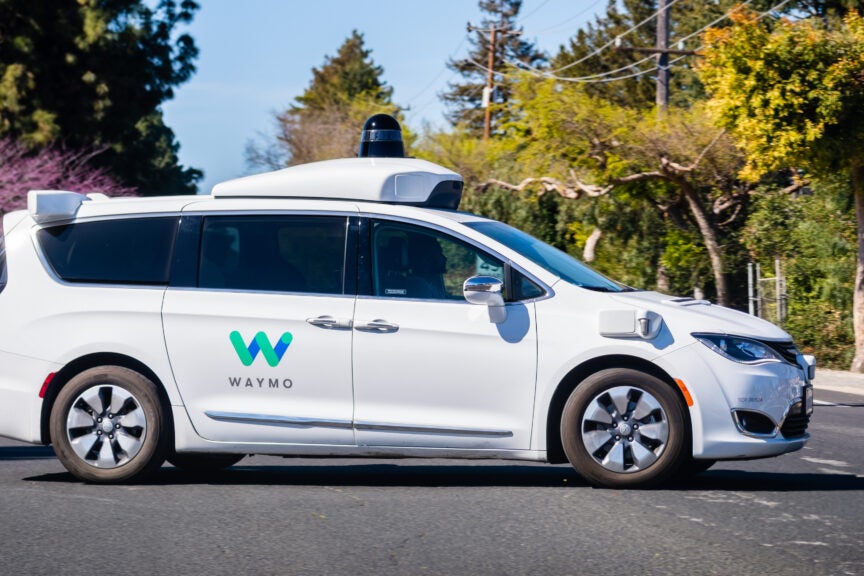
An Alphabet Inc. (NASDAQ:GOOGL) (NASDAQ:GOOG) autonomous cab service, Waymo's "Ojai" Robotaxi, built in collaboration with Chinese automaker Zeekr, crashed into multiple vehicles in Los Angeles' Echo Park area.Ojai Robotaxi Was Driven By A HumanSurveillance camera footage has emerged of the incident on Tuesday, which took place on Sunday, around the Dodger Stadium area in the city. The video shows a Waymo veering off the road onto a grassy patch, before it came back on the street and crashed into multiple p ...

Forget Tesla: This EV Stock Is Beating It in Robotics and It's Dirt Cheap.
The Motley Fool· 2026-01-28 04:45
Core Insights - Tesla has shifted its strategic focus from electric vehicles to autonomy, particularly its robotaxi network and the Optimus humanoid robot, as its EV business faces declining unit sales [1][2] - Boston Dynamics, now majority-owned by Hyundai, is considered to have an edge over Tesla in the autonomous robotics space, particularly with its Atlas robot [3][7] Company Overview - Boston Dynamics was valued at $1.1 billion after Hyundai acquired an 80% stake from Softbank in June 2021 [3] - The company has developed several notable robots, including Spot, Stretch, and Atlas, with Atlas recently awarded "Best Robot" at CES 2026 [4][5] Competitive Landscape - Atlas is set to begin commercial production, with plans for tens of thousands of units to be deployed in Hyundai factories, potentially making it the first humanoid robot to market [6] - Current consensus suggests that Atlas outperforms Optimus in mobility and agility, raising concerns about Tesla's competitive position in humanoid robotics [7] Market Implications - Hyundai Motor Group is now the world's third-largest automaker and the third-largest EV-maker, bolstered by the success of its Ioniq line [9] - Hyundai's market cap is approximately $90 billion, with a price-to-earnings ratio of 12, presenting a potentially attractive investment compared to Tesla's higher valuation [11]
蔚来:与蔚来创始人会面纪要
2026-01-28 03:03
Summary of NIO Inc. Conference Call Company Overview - **Company**: NIO Inc. - **Industry**: China Autos & Shared Mobility - **Date of Call**: January 27, 2026 Key Points Deliveries and Growth Projections - NIO's founder, William Li, projected that deliveries could achieve a **40-50% CAGR** over the next two years, estimating **456-489k units** in 2026, supported by new models such as ES9, ES7, and Onvo L80 [2] - The ES9 model is expected to be crucial for higher margins, potentially exceeding **Rmb100k** profit per unit, with an average selling price (ASP) above **Rmb500k**, allowing competition with models like BMW X5 and Mercedes GLE [2] Market Strategy - NIO plans to introduce **2-3 Onvo models** in the **Rmb150-200k** segment, targeting an **8-10% market share** in this segment [3] - The company aims to reach potential customers in the sub-**Rmb150k** segment through a Battery-as-a-Service (BAAS) subscription model [3] - Enhancing brand awareness and sales efficiency for Onvo is deemed critical in the near term [3] Autonomous Driving Commitment - NIO is committed to regaining its leading position in the **China autonomous driving (AD)** space, leveraging its in-house developed World Model, reinforcement learning model, and Shenji chips [4] - The company is optimistic about monetizing its AD software in the long run and is exploring opportunities to sell its AD chips externally [4] Market Conditions and Financial Outlook - The founder believes that **Battery Electric Vehicles (BEVs)** can grow **20% YoY** in 2026, with premium BEVs (priced over **Rmb300k**) continuing to outperform despite a weaker-than-expected January [9] - Non-auto business segments, including after-sales, financial, and technical engineering services, along with NIO Life, are expected to offset narrowing losses from battery swapping [9] - Management anticipates a maximum cost inflation of **Rmb5k** per car due to rising prices of copper, aluminum, lithium, and DRAM, but remains confident in offsetting these costs through economies of scale and improved operational efficiency [9] International Expansion - NIO targets a **20% overseas sales mix** by 2030, planning to first introduce the Firefly brand overseas, followed by Onvo, and then the NIO brand [9] Financial Metrics and Valuation - Current stock price as of January 26, 2026, is **US$4.61**, with a price target of **US$7.00**, indicating a **52% upside potential** [7] - Market capitalization is estimated at **Rmb148,901 million** [7] - Revenue projections for the fiscal years ending in 2024, 2025, and 2026 are **Rmb65,732 million**, **Rmb86,600 million**, and **Rmb128,033 million**, respectively [7] - Expected net profit is projected to break even by 2028, with a weighted average cost of capital (WACC) of **17.8%** [10] Risks - Upside risks include the introduction of new models, stronger-than-expected sales volume, and better-than-expected improvements in operating efficiency [12] - Downside risks involve weaker-than-expected sales volume and lack of efficiency improvements, alongside moderating auto sales growth affecting overall industry valuations [12] Conclusion NIO Inc. is positioning itself for significant growth in the electric vehicle market, with ambitious delivery targets and a strong focus on autonomous driving technology. The company is also exploring international markets and new product segments to enhance its market share and profitability.

Pony.ai Expands Robotaxi Commercialization With ATBB, Advancing Asset-Light Scaling Across Urban and Airport Mobility
Prnewswire· 2026-01-28 02:00
Core Insights - Pony.ai has announced a strategic partnership with Beijing ATBB Travel & Express Service Co., Ltd. to enhance the commercialization of Robotaxi services in China [1][2] Partnership Details - The collaboration will focus on deploying and operating Robotaxi services in tier-1 cities in China, with an emphasis on airport and business travel applications [2][5] - The partnership aims to leverage ATBB's mobility expertise and resources to improve capital efficiency and support the asset-light strategy of Pony.ai [2][3] Fleet and Technology - A new Robotaxi fleet will be established using Pony.ai's seventh-generation vehicles, operating in major cities and connecting airports and high-speed rail stations [3][4] - The initial fleet will be integrated into Pony.ai's ride-hailing platform and ATBB's Xinghui Mobility platform, allowing for shared access to demand and fleet resources [4] Market Positioning - The partnership aims to cater to premium and business-class travelers by offering customizable in-vehicle experiences and on-time performance, positioning Robotaxis as a differentiated mobility option [5] Progress and Milestones - Pony.ai has made significant progress in scaling its commercial Robotaxi operations, achieving a citywide permit for fully driverless operations in Shenzhen and expanding services in Beijing, Guangzhou, and Shanghai [6][7] - The total Robotaxi fleet has surpassed 1,159 vehicles, with plans to expand to over 3,000 by the end of 2026 [7] - The Gen-7 Robotaxi operations have reached breakeven in city-wide unit economics in Guangzhou, indicating the commercial viability of the model [8]