储能业务

Search documents
德宏股份2025年中报:营收增长但净利润下滑,应收账款和现金流管理需加强
Zheng Quan Zhi Xing· 2025-08-11 22:12
Core Insights - Dehong Co., Ltd. reported a total operating revenue of 414 million yuan for the first half of 2025, representing a year-on-year increase of 29.05%. However, the net profit attributable to shareholders decreased by 36.31% to 9.94 million yuan. The net profit after deducting non-recurring gains and losses increased significantly by 229.89% to 6.78 million yuan, indicating improved profitability in core operations but significant impact from non-recurring items [1][6]. Financial Performance - In the second quarter, the operating revenue reached 226 million yuan, a year-on-year growth of 47.98%. The net profit attributable to shareholders was 5.23 million yuan, down 38.44% year-on-year, while the net profit excluding non-recurring items rose by 191.38% to 3.88 million yuan, showing strong revenue growth despite profit pressure [2][6]. Key Financial Metrics - Gross margin stood at 14.45%, an increase of 5.23% year-on-year. Net margin was 4.12%, down 29.78% year-on-year. The ratio of operating expenses to revenue was 6.5%, a decrease of 21.22% year-on-year. Earnings per share were 0.04 yuan, down 33.33% year-on-year, while net assets per share increased by 3.89% to 3.07 yuan [7]. Accounts Receivable and Cash Flow - As of the end of the reporting period, accounts receivable amounted to 283 million yuan, representing 613.92% of the latest annual net profit, indicating a significant accounts receivable burden. The net cash flow from operating activities was negative, with operating cash flow per share at -0.24 yuan, a decline of 223.78% year-on-year, highlighting challenges in cash flow management [4][6]. Industry Context and Business Development - Dehong Co., Ltd. specializes in the research, production, and sales of automotive alternators and electronic vacuum pumps, also venturing into energy storage. The company leads the market share in automotive alternators for commercial vehicles and performs well in the electronic vacuum pump sector for new energy vehicles. In the first half of 2025, the Chinese automotive market continued to show positive trends, with new energy vehicle production and sales reaching 6.968 million and 6.937 million units, respectively, marking year-on-year growth of 41.4% and 40.3%, with a market share of 44.3%. However, the company faces challenges such as weak demand growth in the commercial vehicle market and high raw material prices [5][6]. Debt and Liquidity - The company reported interest-bearing liabilities of 159 million yuan, a substantial increase of 433.24% year-on-year. Cash and cash equivalents were recorded at 111 million yuan, down 6.47% year-on-year, indicating potential liquidity concerns [8].

智光电气新签2.04亿元 系统设备订单
Zheng Quan Shi Bao· 2025-08-11 19:03
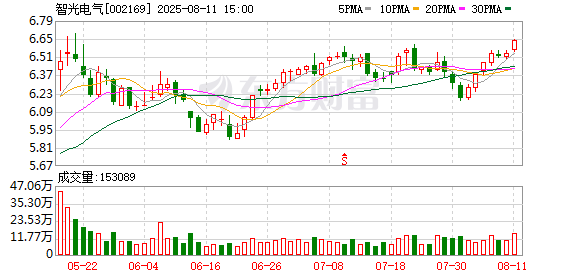
Group 1 - The company signed a sales contract worth 204 million yuan for a 200MW/400MWh energy storage system with Guangdong Pengxin Energy Technology Co., Ltd [1] - The contract is expected to positively impact the company's financial status and operating performance for the current and future years [1] - The company anticipates a net loss of 45 million to 60 million yuan for the first half of the year, representing a reduction in losses of 33.50% to 50.13% compared to the same period last year [1] Group 2 - In 2024, the company reported a revenue of 2.596 billion yuan, a decrease of 5.05% year-on-year, and a net loss of 326 million yuan, a decrease of 108.05% year-on-year [2] - The energy storage business generated a revenue of 1.063 billion yuan, showing a year-on-year growth of nearly 15% [2] - The company achieved an energy storage system shipment volume of 3.6 GWh and an order volume of 4.1 GWh, with a year-on-year increase of over 200% [2]

智光电气新签2.04亿元系统设备订单
Zheng Quan Shi Bao· 2025-08-11 17:37
Group 1 - The core point of the news is that Zhiguang Electric (002169) has signed a sales contract worth 204 million yuan for a 200MW/400MWh energy storage system with Guangdong Pengxin Energy Storage Co., which is expected to positively impact the company's financial performance in the current and future years [2] - The company anticipates a net loss of 45 million to 60 million yuan for the first half of the year, which represents a reduction in losses of 33.50% to 50.13% compared to the same period last year [2] - The company’s earnings per share is expected to be a loss of 0.0580 yuan to 0.0774 yuan [2] Group 2 - In the previous year, Zhiguang Electric's energy storage business experienced growth despite market challenges, with energy storage revenue reaching 1.063 billion yuan, a year-on-year increase of nearly 15% [3] - The company shipped 3.6 GWh of energy storage systems and received orders totaling 4.1 GWh, representing a year-on-year growth of over 200% [3] - The large-scale energy storage systems introduced by the company have a maximum power of 25MW and an efficiency greater than 90%, being widely used by major clients such as State Grid and China Southern Power Grid [3]

储能业务持续增长 智光电气新签2.04亿元系统设备订单
Zheng Quan Shi Bao Wang· 2025-08-11 11:28
Core Viewpoint - The company has signed a significant sales contract for energy storage systems, which is expected to positively impact its financial performance in the current and future years [1]. Group 1: Contract and Financial Impact - The company’s subsidiary signed a sales contract worth RMB 204 million for a 200MW/400MWh energy storage system [1]. - The contract is part of the company's main business, and successful execution is anticipated to enhance the company's financial status and operational performance [1]. - The company forecasts a net loss of RMB 45 million to RMB 60 million for the first half of the year, representing a reduction in losses of 33.50% to 50.13% compared to the previous year [1]. Group 2: Business Performance and Growth - Despite a decrease in overall revenue, the energy storage business saw a revenue increase of 15%, reaching RMB 1.063 billion, with a shipment volume of 3.6GWh and an order volume of 4.1GWh, reflecting over 200% growth [2]. - The company has developed large-scale energy storage systems with a maximum power of 25MW and efficiency exceeding 90%, which are utilized by major clients including State Grid and China Southern Power Grid [2]. Group 3: Investment Strategy and Market Expansion - The company has invested in several independent energy storage stations, becoming the largest in the province, and is cautious about new investments in large independent storage projects due to regional policy restrictions [3]. - The company is focusing on expanding its international market presence, particularly in Europe and Africa, and has established a representative office in Italy [3].
联域股份:业务暂不涉及芯片领域
Ge Long Hui· 2025-08-04 07:13
Core Viewpoint - Company focuses on the research, production, and sales of medium and high-power LED lighting products while actively expanding into new areas such as charging stations and energy storage through its wholly-owned subsidiary, Shenzhen Haibo [1] Group 1 - Company does not engage in the chip sector [1] - Company will continue to adhere to independent innovation in its production and operations [1] - Company closely monitors the development trends of cutting-edge technologies in the industry [1] Group 2 - Company plans to conduct forward-looking research and development based on market and customer needs [1] - Company aims to combine its research and development capabilities with market demands for future growth [1]
科泰电源:储能业务在公司总体收入中占比较低
Zheng Quan Ri Bao Wang· 2025-07-29 09:44
Core Viewpoint - The company is actively focusing on energy storage sectors such as home storage and commercial storage, as well as electrification in bicycles, home appliances, and industrial applications, while maintaining a cautious approach to business expansion and order production [1] Group 1: Business Focus - The company is engaged in product manufacturing to penetrate relevant niche markets within the energy storage and electrification sectors [1] - Currently, the company's involvement in the charging pile business is non-existent [1] Group 2: Revenue Contribution - Overall, the energy storage business constitutes a relatively low proportion of the company's total revenue [1]

超210MWh!3企储能新动作
行家说储能· 2025-07-22 11:12
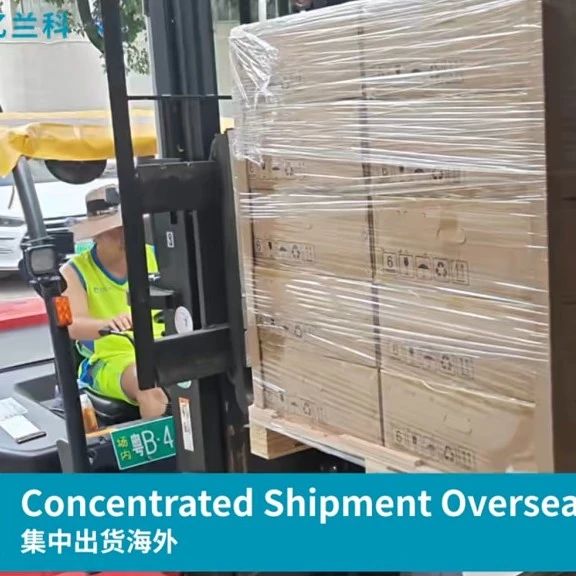
Core Viewpoint - The article highlights recent advancements in the energy storage sector, focusing on significant projects undertaken by companies like Envision Energy, Jinko ESS, and Yilanco, showcasing their international expansion and technological innovations in energy storage solutions [1][6][12]. Group 1: Envision Energy - Envision Energy has secured two energy storage projects in the UK, each with a capacity of 50MW/100MWh, in collaboration with Field, a clean energy company [2][4]. - The Holmston project has already commenced construction, while the Drum Farm project is expected to start in early autumn, with both projects scheduled for completion by the end of 2026 [3]. - Envision Energy has reported a cumulative order scale exceeding 2GWh across 13 projects, indicating a robust growth trajectory in various energy storage sectors [4][5]. Group 2: Jinko ESS - Jinko ESS has won two grid-level energy storage projects in Italy, each with a capacity of 5MWh, set to be delivered in October 2025 and March 2026 [6][10]. - This marks Jinko ESS's entry into the large-scale energy storage market in Italy, providing frequency regulation and renewable energy integration services for the national grid [7]. - The company has disclosed a total order capacity exceeding 6GWh for 2025, reflecting its expanding footprint in the energy storage sector [9]. Group 3: Yilanco - Yilanco has recently shipped nearly 400 PCS units to overseas markets, catering to industrial storage integrators [12]. - The new products integrate an energy management system and multiple energy access distribution switches within a single cabinet, enabling automatic switching between grid power and generators [14]. - These products are designed for multi-energy complementary scenarios, suitable for microgrids, energy storage systems, data centers, and industrial loads [15].
富佳股份20250428
2025-07-16 06:13
Summary of Conference Call Company and Industry - The conference call discusses a manufacturing company with operations in Indonesia and Vietnam, focusing on its export business and new ventures in robotics and energy storage. Key Points and Arguments 1. **Profit Allocation Strategy** The company is transferring profits to its Hong Kong trading company, which aids in overall operational capacity [1] 2. **Revenue Growth** The company reported a 60% revenue growth in Q1, driven by strong business performance and potential contributions from small exports [1] 3. **Q2 Revenue and Profit Outlook** The company anticipates continued growth in Q2, with significant contributions expected from its Vietnam factory [2] 4. **Local Employment Obligations** The company is addressing local government concerns regarding employment and production value, ensuring that new business initiatives can compensate for any reductions in output [3] 5. **Gross Margin Trends** There has been a decline in gross margins from approximately 20% to around 15-16%, attributed to price negotiations with downstream suppliers and rising raw material costs [4] 6. **New Business Ventures** The company is focusing on two new manufacturing areas: energy storage and robotics, with expectations for significant revenue contributions by 2025 [5][6] 7. **Robotics Development** The company is exploring the development of specialized robots for the grain industry, with ongoing research into core components like motors [7][8] 8. **Market Conditions and Pricing** The company does not foresee price increases in the current market, emphasizing the need to optimize internal operations to maintain market share [10] 9. **Inventory Levels** Downstream customers are currently maintaining normal inventory levels, with no significant excess reported [9][18] 10. **Strategic Partnerships** The company is cautious about expanding its operations in Southeast Asia but is considering opportunities in Europe for future growth [19] 11. **Future Business Outlook** The company aims for steady development in 2025, laying the groundwork for further growth and expansion in new business areas [20] 12. **Investment Strategy** The company is currently focused on strategic investments and partnerships, particularly in energy storage projects, while being selective about new market entries [15][16] Other Important but Overlooked Content - The company is actively working on a laser radar project, which is still in the evaluation phase [12] - There are ongoing developments in pest monitoring technology for grain storage, with initial shipments already made [13] - The company has established a dual-brand strategy in the U.S. market, with plans to expand its product offerings [14] This summary encapsulates the key insights and strategic directions discussed during the conference call, highlighting the company's growth prospects and operational challenges.

万里扬: 关于为公司下属子公司提供担保暨关联交易的公告
Zheng Quan Zhi Xing· 2025-07-11 16:13
Summary of Key Points Core Viewpoint - The company Zhejiang Wanliyang Co., Ltd. has approved a guarantee for its wholly-owned subsidiary Foshan Wanliyang New Energy Technology Co., Ltd. to secure a credit limit of up to RMB 400 million from banks and non-bank institutions for a period of 8 years, subject to shareholder approval [1][2][7]. Group 1: Guarantee Overview - The board of directors approved a guarantee for Foshan Wanliyang New Energy Technology Co., Ltd. to apply for a credit limit not exceeding RMB 400 million [1][2]. - The guarantee will be effective for 8 years from the date of approval by the shareholders' meeting [1][2]. - The controlling shareholder, Wanliyang Group Co., Ltd., will provide a full joint liability guarantee under the same conditions [1][7]. Group 2: Subsidiary Information - Foshan Wanliyang New Energy Technology Co., Ltd. was established on May 22, 2024, with a registered capital of RMB 50 million [2]. - The company is 100% owned by Wanliyang Energy Co., Ltd. and focuses on technology services and energy technology research [2][3]. - Recent financial data shows total assets of RMB 63.53 million and total liabilities of RMB 13.92 million as of June 30, 2025 [2]. Group 3: Financial Data of Controlling Shareholder - Wanliyang Group Co., Ltd. has total assets of RMB 1,645.39 million and total liabilities of RMB 826.75 million as of December 31, 2024 [3]. - The group reported a net profit of RMB 25.15 million and operating income of RMB 635.03 million for the same period [3]. Group 4: Guarantee Agreement Details - The guarantee amount is determined based on the operational needs of Foshan Wanliyang and will allow for the actual guarantee amount to be reused within the approved limit [4][5]. - The guarantee will be a joint liability guarantee, and the specific terms will be finalized in the actual guarantee agreement [4][5]. Group 5: Business Operations and Future Plans - Wanliyang Energy Co., Ltd. is engaged in the investment and operation of energy storage power stations and aims to provide flexible power regulation capabilities [6][7]. - The company has operational energy storage projects in Guangdong and Zhejiang provinces, with plans for further development in various regions [4][6]. - The company is also involved in providing services related to power market operations and carbon asset management [5][6].

连拿2单!中企储能最大竞争对手来了?
行家说储能· 2025-07-03 05:03
Core Viewpoint - Tesla has secured two significant energy storage orders, indicating strong demand for its Megapack systems and a growing presence in the energy storage market [2][4]. Group 1: Recent Orders and Projects - Tesla has received a 100MW/400MWh energy storage order from Atmos Renewables for the Merredin Battery Energy Storage System, with a total investment of $145 million, expected to be completed by early 2027 [2][3]. - The Mangoplah battery storage project, also 100MW/400MWh, will utilize 108 Tesla Megapacks, showcasing Tesla's competitive edge in the Australian market [2][3]. - In June, Tesla signed a contract for China's first gigawatt-level grid-side energy storage project, with an investment of 4 billion yuan, aiming for a storage capacity of 300MWh [2][3]. Group 2: Storage Deployment Performance - In Q2 2025, Tesla deployed 9.6GWh of energy storage products, marking its best performance for the second quarter, although it was a slight decrease from 10.4GWh in Q1 [4]. - The cumulative deployment in the first two quarters of 2025 is nearing the total deployment for the first three quarters of 2024, indicating strong growth momentum [4]. Group 3: Production Capacity Expansion - Tesla's Shanghai Gigafactory has begun ramping up production of Megapack systems, with hundreds of units delivered to various regions [6]. - A new lithium iron phosphate battery factory in Nevada is set to commence production, with an initial capacity of 10GWh, utilizing idle equipment from CATL, aimed at producing Megapack batteries and electric vehicle batteries [6].