核聚变

Search documents
安达维尔的前世今生:营收行业第37,净利润排名靠后,毛利率高于行业均值9.31个百分点
Xin Lang Cai Jing· 2025-10-30 13:27
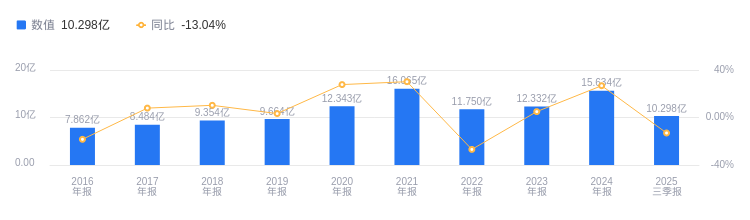
Company Overview - Andavil was established on December 3, 2001, and listed on the Shenzhen Stock Exchange on November 9, 2017. The company is based in Beijing and specializes in airborne equipment in the domestic market, possessing strong technical advantages in aviation equipment maintenance [1] Business Performance - For Q3 2025, Andavil reported revenue of 447 million yuan, ranking 37th out of 48 in the industry, significantly lower than the top competitors, AVIC Xi'an Aircraft Industry Group with 30.244 billion yuan and AVIC Engine with 22.912 billion yuan. The industry average revenue was 3.456 billion yuan, and the median was 1.171 billion yuan [2] - The main business segments include airborne equipment (104 million yuan, 40.40%), aviation maintenance (81.147 million yuan, 30.75%), measurement and control equipment (43.3804 million yuan, 16.44%), and technical services and others (32.7543 million yuan, 12.41%) [2] - The net profit for the same period was -1.571 million yuan, ranking 41st in the industry, far behind the leading company AVIC Shenyang Aircraft Corporation with 1.369 billion yuan and AVIC Aircraft with 1.162 billion yuan. The industry average net profit was 224 million yuan, and the median was 89.7046 million yuan [2] Financial Ratios - As of Q3 2025, Andavil's debt-to-asset ratio was 41.21%, an increase from 35.42% in the previous year and above the industry average of 39.42%, indicating rising debt pressure [3] - The gross profit margin for Q3 2025 was 40.85%, down from 43.59% year-on-year but still above the industry average of 30.54%, suggesting a strong profitability potential [3] Executive Compensation - The chairman, Zhao Zian, received a salary of 1.1185 million yuan in 2024, a decrease of 383,100 yuan from 2023 [4] Shareholder Information - As of September 30, 2025, the number of A-share shareholders decreased by 22.95% to 29,300, while the average number of circulating A-shares held per account increased by 29.79% to 6,123.48 [5]


亚光科技的前世今生:营收行业29,净利润行业53,资产负债率高企下的盈利困境
Xin Lang Cai Jing· 2025-10-30 13:25
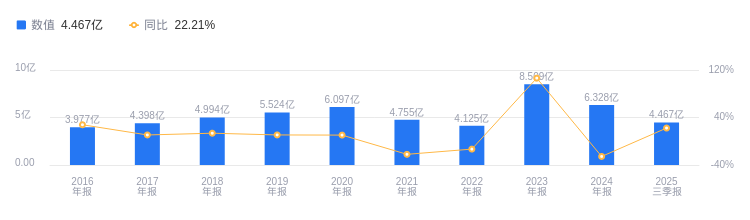
Core Viewpoint - 亚光科技 is a prominent player in the military electronics and boat manufacturing sectors in China, with a focus on electronic components and boat manufacturing services [1] Group 1: Business Overview - 亚光科技 was established on June 3, 2003, and listed on the Shenzhen Stock Exchange on September 28, 2010 [1] - The company operates in military electronics and boat manufacturing, with a strong technical capability and market competitiveness [1] - Main business activities include manufacturing and sales of boats, military electronic components, electronic product trading, and leasing services [1] Group 2: Financial Performance - For Q3 2025, 亚光科技 reported revenue of 667 million yuan, ranking 29th among 64 companies in the industry [2] - The company's revenue breakdown shows that electronic components generated 356 million yuan (69.77%), boat manufacturing contributed 119 million yuan (23.33%), and other services accounted for 34.07 million yuan (6.67%) [2] - The net profit for the same period was -88.43 million yuan, placing the company 53rd in the industry [2] Group 3: Financial Ratios - As of Q3 2025, the asset-liability ratio for 亚光科技 was 66.10%, higher than the previous year's 56.78% and the industry average of 32.84%, indicating significant debt pressure [3] - The gross profit margin was reported at 21.22%, down from 28.36% year-on-year and below the industry average of 34.84%, suggesting a need for improvement in profitability [3] Group 4: Executive Compensation - The chairman, 李跃先, received a salary of 628,900 yuan in 2024, an increase of 348,500 yuan from 2023 [4] - The general manager, 胡代荣, earned 435,600 yuan in 2024, up by 164,900 yuan from the previous year [4] Group 5: Shareholder Information - As of September 30, 2025, the number of A-share shareholders decreased by 0.47% to 81,800 [5] - The average number of circulating A-shares held per shareholder increased by 0.47% to 12,200 [5] - Notable changes among the top ten circulating shareholders include a decrease in holdings by 香港中央结算有限公司 and the entry of 卫星ETF as a new shareholder [5]

芯导科技的前世今生:2025年Q3营收行业第15,净利润第9,资产负债率远低于行业平均
Xin Lang Cai Jing· 2025-10-30 13:25
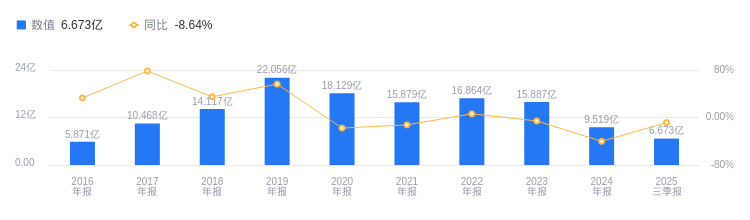
Core Viewpoint - Chip导科技 is a leading company in the domestic power semiconductor sector, focusing on the research and sales of power semiconductors with advanced technology and a complete industrial chain [1] Financial Performance - In Q3 2025, Chip导科技 reported revenue of 291 million, ranking 15th among 18 companies in the industry, with the top company,闻泰科技, achieving 29.769 billion [2] - The company's net profit for the same period was 73.63 million, ranking 9th in the industry, while the top company reported a net profit of 1.505 billion [2] - The revenue from power devices was 166 million, accounting for 90.93% of total revenue, while power IC revenue was 16.54 million, making up 9.07% [2] Financial Ratios - As of Q3 2025, Chip导科技's debt-to-asset ratio was 2.63%, significantly lower than the industry average of 24.02%, indicating strong solvency [3] - The company's gross profit margin was 32.80%, higher than the industry average of 30.71%, reflecting robust profitability [3] Executive Compensation - The chairman and general manager, 欧新华, received a salary of 1.2858 million in 2024, an increase of 42,100 compared to 2023 [4] Shareholder Information - As of September 30, 2025, the number of A-share shareholders decreased by 5.36% to 7,755, while the average number of circulating A-shares held per shareholder increased by 5.66% to 15,200 [5]

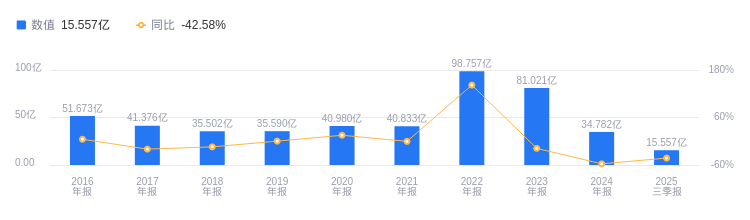
亿晶光电的前世今生:2025年三季度营收15.56亿行业排14,净利润-2.49亿行业排9,资产负债率95.24%高于行业平均
Xin Lang Cai Jing· 2025-10-30 13:25
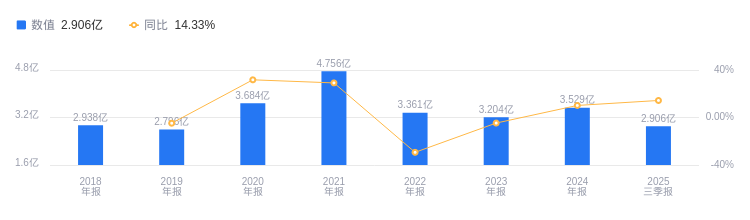
Core Viewpoint - Yichin Photovoltaic is a leading domestic photovoltaic enterprise focusing on crystalline silicon solar cells and modules, with advantages in high-efficiency battery technology [1] Group 1: Business Performance - In Q3 2025, Yichin Photovoltaic reported revenue of 1.556 billion, ranking 14th in the industry, with the top competitor Longi Green Energy generating 50.915 billion [2] - The main business revenue from photovoltaic products was 1.121 billion, accounting for 94.92%, while power generation business revenue was 79.386 million, accounting for 6.72% [2] - The net profit for the same period was -249 million, ranking 9th in the industry, with the industry average at -744 million [2] Group 2: Financial Ratios - As of Q3 2025, the debt-to-asset ratio was 95.24%, up from 72.00% year-on-year, exceeding the industry average of 70.17% [3] - The gross profit margin was 1.83%, an improvement from -9.94% year-on-year, slightly above the industry average of 1.80% [3] Group 3: Executive Compensation - Chairman Chen Jiangming's salary for 2024 was 416,000, a decrease of 171,500 from 2023 [4] - General Manager Liu Qiang's salary for 2024 was 1.275 million, an increase of 149,200 from 2023 [4] Group 4: Shareholder Information - As of September 30, 2025, the number of A-share shareholders increased by 59.38% to 127,100 [5] - The average number of circulating A-shares held per shareholder decreased by 37.26% to 9,310.4 [5]

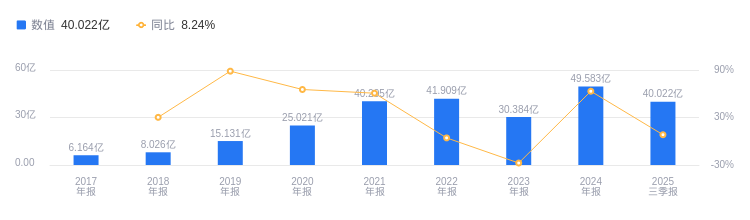
和辉光电的前世今生:2025年三季度营收40.02亿排行业第12,净利润亏损排第37
Xin Lang Zheng Quan· 2025-10-30 13:21
Core Viewpoint - Hehui Optoelectronics is a significant player in the domestic AMOLED semiconductor display panel industry, focusing on small and medium-sized AMOLED panels and possessing a full industry chain advantage [1] Group 1: Business Performance - In Q3 2025, Hehui Optoelectronics reported revenue of 4.002 billion yuan, ranking 12th among 38 companies in the industry [2] - The company's main business, AMOLED semiconductor display panels, generated revenue of 4.817 billion yuan, accounting for 97.16% of total revenue [2] - The net profit for Q3 2025 was a loss of 1.37 billion yuan, placing the company 37th in the industry [2] Group 2: Financial Ratios - As of Q3 2025, Hehui Optoelectronics had a debt-to-asset ratio of 68.44%, which is higher than the industry average of 45.77% [3] - The gross profit margin for Q3 2025 was -13.93%, lower than the industry average of 14.89%, although it improved from -23.70% in the same period last year [3] Group 3: Executive Compensation - The chairman, Fu Wenbiao, received a salary of 2.1163 million yuan in 2024, an increase of 128,600 yuan from 2023 [4] - The general manager, Liu Huiran, earned 2.0714 million yuan in 2024, up by 109,000 yuan from the previous year [4] Group 4: Shareholder Information - As of September 30, 2025, the number of A-share shareholders decreased by 0.61% to 116,000 [5] - The average number of circulating A-shares held per shareholder increased by 0.61% to 49,600 [5]

浙能电力(600023):Q3发电量同比增加,高分红重视股东回报
Shenwan Hongyuan Securities· 2025-10-30 13:20
Investment Rating - The report maintains a "Buy" rating for the company [2] Core Insights - The company reported a total revenue of 58.814 billion yuan for the first three quarters of 2025, a year-on-year decrease of 11.29%, while the net profit attributable to shareholders was 6.230 billion yuan, down 6.96% year-on-year, which aligns with expectations [7] - The increase in electricity generation is attributed to a rise in electricity consumption in Zhejiang province and the commissioning of new units, with total electricity generation reaching 13,523,434.29 million kWh, a year-on-year increase of 4.68% [7] - The company has a high dividend payout ratio, exceeding 50% for two consecutive years, with a dividend of 0.29 yuan per share for 2024, resulting in a dividend yield of 5.42% as of October 29, 2025 [7] - The company is expected to benefit from a decrease in coal costs, providing room for profit recovery despite a decline in electricity prices [7] Financial Data and Profit Forecast - Total revenue forecast for 2025 is 86.123 billion yuan, with a year-on-year decline of 2.1% [6] - The net profit attributable to shareholders is projected to be 7.328 billion yuan for 2025, reflecting a year-on-year decrease of 5.5% [6] - The earnings per share (EPS) is estimated at 0.55 yuan for 2025, with a price-to-earnings (PE) ratio of 10 [6][8]

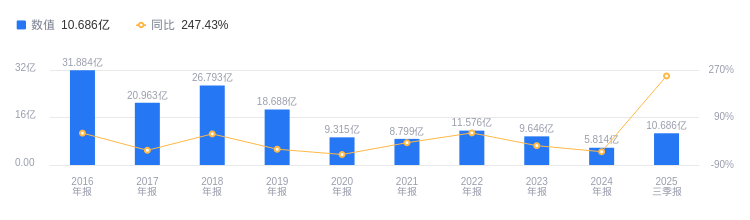
万业企业的前世今生:2025年三季度营收10.69亿行业排42,净利润-6127.46万行业排45
Xin Lang Cai Jing· 2025-10-30 13:19
Core Viewpoint - Wan Ye Enterprise, established in 1991 and listed in 1993, is a significant player in the semiconductor and real estate sectors, with advantages in core components for semiconductor equipment and bismuth material processing [1] Business Performance - In Q3 2025, Wan Ye Enterprise reported revenue of 1.069 billion yuan, ranking 42nd out of 69 in the industry, significantly lower than the top competitors Poly Developments (173.72 billion yuan) and Vanke A (161.39 billion yuan), as well as below the industry average of 11.727 billion yuan [2] - The main business composition includes bismuth deep processing and compound business at 525 million yuan (75.14%), real estate business at 102 million yuan (14.57%), and specialized equipment manufacturing at 71.12 million yuan (10.18%) [2] - The net profit for the period was -61.27 million yuan, ranking 45th in the industry, with a notable gap from the top performers [2] Financial Ratios - As of Q3 2025, the company's debt-to-asset ratio was 28.72%, an increase from 14.58% year-on-year, but still significantly lower than the industry average of 60.51%, indicating strong debt repayment capability [3] - The gross profit margin was 26.20%, down from 59.30% year-on-year, yet still above the industry average of 19.19%, suggesting relative strength in profitability [3] Shareholder Information - As of September 30, 2025, the number of A-share shareholders increased by 3.56% to 52,400, while the average number of circulating A-shares held per shareholder decreased by 3.44% to 17,800 [5] - Notable changes among the top ten circulating shareholders include a decrease in holdings for several funds, while new entrants like the Guotai Junan CSI Semiconductor Materials Equipment Theme ETF appeared [5] Business Growth and Outlook - According to Dongfang Securities, the bismuth material processing business has seen significant revenue growth, with sales reaching 525 million yuan in H1 2025, accounting for 75% of total revenue, and production capacity is expected to expand by year-end [6] - The company has achieved scale production of ion implanters, delivering eight 12-inch ion implanters in H1 2025, with a breakthrough in the safety production of wafer products [6] - Longjiang Securities forecasts substantial growth in revenue and net profit for 2025-2027, driven by core business expansion and new material developments, maintaining a "buy" rating [6]

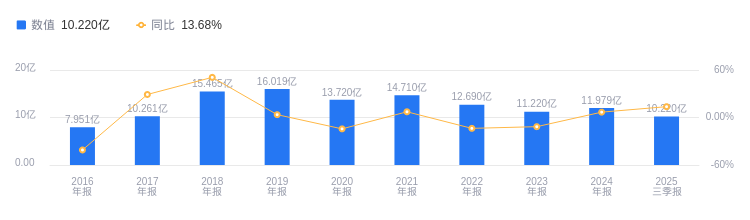
泉阳泉的前世今生:2025年三季度营收10.22亿行业排第7,低于行业平均27.05亿
Xin Lang Cai Jing· 2025-10-30 13:19
Core Insights - The company, Quan Yang Quan, is a leading producer of natural mineral water from Changbai Mountain, with a full industry chain advantage and a scarce water source [1] Financial Performance - For Q3 2025, Quan Yang Quan reported revenue of 1.022 billion yuan, ranking 7th in the industry, with the top competitor, Dongpeng Beverage, generating 16.844 billion yuan [2] - The company's net profit for the same period was 52.7939 million yuan, placing it 6th in the industry, while Dongpeng Beverage led with a net profit of 3.76 billion yuan [2] Profitability and Debt - As of Q3 2025, the company's asset-liability ratio was 66.48%, significantly higher than the industry average of 40.04% [3] - The gross profit margin stood at 36.17%, which is below the industry average of 37.58% [3] Leadership - The chairman, Cheng Yu, holds a PhD in law and has a rich background in various leadership roles, while the general manager, Wang Huaibo, has a degree in economics and extensive experience in the industry [4] Shareholder Information - As of September 30, 2025, the number of A-share shareholders decreased by 6.64% to 40,000, while the average number of shares held per shareholder increased by 7.12% to 17,900 [5]

万事利的前世今生:2025年三季度营收5.19亿低于行业平均,净利润1999.4万行业排名靠后
Xin Lang Zheng Quan· 2025-10-30 13:13
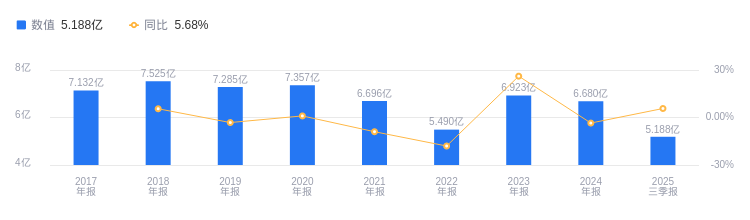
Core Viewpoint - Wan Shili is a leading enterprise in the silk cultural creative sector in China, with a full industry chain advantage from design to sales [1] Group 1: Business Performance - In Q3 2025, Wan Shili's revenue was 519 million yuan, ranking 10th in the industry, significantly lower than the top competitor Taihua New Materials at 4.703 billion yuan and second-place Xin'ao Co. at 3.894 billion yuan [2] - The main business composition includes silk cultural creative products (self-owned terminal brands) at 238 million yuan, accounting for 66.11%, and silk textile products (non-self-owned terminal brands) at 113 million yuan, accounting for 31.27% [2] - The net profit for the same period was 19.994 million yuan, ranking 12th in the industry, with a notable gap from the top competitor Taihua New Materials at 428 million yuan [2] Group 2: Financial Ratios - As of Q3 2025, Wan Shili's debt-to-asset ratio was 24.44%, lower than the previous year's 32.90% and below the industry average of 29.42%, indicating good solvency [3] - The gross profit margin for Q3 2025 was 45.33%, slightly up from 45.07% year-on-year and significantly higher than the industry average of 20.26%, reflecting strong profitability [3] Group 3: Executive Compensation - The chairman, Li Jianhua, received a salary of 1.5008 million yuan in 2024, a decrease of 2,900 yuan from 2023 [4] - The general manager, Yu Zhiwei, saw an increase in salary from 1.2027 million yuan in 2023 to 1.231 million yuan in 2024, an increase of 28,300 yuan [4] Group 4: Shareholder Information - As of September 30, 2025, the number of A-share shareholders decreased by 18.69% to 12,700, while the average number of circulating A-shares held per household increased by 22.98% to 14,900 [5]

平潭发展的前世今生:2025年三季度营收10.3亿行业第一,净利润1330.89万领先同行
Xin Lang Cai Jing· 2025-10-30 13:10
Core Viewpoint - Pingtan Development has established itself as a leading player in the forestry sector, achieving the highest revenue and net profit in its industry for Q3 2025, indicating strong market positioning and operational performance [2][3]. Group 1: Business Performance - For Q3 2025, Pingtan Development reported a revenue of 1.03 billion yuan, ranking first in its industry, with the second competitor, Yong'an Forestry, at 216 million yuan [2]. - The main business segments include fiberboard sales contributing 317 million yuan (42.75%) and real estate sales at 273 million yuan (36.79%) [2]. - The net profit for the same period was 13.31 million yuan, also the highest in the industry, with the second competitor reporting a loss of 20.08 million yuan [2]. Group 2: Financial Ratios - As of Q3 2025, Pingtan Development's debt-to-asset ratio was 40.09%, down from 43.45% year-on-year, which is significantly lower than the industry average of 56.89%, indicating strong solvency [3]. - The gross profit margin for the period was 8.26%, a decrease from 9.99% year-on-year, and below the industry average of 9.65%, suggesting a need for improvement in profitability [3]. Group 3: Executive Compensation - Chairman Liu Pingshan's salary for 2024 was 647,000 yuan, a decrease of 164,000 yuan from 2023 [4]. - General Manager Wang Zhimin's salary for 2024 was 715,700 yuan, down by 163,600 yuan from the previous year [4]. Group 4: Shareholder Information - As of September 30, 2025, the number of A-share shareholders decreased by 2.72% to 97,900 [5]. - The average number of circulating A-shares held per shareholder increased by 2.80% to 19,600 [5]. - Hong Kong Central Clearing Limited is the second-largest shareholder, holding 25.90 million shares, an increase of 21.74 million shares from the previous period [5].