全球化产能布局

Search documents
【私募调研记录】神农投资调研立讯精密、水晶光电
Zheng Quan Zhi Xing· 2025-04-11 00:07
Group 1: Luxshare Precision (立讯精密) - The company stated that the impact of the US tariffs on its exports is limited, as the proportion of finished products exported to the US is relatively small [1] - Luxshare expects customers to request the relocation of products exported to the US to regions with lower tariffs, with Vietnam being a key area due to its advantages in logistics, supply chain, and talent [1] - The company believes that the competitive landscape in the consumer electronics industry will not change significantly due to tariffs, as the supply chain structure primarily depends on corporate competitiveness [1] Group 2: Crystal Optoelectronics (水晶光电) - The company is committed to a global, technology-driven, and open cooperation strategy, continuing to embrace major clients and firmly establishing a dual circulation layout [2] - Crystal Optoelectronics is advancing its production base adjustments and the construction of its Singapore operations center, with AR being identified as a third growth curve [2] - The company has achieved breakthroughs in coating filter technology and expects to capture a significant market share in the future, with the second phase of its Vietnam factory expected to commence mass production in the second half of this year [2]



优化供应链 家居企业能否“硬刚”关税壁垒
Bei Jing Shang Bao· 2025-04-10 15:34
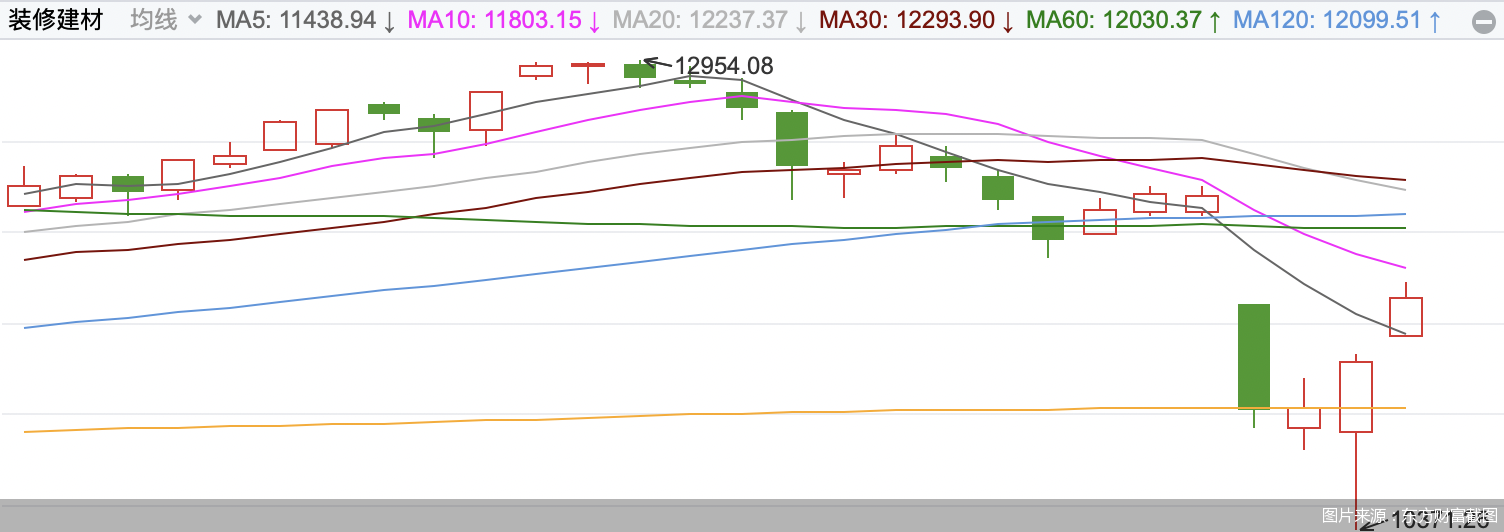
4月9日,装修建材板块小幅拉升,以11636.22点收盘,涨幅3.09%。事实上,在美国4月2日宣布实施所谓"对等关税"举措后,国内诸多家居企业资本市场跳 空低开,股价应声下跌。资本市场的波动,反映出家居行业对于关税的高敏感度。从大幅下跌到缓步回升,展现出了布局海外市场的家居企业较强的抗风险 能力。近年来,中国家居行业加速海外市场布局,部分企业美国市场营收占比超八成。在美国实施所谓"对等关税"后,企业如何应对海外市场变局成为行业 关注重点。 业内人士表示,企业应加快全球化产能布局,在东南亚、墨西哥等关税优惠地区设厂,同时提升产品附加值,向高端化、品牌化转型。尽管短期承压,但中 国家居企业在成本控制、产业链配套等方面仍具优势。长期来看,加速品牌出海、优化全球供应链布局将成为行业突破贸易壁垒的关键。 境外营收占比超八成 家居企业相继"出海",将重心放在海外市场的背后,正是全球家居市场巨大的潜力。Statistic发布的数据显示,预计2024年全球家具市场收入将达到7662亿 美元。在2024年到2028年间,家具市场还将保持5.02%的年复合增长率。 面对全球家具的广阔市场,头部家居企业掀起出海热潮。中国海关总署 ...
汽车行业周报:关税靴子落地,汽车影响有限-2025-04-08
Changjiang Securities· 2025-04-07 23:30
Investment Rating - The report maintains a "Positive" investment rating for the automotive industry [14] Core Insights - The impact of the recent tariffs imposed by the U.S. on China is relatively limited for the automotive sector, primarily affecting parts exports. Strong parts manufacturers have established global production capabilities, particularly in Mexico, which benefits from zero tariffs under the USMCA agreement [2][10] - The overall automotive sales for the week of March 24-30 reached 482,500 units, a 12.3% increase compared to the previous week. New energy vehicle sales were 241,900 units, reflecting an 8.0% increase, with a penetration rate of 50%, down 2.0 percentage points from the previous week [9][10] - The A-share automotive sector experienced a decline of 3.60%, underperforming the CSI 300 index, which fell by 1.37% [9] Summary by Sections Tariff Impact - The U.S. tariffs on Chinese imports have a limited short-term impact on the automotive sector, with parts exports being the primary concern. Companies can potentially shift production to Mexico or other low-tariff regions to mitigate costs [10][23] Market Performance - The automotive sector's performance in the A-share market has been weak, with various sub-sectors showing declines, particularly in commercial vehicle parts and tires [9][11] Sales Data - Total automotive sales for March 2025 reached 1.685 million units, a 23.4% increase year-on-year, with new energy vehicles accounting for 890,000 units, up 27.7% [9][10] Investment Recommendations - The report recommends focusing on the complete vehicle segment and parts manufacturers with strong overseas layouts, particularly those involved in smart driving technologies and robotics [11][12] - Specific companies highlighted for investment include BYD, XPeng Motors, and Geely for smart driving vehicles, and Top Group and Fulin Precision for robotics [11][12] Parts Manufacturing - Some parts manufacturers may face pressure due to declining Tesla sales, but recovery is expected with new vehicle launches in Q2. Companies with operations in Mexico are less affected by the tariffs [12][40]




药明康德再减持药明合联,套现约22亿港元
Huan Qiu Lao Hu Cai Jing· 2025-04-03 03:43
Core Viewpoint - WuXi AppTec has sold 50.8 million shares of its associate WuXi Biologics through block trading, raising approximately HKD 21.78 billion, which is expected to significantly enhance its financial performance in 2025 [1][2]. Group 1: Share Sale Details - The share sale represents 4.23% of WuXi Biologics' total share capital and is part of a series of three sales within six months, totaling a 11.4% reduction in holdings and over HKD 46 billion raised [1]. - WuXi AppTec's subsidiary, WuXi Biologics, remains the second-largest shareholder with a 33.94% stake after the sale [1]. Group 2: Financial Performance - WuXi Biologics reported a revenue of RMB 4.052 billion for 2024, a year-on-year increase of 90.77%, and a net profit of RMB 1.07 billion, up 276.76% [2]. - In contrast, WuXi AppTec's revenue for 2024 was RMB 39.241 billion, a decline of 2.73%, with a net profit of RMB 9.450 billion, down 1.63%, marking the first decline in recent years [2]. Group 3: Strategic Initiatives - The funds from the share sale will be used to accelerate global capacity and capability building, as well as to attract and retain key talent [2]. - WuXi AppTec is expanding its global production capacity, with new facilities in Taixing and Switzerland, and plans for a Singapore R&D and production base to be operational by 2027 [2]. Group 4: Geopolitical Risks - WuXi AppTec faces geopolitical risks, particularly from uncertainties in the U.S. market, where 64% of its revenue (approximately RMB 25.02 billion) is derived [3]. - To mitigate potential risks from U.S. tariffs, the company is accelerating the construction of its Middleton facility, expected to be operational by the end of 2026 [3].