
生态文明

Search documents
中国经济圆桌会|中国是世界经济发展最稳定最可靠的动力源
Xin Hua Wang· 2025-10-18 00:38
Core Insights - China is expected to contribute approximately 30% to global economic growth from 2021 to 2024, positioning itself as a stable and reliable driver of world economic development [1][2] - Despite facing complex external challenges, including the impact of the COVID-19 pandemic, China's economy has maintained a steady growth trajectory, providing continuous momentum for the uncertain global economy [1] - During the 14th Five-Year Plan period, China's energy consumption has supported an average economic growth of 5.5% per year, with energy intensity decreasing by 11.6%, making it one of the fastest countries in reducing energy intensity globally [1] - China's ecological civilization practices have broken the traditional path of "pollution first, governance later," contributing significantly to global climate change responses and green transitions [1] - China has emerged as a source of global innovation breakthroughs, with its innovation index ranking among the top ten globally, marking it as one of the fastest-growing economies in terms of innovation over the past decade [1] - Rapid development of new industries such as artificial intelligence, robotics, and biomedicine is driving China's industrial upgrade towards the mid-to-high end of the value chain, providing technical references and market paradigms for global emerging industries [1]

中国经济圆桌会丨中国是世界经济发展最稳定最可靠的动力源
Xin Hua She· 2025-10-17 13:20
Core Insights - China's contribution to global economic growth remains around 30% annually from 2021 to 2024, positioning it as a stable and reliable driver for world economic development [1][2] - Despite facing complex external challenges, including the impact of the COVID-19 pandemic, China's economy has maintained a steady growth trajectory, continuously providing momentum for the uncertain global economy [1] - During the 14th Five-Year Plan period, China's energy consumption supported an average economic growth of 5.5% per year, with energy intensity decreasing by 11.6%, making it one of the fastest countries in reducing energy intensity globally [1] - China's ecological civilization practices have broken the traditional "pollute first, control later" model, contributing significantly to global climate change responses and green transitions [1] - China is increasingly recognized as a source of global innovation breakthroughs, with its innovation index entering the global top ten, marking it as one of the fastest improving economies in terms of innovation over the past decade [1] - Rapid development of new industries such as artificial intelligence, robotics, and biomedicine is driving China's industrial upgrade towards the mid-to-high end of the value chain, providing technical references and market paradigms for emerging industries worldwide [1]
中国学丨英国作家马丁内斯:中国生态文明建设何以成果丰硕?
Zhong Guo Xin Wen Wang· 2025-10-17 04:49
Core Viewpoint - China's ecological civilization construction has achieved significant results, gaining increasing recognition from the international community, rooted in traditional ecological concepts and a people-centered governance approach [1][3]. Group 1: Observations on China's Ecological Civilization - Carlos Martinez, a British writer, has visited China multiple times since 2019, noting the developed infrastructure and clean cities, which contrast sharply with Western stereotypes of China [3]. - The cleanliness of Chinese cities is attributed to ecological civilization efforts, emphasizing the harmonious relationship between humans and nature, supported by traditional Chinese philosophies [3][5]. Group 2: Achievements in Renewable Energy - As of June 2023, China's renewable energy installed capacity exceeded 2.159 billion kilowatts, accounting for approximately 59.2% of total installed power generation capacity [5]. - China has already met its 2030 targets for total installed capacity of wind and solar power, as well as forest stock volume [5][6]. Group 3: Global Implications and Future Expectations - China's systematic investment in green technologies and focus on renewable energy, nuclear energy, and biodiversity protection has balanced economic development with ecological sustainability [6]. - The achievements in environmental protection and sustainable development have drawn global attention, with expectations for China to play a larger role in addressing environmental issues [6].

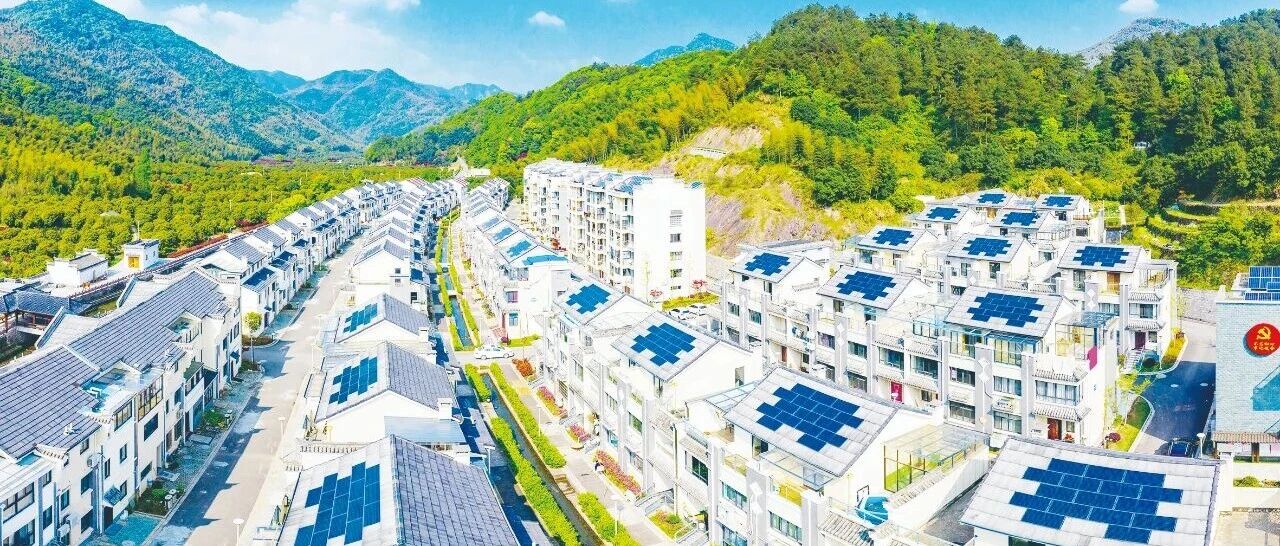
“甬”动绿色未来 奏响生态交响
中国能源报· 2025-10-14 00:07
Core Viewpoint - Ningbo is showcasing its ecological civilization practices through various green transformation projects, including renewable energy initiatives and smart energy solutions, which are contributing to sustainable development and economic growth [1][3][26]. Renewable Energy Development - In 2024, Ningbo's renewable energy generation is projected to reach 131.38 million kilowatt-hours, accounting for 11.32% of the total electricity consumption [3]. - As of mid-2023, Ningbo's installed renewable energy capacity reached 12.24 million kilowatts, ranking first in Zhejiang Province, with wind power at 1.54 million kilowatts and solar power at 10.28 million kilowatts, making it the "first city" for distributed solar power in China [3][4]. Smart Energy Solutions - The Fuming Smart Charging Station in Ningbo integrates charging, battery swapping, solar power, and energy storage, featuring a 114 kW solar roof and an 880 kWh energy storage system [5][7]. - The station's operational performance includes a 32% reduction in peak load, a 50% utilization of off-peak electricity, and an annual contribution of 20,000 kWh for peak shaving [7]. Hydropower and Energy Storage - The Ninghai Pumped Storage Power Station, which began operations in May 2023, has a total installed capacity of 1.4 million kilowatts and is designed to support the stability of the East China Power Grid [11][12]. - The project is expected to generate over 30 billion yuan in GDP annually during its construction phase and increase local tax revenue by 0.6 billion yuan [11][12]. Offshore Wind and Solar Projects - The Xiangshan offshore wind farm has a total installed capacity of 25.4 million kilowatts, with an annual generation of 700 million kilowatt-hours for the first phase and 1.6 billion kilowatt-hours for the second phase [15][17]. - The largest coastal tidal flat solar project in China, located in Xiangshan, has an installed capacity of 300,000 kilowatts and an annual generation of 340 million kilowatt-hours [17][18]. Rural Transformation and Economic Benefits - Li'ao Village has become a model for rural transformation through solar power, with a total installed capacity of 600 kW and an annual generation of approximately 600,000 kWh, providing significant economic benefits to local residents [21][22]. - The village's solar initiative has led to a reduction in electricity costs for residents and has been expanded to other villages in the region, promoting a sustainable rural economy [21][23].
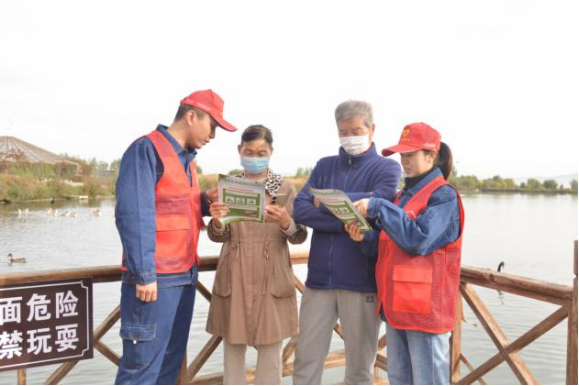
国网张掖供电公司:生态电网守护候鸟生命线
Zhong Guo Neng Yuan Wang· 2025-10-13 01:50
Core Viewpoint - The article highlights the efforts of the State Grid Zhangye Power Supply Company in protecting migratory birds and their habitats in the Zhangye Heihe Wetland National Nature Reserve, emphasizing the importance of ecological conservation alongside power grid operations [3][4][5][7]. Group 1: Conservation Activities - On World Migratory Bird Day, the company organized a volunteer service team to raise awareness about bird protection and wetland conservation among the public [3]. - Volunteers distributed educational materials about local migratory bird species, their habits, and the significance of protecting their habitats [3][4]. - The activities included hands-on experiences at the Zhangye Wetland Museum, allowing participants to learn about the diverse flora and fauna of wetlands [3]. Group 2: Collaborative Research and Technology - The company collaborated with the Beijing Mountain and Water Nature Conservation Center and the management bureau of the Zhangye Heihe Wetland National Nature Reserve to conduct a study on bird habitats along the power lines [4]. - A three-dimensional model was created for 7,225 power poles and 2,046 kilometers of transmission corridors, identifying 56 key bird resting points [4]. - New eco-friendly bird deterrent devices were installed, reducing the risk of bird electrocution to below 0.3% [5]. Group 3: Smart Monitoring and Corporate Responsibility - The introduction of the "Silver Line Scout" intelligent monitoring system has enabled proactive bird collision prevention, reducing accident rates by 83% [7]. - The company is committed to integrating ecological protection with power grid operations, aligning with the principles of ecological civilization and sustainable development [7][5]. - Continuous efforts will be made to explore scientific measures for bird protection and to promote ecological awareness in the community [5][7].
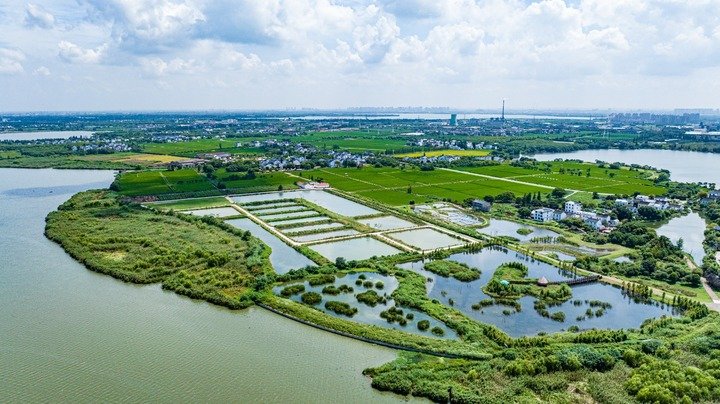
青春华章|幸福河湖,精塑江苏悠悠水韵
Xin Hua Ri Bao· 2025-10-12 07:37
Core Viewpoint - Jiangsu province has made significant progress in ecological governance and water quality improvement through the implementation of the River Chief System, leading to a transformation in the management of rivers and lakes, promoting both economic development and ecological civilization [1][2][3]. Group 1: River Chief System Implementation - The River Chief System originated in Jiangsu after the Taihu blue algae incident in 2007 and was fully implemented across the province by 2018, establishing a governance model that involves party leadership, water conservancy, departmental collaboration, and social participation [2][3]. - Jiangsu has initiated multiple actions, including the "Ecological River and Lake Action" in 2017 and the "Blue Water Defense War" in 2019, which have led to significant improvements in river and lake management [2][3]. Group 2: Systematic Governance Approach - Jiangsu's approach has evolved from "single water treatment" to "holistic ecological management," focusing on the integration of water safety, resource protection, pollution prevention, and ecological restoration [3][4]. - The province has implemented comprehensive ecological restoration projects along major water bodies, including the Yangtze River and Taihu Lake, resulting in improved water quality and biodiversity [4][5]. Group 3: Economic Development through Ecological Improvement - The improvement of water quality in rivers like the Yong'an River has attracted businesses, contributing to local economic growth and the establishment of new industries [6][7]. - Jiangsu is integrating ecological tourism with economic development, as seen in Suqian, where significant investments have been made in integrated protection projects, enhancing both the environment and local economies [7][8]. Group 4: Future Goals and Initiatives - The ultimate goal of the happiness river and lake initiative is to ensure that the ecological benefits are shared by the public, linking ecological restoration with rural revitalization and urban-rural integration [7][8]. - Jiangsu aims to continue its efforts in ecological governance, with plans to further enhance the quality of its rivers and lakes, ensuring sustainable development and environmental protection [8].
襄阳全面强化河湖长制,加快建设美丽幸福河湖
Zhong Guo Huan Jing Bao· 2025-10-09 07:09
Core Viewpoint - The article emphasizes the importance of water resource management and ecological restoration in Xiangyang, Hubei Province, as part of the broader strategy for sustainable development and environmental protection in the region [1][2][3]. Group 1: Water Resource Management - Xiangyang has a rich water resource network with 1,154 reservoirs and 985 rivers, which is crucial for the city's development [1]. - The city aims to ensure long-term water safety by implementing strict water resource management policies, including a negative list for risk prevention and a flood control system with a target of over 90% compliance [1][2]. - In 2024, Xiangyang plans to keep its total annual water usage and water usage per unit of GDP below provincial control indicators, showcasing a commitment to efficient water use [2]. Group 2: Environmental Improvement Initiatives - The city is focused on creating a livable water environment by completing environmental remediation in 180 administrative villages and managing wastewater in 300 villages [2]. - Efforts are being made to restore small water bodies and enhance public access to water spaces, contributing to the overall quality of life for residents [2]. - The ecological restoration actions aim to build green corridors and protect biodiversity in the Han River basin, aligning with the "Ten-Year Fishing Ban" in the Yangtze River [2]. Group 3: Cultural and Historical Integration - The article highlights the promotion of Xiangyang's unique water culture through the restoration of historical sites along the Xiang River, creating a cultural tourism circuit [3]. - The integration of cultural heritage with environmental initiatives is intended to enhance the region's appeal and foster community engagement [3].
“杭九”两地共同挖掘乡村振兴数字新动能
Mei Ri Shang Bao· 2025-10-09 03:20
Group 1 - The core idea of the news is the collaboration between rural areas and urban centers to leverage digital technology for rural revitalization and ecological transformation [1][2][3] - The exchange program involved 40 representatives from rural areas in Sichuan province visiting Hangzhou to learn about digital empowerment and innovative practices [1] - The initiative aims to create a replicable model for transforming traditional agriculture into smart agriculture and converting ecological resources into digital assets [1][2] Group 2 - The transformation of New Yu Village showcases a successful case of ecological restoration and industrial transformation, integrating high-efficiency ecological agriculture with tourism [2][3] - The "Zhangshu Under the Tree" governance model in Xiaogucheng Village demonstrates effective community participation in planning and decision-making, leading to significant increases in tourism revenue and per capita income [3] - The visit to various technological innovations in Hangzhou highlighted the role of technology in enhancing public services and traditional industries, such as smart collars for livestock tracking [5][6] Group 3 - The cultural and historical significance of the region was emphasized through visits to sites like the South Lake Revolutionary Memorial, connecting local history with current development efforts [7][8] - The exchange program participants recognized the need for adopting advanced practices from Hangzhou, particularly in e-commerce and agricultural product sales, to enhance local economic development [8]
生态文明主题国际研讨会在保加利亚召开
Xin Hua Wang· 2025-10-09 02:28
Core Points - The international seminar on "Ecological Civilization and the Philosophical Foundation, Cultural Dimensions, and Social Values of Sustainable Development" opened in Sofia, Bulgaria, with experts discussing the cultural roots of ecological civilization and policies for green transformation [1][2] - The event aims to promote dialogue between philosophy, social sciences, and natural sciences to enrich ecological transformation [1] - China expressed its willingness to strengthen cooperation with the international community, including Europe and Bulgaria, to address climate change and promote a fair global governance system [1] Group 1 - The seminar features participation from experts and scholars from various countries, including Bulgaria, China, Belgium, Brazil, and the United States, who will present academic reports over four days [2] - The event is organized by the Institute of Philosophy and Sociology of the Bulgarian Academy of Sciences, with support from institutions like the Xinhua News Agency [2] - The significance of the seminar lies in fostering collaboration among experts from different regions and scientific fields to address global challenges and create a better future for people worldwide [1]
中国绿化基金会40年完成生态修复700万亩
Ren Min Wang· 2025-10-08 07:24
Core Points - The China Green Foundation has mobilized hundreds of millions of people for land greening over the past 40 years, raising over 5 billion yuan in ecological public welfare funds and planting more than 1.5 billion trees [1][2] - The foundation has implemented over 3,000 key ecological projects, including windbreaks, urban greening, grassland restoration, wetland protection, water source conservation, forest quality improvement, and biodiversity protection, covering an ecological restoration area of 7 million acres [1] - The foundation emphasizes the importance of aligning with national policies and enhancing public participation in green initiatives through an integrated online and offline action system [1] Recommendations and Future Directions - The National Forestry and Grassland Administration suggests that the China Green Foundation should optimize resources, standardize project management, and enhance support for the "Three-North" project to contribute more to ecological efforts [2] - The foundation aims to focus on key areas such as the "Three-North" project, biodiversity protection, and international cooperation, while strengthening its role as an ecological charity platform [1][2]