Autonomous vehicles

Search documents
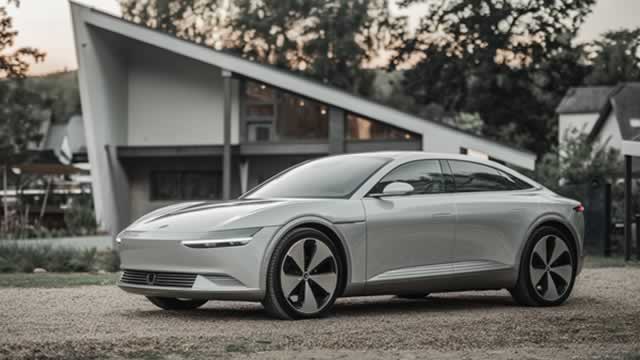
Tesla said it would start making its cheaper EV by June. It's keeping quiet about the mysterious project — here's what we know.
Business Insider· 2025-07-03 11:27
Core Viewpoint - Tesla's timeline for launching an affordable electric vehicle (EV) continues to slip, with production now expected to start in late 2025, despite earlier promises for the first half of 2025 [1][9][14]. Group 1: Production Timeline and Challenges - Tesla initially announced plans to produce a $25,000 EV in 2020, but concrete details have been lacking since then [3]. - In January 2022, CEO Elon Musk stated that the affordable EV project was deprioritized due to other ongoing projects [4]. - Following a drop in stock price due to reports of the project being canceled, Tesla indicated it would accelerate plans for affordable models, aiming for production in late 2024 or early 2025 [12][15]. Group 2: Market Competition and Demand - Tesla faces increasing pressure from cheaper competitors, particularly in China, such as BYD, and from Western manufacturers expanding their EV offerings [2]. - The need for a more affordable model is underscored by a general slowdown in EV adoption, making it crucial for Tesla to remain competitive [2][3]. Group 3: Internal Communications and Investor Sentiment - Reports from Reuters suggested that internal communications indicated the affordable EV project was scrapped, which Musk denied, asserting that a great product at a great price would lead to excellent sales [10][11]. - Despite Musk's optimistic timelines, there is skepticism among investors regarding the feasibility of the proposed production schedules for affordable models [9][14].


Aeva & Mobileye: LiDAR Stocks Powering the Autonomous Revolution
MarketBeat· 2025-07-02 13:40
Core Insights - The launch of Tesla's Robotaxi in Austin marks a significant step in the autonomous vehicle (AV) sector, joining Waymo in offering driverless rides to consumers, indicating a competitive landscape that may benefit consumers through cost and efficiency improvements [1][2] - Waymo has established a lead in the driverless taxi race, leveraging advanced LiDAR technology, which has contributed to its impressive safety record and successful commercial operations in multiple cities [3][4][8] Technology Comparison - Waymo has logged over 56 million driverless miles across various cities, with plans for international expansion in 2025, showcasing its operational scale and ambition [3] - The primary technological difference between Waymo and Tesla lies in the use of LiDAR by Waymo, which provides high-resolution 3D mapping and precise object detection, while Tesla relies on a camera and AI-based system [4][6][7] Company Performance - Aeva Technologies has seen a remarkable 1,400% stock increase over the past year, attributed to its innovative 4D LiDAR system that measures both distance and velocity, distinguishing it from competitors [9][10] - Aeva anticipates revenue growth of 70% to 100% in 2025, projecting revenues between $15 million and $18 million, with a Q1 2025 revenue of $3.4 million, up from $2.1 million year-over-year [11] - Mobileye Global has faced a 35% decline in stock value over the past year, but its advanced driver-assistance systems and partnerships in autonomous technology may provide a path for recovery [12][14] Market Dynamics - Analysts express skepticism regarding Mobileye's stock despite its profitability, as it reported a Q1 2025 EPS of $0.08, indicating a stable financial position [14][15] - The competition in the AV sector is intensifying, with companies like Aeva Technologies and Mobileye Global positioned to capitalize on the growing demand for autonomous vehicle technology [8][12]


Tesla Set For Rebound Thanks To Robotaxis And Strong Cash Flow: Analyst
Benzinga· 2025-06-26 15:36
Group 1 - Benchmark analyst Mickey Legg maintained a Buy rating on Tesla and raised the price target from $350 to $475, indicating confidence in the company's future performance [1] - Tesla is a Benchmark Top Pick for 2025, reflecting strong expectations for growth and market positioning [1] - The stock has experienced significant volatility, reaching a high of $488 in December and declining by 33% before rebounding by 54% from a low of $213 in April [3] Group 2 - New regulations for autonomous vehicles in Texas, effective September 1, are expected to enhance public trust and facilitate Tesla's expansion into additional cities [2] - Tesla's approach to autonomous vehicles, focusing on a camera-based system, is seen as cost-effective and scalable compared to competitors like Waymo, which has a higher average cost per vehicle [4] - The company is transitioning from a vehicle OEM to a high-tech automation and robotics firm, with plans for growth in the Robotaxi business, model refreshes, and Optimus robots [5] Group 3 - Tesla's balance sheet is strong, with $37.0 billion in cash and equivalents, and it generated over $600 million in free cash flow in the first quarter, indicating ample resources for future growth [6] - Projected second-quarter revenue is $22.7 billion with an EPS of $0.33, suggesting solid financial performance despite potential short-term challenges [6] - TSLA stock was up 0.39% at $328.79, reflecting positive market sentiment [6]
X @Tesla Owners Silicon Valley
Tesla Owners Silicon Valley· 2025-06-22 05:12
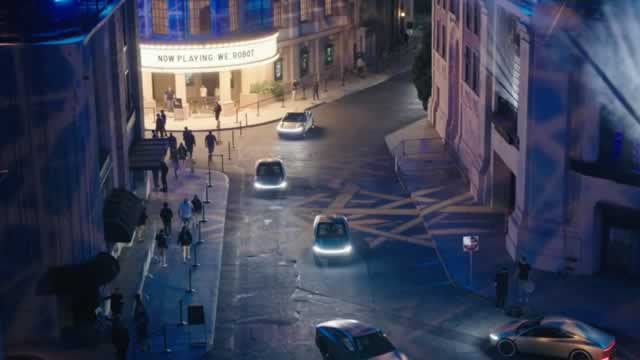
Boom!I’m here in Austin Texas ready to experience the future of transportation and autonomous vehicles.Huge shoutout to the Tesla team for this huge milestone. https://t.co/S7422P5VMM ...
X @Tesla Owners Silicon Valley
Tesla Owners Silicon Valley· 2025-06-21 12:44
🚨 BREAKING: Seven Texas Democratic lawmakers are urging Tesla to pause its Robotaxi launch in Austin until September 1, when new autonomous vehicle regulations take effect .They’re pushing for state-level AV safety approvals, comprehensive documentation, and emergency protocols before rolling out Tesla’s driverless Model Ys ...
X @Tesla Owners Silicon Valley
Tesla Owners Silicon Valley· 2025-06-16 23:59
RT Tesla Owners Silicon Valley (@teslaownersSV)We're standing at the threshold of a new era.Autonomous vehicles are right around the corner, and it will come with the flip of a switch.Huge shoutout to everyone at Tesla, especially Elon, who’ve poured their blood, sweat, and tears into Autopilot and FSD over the years! https://t.co/fjwArnnx0S ...
X @Tesla Owners Silicon Valley
Tesla Owners Silicon Valley· 2025-06-16 17:04
🚨 UPDATE:The NHTSA is officially fast-tracking approvals for fully autonomous vehicles — including Tesla’s Cybercab!The agency will now streamline exemptions for vehicles without steering wheels or pedals, reducing approval times from years to just months. https://t.co/cB8NNVZLhi ...
Billionaires Sell Nvidia Stock and Buy a Robotaxi Stock Up 300% in 3 Years (Hint: Not Tesla)
The Motley Fool· 2025-06-16 08:18
Nvidia - Nvidia is a market leader in data center GPUs, holding over 90% market share, with a forecasted annual growth rate of 28% through 2030 [3] - The company has developed a robust software platform called CUDA, which includes tools for building AI applications across various disciplines [4] - Nvidia's vertical integration allows it to design systems with the lowest total cost of ownership, streamlining the development process for developers [5] - Wall Street estimates Nvidia's earnings will grow at 28% annually over the next three years, making its current valuation of 46 times earnings appear fair [6] - Hedge fund managers sold Nvidia shares in Q1, with David Tepper reducing his position by 56% and Steven Schonfeld by 72%, while concerns about export controls and competition from DeepSeek were noted [8][7] Uber Technologies - Uber holds a 76% share of the U.S. ride-sharing market and ranks second in the restaurant food delivery market with a 24% share [10] - The investment thesis for Uber includes potential growth in market share for ride-sharing and food delivery, as well as increasing advertising revenue from consumer data [11] - Uber is positioned as a demand aggregator for autonomous ride-sharing, with a U.S. market valuation of $1 trillion, and is already collaborating with several autonomous vehicle companies [12] - Uber's stock trades at 15 times earnings, which is a discount compared to its one-year average of 40 times earnings, with earnings forecasted to grow at 25% annually over the next three years [13]



Nvidia CEO says this is the decade of robotics and autonomous vehicles
CNBC· 2025-06-12 10:38
Group 1 - Nvidia CEO Jensen Huang predicts significant growth in autonomous vehicles (AVs) and robotics in the coming decade, emphasizing it as the "decade of AV, robotics, autonomous machines" [1] - Nvidia is a key player in the development of driverless vehicles, providing both hardware and software solutions for AVs [2] - The presence of self-driving cars is increasing in the U.S., with companies like Waymo operating robotaxi services in major cities [2] Group 2 - Chinese companies such as Baidu and Pony.ai are also actively deploying their own robotaxi fleets, indicating a competitive landscape in the AV sector [2]
Better Autonomous Driving Stock: Tesla or Uber? The Answer Might Surprise You.
The Motley Fool· 2025-06-11 09:43
Core Viewpoint - Tesla is a leader in the electric vehicle industry, but its focus on autonomous full self-driving (FSD) software may not be enough to maintain its competitive edge against companies like Uber, which is advancing in the commercialization of autonomous driving technology [1][2][17]. Tesla's Position - CEO Elon Musk has promised self-driving cars since the early 2010s, with plans to launch the Cybercab robotaxi in Texas and California this year [4]. - The Cybercab operates entirely on Tesla's FSD software, which has shown to outperform human drivers significantly, with a crash rate of one every 7.44 million miles compared to one every 702,000 miles for manual drivers [5][6]. - If FSD receives approval for unsupervised use, it could transform Tesla's economics by generating consistent revenue from passenger transport and small commercial deliveries [7][8]. - Ark Investment Management estimates that the Cybercab could generate $756 billion in annual revenue from autonomous ride-hailing by 2029, contingent on regulatory approval and market acceptance [8]. Uber's Position - Uber operates the largest ride-hailing network globally, with over 170 million monthly users, giving it a significant advantage over Tesla, which is starting from scratch [9]. - As of Q1 2025, Uber had 18 partnerships with autonomous technology developers, up from 14 six months prior, including a partnership with Waymo, which is already conducting over 250,000 paid autonomous rides weekly [10][11]. - Uber's gross bookings reached $42.8 billion in Q1, with a revenue of $11.5 billion after driver payments and merchant payouts, indicating a strong financial position [12]. - The potential to reduce driver costs through autonomous vehicles could significantly enhance Uber's profitability, as driver expenses are its largest cost [13]. Comparative Analysis - Uber's model allows it to partner with multiple autonomous vehicle developers without significant capital investment, providing flexibility and resilience against market changes [14]. - In contrast, Tesla must invest heavily in manufacturing Cybercabs, improving FSD, and building a ride-hailing network, which poses existential risks given its declining EV sales [15]. - Tesla's current stock valuation is high, with a P/E ratio of 171 compared to the Nasdaq-100's 30.6, making it difficult to justify its premium valuation amid shrinking earnings [16].