
Unemployment

Search documents
Why Gen Z Can’t Find Work—and How It Could Shape Their Future
Investopedia· 2025-12-12 17:00
Core Insights - Young people are facing significant challenges in the job market, with a higher unemployment rate for recent college graduates at 4.8% compared to 4.0% for all workers, indicating potential long-term negative consequences for this demographic [1][3]. Group 1: Job Market Conditions - The current job market for recent graduates is the worst compared to the general workforce, despite not being the worst overall in history [3]. - Companies are slowing down hiring due to economic uncertainties, which is making it difficult for new graduates to secure jobs [3][4]. - Experts suggest that young job seekers should remain flexible and broaden their job search beyond specific roles or industries to improve their chances of employment [3][7]. Group 2: Economic Implications - Historical data indicates that entering the labor market during a downturn can lead to persistent declines in earnings and adverse health outcomes for young individuals [5][6]. - The current economic climate, while not in recession, poses risks for new graduates, as previous studies show long-term negative effects on earnings and overall well-being for those who start their careers in challenging conditions [5][6]. Group 3: Industry Insights - There is speculation that the rise of AI may be impacting entry-level job availability, but experts argue that economic policy uncertainties, such as tariffs, may be a more significant factor [4]. - Growth in sectors like healthcare presents opportunities for graduates, as these industries continue to hire despite broader market challenges [8].


X @Bloomberg
Bloomberg· 2025-12-11 13:42
Applications for US unemployment benefits rose last week by the most since the onset of the pandemic, after a big drop during the Thanksgiving holiday week https://t.co/GvlRD2FnuM ...
Will Fed’s Latest Rate Cut Be Powell’s Last?
Yahoo Finance· 2025-12-11 05:01
Core Viewpoint - The Federal Reserve's Open Market Committee (FOMC) cut the key overnight borrowing rate to 3.5%-3.75%, aligning with market expectations, but future rate cuts may be limited due to inflation concerns [1][2][3] Group 1: Federal Reserve Actions - The FOMC's decision to cut rates was a 9-3 vote, indicating a division among members regarding the need for further cuts to support the labor market versus concerns about inflation [2] - The Fed's preferred inflation gauge is currently at 2.8%, above the 2% target, with expectations to decrease to approximately 2.4% by the end of 2026 [2] - The FOMC's dot plot suggests only one rate cut is anticipated in 2026, indicating a higher threshold for future cuts [3] Group 2: Market Reactions - Rate-sensitive investments saw a rally, with the small-cap Russell 2000 index increasing by 1.3% and the State Street SPDR S&P Homebuilders ETF rising by 3% [5] - Historical data indicates that stocks perform well during non-recession periods when the Fed cuts rates, averaging a 15% annualized return since 1970 [5] - Some analysts caution that optimism regarding the pace of future rate cuts may be overstated, suggesting that the anticipated timeline for lower interest rates could be longer than expected [5]
Economist reveals what 'surprised' people about Powell's rate cut
Youtube· 2025-12-11 05:00
Economic Outlook - The American economy is not overheating, and there are no immediate signs of a hot economy that would lead to significant inflation [1][2] - The Employment Cost Index (ECI) report suggests that inflation is not being driven by a tight labor market [2][3] Federal Reserve Actions - The Federal Reserve announced a mild quantitative easing (QE) program, starting with Treasury bill purchases, which was above market expectations [3][4] - There is a shift from quantitative tightening (QT) to QE, indicating a more accommodative monetary policy [4][11] Inflation and Tariffs - Powell indicated that the effects of tariffs on inflation are temporary, and if no new tariffs are imposed, inflation could decrease in the latter half of next year [5][8] - The recognition that tariff impacts are one-time increases rather than ongoing inflationary pressures is seen as a positive development [10] Employment Data - Powell suggested that payroll numbers may be revised to show slight negative growth, which aligns with recent ADP data [11][12] - The discussions within the Fed are characterized as thoughtful and respectful, reflecting a range of opinions on monetary policy direction [18] Corporate Engagement - President Trump is engaging with CEOs from major companies like IBM and Qualcomm to discuss the impact of AI on the economy, which Powell acknowledged as beneficial [13]

After December Cut, The Fed's Next Move Is Far From Certain
Investopedia· 2025-12-11 01:00
Core Points - The Federal Reserve cut its key rate by a quarter-point for the third consecutive meeting, bringing the fed funds rate to a range of 3.5% to 3.75% [1][2] - Fed Chair Jerome Powell indicated that the current rate is at the high end of the "neutral" range, suggesting a balance between stimulating the economy and controlling inflation [2] - Fed officials project only one further quarter-point rate cut next year, contingent on incoming economic data and the evolving outlook [3] Economic Implications - The Fed's divided views on rate cuts indicate that upcoming economic reports could influence decisions, particularly if unemployment rises unexpectedly or inflation increases [4][9] - Key reports on inflation and the job market are expected soon, which will provide more clarity on whether further rate cuts are necessary [5] - Financial markets currently price in a 22% chance of a fourth consecutive rate cut in January [6] Internal Fed Dynamics - There was dissent among Fed officials regarding the rate cut, with two members opposing the decision and six others suggesting that keeping rates flat was appropriate [7] - The divided vote reflects the Fed's challenging position of managing rising unemployment alongside accelerating inflation [7][10] - Powell noted that inflation this year has been significantly influenced by tariffs imposed during the previous administration, affecting consumer prices [10][11]
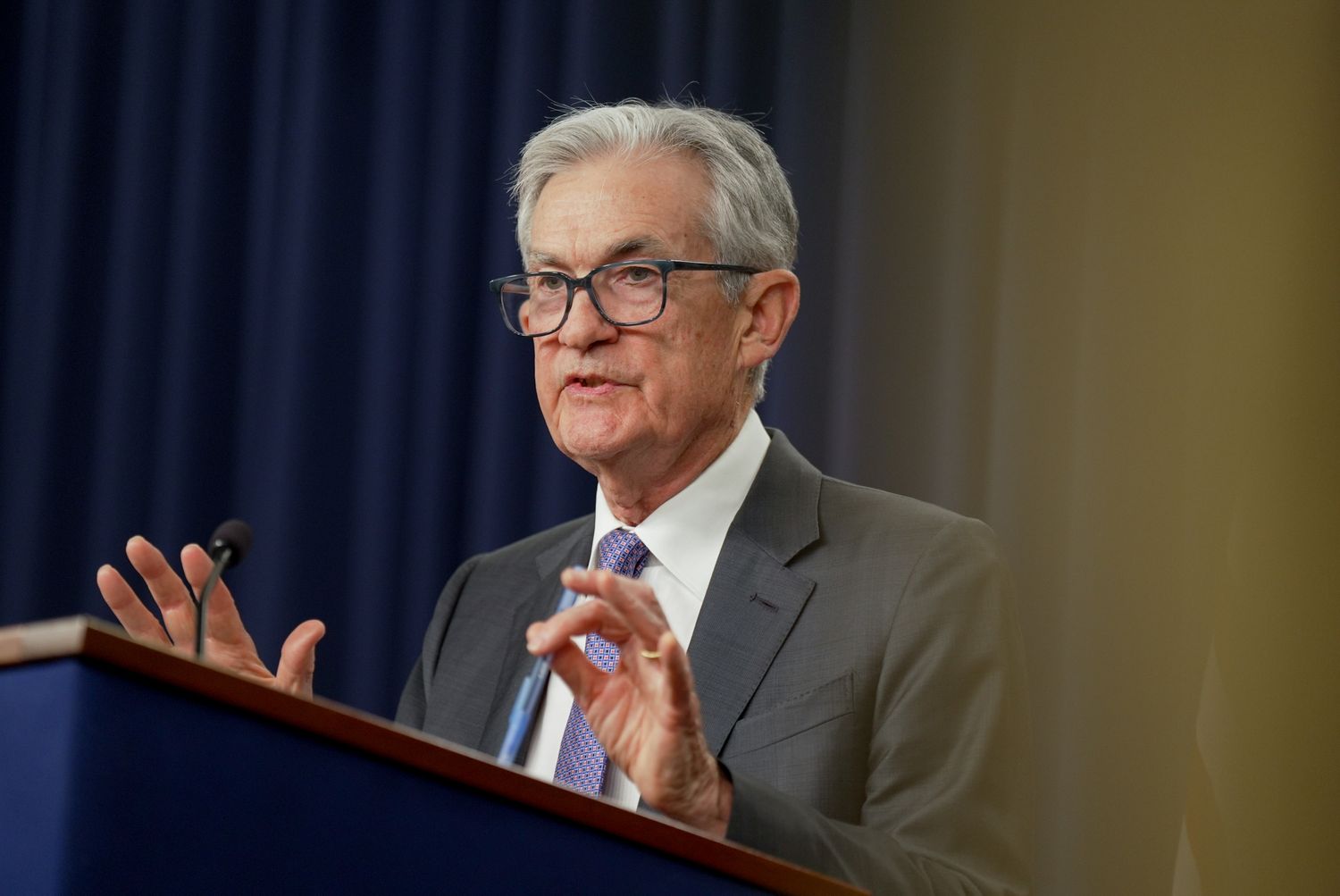
X @Bloomberg
Bloomberg· 2025-12-11 00:44
Labor Market Conditions - Australian unemployment rate remained stable despite unexpected job losses [1] - Fewer individuals seeking employment indicates a gradual easing of the labor market [1] Monetary Policy Implications - The observed labor market trends may provide the Reserve Bank with leeway to maintain the current interest-rate pause [1]
Federal Reserve System (:) Update / Briefing Transcript
2025-12-10 20:32
Summary of Key Points from the Conference Call Industry or Company Involved - The discussion primarily revolves around the Federal Reserve's monetary policy and its implications for the U.S. economy, particularly focusing on employment and inflation. Core Points and Arguments 1. **Monetary Policy Adjustments** The Federal Open Market Committee (FOMC) decided to lower the policy interest rate by 0.25 percentage points to a range of 3.5%-3.75% to support maximum employment and stable prices [1][5][6] 2. **Economic Growth Projections** The median projection for real GDP growth is 1.7% for the current year and 2.3% for the next year, indicating a stronger outlook than previously projected [3][14] 3. **Labor Market Conditions** The unemployment rate has increased to 4.4%, with job gains slowing significantly. Layoffs and hiring remain low, but perceptions of job availability are declining [3][4][31] 4. **Inflation Trends** Total Personal Consumption Expenditures (PCE) prices rose by 2.8% over the past year, with core PCE prices also increasing by 2.8%. Inflation remains elevated compared to the Fed's long-term goal of 2% [4][5] 5. **Risks to Employment and Inflation** The balance of risks has shifted, with downside risks to employment increasing and inflation risks remaining tilted to the upside [5][6][20] 6. **Impact of Tariffs on Inflation** The effects of tariffs are contributing to inflation, particularly in goods, while disinflation is observed in services. The Fed aims to ensure that one-time price increases do not lead to ongoing inflation issues [4][6][32] 7. **Expectations for Future Rate Adjustments** The FOMC is positioned to evaluate future rate adjustments based on incoming data and the evolving economic outlook. The current policy stance is seen as neutral [12][20][40] 8. **Consumer Spending Dynamics** Consumer spending remains solid, driven by higher-income households, while lower-income consumers are facing challenges due to rising prices. This creates a K-shaped recovery scenario [61][63] 9. **Housing Market Challenges** The housing market remains weak, with low supply and high mortgage rates from previous refinancing. The Fed's rate cuts may not significantly improve affordability in the housing market [64][65] 10. **Technological Impact on Employment** The rise of AI and automation is acknowledged as a factor in job market dynamics, with potential implications for productivity and job creation [55][67] Other Important but Overlooked Content 1. **Dissenting Opinions within the FOMC** There were notable dissenting opinions regarding the recent rate cuts, indicating a divided view on the appropriate monetary policy direction [19][21] 2. **Data Collection Challenges** The Fed highlighted potential distortions in labor market data due to collection issues, emphasizing the need for careful analysis of upcoming data releases [22][23] 3. **Long-term Inflation Expectations** Despite current inflation levels, long-term inflation expectations remain anchored around the Fed's 2% target, suggesting confidence in achieving this goal over time [5][46] 4. **Legacy of Current Leadership** The current Fed Chair expressed a desire to leave the economy in good shape, with controlled inflation and a strong labor market, as part of their legacy [70]
Fed Chair Powell: Very unusual to have persistent tension between parts of dual mandate
Youtube· 2025-12-10 20:21
Core Viewpoint - The Federal Open Market Committee (FOMC) is experiencing internal divisions regarding monetary policy decisions, particularly concerning interest rate cuts, indicating a complex economic environment [1][4]. Group 1: FOMC Decision Dynamics - The recent decision saw nine out of twelve members supporting it, reflecting a broad but not unanimous consensus [4]. - There is a notable reluctance among several members to endorse further reductions, suggesting a higher threshold for future cuts [2][5]. - Discussions within the FOMC are characterized as thoughtful and respectful, with members holding strong, differing views on the economic outlook [3][9]. Group 2: Economic Indicators and Data Assessment - The FOMC acknowledges that inflation remains high and the labor market has softened, creating a tension between its dual mandate [2][10]. - Upcoming economic data, particularly from household surveys, may be distorted due to technical issues in data collection, necessitating careful analysis [6][7]. - The committee anticipates receiving significant data by the January meeting, which will be crucial for future policy decisions [8]. Group 3: Risks and Uncertainties - There is a consensus among FOMC members that risks related to unemployment and inflation are skewed to the upside, complicating decision-making [10]. - The committee is positioned to wait and observe how the economy evolves before making further moves, indicating a cautious approach [5][11].

Fed cuts rates as dissents loom at key December meeting
Yahoo Finance· 2025-12-10 19:37
Economic Outlook - Some officials view the economy as cooling in a controlled manner, while others express concern that deterioration could accelerate if borrowing costs remain high for an extended period [1] - Hiring has slowed and wage growth has decelerated, yet unemployment remains low by historical standards [1] Federal Reserve Actions - The Federal Open Market Committee (FOMC) lowered the interest rate by a quarter percentage point in both September and October due to labor market concerns, maintaining a cautious "wait-and-see" approach influenced by tariff inflation and trade policy [2] - The FOMC signaled a potential pause in rate cuts in the short term, with the Federal Funds Rate now set between 3.50% and 3.75% following a 25-percentage-point cut in December [5][6] - The Fed plans to buy $40 billion of Treasury bills monthly starting December 12 to ensure sufficient cash in the financial system, marking a shift from previous balance sheet reduction strategies [13][15] Inflation and Employment - The Fed's dual mandate requires balancing inflation and job growth, with current inflation levels deemed too high and the labor market showing signs of softening [9][10] - Powell indicated that the Fed has done enough to support employment while keeping rates high enough to manage price pressures [7] Future Projections - The quarterly Summary of Economic Projections suggests one more quarter-point rate reduction is expected in 2026, with growth upgraded to 2.3% primarily due to adjustments from the government shutdown [4][19] - The "dot plot" will be closely monitored for insights into the Fed's future rate strategy, with a small number of projected cuts indicating caution among policymakers [17][18]