军国主义
Search documents
新华时评丨错判时与势,注定撞南墙
Xin Hua She· 2025-11-16 13:19
Group 1 - The article discusses the provocative remarks made by Japan's Prime Minister, Kishi Suga, regarding Taiwan, suggesting potential military intervention, which reflects the extreme stance of Japan's right-wing forces [1][2] - It emphasizes that Japan should learn from its historical mistakes, particularly in the context of the 80th anniversary of the victory in the Anti-Japanese War and the liberation of Taiwan, and should pursue a path of peaceful development [2][3] - The article asserts that China has the strong will and capability to defend its sovereignty and territorial integrity, dismissing any attempts by Japan to revive militaristic ambitions as futile [2][3] Group 2 - The article highlights recent developments in China's military capabilities, including the commissioning of the third aircraft carrier, Fujian, and the successful return of the Shenzhou 20 astronaut crew, showcasing China's economic and technological strength [2][3] - It reiterates that Taiwan is an inseparable part of China and that the unification of Taiwan with the mainland is an unstoppable historical trend [3]
专栏丨什么样的“毒土”,长什么样的“毒苗”
Xin Hua Wang· 2025-11-15 13:18
Core Viewpoint - The article discusses the provocative statements made by Japanese Prime Minister Sanna Takashi regarding Taiwan, highlighting a pattern of historical revisionism, colonial mentality, militarism, and erroneous perceptions of China that underpin her actions [1][2][3]. Group 1: Historical Revisionism - Takashi has gained notoriety for her historical revisionism, questioning established narratives such as the Murayama Statement and denying events like the Nanjing Massacre, which reflects a lack of sensitivity towards Japan's colonial history in Taiwan [1]. Group 2: Colonial Mentality Towards Taiwan - Takashi has previously visited Taiwan and engaged with pro-independence forces, indicating a strong pro-Taiwan stance. Her administration has appointed several pro-Taiwan officials, leading to provocative actions such as awarding honors to pro-independence figures [2]. Group 3: Militarism - Takashi has aligned herself with extreme right-wing factions advocating for a revival of Japan's militaristic past. Her government is pushing for significant military expansion, including increased defense spending and discussions to amend Japan's nuclear policy [2]. Group 4: Misconceptions About China - There is a prevailing trend among Japanese politicians, including Takashi, to misinterpret China's rise and historical context, often resorting to "China threat" rhetoric. This misjudgment could lead to severe diplomatic repercussions if continued [3].
新华社:什么样的“毒土”,长什么样的“毒苗”
财联社· 2025-11-15 12:30
Core Viewpoint - The article discusses the provocative remarks made by Japanese Prime Minister Sanae Takaichi regarding Taiwan, highlighting the historical and political context that shapes her stance, which is seen as a reflection of Japan's toxic political soil [2][3][4][5]. Group 1: Historical Context - Takaichi's rise in politics is linked to a historical revisionism that denies Japan's wartime atrocities, such as the Nanjing Massacre, and shows a lack of sensitivity towards China's historical grievances [2][3]. - The article emphasizes that Takaichi's views on Taiwan are influenced by a distorted understanding of Japan's colonial history in Taiwan, indicating a troubling colonial mindset [3]. Group 2: Political Alliances - Takaichi has established connections with pro-independence forces in Taiwan, leveraging her position to support these groups, which is seen as a strategic move to strengthen Japan's influence in the region [3]. - The formation of a cross-party alliance in Japan that supports pro-Taiwan policies is highlighted, indicating a shift in Japan's political landscape towards a more aggressive stance on Taiwan [3]. Group 3: Military Policies - Takaichi's administration is characterized by a push for militarization, including significant increases in military spending and a reevaluation of Japan's nuclear policy, which raises concerns about regional security dynamics [3][4]. - The article notes that Takaichi's government is considering changes to Japan's "three non-nuclear principles," reflecting a desire to enhance military capabilities and align more closely with U.S. defense strategies [3]. Group 4: Misconceptions about China - The article critiques the Japanese political elite's misunderstanding of China, suggesting that their rhetoric around "China threat" is politically motivated and ignores the historical context of Sino-Japanese relations [4]. - Takaichi's alignment with hardline views on China is seen as a continuation of a trend among Japanese politicians who misjudge the geopolitical landscape, potentially leading to increased tensions [4].
马杜罗怒斥美“南方之矛”行动:国际法终将被维护
Yang Shi Xin Wen Ke Hu Duan· 2025-11-15 00:29
Core Viewpoint - Venezuelan President Maduro stated that the U.S. military actions are not aimed at him personally or Venezuela, but rather at the entire Americas and humanity as a whole [1] Group 1: U.S. Military Actions - The U.S. Defense Secretary announced the initiation of "Operation Southern Strike" on November 13, aimed at defending U.S. territory and eliminating drug terrorists from the Western Hemisphere [1] - The military deployment in the Caribbean has reached its largest scale in over 30 years [1] Group 2: Maduro's Response - Maduro emphasized that militarism and fascism should not be allowed to prevail, asserting that peace will ultimately triumph and international law will be upheld [1] - This press conference marked Maduro's first public appearance following the announcement of U.S. military operations [1]
日本若碰红线,新账旧账一起清算!
Bei Jing Ri Bao Ke Hu Duan· 2025-11-14 11:46
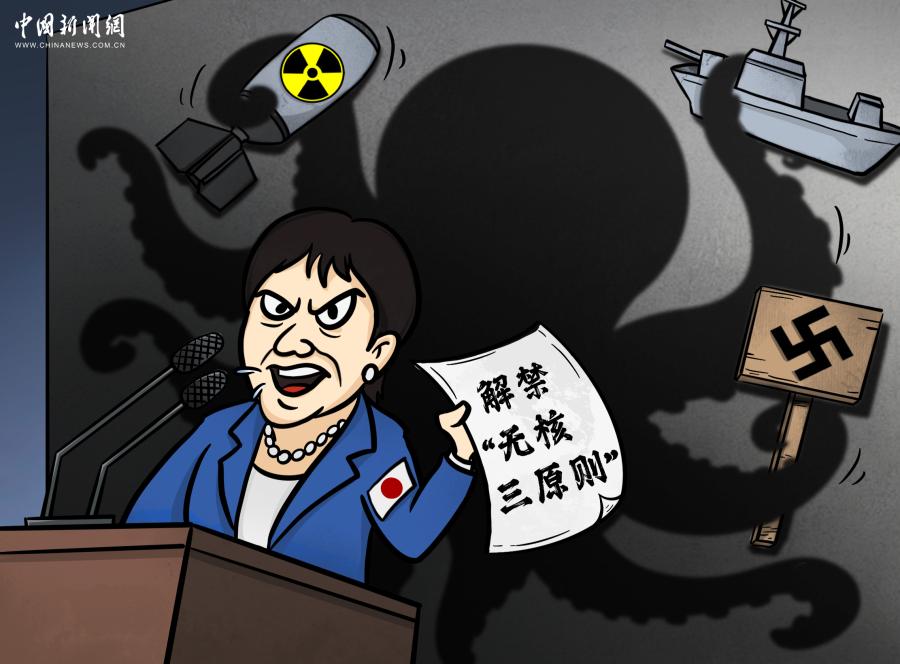
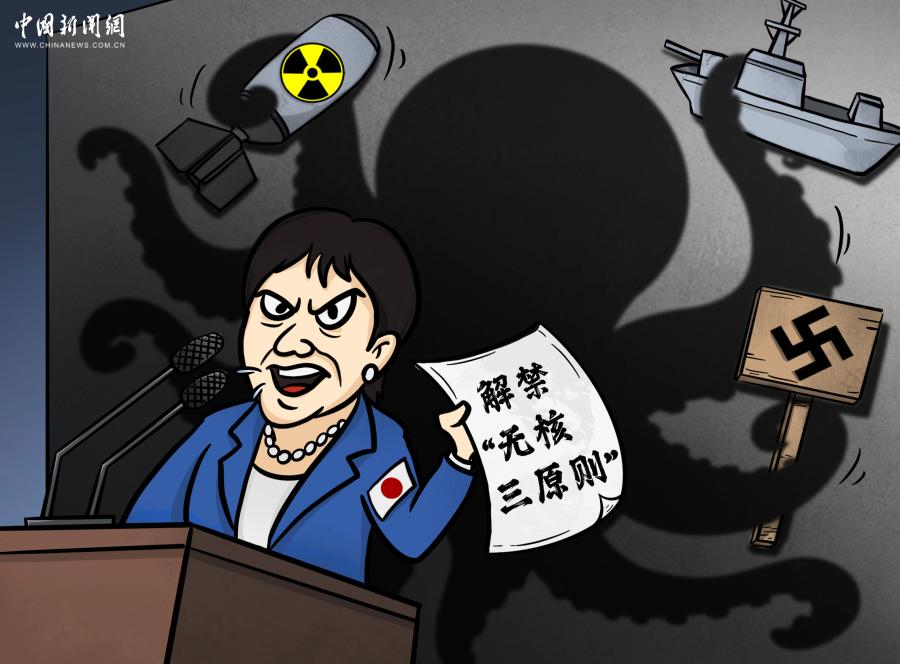
Core Viewpoint - The recent statements by Japanese Prime Minister Sanae Takaichi regarding Taiwan represent a significant escalation in Japan's military rhetoric, suggesting potential military intervention in the Taiwan Strait, which is viewed as a serious provocation against China's sovereignty and a challenge to the post-World War II international order [1][2][3] Group 1: Japan's Military Posture - Takaichi's remarks imply that Japan may consider military action in response to a "crisis" in Taiwan, which is seen as a violation of the One China principle and a dangerous shift in Japan's defense policy [1][2] - Japan's government is reportedly discussing potential changes to its constitution, including Article 9, which could allow for a more aggressive military stance [1][2] - The Japanese government has been increasing its defense budget and relaxing restrictions on arms exports, indicating a trend towards a more militarized approach [2] Group 2: Historical Context and Implications - The invocation of a "survival crisis" by Japan echoes historical precedents where similar rhetoric was used to justify military aggression, raising concerns about a resurgence of militarism in Japan [2] - There is skepticism regarding Japan's commitment to its "defensive" posture and its "Three Non-Nuclear Principles," as recent discussions suggest openness to nuclear capabilities [1][2] - The international community is urged to reflect on Japan's historical responsibilities and to ensure that Japan respects China's sovereignty and territorial integrity [3] Group 3: Regional Reactions - China's government has responded strongly to Takaichi's comments, emphasizing that any military intervention by Japan would face severe consequences [1][3] - The situation has sparked significant concern among neighboring countries and the international community regarding Japan's military intentions and historical accountability [2][3] - The narrative surrounding Taiwan is being framed as a core interest for China, with a clear warning that any infringement on this issue will not be tolerated [3]
绝不容忍高市早苗在台湾问题上的越线挑衅(钟声)
Ren Min Ri Bao· 2025-11-13 22:10
Core Viewpoint - The recent statement by Japanese Prime Minister Sanae Takaichi regarding Taiwan represents a significant shift in Japan's stance, suggesting potential military intervention in the Taiwan issue, which is viewed as a serious provocation against China's sovereignty and a challenge to the post-World War II international order [1][2][3]. Group 1: Historical Context - Japan's historical aggression towards China includes the forced cession of Taiwan through the Treaty of Shimonoseki in 1895, leading to a 50-year colonial rule that severely impacted Taiwan's economy and culture [1]. - The end of World War II saw China reclaim Taiwan, restoring its sovereignty as per international legal documents like the Cairo Declaration and the Potsdam Proclamation [1]. Group 2: Current Political Implications - Takaichi's remarks are seen as an attempt to link Japan's security interests with Taiwan, providing a pretext for potential military intervention, which contradicts the core principles of the China-Japan Joint Statement and previous political agreements [2]. - The statement has raised concerns about Japan's military ambitions, as it reflects a broader trend of Japan's right-wing forces seeking to expand military capabilities and abandon its pacifist constitution [3]. Group 3: Response from China - The Chinese government and people have expressed strong opposition to Takaichi's comments, emphasizing that any military intervention by Japan in the Taiwan Strait would be viewed as aggression, and China would respond decisively [3][4]. - The Chinese stance is that the issue of Taiwan is a core interest, and any attempts to undermine China's sovereignty will be met with firm resistance [4].
狼子野心暴露?特朗普刚离开日本,高市就唱反调,继续进口俄能源
Sou Hu Cai Jing· 2025-11-04 04:35
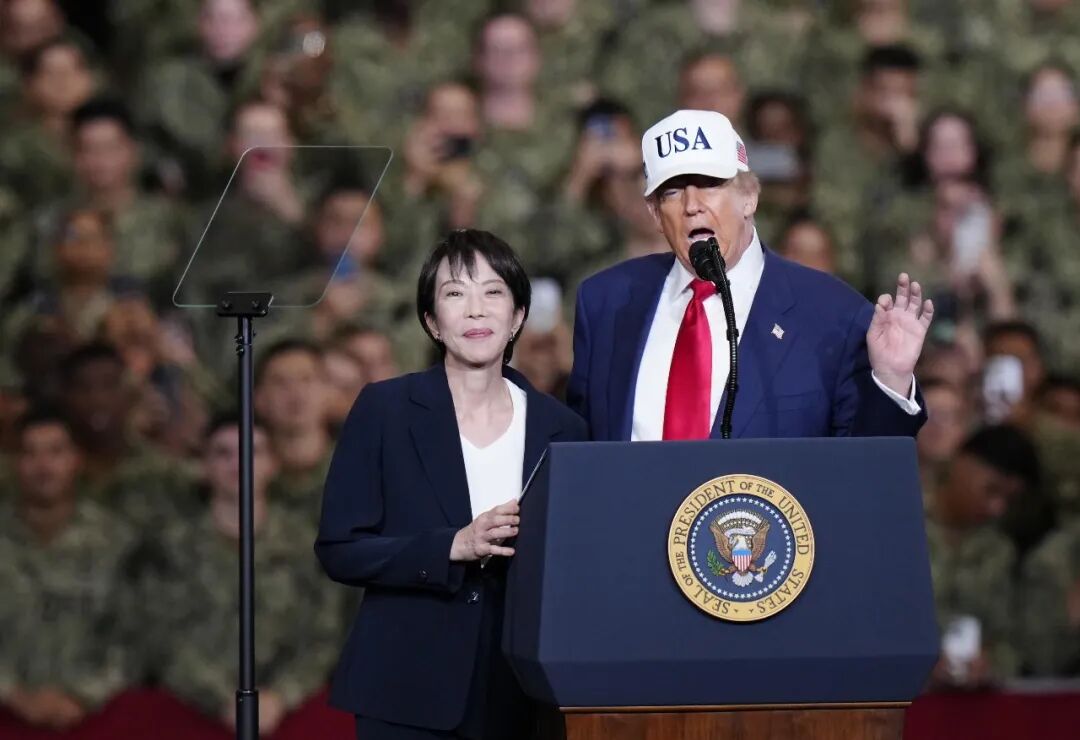
Core Points - The meeting between Japanese Prime Minister Kishida and former U.S. President Trump highlighted Japan's reluctance to fully comply with U.S. demands regarding the cessation of Russian energy imports, emphasizing the potential negative impact on Japanese citizens' lives [1][5] - Kishida's approach during the meeting was characterized by deference to Trump, which resulted in the formalization of a $550 billion investment commitment from Japan to the U.S. and an agreement on critical mineral extraction and processing [3][5] - Despite the outward compliance, there are indications that Japan is not genuinely committed to being a subordinate ally, as Kishida's rejection of Trump's energy import demands suggests a more complex geopolitical strategy [7][11] Investment Commitments - Japan's $550 billion investment commitment includes sectors such as energy, artificial intelligence, U.S. shipbuilding, and soybean procurement [3] - The agreement on critical minerals is seen as a continuation of previous discussions rather than a groundbreaking development [3] Geopolitical Dynamics - Japan's energy imports from Russia are minimal, with natural gas accounting for only 9% and oil less than 1% of total imports, primarily sourced from Australia and the Middle East [5] - Kishida's refusal to cut Russian energy ties indicates Japan's strategic interests in maintaining energy diversity and not fully aligning with U.S. sanctions [5][11] - The historical context of Japan's relationship with the U.S. reveals a complex dynamic where Japan has benefited from U.S. support while also harboring resentment towards American control post-World War II [9][11] Future Implications - The current geopolitical landscape, particularly the U.S.-China rivalry, presents Japan with opportunities to assert itself and potentially regain a more independent stance [11] - There is a concern that Japan's historical tendencies could resurface, leading to a revival of militarism if the right conditions arise [11]
浴火重生:历史阴影中的德国转型
Xin Jing Bao· 2025-09-15 03:26
Core Points - The article discusses the complex historical legacy of Germany, particularly the duality of its cultural achievements and the atrocities committed during the Nazi regime, questioning how a nation that produced great thinkers and artists could also give rise to figures like Hitler [1] - It highlights the ongoing struggle of Germany to reconcile its past with its present identity, especially in light of rising populism and nationalism in Europe [1][5] - The narrative emphasizes the importance of collective reflection and the challenges of achieving a complete moral reckoning with history, suggesting that Germany's path to recovery is fraught with contradictions [1][7] Group 1 - The article reflects on the historical context of Germany's post-war reconstruction and the attempts to confront its Nazi past, noting that this process has not been entirely successful [1][7] - It mentions the significant investment in military capabilities announced by Chancellor Olaf Scholz, which has raised concerns about a resurgence of militarism in Germany [5][6] - The article discusses the perception of Germany as a model of post-war reconciliation compared to Japan, highlighting the symbolic gestures made by German leaders to acknowledge past wrongs [9][11] Group 2 - The text outlines the economic recovery of West Germany under Ludwig Erhard's leadership, which was characterized by a shift towards a social market economy that facilitated rapid growth [16][17] - It describes the political landscape of Germany in the 1950s, including the tensions surrounding NATO membership and the internal divisions within political parties regarding foreign policy [19][20] - The article notes the cultural transformation in Germany, where traditional authoritarian political culture faced challenges from emerging democratic ideals and social movements [22][23] Group 3 - The narrative addresses the resurgence of extremist political movements in contemporary Germany, particularly the rise of the Alternative for Germany (AfD) party, which has drawn support from a segment of the electorate despite its controversial ties to Nazi symbolism [7][29] - It discusses the ongoing debates around immigration and national identity, particularly in the context of the refugee crisis, and how these issues have reignited discussions about Germany's historical responsibilities [29][32] - The article concludes by questioning whether Germany's reconstruction is truly complete, suggesting that the nation continues to grapple with its historical legacy and the implications for its future [35][36]
以史为鉴 珍爱和平
Ren Min Ri Bao· 2025-09-05 22:22
Core Viewpoint - The exhibition commemorating the 80th anniversary of the victory in the Chinese People's Anti-Japanese War and the World Anti-Fascist War highlighted China's significant contributions to the global anti-fascist efforts and emphasized the importance of historical awareness and peace [1][2]. Group 1: Historical Context - The exhibition showcased the historical facts of Japanese aggression in China and the 14-year struggle of the Chinese people against this invasion, along with support from the international community and overseas Chinese [1]. - It was noted that the Chinese People's Anti-Japanese War was the earliest and longest in the context of the World Anti-Fascist War, underscoring China's pivotal role [1]. Group 2: Perspectives from Scholars and Officials - Scholars and officials emphasized the need for Germany to acknowledge the brutal nature of Japanese militarism in Asia, which has been historically overlooked [2]. - The exhibition also highlighted acts of humanity during the war, such as John Rabe's efforts to shelter refugees during the Nanjing Massacre and Hans Müller’s medical assistance to Chinese soldiers [2]. Group 3: Peace and Cooperation - The exhibition concluded with images of China's peacekeeping efforts, including the 20th batch of peacekeeping troops in Lebanon and the welcoming of the "Peace Ark" hospital ship in Africa, reinforcing China's commitment to peace and cooperation [2]. - Officials reiterated that China pursues a path of peaceful development and cooperation, contrasting with historical aggressions by other nations [2].
“期待实现中华民族伟大复兴” 纪念大会引发台湾岛内舆论关注
Yang Shi Xin Wen Ke Hu Duan· 2025-09-04 02:01
Group 1 - The commemoration of the 80th anniversary of the victory in the Chinese People's Anti-Japanese War and the World Anti-Fascist War has drawn attention from Taiwan, with some individuals expressing hope for the great rejuvenation of the Chinese nation [1] - Xi Jinping's speech emphasized the importance of remembering history and promoting peace, while rejecting militarism and fascism [3] - The military parade on September 3 is seen as a demonstration of national strength and a significant ceremony to honor the martyrs and remember history, highlighting the need for self-reliance and national prosperity [5] Group 2 - The military parade serves as a reminder of the painful lessons of the past, urging the Chinese people to cherish peace and warning countries that have engaged in aggression to reflect on their actions [7] - The rise of mainland China and the rejuvenation of the Chinese nation evoke a sense of pride among Chinese people, with aspirations for complete unification in the future [8]