
Autonomous Vehicles

Search documents
This Robotaxi Stock Just Scored a Major Win. Should You Buy It Here?
Yahoo Finance· 2025-11-03 16:06
Core Insights - The global autonomous vehicle market is projected to grow significantly, from $68.09 billion in 2024 to $214.32 billion by 2030, reflecting a compound annual growth rate (CAGR) of 19.9% [3] - WeRide, a Chinese company, has received a federal-level license to operate fully driverless robotaxis in the UAE, expanding its presence in the Middle East [2] - North America accounts for only 37% of the global autonomous vehicle market, with the Asia-Pacific region identified as the fastest-growing market [1] Company Overview - WeRide is based in Guangzhou, China, and specializes in autonomous vehicles, including self-driving taxis, buses, vans, and robosweeper street sweeping vehicles [4] - The company operates in 11 countries and develops products with automation levels ranging from Level 2 to Level 4, where Level 4 vehicles are fully automated within a defined operational design domain [5] Stock Performance - WeRide began trading on the Nasdaq on October 24, 2025, and initially saw a stock price surge due to a $25 million investment from Nvidia, but has since experienced a decline, with WRD stock down 31% since inception and a year-to-date loss of 24% [6] - The company's price-to-sales ratio stands at 33.5, significantly higher than Tesla's 16.8 and Alphabet's 8.9, indicating a high valuation [6] Financial Performance - WeRide reported second-quarter revenue of $17.8 million, marking a 60.8% increase year-over-year, but posted a net loss of $56.7 million, a decrease of 1.7% from the previous year [7] - The company maintains a strong cash position of $570.6 million, which may support its future growth initiatives [7]

1 Impressive Quantum Computing ETF I'm Strongly Considering Right Now
Yahoo Finance· 2025-11-03 12:22
Group 1 - Quantum computing represents a significant advancement over traditional computing, utilizing "qubits" that can exist in multiple states, potentially solving complex problems much faster than conventional computers [2][3] - The market for quantum computing is vast, presenting substantial investment opportunities as the technology is still in its early stages of development [3][4] - The Defiance Quantum ETF offers a diversified investment approach, tracking an index of quantum computing stocks and holding 79 companies in its portfolio, including both start-ups and established tech giants [5][6] Group 2 - The top holding in the Defiance Quantum ETF is Rigetti Computing, which constitutes 3.3% of the fund, indicating a diversified asset allocation [6] - Other significant holdings in the ETF include Advanced Micro Devices, Intel, D-Wave Quantum, and Tower Semiconductor, showcasing a mix of companies involved in quantum computing [6][7] - The ETF has a low expense ratio of 0.40%, making it an attractive option for investors looking to gain exposure to the quantum computing sector [7]
X @Tesla Owners Silicon Valley
Tesla Owners Silicon Valley· 2025-10-31 11:44
Tesla Robotaxi future. https://t.co/Mjmc7lh4kT ...

NVIDIA and Hyundai Motor Group Team on AI Factory to Power AI-Driven Mobility Solutions
Globenewswire· 2025-10-31 06:00
Core Insights - NVIDIA and Hyundai Motor Group are enhancing their collaboration to innovate in autonomous vehicles, smart factories, and robotics through a new AI factory powered by NVIDIA Blackwell [2][3] - The partnership will focus on co-developing AI capabilities for mobility solutions and semiconductor advancements, aiming to strengthen Hyundai's future capabilities [3][4] Investment and Infrastructure - The collaboration includes a $3 billion investment to develop Korea's physical AI landscape, supporting the government's initiative to build a national AI cluster [4][8] - Key infrastructure developments will include the establishment of an NVIDIA AI Technology Center and Hyundai's Physical AI Application Center, along with regional data centers [5][8] AI Technology and Applications - Hyundai Motor Group plans to utilize 50,000 NVIDIA Blackwell GPUs for integrated AI model training, validation, and deployment [4][9] - The partnership will leverage NVIDIA's Omniverse and Cosmos platforms to create digital twins of car factories and regional driving environments, enhancing production and autonomous driving capabilities [10][13] Future Mobility Solutions - Advanced AI models will be developed for over-the-air updates and innovative in-vehicle features, transforming vehicles into intelligent agents [14][15] - The collaboration aims to create a unified ecosystem for in-vehicle AI, autonomous driving, and factory automation, setting a new standard in the automotive industry [17]



X @Anthony Pompliano 🌪
Anthony Pompliano 🌪· 2025-10-29 21:21
From the Desk of Anthony Pompliano0:00 The Fed Cuts Rates by 25bps2:32 Incredible Advancements In Robotics Are Here8:29 Boston Threatens To Ban Autonomous VehiclesEnjoy! https://t.co/IAyGjQXSa5 ...
Stifel Raises PT on Uber (UBER) to $124, Highlights Network Strength, Autonomous Vehicle Debate
Yahoo Finance· 2025-10-29 15:25
Group 1 - Uber Technologies Inc. is projected to double in value over the next three years, with Stifel raising its price target from $116 to $124 while maintaining a Buy rating [1] - Guggenheim analyst initiated coverage of Uber with a Buy rating and a price target of $140, emphasizing the company's strong network, technology, and brand equity [2] - The company operates through three segments: Mobility, Delivery, and Freight, utilizing proprietary technology applications internationally [3] Group 2 - The ongoing debate regarding autonomous vehicle adoption is expected to influence investor sentiment, with bullish investors focusing on market expansion potential and bearish investors highlighting disintermediation risks [2]

Nvidia market cap tops $5 trillion, Fed expected to cut rates
Youtube· 2025-10-29 15:07
Group 1: Nvidia's Market Performance - Nvidia has become the first company to reach a $5 trillion market cap, surpassing Microsoft and Apple by nearly a trillion dollars [4][7][17] - The stock opened up approximately 3.5% at the market open, reflecting strong investor sentiment [5][6] - Nvidia accounts for 8% of the S&P 500, a level not seen since the 1970s, indicating significant market influence [12] Group 2: Partnerships and Future Prospects - Nvidia is forming major partnerships, including a collaboration with Uber for autonomous vehicles and a deal with Nokia for 6G technology [8][17] - The company has an order book of $500 billion for its new chips through 2026, suggesting robust future demand [9] - Wall Street is raising EPS estimates for Nvidia, indicating that analysts may still be underestimating its earnings potential [10] Group 3: Broader Market Context - The overall market is experiencing optimism, with major indices like the S&P 500 and NASDAQ showing slight gains [4][6] - The AI infrastructure sector is highlighted as a key area of growth, with demand outpacing supply [12][26] - The Federal Reserve's potential interest rate cuts are being closely monitored, as they could impact market dynamics [2][60] Group 4: Consumer Sentiment and Economic Conditions - There is a divergence in consumer sentiment, with high-income consumers continuing to spend while lower-income consumers are more cautious [36][58] - The impact of tariffs and inflation remains a concern, particularly for middle and lower-income consumers [33][36] - The economic backdrop is described as a "K-shaped economy," where different income groups are experiencing varying levels of economic recovery [36][58]
Uber Taking on Waymo in San Francisco With Lucid, Nuro Robotaxis
Insurance Journal· 2025-10-29 13:37
Core Insights - Uber Technologies Inc. is set to launch driverless rides using vehicles from Lucid Group Inc. and Nuro Inc. in the San Francisco Bay Area next year, entering direct competition with Waymo's robotaxi service [1][4] Group 1: Vehicle Testing and Deployment - Road testing of Lucid Gravity SUVs equipped with Nuro's self-driving technology is currently in progress, with initial deliveries made in September and plans to expand the test fleet to over a hundred vehicles [2] - The vehicles used for public ride-hailing will be distinct from the current test fleet, with further operational details to be announced closer to the launch [3] Group 2: Competitive Landscape - Uber's initiative represents a challenge to Waymo, which has established a significant presence in San Francisco and is expanding its services to additional cities including Miami, London, and Washington next year [4][6] - Waymo has been expanding its service area and has secured permissions to operate at major transit hubs like the San Francisco and San Jose airports, which are critical for ride-hailing services [7] Group 3: Strategic Partnerships and Investments - Over the past year, Uber has formed more than a dozen partnerships with robotaxi developers, investing hundreds of millions in both Lucid and Nuro, indicating a strategic bet on a future where autonomous and human-driven vehicles coexist [5] - Uber aims to build a fleet of 100,000 autonomous vehicles powered by Nvidia technology, starting with a commitment to purchase and operate 20,000 Lucid-Nuro robotaxis over the next six years [6] Group 4: Regulatory Environment - Nuro has obtained driverless testing and deployment permits in parts of the South Bay but lacks the necessary permits to operate Lucid vehicles without a driver in San Francisco and to carry passengers [8] - Nuro and its partners are committed to obtaining all required permits as testing progresses, while Uber is actively updating policymakers and regulators on its operational progress [9]

Global Innovators Leading Level 4 Autonomy with NVIDIA
NVIDIA· 2025-10-29 07:00
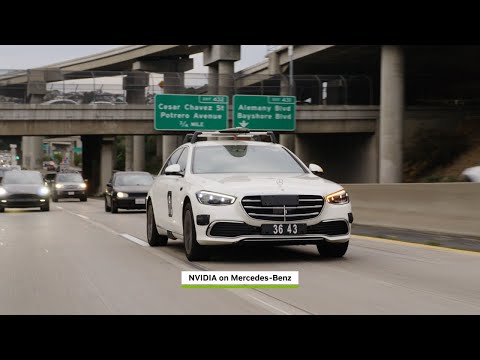
NVIDIA’s level 4 partners are accelerating the future of autonomous vehicles. Together, we’re building an AI-driven transportation ecosystem powered by NVIDIA — from training and simulation to in-vehicle compute — to safely bring autonomy to the road. Our level 4 ecosystem includes: Uber, Stellantis, Mercedes-Benz, Lucid, Nuro, Wayve, Oxa, Pony.ai, WeRide, Waabi, and Volvo Autonomous Solutions. These innovators are redefining mobility by developing, deploying, and scaling autonomous vehicles on NVIDIA. Read ...
X @Tesla Owners Silicon Valley
Tesla Owners Silicon Valley· 2025-10-28 22:15
BREAKING: Tesla Expands Robotaxi Geofence Area In Austin. https://t.co/EzPN2uCjaz ...