社会主义核心价值观

Search documents
中国文明乡风大会在延安举行 李书磊出席并讲话
Xin Hua Wang· 2025-10-29 06:20
Group 1 - The core theme of the conference is "Civilization Makes Rural Areas More Beautiful" [2] - The construction of civilized rural customs is considered a systematic project essential for promoting comprehensive rural revitalization and enhancing the overall level of social civilization [1][2] - The conference emphasized the importance of integrating agricultural civilization with urban civilization to achieve high-quality development of spiritual civilization [1] Group 2 - The event was co-hosted by the Central Office for Spiritual Civilization Construction, the Ministry of Agriculture and Rural Affairs, and the Shaanxi Provincial Government [2] - Attendees included officials from central and local units, experts, scholars, young talents, farmers, and representatives from grassroots party organizations [2]
充分发挥文化养心志、育情操重要作用
Ren Min Ri Bao· 2025-10-22 22:02
Core Viewpoint - The emphasis on the role of culture in nurturing the spirit and moral character of the nation is crucial for building a strong socialist cultural power and responding to the challenges of the changing world [1][2][4]. Group 1: Cultural Functions - The concepts of nurturing the spirit and moral character are intrinsic to culture and are essential components of cultural development [2]. - Nurturing the spirit involves instilling firm ideals and a sense of responsibility, while nurturing moral character focuses on cultivating high moral standards and aesthetic appreciation [2]. - A healthy and positive culture promotes comprehensive development and enhances the overall quality of society, fostering a spirited and motivated populace [2]. Group 2: Historical Context - Throughout history, culture has cultivated numerous individuals with strong ideals and a sense of national pride, inspiring collective efforts towards national rejuvenation [3]. - Historical examples include the revolutionary spirit during wartime and the determination shown during the socialist construction period, which motivated many to contribute to national progress [3]. Group 3: Cultural Resources and Values - The report from the 20th National Congress highlights the importance of socialist core values in guiding cultural development and nurturing the spirit and moral character [4][5]. - The integration of revolutionary culture and traditional Chinese culture provides a continuous source of spiritual motivation for national rejuvenation [4]. Group 4: Cultural Supply and Demand - The shift in cultural supply from mere availability to quality necessitates the provision of diverse, high-quality cultural services and products to meet public needs [5]. - Emphasis on building a modern public cultural service system and innovative cultural service models is essential for promoting cultural prosperity [5]. Group 5: Talent Development - The development of a high-level talent pool is critical for advancing socialist culture, requiring a structured approach to talent cultivation and assessment [6]. - Embracing technological advancements such as AI and big data is necessary to adapt to the evolving cultural landscape and meet audience demands [6][7].
新视野 | 把崇德修身作为领导干部必修课
Zhong Yang Ji Wei Guo Jia Jian Wei Wang Zhan· 2025-10-21 00:08
Group 1 - The core idea emphasizes the importance of political ethics and moral integrity among leaders, highlighting the need for a strong ideological foundation and commitment to serving the people [2][3][6] - The concept of "明大德" (clarifying major virtues) is identified as the primary task for leaders, which involves loyalty to the Party and a strong sense of party spirit [3][4][5] - "守公德" (upholding public morals) is described as a fundamental principle for leaders, focusing on serving the people and maintaining a selfless attitude [6][7][8] Group 2 - "严私德" (strictly adhering to personal morals) is crucial for leaders, requiring them to restrain their behavior and avoid corruption [9][10][11] - The article discusses the significance of personal conduct and family ethics in maintaining integrity and preventing corruption [10][11] - Leaders are encouraged to continuously improve themselves and set a moral example for others, fostering a culture of integrity within society [11][12]

激发文化创新创造的时代华彩——江苏“十四五”经济社会发展综述之五
Xin Hua Ri Bao· 2025-10-18 23:31
Group 1 - The core viewpoint of the articles highlights the flourishing cultural scene in Jiangsu, showcasing various cultural events and initiatives that reflect the province's commitment to cultural development and innovation [2][3][7]. - The 2025 Zijin Cultural Arts Festival is actively taking place across Jiangsu, along with the "Jasmine Flower Blooming" cultural outreach initiative, which brings quality cultural performances to the public [1][2]. - Jiangsu's cultural achievements are part of the broader "14th Five-Year Plan," aiming to build a strong socialist cultural province, enhancing social civilization and providing cultural support for modernization [2][3]. Group 2 - Jiangsu has seen a continuous improvement in social civilization, with initiatives like the establishment of the "Qing Cavalry" theoretical promotion academy and extensive training for grassroots party members [3][4]. - The province has implemented the "Jasmine Flower Blooming" initiative, which has reached over 10 million people, providing cultural resources directly to the grassroots level [7][10]. - The cultural industry in Jiangsu has achieved significant growth, with revenues reaching 2.25 trillion yuan in 2024, marking a historical high and positioning the province as a leader in cultural enterprise numbers [10][11]. Group 3 - Jiangsu's cultural reforms have led to increased vitality in the arts, with successful projects like the film "Guard Island" and the dance drama "Dream of the Red Chamber" gaining national recognition [7][8]. - The province has established over 22,000 centers for civilizational practice, enhancing community engagement and cultural participation [4][6]. - The international cultural exchange initiatives, such as the "Civilization Encounter" events in Europe, have improved Jiangsu's global cultural presence and storytelling [11][12].
山东省“我们的价值观 我们的中国梦”百姓宣讲大赛决赛举行
Da Zhong Ri Bao· 2025-10-17 01:00
Group 1 - The core event is the "Our Values, Our Chinese Dream" public speaking competition held in Jinan, Shandong Province, from October 14 to 16, featuring 163 speakers and 414 micro-video entries [1] - The competition included four categories: theoretical, storytelling, artistic, and micro-video, with a total of 5 first prizes, 7 second prizes, and 12 excellence awards in the theoretical category; 9 first prizes, 15 second prizes, and 33 excellence awards in storytelling; 5 first prizes, 8 second prizes, and 10 excellence awards in the artistic category; and 9 first prizes, 20 second prizes, and 100 excellence awards in micro-video [1] - Eight cities, four provincial departments, and two central enterprises stationed in Shandong received awards for excellent organizational work [1] Group 2 - The provincial propaganda department has innovated the competition format by combining online collection and offline events, emphasizing "people speaking to people" to enhance the competition's appeal and impact [2] - Following the competition, the provincial propaganda department and the provincial lecturer group will select some award-winning speakers to form a provincial public speaking team for touring presentations across various cities, units, enterprises, and universities [2]
江苏打造习近平文化思想生动实践地①“加强文化建设要有主心骨”
Xin Hua Ri Bao· 2025-10-13 23:22
Group 1 - The core message emphasizes the importance of cultural construction and the promotion of socialist core values as a driving force for societal progress in Jiangsu [1][2][3] - Jiangsu aims to become a vibrant practice ground for Xi Jinping's cultural thoughts, focusing on cultural confidence and innovation since the 14th Five-Year Plan [1][2] - The promotion of traditional Chinese culture is seen as essential for nurturing socialist core values and strengthening the spiritual foundation of society [2][3] Group 2 - The cultivation and practice of socialist core values are illustrated through various initiatives, including the integration of red culture into education and community activities [3][4] - Jiangsu has seen a rise in moral exemplars and role models, which serve as effective demonstrations of the core values, inspiring societal admiration and emulation [4][5] - The "Moral Power" tour and other cultural events have been organized to spread the stories of these role models, enhancing community engagement and moral education [4][5] Group 3 - The implementation of cultural initiatives, such as the "Art Direct to the People" program, aims to enhance cultural accessibility and meet the growing spiritual and cultural needs of the public [6][8] - The introduction of multifunctional mobile stage vehicles has improved the efficiency of cultural performances, bringing high-quality artistic resources directly to communities [6][7] - Jiangsu's public cultural service reforms have led to increased museum accessibility and a rise in visitor numbers, reflecting a commitment to enriching the cultural landscape [8][9] Group 4 - Jiangsu has achieved recognition as a leader in creating civilized cities, with 37 cities designated as national civilized cities, focusing on addressing community needs [10][11] - The integration of socialist core values into daily life is evident through community activities and initiatives that promote moral education and civic responsibility [11][12] - The cultivation of cultural practices in rural areas is highlighted, showcasing the blend of cultural heritage and modern development in enhancing community spirit [12][13] Group 5 - The emphasis on moral education for children is crucial, with initiatives aimed at nurturing their spiritual needs and instilling core values from a young age [13] - The establishment of numerous civilization practice centers across Jiangsu facilitates grassroots engagement in cultural and moral activities, promoting a shared sense of community values [13] - Jiangsu is poised for a new phase of cultural prosperity, driven by a collective commitment to cultural and moral development among its citizens [13]
学习进行时|习近平总书记重要讲话指引妇女事业发展
Xin Hua She· 2025-10-13 00:09
Core Viewpoint - The development of women's affairs is an essential part of the Party and people's endeavors, guided by Xi Jinping's important speeches since the 18th National Congress, providing fundamental adherence and action guidelines for advancing women's affairs in the new era [2][4]. Group 1: Political Direction and Leadership - Women's affairs and the Women's Federation work must consistently adhere to the correct political direction, aligning with the Party's objectives [3]. - Strengthening the Party's leadership over women's work is crucial, emphasizing the path of socialist women's development with Chinese characteristics [4][5]. Group 2: Gender Equality and Women's Role - Promoting gender equality and enhancing women's roles in various sectors is vital for achieving the Chinese Dream of national rejuvenation [4][7]. - Women's participation in political and economic activities should be enhanced, aiming for women to become leaders in politics, business, and academia [10][11]. Group 3: Rights and Development - Ensuring women's rights and improving their livelihoods are integral to Chinese-style modernization, with a focus on eliminating biases, discrimination, and violence against women [13][14]. - Development strategies must consider national conditions, gender differences, and women's specific needs to ensure equitable sharing of development outcomes [9]. Group 4: Education and Social Services - Measures should be taken to ensure all girls can access education safely and to develop vocational and lifelong education tailored for women [18]. - Social services must prioritize the needs of vulnerable groups, including pregnant women, children, and impoverished women, ensuring practical support [16].

巩固团结奋斗的思想基础——习近平文化思想的生动实践系列述评之三
Xin Hua She· 2025-10-10 12:51
Core Viewpoint - The articles emphasize the importance of consolidating a unified ideological foundation for the Chinese nation, driven by Xi Jinping's cultural thought, to support national rejuvenation and development [1][11]. Group 1: Ideological Foundation - The "Regulations on Ideological and Political Work of the Communist Party of China" was issued, marking a significant step in establishing a comprehensive framework for ideological work [2]. - The guiding ideology for ideological work emphasizes the need to uphold Marxism's leading position in the ideological domain and to strengthen the common ideological foundation for unity among the people [2][3]. Group 2: Marxism and Ideological Leadership - Marxism is identified as the fundamental guiding ideology for the Party and the nation, serving as the banner and soul of socialist ideology [3]. - The central leadership under Xi Jinping has established a system to maintain Marxism's guiding position in the ideological field, ensuring the Party's leadership over ideological work [3][5]. Group 3: Core Socialist Values - The core socialist values are recognized as the most enduring and profound force within the ideological framework, requiring collective recognition across society [6][7]. - Recent initiatives have been launched to promote and practice these core values, emphasizing their integration into daily life and cultural products [7][8]. Group 4: Cultural Development and Digital Integration - The rapid development of digitalization and intelligence necessitates enhancing governance capabilities in the cultural sector [9][10]. - The integration of culture and technology is highlighted as a strategic priority, with efforts to promote high-quality cultural development through digital means [10]. Group 5: Youth Engagement and Network Culture - Youth representatives have called for a collective effort to build a positive online cultural environment, reflecting the growing significance of the internet in cultural construction [10]. - The government has initiated various campaigns to foster a healthy online culture and address issues within the digital space [10].
文化之约丨家书中的家国情访中国人民大学家书博物馆副馆长张丁
Zhong Yang Ji Wei Guo Jia Jian Wei Wang Zhan· 2025-10-10 00:02
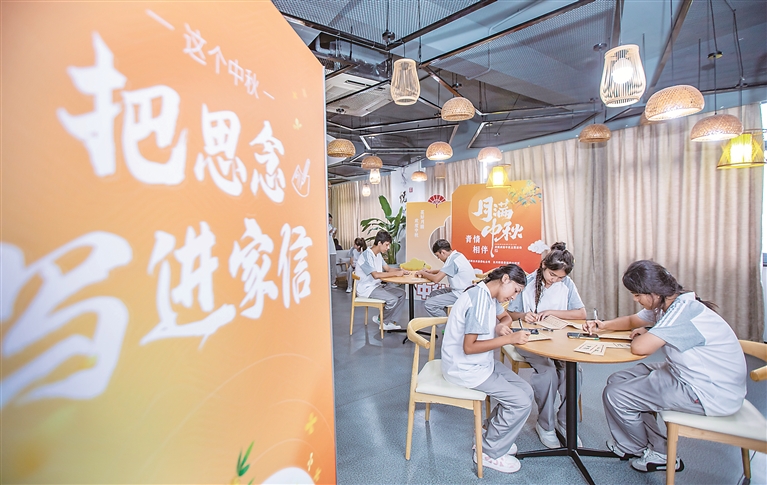
Core Insights - The article emphasizes the integration of familial love and patriotism, highlighting the significance of family letters as a medium for expressing these sentiments [4][6][10] Group 1: Importance of Family Letters - Family letters serve as authentic records of personal and historical narratives, reflecting genuine emotions and familial bonds [5][6] - They are valuable primary sources for historical research, documenting personal experiences and societal conditions during different eras [5][6] - The cultural significance of family letters encompasses various elements, including ethics, education, and artistic appreciation, making them a rich resource for understanding Chinese traditions [5][6][12] Group 2: Red Letters and Historical Context - The article discusses the collection of over 200 anti-Japanese war letters, which capture the emotional and psychological impact of war on individuals and families [7][8] - These letters reflect the spirit of national unity and sacrifice during times of crisis, showcasing the intertwining of personal and national narratives [8][9] - The preservation and promotion of these letters are deemed essential for educating future generations about patriotism and historical consciousness [9][10] Group 3: Family Culture and Values - Family letters are identified as crucial tools for fostering family values, education, and traditions, serving as a reflection of family dynamics [10][11] - The article suggests that the study and practice of writing family letters can enhance familial relationships and promote positive family culture [11][12] - It advocates for the creative transformation of traditional family letter culture to adapt to modern communication methods, ensuring its relevance in contemporary society [12]
学习进行时丨长成中华民族的参天大树
Xin Hua Wang· 2025-10-03 13:27
Core Viewpoint - The article emphasizes the importance of nurturing children as the future force for national development and rejuvenation, highlighting the deep concern and care of President Xi Jinping for the growth and education of children [1][19]. Group 1: President Xi Jinping's Engagement with Children - President Xi Jinping consistently expresses his care for children through greetings and encouragement during local inspections [1][4]. - During visits, he interacts warmly with children, offering them sweets and encouraging them to have a sweet life like candy [4][6]. - He emphasizes the significance of traditional crafts and the role of youth in achieving national rejuvenation, stating that modern China relies on the younger generation [6][8]. Group 2: Education and Values - Xi Jinping stresses the importance of instilling correct life goals in children during their formative years, urging them to learn from heroic stories and embody socialist core values [10][11]. - He highlights the need for children to remember revolutionary stories and acquire knowledge for modern development, aiming to cultivate them as future builders of socialism [11][12]. Group 3: Health and Well-being - The President places high importance on the physical and mental health of children, advocating for comprehensive development in moral, intellectual, physical, aesthetic, and labor education [12][15]. - He has expressed concerns about the increasing prevalence of myopia among children and has called for collective efforts to protect their eyesight [14][15]. - Recent initiatives have shown improvements in students' overall health and a decrease in myopia rates compared to five years ago [17]. Group 4: Support for Vulnerable Groups - Xi Jinping emphasizes the need to support vulnerable children, including those with disabilities and those affected by disasters, ensuring they receive education and care [19][23]. - He has made it clear that no child should suffer due to poverty, and education must be guaranteed for children in impoverished areas [21][23].