
Tariffs

Search documents
Trump terminates trade talks with Canada
MSNBC· 2025-10-24 19:37
International Relations & Trade Policy - US-Canada relations are strained due to a perceived slight from a Canadian advertisement, leading to potential trade policy implications [1][2] - The US President's reaction to the advertisement is described as easily triggered and capable of influencing international policy [2] - The timing of the dispute coincides with Game One of the World Series in Toronto, potentially exacerbating tensions [3][4] - Tariffs and trade with China are also a point of focus, with the President scheduled to meet with Xi Jinping to discuss trade [2] - The legality of the tariffs is currently under review by the Supreme Court [3] Political Sentiment & Public Perception - The American national anthem is expected to be booed at the World Series game in Toronto, reflecting negative sentiment [4] - The situation is occurring at a time when US-Canada friendship should be celebrated [4]

Consumer is pretty flush right now, says former Walmart U.S. CEO Bill Simon
CNBC Television· 2025-10-24 19:16
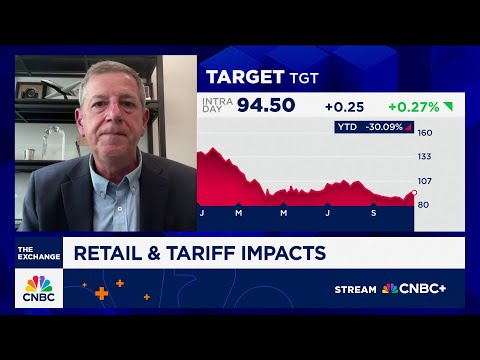
Joining me now is Bill Simon, former Walmart US president and CEO. Bill, it's great to have you here. Give me a little bit of your thesis on why you think the consumer is in control.>> Hey Courtney, good to see you again. Yeah, I mean, look, the consumer's, you know, pretty flush right now. Nominal wages are up 4%.The inflation report today was relatively tame. There's been a lot of, you know, dark news about tariff this and tariff that and, you know, it is a bit of a roller coaster. It's on, it's off, it's ...

Consumer is pretty flush right now, says former Walmart U.S. CEO Bill Simon
Youtube· 2025-10-24 19:16
Consumer Sentiment and Behavior - The consumer is currently in a strong position, with nominal wages up by 4% [1][18] - Despite concerns about tariffs and inflation, consumer spending is expected to remain robust during the holiday season [2][17] - Consumers are becoming more value-conscious, leading to a trend of trading down to private label products or alternatives [4][5] Retailer Strategies - Retailers like Target and Kohl's are focusing on private label offerings to cater to consumers looking for lower-cost options [3][4] - There is a notable shift in hiring practices, with Target announcing layoffs of about 8% of corporate staff, indicating a cautious approach to holiday staffing [8][10] - Retailers are leveraging technology and online sales to adapt to changing consumer behaviors, which may reduce the need for in-store staffing [11] Pricing and Inflation Impact - Retailers are managing the impact of tariffs and inflation through various strategies, which helps mitigate price increases for consumers [12][15] - Specific product prices are rising due to tariffs, but retailers like Walmart have managed to lower the overall cost of holiday staples, such as Thanksgiving dinner [15][16] - The overall impact of tariffs on consumer spending is estimated to be manageable, with potential increases in prices being offset by wage growth [18]

Trump’s tariffs hit Lesotho, Africa’s “denim capital” #shorts #lesotho #trump #tariffs #textile
Bloomberg Television· 2025-10-24 18:32
Economic Impact of Tariffs - The textile industry in Lutu faces challenges with workers earning as little as $1,800 per year [1] - The Prime Minister of Lutu declared a 2-year state of disaster for the country's economy after tariffs were imposed [2] - Initial tariffs were set at 50%, among the highest globally, later revised to 15% [2] - Potential shutdown of factories could result in 30,000 to 40,000 job losses [3] Trade Negotiations - Lutu is negotiating with the US government for a further tariff reduction, potentially to 10% or zero [3]

Deckers Brands stock sinks more than 12% after soft outlook raises concerns about Hoka, Ugg growth
CNBC· 2025-10-24 17:16
Core Insights - Deckers Brands' shares fell over 12% after the company reduced its sales guidance for Hoka and Ugg due to concerns about tariffs impacting demand [1] - Hoka is now projected to grow by a low-teens percentage in fiscal 2026, down from 24% growth in the previous year, while Ugg is expected to grow in the low to mid single digits, down from 13% [2] - The company previously anticipated mid-teens growth for Hoka and mid-single digits for Ugg before the introduction of tariffs [3] Financial Performance - During the fiscal second-quarter earnings call, the finance chief indicated that the effects of tariffs and price increases on demand have become clearer [4] - The company expects fiscal 2026 revenue of approximately $5.35 billion, below Wall Street's expectation of $5.45 billion, with earnings per share projected between $6.30 and $6.39, aligning closely with the $6.32 estimate [7] Market Dynamics - The slower growth for Hoka and Ugg suggests a potential loss of momentum after years of strong performance, as these brands account for the majority of Deckers' revenue [6] - Despite the near-term pressures from tariffs and inflation, the CEO expressed confidence in the long-term strength of both brands among core consumers [7] Cost Implications - The company warned that tariff costs could reach about $150 million this fiscal year, with plans to offset roughly half of these costs through price adjustments and cost-sharing with factory partners [8] - Deckers' shares have declined over 55% year-to-date, raising concerns among investors about demand deceleration [8]

Trump terminates trade talks with Canada over anti-tariff ad
NBC News· 2025-10-24 17:03
Trade Relations - US President abruptly terminated trade negotiations with Canada [1] - The termination was due to objections to a Canadian-made ad criticizing tariffs [1] - Tensions rose after the US imposed tariffs on imports from Canada earlier this year [2] - Canada accounts for over 400 billion USD in goods coming into the US [2] Economic Impact - The US President touted his trade war, stating "Thank God for tariffs" [2] - The President believes that without tariffs, the US would be a third world nation [2]
❌ Trump terminates Canada trade talks following Regan tariff ad.
Yahoo Finance· 2025-10-24 16:50
You see, at first when someone says, "Let's impose tariffs on foreign imports," it looks like they're doing the patriotic thing by protecting American products and jobs. High tariffs inevitably lead to retaliation by foreign countries and the triggering of fierce trade wars. The result is more and more tariffs, higher and higher trade barriers, and less and less competition.So soon, because of the prices made artificially high by tariffs that subsidize inefficiency and poor management, people stop buying. T ...

Ford lower guidance, estimates $1B tariff impact
CNBC Television· 2025-10-24 16:40
Let's turn to Ford lowering its outlook despite a Q3 beat. Philau Ha is with us and has more on that guidance that the market seems to really be shrugging off at this point in time. Phil.>> Yeah, I think the market is focused on the fact that Ford has managed a couple of difficult situations much better than people expected. As you take a look at shares of Ford, they are now at a 52- week high. In fact, we haven't seen shares of Ford trading at this level since 2023.And the company did beat Q3 on both the t ...

Ford lower guidance, estimates $1B tariff impact
Youtube· 2025-10-24 16:40
Core Insights - Ford has lowered its outlook despite beating Q3 expectations, with shares reaching a 52-week high, indicating strong market performance [1][2]. Financial Performance - Ford exceeded Q3 expectations on both revenue and earnings, attributed partly to better-than-expected management of tariff impacts [2][3]. - The anticipated tariff impact for Ford has been revised down from $2.5 billion to approximately $1 billion [3]. Tariff Impact - General Motors has also reduced its expected tariff impact for the year from $4 to $5 billion to a range of $3.5 to $4.5 billion [4][5]. - Both Ford and GM are experiencing increased demand for trucks and SUVs, which is contributing to their positive financial outlook [7]. Production Plans - Ford confirmed that its plans to build Superduty pickup trucks in Oakville, Ontario, remain unchanged despite ongoing production in Canada and Mexico [6]. - The companies are not halting production in Canada and Mexico, indicating a balanced approach to manufacturing [5][6]. Electric Vehicle Market - The share of electric vehicles (EVs) in the U.S. market is expected to stabilize around 5% to 6%, with a need for more offerings in the $35,000 to $45,000 price range to drive demand [7][8].

Deckers Stock Sinks As Tariffs Hurt Guidance, Adding To Industry's Woes
Investors· 2025-10-24 16:32
Group 1 - Deckers Outdoors, the parent company of brands like Hoka, Teva, and UGG, experienced a significant stock decline of 12% to a two-year low following the release of weak quarterly earnings and guidance [1] - Investors are concerned that economic slowdowns due to tariffs and declining consumer confidence may negatively impact Deckers' performance [1] - The overall stock market, particularly the Dow Jones index, rallied on positive CPI inflation data, contrasting with Deckers' poor performance [1][2] Group 2 - The stock market is showing resilience, with small caps surging after the inflation data release, indicating a broader market reaction despite individual company struggles [2] - Other companies, such as Nike, are also facing challenges with stock performance amid earnings reports and restructuring concerns, highlighting a mixed sentiment in the retail sector [4]