
社会主义核心价值观

Search documents
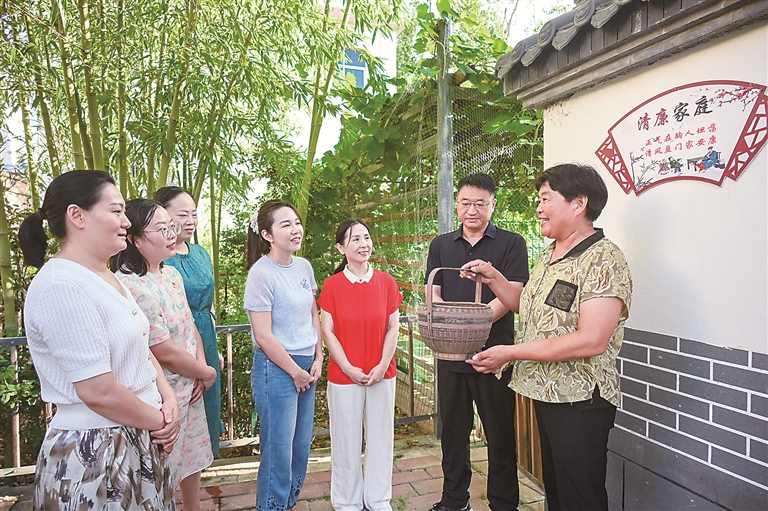
新视野丨探寻优秀传统文化中的廉洁元素
Zhong Yang Ji Wei Guo Jia Jian Wei Wang Zhan· 2025-09-30 00:04
Group 1 - The article emphasizes the importance of building a clean and honest family culture among party members and officials, highlighting initiatives like establishing family education bases and selecting exemplary clean families [2] - The report from the 20th National Congress of the Communist Party of China stresses the need to strengthen the construction of a clean culture in the new era, guiding party members and officials to enhance their awareness of integrity [2] - The article outlines the core values of integrity in Chinese traditional culture, including faith, righteousness, public service, frugality, respect, and filial piety, which are essential for fostering a clean culture [2] Group 2 - The concept of "faith" is presented as a foundational element for establishing integrity, with a strong belief system being crucial for personal and collective resilience [3] - The article discusses the significance of "righteousness" in maintaining integrity, emphasizing the need for moral character and self-discipline to resist corruption [5] - "Frugality" is highlighted as a key virtue that supports integrity, suggesting that a frugal lifestyle leads to reduced desires and a clearer path to ethical behavior [9][10] Group 3 - The article underscores the role of "public service" in promoting integrity, advocating for a mindset that prioritizes collective interests over personal gain [7][8] - The importance of "respect" in social interactions is emphasized, with the notion that understanding and practicing etiquette fosters a culture of integrity [11][12] - "Filial piety" is presented as a cultural cornerstone that connects personal virtue with public integrity, suggesting that respect for family translates into respect for societal norms [13][14]

习近平在中共中央政治局第二十二次集体学习时强调系统推进我国宗教中国化 积极引导宗教与社会主义社会相适应
Xin Hua She· 2025-09-29 23:18
Group 1 - The core viewpoint emphasizes the importance of systematically promoting the Sinicization of religion in China, aligning it with socialist society [1][2] - Xi Jinping highlighted that since the 18th National Congress, the Party has prioritized religious work, introducing new concepts and measures to enhance the legal framework and effectiveness of religious governance [1] - The necessity of integrating religion with Chinese culture and civilization to ensure healthy transmission and development of various religions was stressed [2] Group 2 - Xi Jinping called for the active engagement and self-reform of religious communities to facilitate the Sinicization of religion, encouraging them to adapt their doctrines and practices to reflect Chinese characteristics [2] - The importance of legal governance in managing religious affairs was underscored, with a focus on improving relevant laws and policies to enhance the rule of law in religious work [2] - Local Party committees are urged to strengthen leadership in religious work, ensuring the implementation of the Party's theories and policies regarding religion [2]
系统推进我国宗教中国化积极引导宗教与社会主义社会相适应
Zhong Guo Zheng Quan Bao· 2025-09-29 20:45
Core Points - The Chinese Communist Party emphasizes the importance of promoting the Sinicization of religion as a key aspect of governance and social harmony [1][2] - Xi Jinping highlights the need for religions to integrate with Chinese culture and values, ensuring that they remain rooted in the nation's historical context [2] Group 1 - The Central Committee of the Communist Party has placed religious work at a significant position in governance since the 18th National Congress, introducing new concepts and measures to enhance the legal framework and effectiveness of religious work [1] - Xi Jinping stresses that only by continuously promoting the Sinicization of religion can the country achieve social harmony, ethnic unity, and long-term stability [1] - The necessity for religions to align with socialist values and foster a correct understanding of national, historical, ethnic, cultural, and religious perspectives is emphasized [1][2] Group 2 - Xi Jinping calls for the integration of religious practices with traditional Chinese culture, urging religious communities to enhance their cultural identity [2] - The importance of self-initiated reform within religious communities is highlighted as crucial for advancing the Sinicization of religion [2] - Legal governance of religious affairs is identified as a fundamental approach to addressing various issues within the religious sector, with a call for improved regulations and law enforcement [2]
习近平在中共中央政治局第二十二次集体学习时强调 系统推进我国宗教中国化 积极引导宗教与社会主义社会相适应
中国能源报· 2025-09-29 12:43
Core Viewpoint - The article emphasizes the importance of promoting the Sinicization of religion in China, aligning religious practices with socialist values, and enhancing the governance and legal framework surrounding religious affairs [1][2]. Group 1: Historical Context and Current Policies - Since the 18th National Congress, the Communist Party has prioritized religious work, introducing new concepts and measures to enhance the legal governance of religious affairs and achieve positive outcomes in the new era [1]. - Historical and practical evidence suggests that advancing the Sinicization of religion is essential for fostering harmony among religions, ethnic groups, and society, as well as ensuring national stability [1]. Group 2: Integration with Chinese Culture - All religions in China must be rooted in Chinese soil and infused with Chinese culture to ensure healthy transmission, promoting integration with the excellent traditional culture of China [2]. - There is a need to enhance the sense of cultural identity among religious figures and believers, encouraging them to embrace Chinese cultural values [2]. Group 3: Self-Transformation and Governance - It is crucial to stimulate proactive self-transformation within the religious community, adapting doctrines, management systems, and practices to reflect Chinese characteristics and meet contemporary demands [2]. - Legal governance of religious affairs is identified as a fundamental approach to addressing various conflicts and issues within the religious sector, necessitating improvements in relevant laws and policies [2]. Group 4: Leadership and Implementation - Local party committees are urged to strengthen leadership in religious work, fully implementing the Party's theories and policies regarding religion, and enhancing research on strategic and practical issues [2]. - There is a call to build a robust team for religious work and solidify grassroots foundations to create a collective effort in promoting the Sinicization of religion [2].
习近平在中共中央政治局第二十二次集体学习时强调 系统推进我国宗教中国化 积极引导宗教与社会主义社会相适应
证监会发布· 2025-09-29 11:14
Core Viewpoint - The article emphasizes the importance of systematically promoting the Sinicization of religion in China, highlighting the need for historical experience, system norms, and grassroots work to align religion with socialist society [2][3][4]. Group 1: Historical Context and Current Policies - Since the 18th National Congress, the Communist Party has prioritized religious work, proposing new concepts and measures to enhance the legal framework and effectiveness of religious governance [2]. - The promotion of Sinicization is seen as essential for social harmony, national stability, and the integration of religion with Chinese culture [2][3]. Group 2: Cultural Integration - Religions in China must root themselves in Chinese civilization and integrate with traditional culture to ensure healthy transmission [3]. - There is a call for religious figures and believers to enhance their recognition of Chinese culture and values [3]. Group 3: Governance and Legal Framework - Legal governance of religious affairs is deemed crucial for addressing conflicts and issues within the religious domain [4]. - The article advocates for improved regulations, law enforcement, and education to elevate the legal standards of religious work [4]. Group 4: Leadership and Organizational Development - Local party committees are urged to strengthen leadership in religious work and to implement the Party's theories and policies effectively [4]. - There is a focus on building a competent workforce in religious affairs and reinforcing grassroots foundations to create a collective effort in promoting Sinicization [4].
习近平在中共中央政治局第二十二次集体学习时强调:系统推进我国宗教中国化 积极引导宗教与社会主义社会相适应
Xin Hua She· 2025-09-29 10:47
Core Viewpoint - The article emphasizes the importance of systematically promoting the Sinicization of religion in China, aligning religious practices with socialist values, and enhancing governance and legal frameworks in religious affairs [2][3]. Group 1: Historical Context and Current Initiatives - Since the 18th National Congress of the Communist Party, the government has prioritized religious work, introducing new concepts and measures to enhance the legal and institutional frameworks governing religion [2]. - The article highlights the necessity of integrating religion with Chinese culture and values, promoting harmony among religions, ethnic groups, and society as a whole [3]. Group 2: Strategic Directions - The government aims to guide religious communities to adapt to socialist society, emphasizing the importance of the socialist core values in shaping religious perspectives [2][3]. - There is a call for religious organizations to reflect Chinese characteristics in their doctrines, management, and practices, enhancing self-regulation and self-education within these communities [3]. Group 3: Governance and Legal Framework - The article stresses the need for legal governance in religious affairs as a fundamental approach to resolving conflicts and issues within the religious sector [3]. - It advocates for the improvement of relevant laws and policies, alongside rigorous law enforcement and education on legal matters related to religion [3].
北京顺义:第十届道德模范主题活动颁奖仪式举办
Bei Jing Shang Bao· 2025-09-28 11:46
据了解,顺义区道德模范主题活动每两年开展一次,至今已连续开展十届,评选出各行业、各领域道德 模范先进个人168名。这些模范人物是道德的践行者、精神的引领者、时代的奋斗者,他们的先进事迹 和高尚品质,生动诠释了社会主义核心价值观的丰富内涵,集中体现了思想道德建设的丰硕成果,充分 彰显了奋斗新时代、奋进新征程的精神风貌,具有鲜明的典型性示范性和引领力感召力。 北京商报讯(记者 张茜琦)9月28日,第十届顺义区道德模范主题活动颁奖仪式在顺义区委党校举行。 本届颁奖典礼分为"初心之光""守望之光""温暖之光""奋进之光"四个篇章,每个篇章包含事迹展播、现 场访谈、颁发奖杯等环节,生动展示道德模范的感人事迹,大力弘扬道德模范的崇高精神,向全社会传 递了崇德向善、见贤思齐的鲜明价值追求。 ...
“我们的价值观 我们的中国梦”高校大学生宣讲大赛举行
Da Zhong Ri Bao· 2025-09-28 01:04
本届大赛由省委宣传部、省教育厅(省委教育工委)联合主办,是今年百姓宣讲大赛创设的特色单 元。活动聚焦深学细悟习近平总书记关于培育和践行社会主义核心价值观的重要论述,推动社会主义核 心价值观融入高校大学生日常生活,生动展现新时代大学生坚定理想信念、传承奋斗精神、积极担当作 为的青春风采。来自22所高校的46名选手同台竞技,经专家评委和大众评委评审,共评出一等奖3组、 二等奖8组、优秀奖21组。 下一步,省委宣传部、省教育厅(省委教育工委)将向获奖选手颁发"山东省大学生宣讲员"聘书, 并适时组织开展巡回宣讲。(记者 曹儒峰) 9月27日上午,"我们的价值观 我们的中国梦"高校大学生宣讲大赛决赛在山东师范大学举行。 ...
学有所悟丨为文化强国建设贡献青春力量
Zhong Yang Ji Wei Guo Jia Jian Wei Wang Zhan· 2025-09-25 00:57
Core Viewpoint - The articles emphasize the importance of inheriting and promoting traditional Chinese culture among the youth, highlighting its role in enhancing cultural confidence and moral character, as well as its significance in building a culturally strong nation [1][2][5]. Group 1: Cultural Confidence - Cultural confidence is described as a fundamental and enduring force for national and ethnic development, rooted in the unique identity of Chinese civilization [2][3]. - The youth are encouraged to draw from the spiritual nourishment of traditional culture to strengthen their cultural identity and confidence in a globalized world [2][4]. Group 2: Moral Character - The articles stress the importance of traditional virtues such as "benevolence, righteousness, propriety, wisdom, and trust" as essential moral guidelines for contemporary youth [3][4]. - Young people are urged to integrate virtues like integrity, kindness, and dedication into their daily lives to contribute to a harmonious society [3][5]. Group 3: Historical Wisdom - Traditional Chinese culture is portrayed as a source of wisdom that supports the nation’s resilience and progress, with concepts like "self-improvement" and "moral integrity" being highlighted [4][5]. - Philosophical ideas from historical figures are presented as valuable tools for addressing complex social issues and enhancing critical thinking [4][6]. Group 4: Cultural Development - The articles call for the youth to actively participate in the construction of a culturally strong nation, emphasizing the need for cultural inheritance and innovation [5][6]. - There is a focus on creatively transforming and developing traditional culture to meet contemporary needs and preferences [6][7]. Group 5: International Perspective - The importance of cultivating an international perspective among the youth is highlighted, with an emphasis on effectively communicating Chinese stories and culture to the world [7]. - The articles advocate for enhancing China's cultural soft power and influence through active participation in international cultural exchanges [7].
整合优质社会资源,朝阳区打造“百家未来汇”育人阵地联盟
Xin Jing Bao· 2025-09-15 08:59
Core Viewpoint - Chaoyang District has launched the "Hundred Families Future" series of demonstration activities to promote socialist core values among youth through immersive educational experiences and resource integration [1][2] Group 1: Initiative Overview - The initiative focuses on the moral and ideological development of minors by creating the "Hundred Families Future" educational alliance, which includes over 100 quality social units such as museums and historical exhibition halls [1] - The alliance aims to bridge home, school, and community collaboration through experiential learning and visits [1] Group 2: Activity Design - This year, five themed activities have been designed based on the educational needs of schools, covering dimensions of morality, intellect, physical education, aesthetics, and labor [1] - Each activity connects a school with a member unit of the alliance, incorporating theme presentations and practical experiences to build a comprehensive educational system centered on socialist core values [1] Group 3: Future Plans - The "Hundred Families Future" will continue to explore and cultivate quality resource units, launching premium service projects to create a high-quality platform for minors to dream and grow [2] - The initiative aims to foster a collaborative environment involving government guidance, social participation, and home-school cooperation for the healthy development of youth in Chaoyang [2]