
家国情怀

Search documents
江西南昌:港澳青少年齐聚英雄城 共筑家国情怀
Jing Ji Guan Cha Bao· 2025-10-02 04:01
Core Viewpoint - The event in Nanchang celebrated the 76th anniversary of the founding of the People's Republic of China, emphasizing cultural exchange and the importance of national identity among youth from Hong Kong, Macau, and local students [1] Group 1: Cultural Exchange - Youth from Hong Kong and Macau participated in cultural exchange activities in Nanchang, including visiting historical sites and learning about heroic history [1] - The activities included hands-on experiences in traditional Chinese medicine, such as making sachets and brewing flower tea, which facilitated the transmission of traditional culture [1] Group 2: National Identity and Friendship - The event fostered deep friendships between the youth from different regions, enhancing their recognition of Chinese culture and national sentiment [1] - Participants expressed a strong desire for national prosperity and a commitment to contributing to the legacy of the "Hero City" of Nanchang [1]
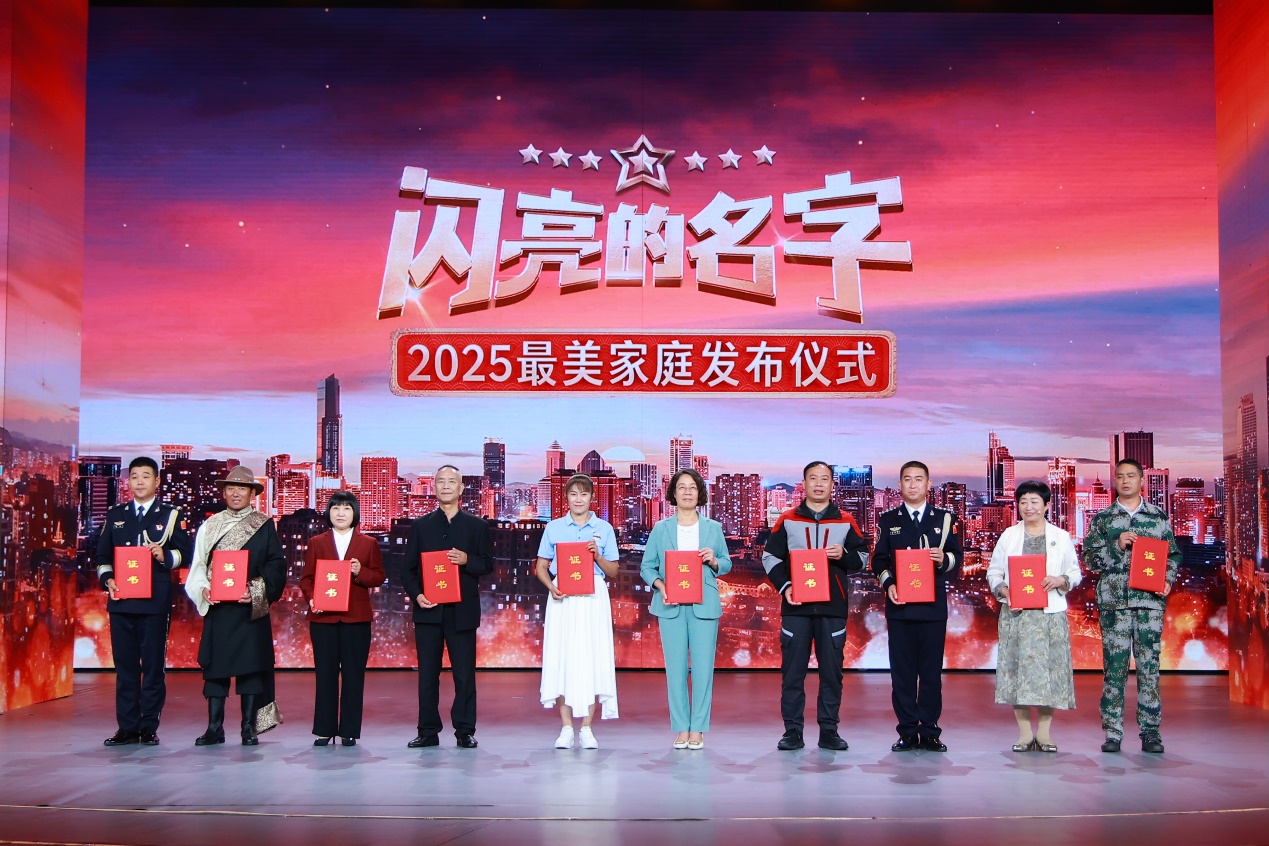
涵养好家风 共筑家国梦 《闪亮的名字—2025最美家庭发布仪式》10月2日播出
Yang Shi Wang· 2025-10-02 01:57
Core Viewpoint - The article emphasizes the importance of family as a source of warmth and support for individuals striving in society, highlighting the initiative to promote family values and the announcement of the "Most Beautiful Families" event in 2025 [1][24]. Summary by Sections Announcement of the Event - The "Most Beautiful Families" initiative will be publicly released by the Central Propaganda Department and the All-China Women's Federation on May 15, 2025, with a broadcast scheduled on CCTV-10 on October 2, 2023 [1]. Honorees - Ten families have been recognized for their contributions to society, showcasing patriotism, traditional virtues, and excellent family values. Their efforts include promoting local economies, safeguarding agricultural research, and nurturing the next generation [3][24]. Individual Family Contributions - **Liu Faying Family (Hubei)**: Supported over 5,000 children’s education through 200 notebooks over 30 years [4]. - **Huang Lili Family (Shaanxi)**: Conducted agricultural research amidst wheat and fruit fields, contributing to national food security [6]. - **Qin Tingqun Family (Chongqing)**: Utilized delivery services to ensure community safety and support [8]. - **Xu Naichao Family (Inner Mongolia)**: Maintained a home on the border, emphasizing loyalty and service [10]. - **Huang Yi Family (Jilin)**: Defended the border while promoting cultural values [12]. - **Shi Ruijuan Family (Heilongjiang)**: Boosted local economy through ice and snow tourism [14]. - **Bai Genbao Family (Jiangxi)**: Preserved traditional performing arts across generations [16]. - **Yao Keli Family (Guizhou)**: Dedicated to forest conservation for over 50 years [18]. - **Nan Jieciren Family (Tibet)**: Provided healthcare in remote areas [20]. - **Wu Shuming Family (Beijing)**: Exemplified filial piety and family harmony over 14 years [22]. Event Presentation - The event will feature various formats such as recitations, guest speeches, and short films to showcase the touching stories of these families, emphasizing their role in national development and cultural heritage [24][30].

校园里共谱青春乐章
Liao Ning Ri Bao· 2025-10-02 01:07
10月1日清晨,大连理工大学音乐喷泉升旗广场上,300余名师生齐聚于此,参加国庆升旗仪式。 10月1日清晨,大连理工大学音乐喷泉升旗广场上,铿锵的诗句响彻长空。300余名师生齐聚于此,以一场充满科创情怀的国庆升旗仪式,将"爱国 情"与"报国志"深深镌刻在青春底色中。 "我们希望通过举办国庆升旗仪式等活动,让学生在感受家国情怀的同时,找到奋斗的方向。"大连理工大学团委负责人介绍,大连理工在校内创办 的"攀登杯"创新创业竞赛自1995年启动,至今已持续30年,仅今年就吸引1.17万人次参与。学校近两年在"挑战杯"等全国赛事中稳居前列。 仪式尾声,师生共同放飞彩色气球,大家挥舞着国旗、校旗,激昂且诗意。一旁,"我和国旗合张影"的背景墙前,学生排起长队。这群朝气蓬勃的年轻 人纷纷拿出手机,在朋友圈里写下"与祖国同行"的铮铮誓言。 这场升旗仪式,让大工书院2025级新生刘印钦深受感染,"聆听学长用实验室里的'微光'照亮了乡村振兴路,特别激动,这才是我们该追的'星'!" 参加升旗仪式的人群中,生物工程学院博士生刘名锋刚刚从2025年度中国青年科技创新"揭榜挂帅"擂台赛载誉归来,这是他第二次捧回该赛事全国特等 奖。"科技创 ...

砥砺家国情怀 凝聚奋进力量——走近2025年“最美家庭”
Ren Min Ri Bao· 2025-10-02 00:06
Core Viewpoint - The article highlights the importance of family as a fundamental unit of society, showcasing ten exemplary families recognized for their contributions to social harmony and the promotion of socialist core values in China [1]. Group 1: Family Contributions to Society - The family of Xu Naichao and Li Wenna established the first "Border Patrol Couple Police Station" in Inner Mongolia, managing over 100 kilometers of border and conducting more than 600 joint patrols, receiving positive feedback from local herders [2]. - Huang Yi, a border patrol instructor in Jilin, has dedicated 19 years to border security, conducting 79 rescue operations in harsh weather, while his wife, Wang Rongxiang, has created a community service initiative that has helped over 200 students [2]. - In Heilongjiang, the couple Shi Ruijuan and Sun Yanlong capitalized on eco-tourism opportunities, leading to a significant increase in local income, with per capita annual income surpassing 30,000 yuan [4]. Group 2: Family Values and Education - Wu Shuming and her husband Wei Shoujiang exemplify filial piety by caring for her elderly parents, emphasizing that "filial piety is the seed of family happiness" [5]. - Liu Faying and her husband Qin Shoulong have raised over 35 million yuan for educational support, benefiting over 5,000 underprivileged students through their transparent and accountable assistance program [6]. Group 3: Commitment to National Development - Professors Huang Lili and Kang Zhensheng have dedicated 40 years to agricultural research, developing techniques that have significantly improved fruit production and contributed to national food security [7]. - The family of Yao Keli and Zhang Liuni has maintained a fire-free forest area for 45 years through diligent conservation efforts, showcasing a commitment to environmental protection [9]. Group 4: Community Engagement and Service - The couple Qin Tingqun and Chen Yiqun have set a standard in the delivery industry with 580,000 packages handled and a record of zero complaints over 17 years, while also providing community support to elderly residents [10].
砥砺家国情怀 凝聚奋进力量
Ren Min Ri Bao· 2025-10-01 22:11
Core Viewpoint - The article highlights the importance of family as the foundation of society, showcasing ten exemplary families recognized for their contributions to social values and community well-being in 2025 [1]. Group 1: Family Contributions to Society - Xu Naichao and his wife Li Wenna established Inner Mongolia's first "Border Patrol Couple's Police Station," managing over 100 kilometers of border and conducting more than 600 joint patrols, gaining community support [2]. - In Heilongjiang, Shijuan and her husband Sun Yanlong capitalized on eco-tourism, leading to an increase in local income, with per capita annual income surpassing 30,000 yuan [3]. - Wu Shuming and her husband Wei Shoujiang exemplified filial piety by caring for her elderly parents, emphasizing that family harmony leads to overall happiness [4]. Group 2: Educational and Charitable Initiatives - Liu Fay Ying and her husband Qin Shoulong have raised over 35 million yuan to support more than 5,000 underprivileged students through transparent and accountable educational initiatives [5]. - Huang Lili and her husband Kang Zhensheng have dedicated decades to agricultural research, significantly contributing to national food security and sharing their findings globally [6]. Group 3: Cultural and Community Engagement - The Bai Genbao family has promoted cultural heritage through tea-picking operas, performing nearly 10,000 shows to enhance rural cultural life [8]. - Yao Keli and his wife have maintained a fire-free forest area for 45 years, demonstrating commitment to environmental conservation [8]. - Qin Tingqun and his wife have set a standard in the delivery industry with 58,000 packages handled and a 17-year zero-complaint record, while also assisting community members in need [9].
新华全媒头条丨山河如画 奋进如歌——各地群众庆祝新中国76周年华诞
Xin Hua She· 2025-10-01 14:33
同庆,一抹"中国红"万千爱国心 国旗升起的方向,是十四亿多中国人共同凝望的信仰。 金秋十月,山河披锦,万里同歌。 七十六载筚路蓝缕、充满艰辛,也一路豪情满怀、凯歌高奏。从积贫积弱到繁荣富强,历史的长 卷镌刻中华民族彪炳史册的辉煌成就,铭记生生不息的奋斗足迹。 今天,迎着清晨第一缕晨曦,新中国迎来了第七十六个生日。从城市到乡村,从北国到江南,创 新创造的浪潮奔涌,踔厉奋发的故事日新。那一抹抹鲜艳的"中国红",成为金秋时节最温暖的底 色,凝聚起亿万人民对伟大祖国最深沉的祝福。 凌晨4时,天安门广场上人海汇聚。12万多双眼睛凝视着同一个方向,等待着五星红旗与朝阳一同 升起的庄严时刻。 "再次到天安门,心情比之前更激动。"27岁的陶卜凡作为阅兵民兵方阵中的一员,不久前刚在这 里参加纪念中国人民抗日战争暨世界反法西斯战争胜利80周年大会,"脑海里涌现阅兵现场老兵眼 中的泪光、新型装备的轰鸣,让我更懂得这面红旗的分量。" 国歌奏响,红旗漫卷。在《义勇军进行曲》的旋律中,五星红旗冉冉升起,迎风招展。"那一刻, 只剩下心跳和国歌在共鸣。"来自河北的大学生王梓涵说,选择国庆到北京看升旗,"比想象中更 震撼,更能感受到国家的脉搏 ...
这群东航人 名字叫“国庆”
Zhong Guo Min Hang Wang· 2025-10-01 10:35
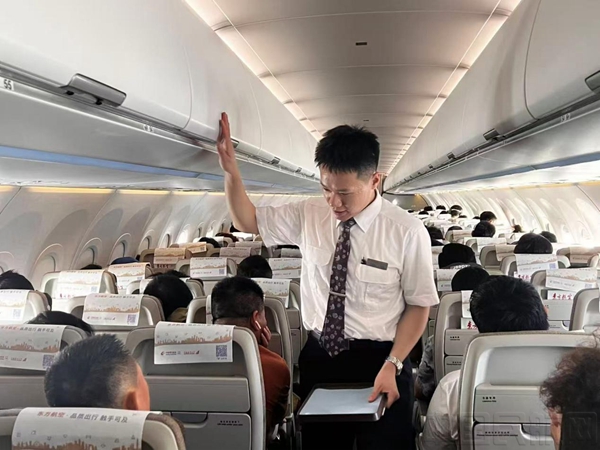
在中国东航,有一群人拥有一个共同的名字——"国庆"。 长大后,吴国庆在多地打拼。那些年,他每天清晨赶到工地与客户沟通,深夜还在测量房屋结构、设计 方案,节假日无法与家人团聚是常态。"爷爷说'国庆的孩子要担当',这句话我一直记着。" 真正让他飞向蓝天、转行成为一名东航乘务员,是兄嫂的民航故事激励了他。"哥哥嫂子都是民航人, 他们常说,看着旅客平安落地时的笑容,比什么都值。" 今年,吴国庆终于穿上乘务员制服,成为东航大家庭中的一员,还将第一次在航班上度过自己的生 日。"当万千家庭团聚之时,我和同事们坚守岗位,服务好每一位旅客的团圆之路。这种坚守,何尝不 是一种对爷爷那代人精神的传承呢?"吴国庆说。 乘务员吴国庆 这个国庆,吴国庆想对远方的父母说:"别担心,我在蓝天上和同事们一起守护着大家的归途。" 这个带着时代温度与记忆的名字,是父母发自肺腑的祝福期许,是刻在生命里的家国烙印,更成为他们 扎根民航岗位、守护蓝天梦想的初心坐标。 他们名字相同、年龄各异,岗位经历不同、使命初心却一致。这个国庆节,东航的这群"国庆们"正以平 凡的坚守,为自己,更为共和国庆生。 乘务员吴国庆:爷爷说"国庆的孩子要担当" "国庆,你要记得 ...

校馆弦歌丨心有大我 至诚报国——感受高校科学精神
Xin Hua Wang· 2025-10-01 08:22
Core Insights - The article emphasizes the integration of scientific spirit into education at various universities, fostering a sense of national pride and responsibility among students [1][2][3] Group 1: Educational Initiatives - Shanghai Jiao Tong University launched a series of scientific activities titled "The Return of the Wall Breakers Across the Ocean" to commemorate the 70th anniversary of alumni Qian Xuesen's return to China, using diverse formats to promote scientific spirit [1] - Tsinghua University's Science Museum showcases thousands of scientific artifacts, aiming to convey the stories of scientists and the underlying scientific spirit and national sentiment [2] - Zhejiang University's Art and Archaeology Museum hosts exhibitions that transform art history into an interactive experience, encouraging students to engage as active participants in cultural heritage [3] Group 2: Student Engagement - Students at Shanghai Jiao Tong University actively participate in historical experiences, deepening their understanding of Qian Xuesen's choices and contributions to science [1] - Tsinghua University aims to build a permanent science museum by 2027, with a vision to connect local, national, and global scientific narratives [2] - The educational approach at Zhejiang University emphasizes the role of museums as platforms for inquiry and cultural transmission, fostering critical thinking among students [3]
国庆高空添喜庆!东航西北分公司“锦绣中华”主题航班传递家国温情
Zhong Guo Min Hang Wang· 2025-10-01 05:44
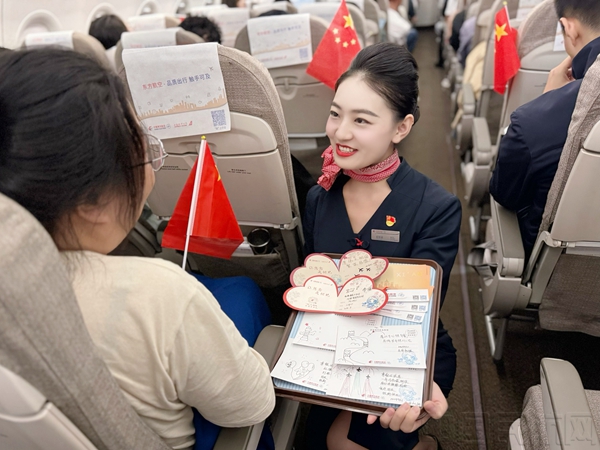
Core Points - The article highlights the celebration of the 76th anniversary of the founding of the People's Republic of China, with Eastern Airlines Northwest Branch launching special "Jinxiu Zhonghua" National Day themed flights to enhance the festive atmosphere for passengers [1][4] - The flight crews meticulously planned and prepared festive decorations and exclusive National Day gifts for passengers, creating a warm and joyful environment onboard [4][8] - The initiative not only provided a unique experience for travelers but also fostered a sense of connection between personal and national celebrations, as evidenced by a passenger celebrating their birthday on the same day as the nation [8] Group 1 - The launch of themed flights by Eastern Airlines Northwest Branch aimed to celebrate the National Day with unique services and interactions for passengers [1] - The onboard experience included festive decorations and special gifts, enhancing the celebratory mood among travelers [4] - The emotional connection between passengers and the nation was highlighted through shared celebrations, such as a passenger's birthday coinciding with National Day [8]
与十月,干杯!(大地风华)
Ren Min Ri Bao· 2025-09-30 22:02
田野成熟了 穗子摇曳在香甜里 山脉披红了 屹立在碧透的苍穹里 人心沸腾了 挥动着森林的臂膀 对着我生命的神,十月 举起八十年的陈酿 斟满八十岁的春秋 再加上一千片雪花 三千河的浪朵 我要与十月,干杯 这杯庆祝山河永安的酒 祝福人民开心的酒 把一生的梦想和奋勇 装进酒杯 把村庄的悲苦变甜的血泪 把母亲的拐杖折弯的倒影 装进酒杯 生与死的锤炼 这杯酒是由死过几次 又活过几次而酿的酒啊 滴滴血泪声 一 点点家国情 我要与十月,干杯 酒啊,生命的酒 它是血与历史的化合 在时光中沉淀 而我的酒是爱与爱的化合 它是我生命的太阳 二 假若你不了解我的生死 不了解我的村庄的生死 就不会了解酒的味道 是在一个早晨 村庄和城市从睡梦中醒来 天边有一抹刺眼的光 那是一个大写的名字 它叫:十月 我们的土地和生命的所在 我的故乡沸腾起来 道路和庄稼舒展成鹰的翅膀 三 今天,与十月干杯 不是我一个人 我和故乡一起 巡逻的路也来了 戈壁的驼铃也来了 钢枪举起祝酒的姿势 我的身后—— 跨海大桥与深海隧道 大山天眼的神秘与地下油井 现代城的华贵与披红挂彩的村庄 都来了 站成庄稼和大山的模样 与十月,干杯 就是祝贺我们的骨头和血肉 祝贺一段不朽 ...