新发展理念

Search documents
习近平总书记带领我们决胜“十四五”
Ren Min Ri Bao· 2025-12-31 00:37
"2025年,我们将全面完成'十四五'规划。""我们从来都是在风雨洗礼中成长、在历经考验中壮大,大家 要充满信心。" 辞旧迎新之际,重温习近平主席在二〇二五年新年贺词中的殷殷寄语,更能感悟蕴含其中的深邃哲思和 强大力量。 这一年,我国经济顶压前行、向新向优发展,现代化产业体系建设持续推进,改革开放迈出新步伐,重 点领域风险化解取得积极进展,民生保障更加有力。 这五年,我们有效应对各种冲击挑战,推动党和国家事业取得新的重大成就,"十四五"即将圆满收官, 第二个百年奋斗目标新征程实现良好开局。 从一年看五年,极不寻常、极不平凡,中国式现代化迈出新的坚实步伐; 从五年看新时代,踔厉奋发、勇毅前行,党和国家事业取得历史性成就、发生历史性变革。 新时代新征程,中华民族伟大复兴势不可挡。"时与势在我们一边,这是我们定力和底气所在,也是我 们的决心和信心所在"。 "十四五"时期,我国开启全面建设社会主义现代化国家新征程。世界百年未有之大变局深刻变化前所未 有,在拥有14亿多人口的世界最大发展中国家解决不平衡不充分的发展难题,改革发展稳定任务之重、 矛盾风险挑战之多、治国理政考验之大都前所未有。 把握规律、深化认识的五年—— ...
国务院原则同意《长株潭生态绿心加快绿色转型发展实施方案》
Zheng Quan Shi Bao Wang· 2025-12-30 09:25
人民财讯12月30日电,国务院办公厅公布关于同意《长株潭生态绿心加快绿色转型发展实施方案》的 函,国务院原则同意《长株潭生态绿心加快绿色转型发展实施方案》,《方案》实施要完整准确全面贯 彻新发展理念,加快构建新发展格局,着力推动高质量发展,坚持生态优先、绿色筑底,有序发展、创 新提质,一体联动、区域融合,深化改革、制度创新,严守国土空间规划底线管控要求,建设高度城市 化地区的生态安全屏障、因地制宜发展新质生产力的研发创新基地、城乡融合宜居宜游的美丽幸福花 园,推动长株潭生态绿心加快绿色转型发展。 ...
评估中心耿海清等:用好政策环评 从源头贯彻新发展理念
Zhong Guo Huan Jing Bao· 2025-12-29 23:20
政策环评是从源头预防和减缓重大不利生态环境影响的重要机制,是贯彻新发展理念、推动高质量发展 的重要抓手。西方国家从20世纪80年代开始逐步建立政策环评机制,迄今已经较为完善,成为保障科学 决策、民主决策的重要工具。我国2014年修订的《环境保护法》、2019年颁布的《重大行政决策程序暂 行条例》等,均为开展政策环评提供了一定的法规依据。2021年,生态环境部全面推进政策环评工作, 在全国组织实施了首批17个政策环评试点项目。从试点成效来看,对于在相关区域、行业、领域贯彻落 实新发展理念,推动高质量发展发挥了积极作用。 头减量、资源化利用等多个方面提出了解决方案。目前滨州市已建成多个工业固废综合利用项目,特别 是赤泥利用水平显著提高,多年积压的"老大难"问题正在逐步得到解决。 下一步做好政策环评工作的几点建议 习近平总书记强调:"完整、准确、全面贯彻新发展理念,是经济社会发展的工作要求,也是十分重要 的政治要求。"政策环评作为一个从决策链最前端发力的生态环境保护预防工具,对于贯彻新发展理 念、推动高质量发展具有天然优势。应该充分培育好、利用好这个工具,提高生态环境保护参与综合决 策的能力。笔者认为,就当前而言, ...
奋楫扬帆“十四五”,金融报国谱新篇——2025年中国人寿保险股份有限公司高质量发展回望
Xin Lang Cai Jing· 2025-12-29 03:09
Core Viewpoint - In 2025, despite external uncertainties, China's economy is expected to reach 140 trillion yuan, solidifying its position as the world's second-largest economy, driven by strong leadership and a focus on high-quality development [1] Group 1: Economic and Industry Overview - The insurance sector is highlighted as a stabilizer in the economy, benefiting from enhanced macro policies and a refined regulatory framework [1] - China Life Insurance Company (China Life) is aligning its strategies with national policies to accelerate its transformation and aim for becoming a world-class insurance company [2] - The company emphasizes its role in supporting national development and addressing public needs, showcasing its commitment to high-quality service [2] Group 2: Financial Performance - In the first three quarters of 2025, China Life achieved total premiums of 669.645 billion yuan, a 10.1% increase year-on-year, with new premiums growing by 10.4% [7] - The company reported a strong growth in new business value, up 41.8%, and maintained high solvency levels with core solvency ratio at 137.50% [7] - Total assets reached 74,179.81 billion yuan, with investment assets growing by 10.2% compared to the previous year [7] Group 3: Business Strategy and Innovation - China Life is focusing on value creation and efficiency, diversifying its product offerings across life, annuity, and health insurance [8] - The company is enhancing its digital operations, utilizing AI and big data to improve customer service and operational efficiency [20][21] - A significant increase in the proportion of floating income products has been noted, with a 45 percentage point rise in the first-year premium share [8] Group 4: Social Responsibility and Community Engagement - China Life is actively involved in rural revitalization efforts, supporting low-income families and contributing to local economic development [17][18] - The company has established numerous assistance points and invested in educational programs to enhance rural skills and promote local industries [18] - It has also expanded its healthcare insurance services, ensuring a stable service level for insured populations [13] Group 5: Future Outlook - Looking ahead, China Life aims to deepen its involvement in various financial sectors, including pension and inclusive finance, while enhancing its governance and risk management [26][27] - The company is committed to maintaining its market leadership and adapting to complex external environments to ensure sustainable growth [26][27]



奋楫扬帆“十四五” 金融报国谱新篇——2025年中国人寿保险股份有限公司高质量发展回望
Jin Rong Jie Zi Xun· 2025-12-29 03:01
Core Viewpoint - In 2025, despite external uncertainties, China's economy is expected to reach 140 trillion yuan, solidifying its position as the world's second-largest economy, driven by strong leadership and a focus on high-quality development [1] Group 1: Economic and Industry Overview - The insurance sector is highlighted as a stabilizer in the economy, benefiting from enhanced macro policies and a refined regulatory framework [1] - China Life Insurance Company is aligning its strategies with national priorities and regulatory guidance to accelerate its transformation and solidify its position as a leading insurance provider [2] Group 2: Corporate Governance and Leadership - The company emphasizes the importance of high-quality party building to ensure high-quality development, with a focus on political construction and organizational strength [3] - By the end of 2025, China Life had established 5,885 party organizations, ensuring coverage in all business areas [4] Group 3: Financial Performance - In the first three quarters of 2025, China Life achieved total premiums of 669.645 billion yuan, a 10.1% increase year-on-year, with new premiums growing by 10.4% [7] - The company maintained a strong solvency position, with a core solvency ratio of 137.50% and total assets reaching 74,179.81 billion yuan, reflecting a 9.6% increase from the previous year [7] Group 4: Investment Strategy - China Life is committed to long-term, value-driven investments, achieving a net profit of over 167.8 billion yuan, a 60.5% increase year-on-year [11] - The total investment income reached 368.55 billion yuan, marking a 40% increase compared to the previous year [11] Group 5: Social Responsibility and Community Engagement - The company has engaged in extensive rural support initiatives, establishing 1,085 assistance points and investing over 90 million yuan in educational support [19] - China Life has developed 23 specialized insurance products aimed at rural revitalization, enhancing its role in community development [19] Group 6: Customer Experience and Digital Transformation - The company has focused on enhancing customer experience through digital transformation, achieving a 99.99% paperless application rate for individual long-term insurance [24] - China Life's digital initiatives have led to a significant increase in customer engagement, with over 53.66 million participants in various service activities [24] Group 7: Future Outlook - Looking ahead, China Life aims to deepen its involvement in national development, enhance its service offerings, and maintain its market leadership through strategic investments and innovation [30][29]
安伟主持召开部分市直单位2026年经济工作座谈会时强调
Zheng Zhou Ri Bao· 2025-12-29 01:41
12月26日,省委常委、市委书记安伟主持召开部分市直单位2026年经济工作座谈会,分析明年经济形 势,研究部署重点工作,强调要深入学习贯彻习近平总书记在河南考察时重要讲话精神,全面落实党的 二十届四中全会、中央经济工作会议、中央城市工作会议和省委十一届十次全会、省委经济工作会议部 署要求,统一思想、坚定信心,围绕市委"1+7+7+7"工作部署,进一步强优势、增动能、激活力,奋力 推动经济社会高质量发展。 安伟强调,要建机制、搭平台、强服务,推动科技创新和产业创新深度融合,加大高新技术企业培育力 度,加快建设教育科技人才一体实践中心。要培育发展新质生产力,谋划建设一批零碳工厂、零碳园 区,积极布局未来产业,构建现代化产业体系,加快建设新型工业化中心。要大力发展科创金融,推动 更多优质企业上市,做大做强期货金融、推动建设相关产业园,对标一流金融中心提升龙湖金融岛运营 水平,加快建设区域金融中心。要深度融入服务全国统一大市场建设,全力推动要素市场化配置综合改 革试点建设,形成一批可感可及的标志性成果,打造国家级跨境电商创新示范高地,加快建设丝路枢纽 中心。要推动内外贸一体化发展,积极培育消费新的增长点,加快建设国际 ...
虞洪:新发展理念引领经济高质量发展
Jing Ji Ri Bao· 2025-12-28 23:32
高质量发展是全面建设社会主义现代化国家的首要任务,是体现新发展理念的发展。党的十八大以 来,以习近平同志为核心的党中央对经济社会发展提出了许多重大理论和理念,其中新发展理念是最重 要、最主要的。"十五五"规划建议将"完整准确全面贯彻新发展理念"列入"十五五"时期经济社会发展的 指导思想。完整准确全面贯彻新发展理念,是经济社会发展的工作要求,也是十分重要的政治要求。立 足于党和国家事业发展全局,必须深刻把握新发展理念的理论内涵,明确新形势下完整准确全面贯彻新 发展理念的实践意义,更加突出新发展理念对经济高质量发展的引领作用。 着眼长远发展指路定向 新发展理念不是凭空得来的,而是在深刻总结国内外发展经验教训、深刻分析国内外发展大势的基 础上形成的,是立足经济发展实践、奔着解决实际问题而去的。新发展理念是一个系统的理论体系,回 答了关于发展的目的、动力、方式、路径等一系列理论和实践问题,指明了更高质量、更有效率、更加 公平、更可持续、更为安全的发展方向。 创新、协调、绿色、开放、共享五大发展理念并非相互割裂的孤立概念,而是相互贯通、相互支撑 的有机整体。创新是引领发展的第一动力,旨在破解发展动力不足的难题,通过技术 ...
中国共产党北京市海淀区第十三届委员会第十次全体会议决议
Bei Jing Ri Bao Ke Hu Duan· 2025-12-28 03:30
全会同意区委常委会工作报告,充分肯定区委常委会2025年工作。一致认为,一年来,在以习近平同志 为核心的党中央和市委坚强领导下,区委常委会坚持以习近平新时代中国特色社会主义思想为指导,深 入贯彻落实党的二十大和二十届历次全会精神,深入贯彻习近平总书记对北京重要讲话精神和对中关村 重要指示精神,全力强化首都功能承载,经济发展稳中有进、提质向好,人工智能全栈布局、占先领 跑,教育科技人才一体发展、协同增效,城市建设科学精细、绿色安全,民生保障更有温度、可感可 及,改革开放示范引领、活力彰显,文化建设守正创新、赋能提质,民主法治建设公正有序、凝聚力 量,扎实开展深入贯彻中央八项规定精神学习教育,推进全面从严治党持之以恒、纵深发力,圆满完成 重大服务保障任务,"十四五"即将圆满收官,各项事业取得新进展、新成就。 转自:北京日报客户端 中国共产党北京市海淀区第十三届委员会第十次全体会议,于2025年12月27日召开。区委常委会主持会 议。全会深入学习贯彻党的二十大和二十届历次全会精神,认真贯彻中央经济工作会议、市委十三届八 次全会精神,总结了2025年工作,部署了2026年任务。中共北京市海淀区委书记张革代表区委常委会 ...
中共中央政治局召开民主生活会
Xin Lang Cai Jing· 2025-12-27 16:36
中央政治局同志的发言,聚焦5个重点。一是带头强化政治忠诚、提高政治能力,二是带头固本培元、 增强党性,三是带头敬畏人民、敬畏组织、敬畏法纪,四是带头干事创业、担当作为,五是带头坚决扛 起管党治党责任。 会议强调,2025年是很不平凡的一年,面对国内外形势带来的严峻挑战,以习近平同志为核心的党中央 团结带领全党全国各族人民迎难而上、奋力拼搏,经济社会发展主要目标将顺利完成,"十四五"即将圆 满收官。我国经济顶压前行、向新向优发展,改革开放迈出新步伐,民生保障更加有力,社会大局保持 稳定。这些成绩来之不易。 中央政治局的同志一致认为,党和国家事业取得新的重大成就,根本在于以习近平同志为核心的党中央 领航掌舵,在于习近平新时代中国特色社会主义思想科学指引。全党必须深刻领悟"两个确立"的决定性 意义,增强"四个意识"、坚定"四个自信"、做到"两个维护"。明年是"十五五"开局之年,要坚决落实党 中央决策部署,完整准确全面贯彻新发展理念,加快构建新发展格局,着力推动高质量发展,进一步全 面深化改革开放,更好统筹发展和安全,推动经济实现质的有效提升和量的合理增长,持续改善民生, 保持社会和谐稳定,纵深推进全面从严治党,努力 ...
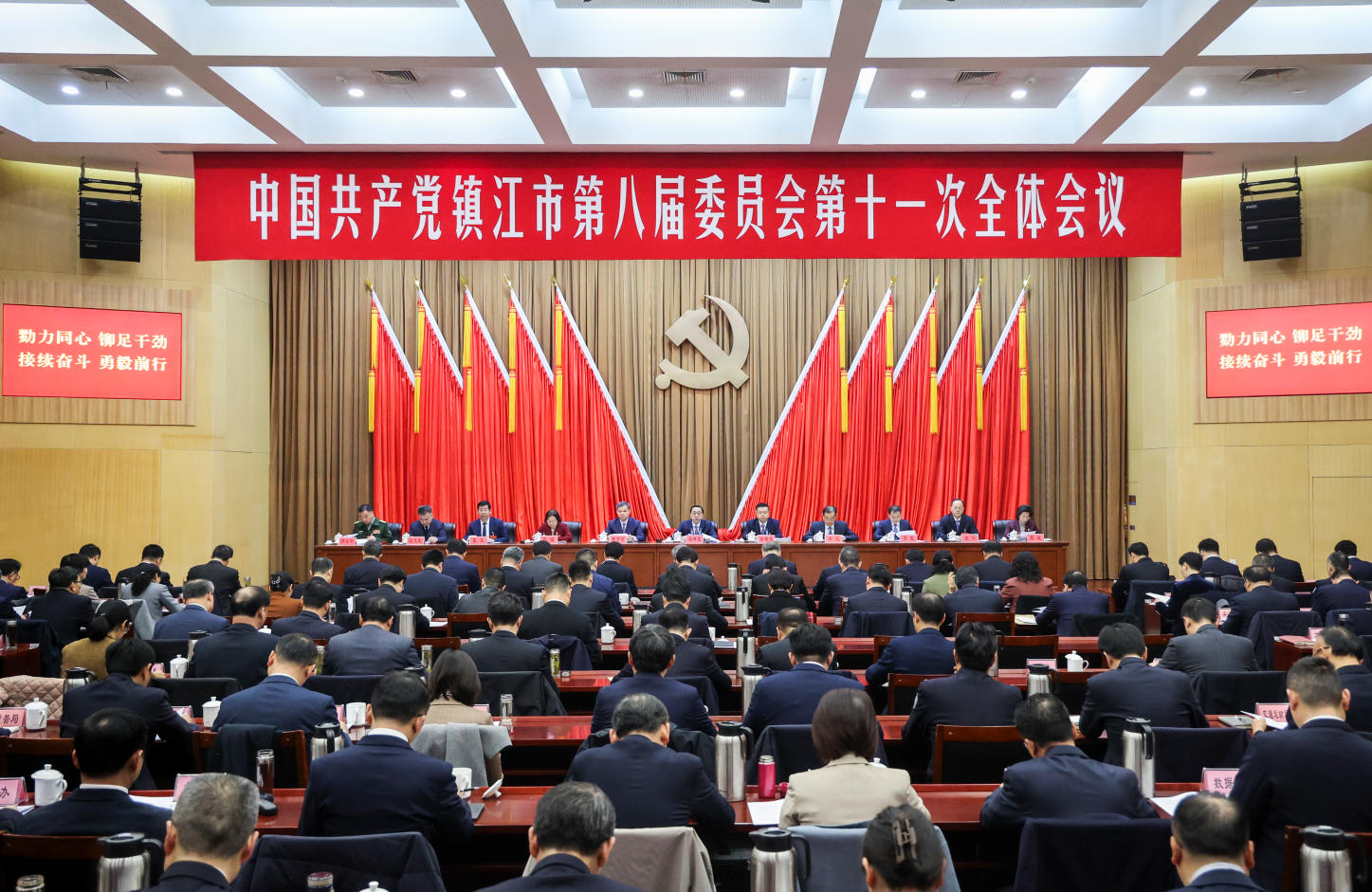
中共镇江市委八届十一次全会举行 牢记“镇江很有前途”谆谆嘱托 奋力谱写“强富美高”新镇江现代化建设新篇章 市委常委会主持会议 马明龙讲话 徐曙海部署明年经济工作 全会听取和讨论了马明龙受市委常委会委托作的工作报告,审议通过《中共镇江市委关于制定镇江市国民经济和社会发展第十五个五年规划的建议》和全会决议及市委关于递补市委委员的《决定》
Zhen Jiang Ri Bao· 2025-12-27 10:33
Group 1 - The core viewpoint of the meeting emphasizes the importance of implementing Xi Jinping's thoughts and the spirit of the 20th National Congress, focusing on economic and social development in Zhenjiang during the 15th Five-Year Plan period [2][3] - The meeting reviewed and approved the suggestions for the 15th Five-Year Plan and discussed the report on the implementation of strict party governance responsibilities [2][3] - The meeting highlighted the need for a unified approach to the central government's decisions and provincial requirements, aiming for new achievements and improvements in various sectors [4] Group 2 - The meeting stressed the importance of strengthening the industrial foundation, promoting the growth of emerging industries, and enhancing the quality of traditional industries and services [5] - It called for efforts to tap into domestic demand, improve investment efficiency, and stabilize the real estate market [5] - The meeting also emphasized the need for reforms in key areas, including local debt management, market-oriented resource allocation, and state-owned enterprise reforms [5] Group 3 - The meeting pointed out the necessity of ensuring social stability and addressing the needs of vulnerable groups while maintaining supply and price stability for essential goods [6] - It underscored the importance of safety production and the need to secure the supply of key agricultural products [5][6] - The meeting concluded with a call for a comprehensive approach to economic development and environmental protection, aiming for a green transformation of production methods [5]