
大数据

Search documents
软件业:前三季度IC设计收入3234亿元,同比增长16.9%
Xin Hua Wang· 2025-10-31 01:33
Core Insights - The software and information technology services industry in China has shown a positive operational trend in the first three quarters of the year, with software business revenue reaching 1,111.26 billion yuan, a year-on-year increase of 13% [1] - The total profit of the software industry amounted to 143.52 billion yuan, reflecting a year-on-year growth of 8.7% [1] - Software business exports reached 45.94 billion USD, marking a year-on-year increase of 6.6% [1] Revenue Breakdown - Software product revenue grew steadily, reaching 238.54 billion yuan, a year-on-year increase of 10.9%, accounting for 21.5% of the total industry revenue [1] - Information technology services revenue was 764.33 billion yuan, with a year-on-year growth of 14.3%, representing 68.8% of the total industry revenue [1] - Cloud computing and big data services generated 115.87 billion yuan in revenue, up 13.7% year-on-year, making up 15.2% of information technology services revenue [1] - Integrated circuit design revenue reached 32.34 billion yuan, reflecting a year-on-year increase of 16.9% [1] - E-commerce platform technology service revenue was 101.67 billion yuan, with a year-on-year growth of 11.1% [1] Regional Performance - In the first three quarters, software business revenue growth rates were 13.3% in the eastern region, 13.0% in the central region, 10.7% in the western region, and 9.5% in the northeastern region [1] - The top five provinces for software business revenue were Beijing, Guangdong, Jiangsu, Shandong, and Shanghai, with year-on-year growth rates of 14.9%, 9.2%, 14.3%, 13.4%, and 20.2% respectively [1]
山东“掌上好办”综合体验获A+等级
Da Zhong Ri Bao· 2025-10-31 01:13
Core Insights - The fifth China Provincial Mobile Government Service Experience Report was released, highlighting the "Palm Good Handling" index for 2025, with Shandong receiving an A+ rating alongside Shanghai, Zhejiang, and Fujian, all awarded the "Top-notch" prize for comprehensive experience [1] Group 1: Technological Advancements - The application of new information technologies such as 5G, big data, and artificial intelligence is accelerating, making "Palm Handling" a standard for government services [1] - The transition of government service platforms from "usable" to "easy to use" is crucial for enhancing service supply capabilities [1] Group 2: User Engagement and Platform Performance - The "Love Shandong" platform has surpassed 120 million registered users, with an average of over 7 million daily active users [1] - The platform has implemented a unified Lu Tong code across the province, enabling the use of 485 types of electronic certificates through the "Love Shandong" app [1] Group 3: Future Directions - Shandong plans to focus on "efficiently completing one task," enhance collaboration with other provinces, and promote scenario innovation to create more "one task, one handling" online services [1] - Continuous simplification of processes and optimization of the "Love Shandong" interface design are prioritized to improve intelligent service levels [1]
硅谷高管创业项目获2500万美元种子轮融资,为企业打造全自动营销AI Agent|早起看早期
36氪· 2025-10-31 00:09
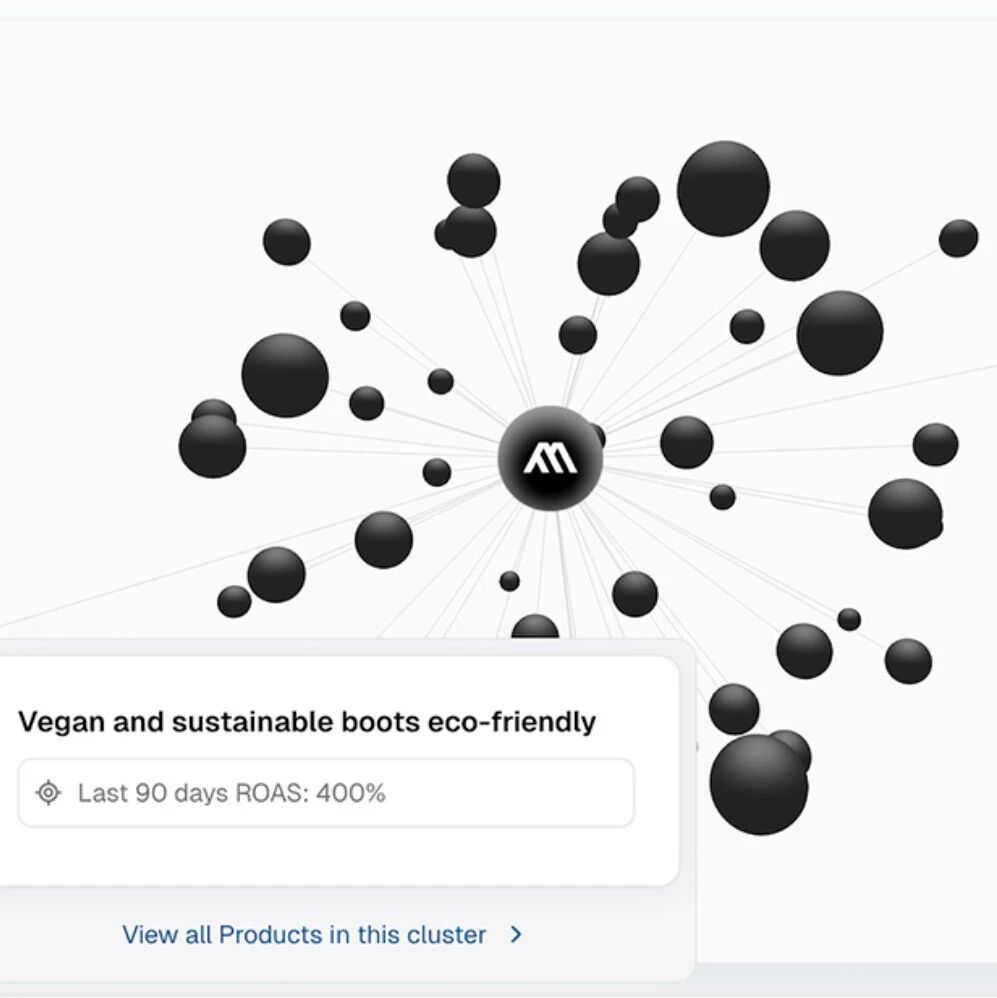
Core Insights - The article discusses the emergence of AI-driven marketing solutions, particularly focusing on MAI's automated marketing AI Agent, which aims to provide small and medium-sized enterprises (SMEs) with advanced advertising technology comparable to that of large corporations [2][4]. Company Overview - MAI is led by CEO Wu Yuchen, who has extensive experience in advertising platforms and e-commerce, having previously worked at Google and Instacart [7][10]. - The company recently completed a $25 million seed funding round, led by Kleiner Perkins, to expand its product and engineering teams and accelerate the development of its AI Agent platform [12][13]. Market Potential - The global MarTech market reached $131 billion in 2023, with a projected compound annual growth rate (CAGR) of 13.3%, indicating significant growth opportunities [15][16]. - There is a notable gap in the market for fully automated marketing solutions, particularly for SMEs that cannot afford the high costs associated with custom big data and machine learning solutions [18][19]. Product and Services - MAI's AI Agent platform offers services such as automated Google Ads management, real-time dynamic adjustments, personalized business adaptation, instant problem detection, and efficient scaling [24][25]. - The platform significantly reduces the time required for advertising optimization from days or weeks to hours, enabling continuous real-time analysis and decision-making [22][23]. Competitive Advantage - MAI differentiates itself by addressing the "white space" in the market for autonomous marketing AI Agents, focusing on comprehensive optimization rather than single-point solutions [27][28]. - The AI Agent system acts as an optimization engineer for marketing efforts, continuously analyzing data to enhance marketing engine efficiency [28][29]. Client Success - MAI has partnered with several well-known brands and manages millions of dollars in Google Ads spending monthly, with some clients reporting sales increases of up to 40% [31][32]. - For instance, NutritionFaktory achieved a threefold revenue increase based on MAI's services, demonstrating the effectiveness of the AI Agent in driving business growth [33].

武汉长江通信产业集团股份有限公司
Shang Hai Zheng Quan Bao· 2025-10-30 22:35
Core Points - The company is revising its governance structure and company articles in accordance with regulatory requirements, involving 24 governance documents, with 1 newly created, 22 revised, and 1 abolished [2][3] - The company plans to invest approximately 450 million yuan in the "DIA Intelligent Equipment R&D and Production Base Project" to enhance its core competitiveness and scale advantages [6][7][8] - The investment has been approved by the company's board of directors and does not require shareholder meeting approval [9][10] Governance Revisions - The revisions to the governance documents will take effect after approval at the upcoming shareholder meeting [3] - The company is eliminating the supervisory board and modifying relevant articles in the company charter [23][25] Investment Overview - The project aims to establish a comprehensive industrial base for product design, R&D, manufacturing, and operations in Shanghai [11] - The project is currently in the initial phase, with 21.65 million yuan already invested in land acquisition [13] - The project is expected to enhance the company's overall image and scale, contributing to the long-term strategic goals [16][17] Financial Impact - The investment is not expected to significantly impact the company's financial status in the short term, with funding sourced from both raised capital and company funds [17] - The project will not alter the company's main business or operational independence [17] Upcoming Shareholder Meeting - The second extraordinary general meeting of shareholders is scheduled for November 19, 2025, to discuss the governance revisions and other matters [36][37]

星环科技的前世今生:2025年Q3营收2.25亿行业排25,净利润-2.13亿行业排29
Xin Lang Zheng Quan· 2025-10-30 15:47
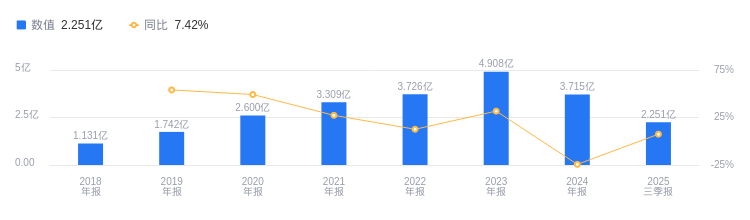
Core Viewpoint - The company, Starry Technology, is a leading enterprise-level big data software developer in China, facing challenges in revenue and profitability compared to industry leaders [1][2]. Group 1: Company Overview - Starry Technology was established on June 5, 2013, and went public on October 18, 2022, on the Shanghai Stock Exchange, with its headquarters in Shanghai [1]. - The company focuses on providing foundational software and services throughout the data lifecycle, operating within the computer software development sector, particularly in big data and artificial intelligence [1]. Group 2: Financial Performance - For Q3 2025, the company's revenue was 225 million yuan, ranking 25th out of 35 in the industry, significantly lower than the top competitor, iFlytek, which reported 16.989 billion yuan [2]. - The company's net profit for the same period was -213 million yuan, placing it 29th in the industry, again trailing behind leading firms like Kingsoft Office and Fanwei Network [2]. - The main business revenue composition includes software products and technical services at 111 million yuan (72.84%), solutions at 34.11 million yuan (22.37%), and integrated products and services at 6.84 million yuan (4.49%) [2]. Group 3: Financial Ratios - As of Q3 2025, the company's debt-to-asset ratio was 23.76%, an increase from 19.17% year-on-year, which is lower than the industry average of 29.42%, indicating relatively good debt repayment capability [3]. - The gross profit margin for Q3 2025 was 47.49%, down from 55.75% year-on-year, and below the industry average of 63.59%, suggesting a need for improvement in profitability [3]. Group 4: Shareholder Information - As of September 30, 2025, the number of A-share shareholders increased by 1.11% to 10,800, while the average number of circulating A-shares held per shareholder decreased by 1.09% to 8,706 [5]. - The top ten circulating shareholders included a new entry, Huabao Zhongzheng Financial Technology Theme ETF, holding 1.4776 million shares [5]. Group 5: Business Highlights and Future Outlook - In H1 2025, the company reported revenue of 153 million yuan, an increase of 8.82% year-on-year, with a 25.24% reduction in net loss [5]. - Key business highlights include securing 30 million yuan in orders related to large models across various industries, launching a new generation of AI infrastructure, and collaborating with Hong Kong Broadband for enterprise digital transformation [6]. - Forecasts for 2025 to 2027 project revenues of 427 million, 503 million, and 610 million yuan, with net losses expected to narrow over the same period [5][6].

盛视科技的前世今生:瞿磊掌舵二十八年,智慧口岸查验系统营收占比近九成,布局机器人赛道扩张新章
Xin Lang Zheng Quan· 2025-10-30 15:35
Core Viewpoint - Shengshi Technology is a leading enterprise in the smart port industry, focusing on new generation information technology research and providing intelligent products and solutions for smart society construction [1] Group 1: Business Performance - In Q3 2025, Shengshi Technology achieved operating revenue of 953 million yuan, ranking 22nd out of 63 in the industry, significantly lower than the top competitor, Inspur Information, which reported 120.67 billion yuan [2] - The main business revenue from smart port inspection system solutions was 492 million yuan, accounting for 89.54% of total revenue [2] - The net profit for the same period was 61.31 million yuan, also ranking 22nd in the industry, and lower than the industry average of 102 million yuan [2] Group 2: Financial Ratios - As of Q3 2025, the asset-liability ratio was 34.69%, higher than the previous year's 30.02% and slightly above the industry average of 34.38% [3] - The gross profit margin for the same period was 38.20%, down from 40.52% year-on-year but still above the industry average of 34.46% [3] Group 3: Shareholder Information - As of September 30, 2025, the number of A-share shareholders decreased by 8.97% to 22,400, while the average number of circulating A-shares held per shareholder increased by 9.86% to 5,987.74 [5] - The top circulating shareholder, Penghua Carbon Neutral Theme Mixed A, held 1.2339 million shares, a decrease of 934,800 shares from the previous period [5] Group 4: Management Compensation - The chairman, Qu Lei, received a salary of 951,800 yuan in 2024, an increase of 47,000 yuan from 2023 [4] - The general manager, Jiang Bing, received a salary of 964,000 yuan in 2024, an increase of 24,000 yuan from 2023 [4] Group 5: Analyst Ratings and Future Projections - According to招商证券, the revenue forecast for 2025-2027 is adjusted to 1.129 billion, 1.302 billion, and 1.497 billion yuan, with net profit projections of 123 million, 166 million, and 209 million yuan respectively [5] - 平安证券 maintains a "strongly recommend" rating, projecting net profits of 183 million, 236 million, and 307 million yuan for 2025-2027 [6]
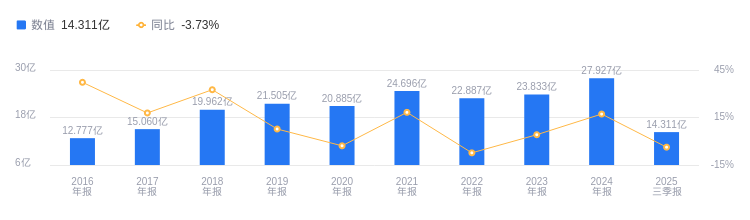
东方国信的前世今生:2025年三季度营收14.31亿行业排35,净利润 -1.1亿排名靠后,业务扩张野心初显
Xin Lang Cai Jing· 2025-10-30 15:10
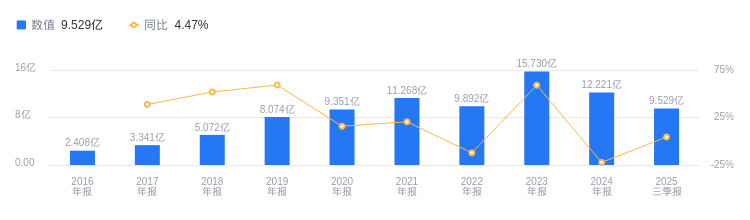
Core Viewpoint - Dongfang Guoxin is a leading enterprise in the fields of big data, cloud computing, and industrial internet in China, providing comprehensive services with significant technological advantages [1] Group 1: Business Performance - In Q3 2025, Dongfang Guoxin reported revenue of 1.431 billion yuan, ranking 35th among 131 companies in the industry, with the industry leader, Digital China, generating 102.365 billion yuan [2] - The company's main business composition includes customized software development and services at 721 million yuan (76.59%), system integration at 152 million yuan (16.14%), cloud computing at 52.675 million yuan (5.60%), and software products at 15.799 million yuan (1.68%) [2] - The net profit for the same period was -110 million yuan, ranking 116th in the industry, with the industry leader, Unisplendour, reporting a net profit of 1.723 billion yuan [2] Group 2: Financial Ratios - As of Q3 2025, the asset-liability ratio of Dongfang Guoxin was 38.11%, slightly below the industry average of 38.93% [3] - The gross profit margin for Q3 2025 was 32.50%, higher than the industry average of 29.96% [3] Group 3: Shareholder Information - As of September 30, 2025, the number of A-share shareholders decreased by 6.66% to 80,000, while the average number of circulating A-shares held per account increased by 7.14% to 11,300 [5] - Among the top ten circulating shareholders, Hong Kong Central Clearing Limited ranked fourth with 10.2374 million shares, a decrease of 3.3882 million shares from the previous period [5] Group 4: Strategic Developments - On August 11, 2025, Dongfang Guoxin planned to acquire a 33.35% stake in Shituo Cloud, increasing its ownership to 51%, which operates the largest C-end AI computing cloud platform in the country [6] - The company aims to capture 20% to 50% of the education and research market, with expectations for revenue growth from 2.870 billion yuan in 2025 to 4.369 billion yuan in 2027 [6]

缩短期数、调整费率!银行信用卡分期“精准让利”
Guo Ji Jin Rong Bao· 2025-10-30 15:08
Core Viewpoint - The adjustment of credit card installment services by banks is a response to the current development environment, focusing on risk prevention and consumer protection, which will ultimately lead to a sustainable improvement in the quality of credit card business [1][4]. Group 1: Business Adjustments - Multiple banks have announced the cessation of credit card self-selected installment services, with Everbright Bank set to discontinue this service by December 9, 2025, affecting previously activated cards [2]. - Industrial and Commercial Bank of China will stop offering installment plans longer than 36 months starting December 5, 2023, while Postal Savings Bank has introduced shorter installment options [3]. - The adjustments reflect a trend towards more refined and consumer-friendly banking practices, with banks like Everbright Bank modifying their overdraft interest rates to be more dynamic based on customer profiles [4]. Group 2: Market Trends - The credit card market is experiencing a contraction, with a reported decrease of 6 million cards issued in the second quarter of 2025, totaling 715 million cards [5]. - The decline in credit card usage is attributed to a weakening macroeconomic environment, affecting consumer willingness to use credit cards, while the growth of consumer loans and digital payment services is also influencing credit card balances [6]. - The industry is moving towards a phase of "precision farming," emphasizing refined customer acquisition, operations, and risk control, with a need for innovation in products and services [6].



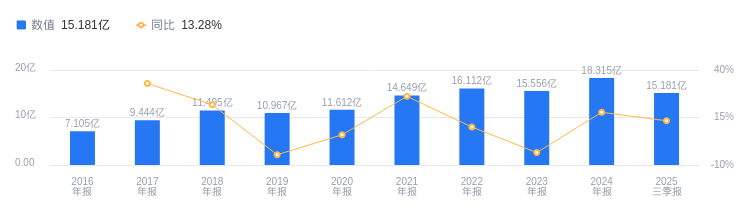
兆龙互连的前世今生:2025年三季度营收15.18亿排行业第7,净利润1.38亿居行业第5
Xin Lang Cai Jing· 2025-10-30 14:02
Core Viewpoint - Zhaolong Interconnect, a leading manufacturer of data cables and specialized cables in China, has shown strong performance in the first half of 2025, with significant growth in revenue and net profit, driven by its specialized cable segment and increasing demand in the GPU/ASIC market [2][6]. Group 1: Company Overview - Zhaolong Interconnect was established on August 21, 1995, and was listed on the Shenzhen Stock Exchange on December 7, 2020. The company is headquartered in Huzhou, Zhejiang Province and specializes in the design, manufacturing, and sales of data cables, specialized cables, and connection products [1]. - The company holds multiple independent intellectual properties and core technologies, with products widely used in communications and data centers [1]. Group 2: Financial Performance - In Q3 2025, Zhaolong Interconnect achieved a revenue of 1.518 billion yuan, ranking 7th among 12 companies in the industry. The industry leader, Hengtong Optic-Electric, reported a revenue of 49.621 billion yuan [2]. - The company's net profit for the same period was 138 million yuan, placing it 5th in the industry, while the top performer, Hengtong Optic-Electric, had a net profit of 2.537 billion yuan [2]. Group 3: Financial Ratios - As of Q3 2025, Zhaolong Interconnect's debt-to-asset ratio was 20.32%, an increase from 16.51% year-on-year, which is significantly lower than the industry average of 44.07% [3]. - The company's gross profit margin was 20.44%, up from 15.91% year-on-year, but still below the industry average of 24.18% [3]. Group 4: Shareholder Information - As of September 30, 2025, the number of A-share shareholders increased by 8.59% to 38,100, while the average number of circulating A-shares held per shareholder decreased by 7.49% to 6,721.25 shares [5]. Group 5: Future Outlook - Analysts from China Galaxy Securities predict that Zhaolong Interconnect will achieve revenues of 2.245 billion yuan, 2.926 billion yuan, and 4.013 billion yuan for 2025, 2026, and 2027, respectively, with year-on-year growth rates of 22.57%, 30.36%, and 37.14% [6]. - The company is expected to maintain strong growth in its specialized cable and connection product segments, supported by a solid customer base and technological advancements [6].
山西财经大学张文龙:高校在金融信息服务生态系统中扮演重要角色
Xin Hua Cai Jing· 2025-10-30 13:54
Core Viewpoint - The forum emphasized the critical role of financial information services in driving high-quality development through data-driven and technology-enabled collaboration [1][2]. Group 1: Role of Higher Education - Higher education institutions play a vital role in the financial information service ecosystem by focusing on talent cultivation, scientific research, and bridging connections between government, enterprises, and industries [1]. - Universities are responsible for training professionals who can manage the entire process from data collection to value realization [1]. - Research initiatives at universities aim to innovate and apply technologies such as artificial intelligence, blockchain, and big data to practical scenarios [1][2]. Group 2: Practical Initiatives - Shanxi University of Finance and Economics has established various programs related to financial technology, data science, and digital economy to enhance educational offerings [2]. - The university has launched a provincial key laboratory focused on data elements and economic decision analysis, highlighting its commitment to research in finance and economics [2]. Group 3: Integration of Finance and Technology - The integration of finance and technology is essential for enhancing financial services that support the development of the real economy [2]. - Financial tools must align with the needs of a high-quality real economy, with finance acting as a core mechanism for resource allocation [2]. - The effective construction of the financial information service ecosystem will enable better resource allocation through price signals, ultimately benefiting the real economy [2].