
掌上办

Search documents
青海省社会救助实现“掌上办”
Xin Lang Cai Jing· 2026-02-01 21:22
Core Viewpoint - The newly integrated "Qinghai Province Social Assistance Information Platform" has been completed and is operational, significantly enhancing service convenience through multiple breakthroughs in online service channels and innovative "mobile handling" models [1] Group 1: Platform Features - The platform is based on a unified provincial social assistance database and employs an architecture of "1 database + 3 core systems + 1 service system," integrating core functions such as processing services, information verification, and dynamic monitoring [1] - A new "emergency assistance" service system has been added to enhance the information support and data empowerment capabilities of social assistance work across the province [1] Group 2: Upgraded Functions - The platform's upgrade focuses on three core functions: monitoring and early warning, information verification, and emergency response, achieving iterative improvements [1] - In terms of monitoring and early warning, the platform's intelligence level and coverage have significantly increased, integrating 47 warning indicators related to undercoverage, miscoverage, and proactive discovery, covering various poverty risk scenarios such as illness, disaster, education, and unemployment [1] - The system can automatically compare and analyze relevant data to intelligently identify potential vulnerable groups, shifting the social assistance model from "people finding policies" to "policies finding people," effectively reducing the risk of undercoverage [1]
辽宁出台24项举措 推动2026年政务服务全面升级
Xin Lang Cai Jing· 2026-01-07 20:19
Core Viewpoint - The "2026 Action Plan for Optimizing the Business Environment" has been issued by the Liaoning Provincial Data Bureau, aiming to enhance the convenience of administrative services for enterprises and the public through 24 key measures across five areas [1]. Group 1: Administrative Service Optimization - The plan includes the implementation of seven initiatives to improve service efficiency, such as "one matter, one standard," "one door" centralized processing, and "one-stop" comprehensive acceptance [1]. - The proposal emphasizes the standardization of administrative service items, ensuring "no difference in acceptance" and "same standard processing" across the province [2]. Group 2: Enhanced Service Delivery - The plan promotes offline service integration, allowing administrative matters to be handled at designated comprehensive service locations, and introduces service models like "guest rooms" and "shoulder-to-shoulder" assistance [3]. - It aims to expand the "Liaoning Service" and "Liaoning Enterprise" platforms to provide more mobile services for enterprises and the public [3]. Group 3: Lifecycle Service System - The initiative seeks to establish a one-stop service system for the entire lifecycle of business operations, integrating related matters and enhancing the efficiency of service delivery [4]. - It promotes the "notification commitment + deficiency handling" service model, allowing for expedited processing based on applicants' credit records and commitments [4]. Group 4: Data Empowerment and Smart Services - The plan outlines measures to enhance the quality of "immediate response" services and expand the use of data sharing and online verification to streamline administrative processes [5]. - It emphasizes the application of artificial intelligence in administrative services to automate form filling and verification, thereby reducing manual intervention [5]. Group 5: Continuous Improvement Mechanism - The Liaoning Provincial Data Bureau will monitor the operational status of administrative services and evaluate the effectiveness of services across regions and departments [6]. - The plan includes a feedback loop for identifying and addressing service issues, aiming to continuously enhance service efficiency based on evaluations from enterprises and grassroots personnel [6].
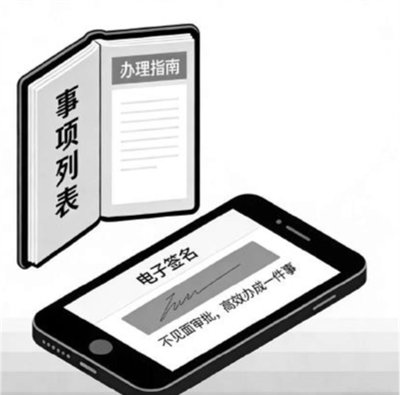
辽宁深化“不见面审批”“高效办成一件事”
Xin Lang Cai Jing· 2026-01-06 20:32
Core Viewpoint - The "2026 Action Plan for Optimizing the Business Environment" has been issued by the Liaoning Provincial Data Bureau, aiming to enhance the convenience of administrative services for enterprises and the public through 24 key measures across five areas [3][4]. Group 1: Key Measures - The plan includes the implementation of seven initiatives, such as "one matter" standardized processing, "one door" centralized handling, and "one network" full online processing, to improve service efficiency [3]. - It emphasizes the standardization of administrative service items, promoting a "no difference in acceptance" principle across the province, ensuring that the same matter is handled uniformly [4]. - The plan aims to enhance offline services by integrating administrative service items into comprehensive service venues, promoting various service models like "guest halls" and "shoulder-to-shoulder" services [5]. Group 2: Digital and Smart Services - The plan promotes the "mobile office" concept, expanding the functionalities of services like "Liaoning Service" and "Liaoning Enterprise" to provide more convenient mobile services [5]. - It aims to strengthen data sharing and service integration, enhancing the user experience through applications like "one code for all" and "one code for processing" [7]. - The use of artificial intelligence in administrative services is encouraged to automate processes such as form filling and document generation, reducing manual intervention [7]. Group 3: Monitoring and Evaluation - The Liaoning Provincial Data Bureau will conduct dynamic monitoring of the operational status of administrative services, implementing a feedback loop for issue discovery and resolution [8]. - The plan includes mechanisms for evaluating service efficiency based on feedback from enterprises and grassroots personnel, aiming for continuous improvement in service delivery [8].

山东“掌上好办”综合体验获A+等级
Da Zhong Ri Bao· 2025-10-31 01:13
Core Insights - The fifth China Provincial Mobile Government Service Experience Report was released, highlighting the "Palm Good Handling" index for 2025, with Shandong receiving an A+ rating alongside Shanghai, Zhejiang, and Fujian, all awarded the "Top-notch" prize for comprehensive experience [1] Group 1: Technological Advancements - The application of new information technologies such as 5G, big data, and artificial intelligence is accelerating, making "Palm Handling" a standard for government services [1] - The transition of government service platforms from "usable" to "easy to use" is crucial for enhancing service supply capabilities [1] Group 2: User Engagement and Platform Performance - The "Love Shandong" platform has surpassed 120 million registered users, with an average of over 7 million daily active users [1] - The platform has implemented a unified Lu Tong code across the province, enabling the use of 485 types of electronic certificates through the "Love Shandong" app [1] Group 3: Future Directions - Shandong plans to focus on "efficiently completing one task," enhance collaboration with other provinces, and promote scenario innovation to create more "one task, one handling" online services [1] - Continuous simplification of processes and optimization of the "Love Shandong" interface design are prioritized to improve intelligent service levels [1]