
大数据

Search documents
同花顺涨2.01%,成交额28.59亿元,主力资金净流入7198.13万元
Xin Lang Cai Jing· 2025-10-28 03:36
Core Viewpoint - The stock price of Tonghuashun has shown significant growth this year, with a notable increase in both revenue and net profit, indicating strong financial performance and investor interest [2][3]. Financial Performance - As of September 30, 2025, Tonghuashun achieved a revenue of 3.261 billion yuan, representing a year-on-year growth of 39.67% [2]. - The net profit attributable to shareholders reached 1.206 billion yuan, marking an impressive year-on-year increase of 85.29% [2]. Stock Market Activity - On October 28, Tonghuashun's stock price rose by 2.01%, reaching 369.38 yuan per share, with a trading volume of 2.859 billion yuan and a turnover rate of 2.86% [1]. - The stock has increased by 29.88% year-to-date, with a 4.78% rise over the last five trading days [2]. Shareholder Information - As of September 30, 2025, the number of shareholders decreased by 4.81% to 82,600, while the average circulating shares per person increased by 5.05% to 3,336 shares [2]. - The company has distributed a total of 7.991 billion yuan in dividends since its A-share listing, with 4.193 billion yuan distributed in the last three years [3]. Major Shareholders - Hong Kong Central Clearing Limited is the second-largest circulating shareholder, holding 14.6293 million shares, an increase of 2.3322 million shares from the previous period [3]. - China Securities Finance Corporation remains stable as the sixth-largest shareholder with 5.8875 million shares [3].

贸易便利化、国债买卖、投资者保护“安全网”……这个金融界盛会“干货满满”
Yang Shi Wang· 2025-10-28 02:38
Group 1: Financial Forum Highlights - The 2025 Financial Street Forum is held in Beijing from the 27th to the 30th, focusing on "Innovation, Transformation, and Reshaping Global Financial Development" with over 400 key guests from more than 30 countries and regions attending [1] - The People's Bank of China (PBOC) will resume public market operations for government bonds, indicating a positive outlook for the bond market [5][9] Group 2: Foreign Exchange Management Policies - The State Administration of Foreign Exchange (SAFE) will introduce nine new policy measures aimed at facilitating trade, including expanding the pilot scope for high-level cross-border trade and optimizing foreign exchange fund settlements for new trade entities [1][3] - SAFE plans to implement policies for multinational companies' integrated currency pools and management of domestic enterprises' overseas listing funds, enhancing foreign exchange management reforms in free trade zones [3] Group 3: Monetary Policy and Market Operations - The PBOC will maintain a supportive monetary policy stance, utilizing various tools to ensure liquidity arrangements across short, medium, and long terms, while keeping social financing conditions relatively loose [7] - The PBOC emphasizes the importance of macro-prudential and micro-regulatory management of the foreign exchange market, leveraging AI and big data for enhanced monitoring and risk prevention [5] Group 4: Investor Protection Measures - The China Securities Regulatory Commission (CSRC) has released new guidelines to strengthen the protection of small and medium investors, addressing concerns over high pricing in new stock issuances [10][12] - The new policy encourages companies to adopt share buybacks and increase dividend distributions, aiming to enhance the stability of returns for investors [14] Group 5: Optimizing Foreign Investor Access - The CSRC has issued a plan to optimize the Qualified Foreign Institutional Investor (QFII) system, aiming to attract more long-term foreign capital over the next two years [15] - The plan includes streamlined processes for sovereign funds and international organizations, facilitating easier access for foreign investors [17]


行业聚焦:医疗器械SPD市场头部企业份额调研(附Top 10 厂商名单)
QYResearch· 2025-10-28 02:20
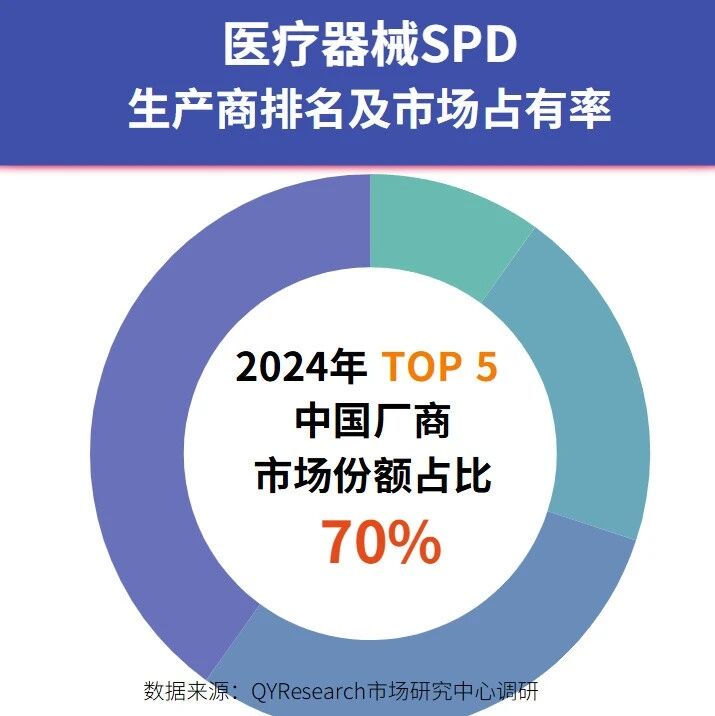
医疗器械 SPD 是指医院院内的"供给( Supply )、加工( Processing )、配送( Distribution )"三种核心工作流程的缩写,是一种通过精益 化、智能化和信息化的管理方式,以提高医疗机构医疗器械、耗材等物资的供应链效率和合理使用的全过程精细化管理体系。它利用条码识 别技术、信息系统和标准化建设,实现患者、临床科室、医学装备部门、供应商等数据信息的无缝对接,最终实现成本可控和规范化管理。 医疗器械SPD,中国市场总体规模 上游为药品及医疗器械生产商,据统计,全国医疗器械生产企业已经超过 3.5 万家。中游为医疗器械 SPD 平台商,主要参与者包括国药集 团、华润医药、塞力医疗、德荣医疗、上海医药等。下游主要是医疗机构和各级经销商,截至 2025 年 6 月,全国医疗器械经销商数量已超 过 66 万家。 行业发展趋势 据 QYResearch 调研团队最新报告"中国医疗器械 SPD 市场报告 2025-2031 "显示,预计 2031 年全球医疗器械 SPD 市场规模将达到 1630 亿 元,未来几年年复合增长率 CAGR 为 12.4% 。 根据 QYResearch 头部企业研究 ...
重磅发布,事关央行国债买卖、创业板改革;国际金价跌破4000美元丨盘前情报
2 1 Shi Ji Jing Ji Bao Dao· 2025-10-28 00:50
欧洲三大股指10月27日全线上涨。截至当天收盘,英国富时100种股票平均价格指数27日报收于9653.82 点,较前一交易日上涨8.20点,涨幅为0.09%。法国巴黎股市CAC40指数报收于8239.18点,较前一交易 日上涨13.55点,涨幅为0.16%;德国法兰克福股市DAX指数报收于24308.78点,较前一交易日上涨68.89 点,涨幅为0.28%。 国际油价10月27日微跌。截至当天收盘,纽约商品交易所12月交货的轻质原油期货价格下跌19美分,收 于每桶61.31美元,跌幅为0.31%;12月交货的伦敦布伦特原油期货价格下跌32美分,收于每桶65.62美 元,跌幅为0.49%。 | | 报价 | 涨跌幅 | | --- | --- | --- | | 道琼斯 | 47544.59 | 0.71% | | 纳斯达克 | 23637.46 | 1.86% | | 标普500 | 6875 16 | 1.23% | | 富时100 | 9653.82 | 0.09% | | COMEX黄金 | 4008.40 | -3.12% | | WTI原油 | 61.31 | -0.31% | | 美元指数 | 9 ...


高水平开放已成为我国经济发展的强劲动力
Zheng Quan Ri Bao· 2025-10-28 00:07
Core Viewpoint - The resilience of global trade has been highlighted despite challenges such as the pandemic, geopolitical tensions, and rising protectionism, with significant contributions from China as the world's second-largest economy and largest goods trader [1] Group 1: Global Trade Resilience - Global trade is projected to grow at an average annual rate of 5.4% from 2019 to 2024, an increase of 4.6 percentage points compared to the previous five years [1] - The United Nations forecasts global trade to exceed $33 trillion this year, marking a historical high [1] - Key drivers of this resilience include technological advancements and open cooperation [1] Group 2: China's Contributions - China plays a crucial role in enhancing global trade resilience and maintaining global trade rules by stabilizing global supply chains and sharing market opportunities [1] - The country is actively involved in global governance and promoting multilateral cooperation [1] Group 3: Foreign Exchange Market Developments - China's foreign exchange market transaction volume is expected to grow by 37% in 2024 compared to 2020, while the scale of foreign-related income and expenditure is projected to increase by 64% [2] - In the first three quarters of this year, China's foreign-related income and expenditure reached $11.6 trillion, a record high for the same period [2] - The State Administration of Foreign Exchange aims to create a more convenient, open, secure, and intelligent foreign exchange management system [2] Group 4: Policy Initiatives - New policies will be introduced to enhance trade facilitation, including expanding cross-border trade pilot programs and optimizing foreign exchange fund settlements for new trade entities [2] - There will be a focus on high-level institutional opening in the foreign exchange sector, including reforms in direct investment and cross-border financing [3] - The use of AI and big data will be emphasized to improve foreign exchange regulation and risk prevention capabilities [3]
国家外汇管理局局长朱鹤新:近期将发布境内企业境外上市资金管理等政策
Sou Hu Cai Jing· 2025-10-28 00:07
Core Viewpoint - The People's Bank of China and the State Administration of Foreign Exchange are committed to implementing the policies from the 20th National Congress, focusing on developing a more convenient, open, secure, and intelligent foreign exchange management system while preventing systemic risks [1][3]. Group 1: Foreign Exchange Policy Enhancements - The foreign exchange policy system will be improved to promote a "more trustworthy, more convenient" framework, with the number of enterprises able to conduct business with instructions increasing over five times since the end of 2020 [1][3]. - Nine new policy measures will be introduced to enhance trade facilitation, including expanding the pilot scope for high-level cross-border trade openness and optimizing foreign exchange fund settlements for new trade entities [1][3]. Group 2: High-Level Institutional Opening - There will be a focus on high-level institutional opening in the foreign exchange sector, with reforms in direct investment, cross-border financing, and securities investment management [4]. - A comprehensive policy package for cross-border investment and financing was launched in September, with upcoming policies for integrated currency pools for multinational companies and management of funds for domestic companies listed abroad [4]. Group 3: Risk Management and Regulatory Enhancements - The foreign exchange market will adopt a "macro-prudential + micro-regulation" dual management approach, utilizing AI and big data for smart regulation and enhancing monitoring of cross-border capital flows [2][4]. - The State Administration of Foreign Exchange will continue to support innovative foreign exchange policies in Beijing, promoting high-level openness in cross-border trade and investment [2][4].
数字化转型核心载体:存量时代手机银行APP的经营之策
艾瑞咨询· 2025-10-28 00:04
Core Insights - The article emphasizes the critical role of mobile banking apps in the digital transformation of commercial banks, highlighting their function as the main platform for financial services and user engagement in the digital economy [1][6] Group 1: Market Trends - The mobile banking app market in China has transitioned from a high-growth phase to a more refined operational stage, with active users stabilizing around 700 million, leading to a focus on user retention and value extraction rather than mere user acquisition [1][6] - The competition among banks has shifted from "land grabbing" to "fine-tuning" user engagement and operational efficiency, making the ability to leverage existing user bases for deeper engagement a key differentiator [1][6] Group 2: Agricultural Bank's Strategy - Agricultural Bank of China (ABC) has positioned its mobile banking app as a core component of its online operational framework, achieving the highest average monthly unique device count of 252.4 million in Q3 2025, reflecting its strong market presence [2][3] - ABC's stock performance has been positively impacted by its digital transformation efforts, with its share price reaching a peak in October 2025, indicating investor confidence in its operational capabilities and growth potential [2] Group 3: Operational Strategies - ABC employs a "one app strategy" to create a unified platform that integrates financial services, user needs, and technological capabilities, avoiding the pitfalls of fragmented service delivery [4] - The bank focuses on a user-centric approach, offering tailored services for diverse customer segments, including elderly users and minority groups, through a comprehensive service lifecycle management system [4][5] - ABC has developed a "one-stop" smart scene ecosystem that combines financial services with everyday life scenarios, enhancing user experience and engagement [5] Group 4: Technological Investment - ABC invests heavily in financial technology, utilizing AI, big data, and cloud computing to enhance service efficiency and security, thereby improving customer engagement and operational performance [5][6] - The bank's data-driven approach allows for personalized service offerings, significantly improving service conversion rates and customer satisfaction [5][6] Group 5: Future Outlook - The mobile banking app is expected to continue leading innovation in financial services, driven by accelerated ecosystem integration, deepened technological empowerment, and refined user management strategies [6][7]


深化专业群产教融合 用科技与创新书写冷链物流新篇
Jing Ji Ri Bao· 2025-10-27 22:21
Core Viewpoint - The collaboration between Ice Wheel Environment Technology Co., Ltd. and Shandong Business Vocational College has significantly contributed to the training of high-quality professionals in the cold chain logistics industry, addressing the growing demand for talent in this sector [1][2]. Group 1: Collaboration and Talent Development - Ice Wheel Environment has been actively involved in training students through initiatives like the "Welding Flowers Illuminate Blue Youth" theme presentation and the recruitment of engineers for its industrial academy [1]. - The partnership has lasted nearly 50 years, resulting in the training of nearly 10,000 high-quality professionals for the cold chain refrigeration industry [1]. - The second phase of the "Double High Plan" has seen Shandong Business Vocational College's cold chain logistics program effectively leverage its brand effect to meet the urgent talent needs of the industry [1][2]. Group 2: Curriculum and Professional Training - The cold chain logistics program at Shandong Business Vocational College includes four key majors, focusing on the installation and operation of refrigeration equipment and addressing complex issues like "intelligent temperature control" and "supply chain optimization" [2]. - The curriculum is designed to be flexible, allowing for practical teaching that breaks down barriers between courses, enhancing the foundational knowledge of students [2][3]. - New emerging positions such as "Digital Operation Engineer for Refrigeration Systems" and "Green Low-Carbon Engineer" have been integrated into the curriculum to meet industry demands [3]. Group 3: Industry Integration and Innovation - The college has established a national cold chain logistics and energy equipment integration community, creating several provincial-level platforms for practical training and skill development [4]. - The collaboration with Ice Wheel Environment includes joint development of teaching materials and evaluation methods, ensuring a seamless integration of education and industry needs [4]. - The college aims to enhance its research capabilities by participating in national and provincial research platforms, contributing to significant technological advancements in the cold chain logistics sector [5]. Group 4: Future Directions and Contributions - Shandong Business Vocational College plans to continue strengthening its cold chain logistics program and deepen its collaboration with enterprises to innovate talent training models [5]. - The institution has already trained over 50% of the founders of small and micro enterprises in the refrigeration industry in Shandong Province, positioning itself as a key talent source for companies like Ice Wheel Environment [5]. - The college is committed to leveraging technology and innovation to support the development of the cold chain logistics industry, contributing to the high-quality development of modern agriculture in Shandong Province [5].

国家外汇管理局局长朱鹤新: 近期将发布境内企业境外上市资金管理等政策
Zhong Guo Zheng Quan Bao· 2025-10-27 21:14
Core Viewpoint - The People's Bank of China and the State Administration of Foreign Exchange are committed to implementing reforms in the foreign exchange sector, focusing on convenience, openness, security, and intelligence in the management system [1][2] Group 1: Policy Enhancements - The foreign exchange policy system will be improved to promote a "more trustworthy, more convenient" environment, with the number of enterprises able to conduct business via instructions increasing over five times since the end of 2020 [1] - Nine new policy measures will be introduced to enhance trade facilitation, including expanding the pilot scope for high-level cross-border trade openness and optimizing foreign exchange fund settlements for new trade entities [1] Group 2: Institutional Opening - High-level institutional opening in the foreign exchange sector will be promoted, with a focus on the internationalization of the Renminbi and high-quality capital account opening [1] - Recent policies include a comprehensive package for cross-border investment and financing, as well as new regulations for multinational companies' integrated currency pools and management of domestic companies' overseas listing funds [1] Group 3: Risk Management and Supervision - The foreign exchange market will adopt a "macro-prudential + micro-regulation" management approach, utilizing AI and big data for smart regulation and enhancing monitoring of cross-border capital flows [2] - The State Administration of Foreign Exchange will support innovative foreign exchange policies in Beijing, aiming to enhance the city's role in global economic stability and growth [2]
近期将发布境内企业境外上市资金管理等政策
Zhong Guo Zheng Quan Bao· 2025-10-27 21:03
Core Viewpoint - The People's Bank of China and the State Administration of Foreign Exchange are committed to implementing reforms in the foreign exchange sector, enhancing convenience, openness, security, and intelligence in foreign exchange management systems [1][2] Group 1: Policy Enhancements - The foreign exchange policy system will be improved to promote a "more convenient" approach based on trust, with the number of enterprises able to conduct business with instructions increasing over five times since the end of 2020 [1] - Nine new policy measures will be introduced to enhance trade facilitation, including expanding the scope of high-level open pilot programs for cross-border trade and optimizing foreign exchange fund settlements for new trade entities [1] Group 2: Institutional Opening - There will be a high-level institutional opening in the foreign exchange sector, focusing on the internationalization of the Renminbi and high-quality capital account opening, with reforms in direct investment, cross-border financing, and securities investment [1] - A package of policies for cross-border investment and financing was launched in September, with upcoming policies for integrated currency pools for multinational companies and management of funds for domestic companies listed overseas [1] Group 3: Risk Management and Regulatory Enhancements - The foreign exchange market will adopt a "macro-prudential + micro-regulation" management approach, utilizing AI and big data for smart regulation and enhancing monitoring of cross-border capital flows [2] - The State Administration of Foreign Exchange will support innovative foreign exchange policies in Beijing, promoting high-level open pilot programs for cross-border trade and investment [2]