
一二三产融合发展

Search documents
十部门发布实施方案 拓展农产品消费新空间
Ren Min Ri Bao· 2025-07-31 23:23
Group 1: Core Insights - The article highlights a shift in consumer preferences towards quality, personalization, and functionality in agricultural products, moving away from traditional staples [1] - A joint implementation plan by ten government departments aims to promote agricultural product consumption through 23 specific measures [1] Group 2: Supply Improvement - Agricultural production is the source of agricultural consumption, with a high quality safety monitoring rate of 97.9% in the first half of the year [2] - Since the 14th Five-Year Plan, 36,000 new certifications for green, organic, and specialty agricultural products have been issued, a 70% increase from the end of the 13th Five-Year Plan [2] - The sales revenue of green food is projected to reach 609.78 billion yuan in 2024, supporting the transition to standardized, green, and high-quality agricultural production [2] Group 3: Distribution Enhancement - A modern agricultural product distribution system is essential for reducing losses and improving consumption quality, with a projected 15.8% growth in online agricultural product retail sales in 2024 [3] - China consumes approximately 1 billion tons of fresh agricultural products annually, with cold chain logistics playing a crucial role in maintaining freshness from production to consumption [3] - The Ministry of Agriculture and Rural Affairs is focusing on improving cold chain logistics, with over 98 million cubic meters of new cold storage capacity added, doubling from the end of the 13th Five-Year Plan [3] Group 4: Market Activation - The rise of experiential consumption is evident, with trends such as "village BA" and integrated online-offline shopping experiences gaining popularity [5] - The development of rural leisure tourism is seen as a key strategy for expanding new consumption spaces, with projected revenue from leisure agriculture nearing 900 billion yuan in 2024 [5] - The implementation plan includes initiatives like the "Chinese Farmers' Harvest Festival" to stimulate consumption, with over 3,000 events expected to generate more than 30 billion yuan in agricultural product sales [6]

小紫花绽放大产业——新疆霍城薰衣草产业振兴记
Xin Hua Wang· 2025-07-17 10:50
Core Viewpoint - The lavender industry in Huo County, Xinjiang, has significantly developed, transforming the local economy and improving residents' incomes through the cultivation and processing of lavender, which is now a key driver of rural revitalization [1][2][3] Group 1: Industry Development - Huo County is recognized as "the hometown of lavender in China," with a focus on integrating technology into the lavender industry to promote the development of primary, secondary, and tertiary sectors [1] - The lavender planting area in Sijia Village reached 12,000 acres by 2017, establishing it as the core area for lavender cultivation in the county [1] Group 2: Economic Impact - The average income of villagers in Sijia Village is projected to exceed 22,000 yuan in 2024, reflecting a significant increase due to lavender-related activities [2] - The processing conversion rate of lavender in Huo County has reached 85%, with the agricultural product processing industry generating a value of 3.457 billion yuan [3] Group 3: Tourism and Future Prospects - The lavender tourism industry attracts millions of visitors each summer, contributing to a tourism revenue of 5.506 billion yuan in 2024, with lavender tourism accounting for 1.5 billion yuan [3] - The comprehensive output value of the lavender industry in Huo County is expected to exceed 5.1 billion yuan by 2025, with the tertiary sector accounting for nearly 30% [3]
“心齐了,干劲更足了”(党旗在基层一线高高飘扬)
Ren Min Ri Bao· 2025-07-04 21:56
Core Viewpoint - The article highlights the efforts of Chen Haonan, the village's first secretary, in promoting the integration of agriculture, tourism, and local culture in the revitalization of Houtun Village, aiming to enhance the local economy and community engagement [2][3][4]. Group 1: Agricultural Development - Houtun Village is focusing on deep processing of corn to create products like pancakes and noodles for tourists, aiming for a model of integrated development across primary, secondary, and tertiary industries [2]. - The village has made significant improvements in infrastructure, including the repair of 2.3 kilometers of tourism axis roads and the construction of a 500 square meter parking lot and two public toilets [3]. Group 2: Community Engagement - Chen Haonan emphasizes the importance of involving villagers in planning and development, leading to increased participation in monthly party meetings, which initially had only about 10 attendees [3]. - The village committee has encouraged villagers to contribute ideas for development, resulting in practical suggestions such as creating a parking area and improving visitor facilities [3]. Group 3: Training and Capacity Building - Chen Haonan has facilitated training for local party members and youth, enhancing their skills and perspectives, which has led to the adoption of new agricultural technologies and promotional strategies [4]. - The village's accountant has started using short videos for promotion, while a returning entrepreneur has become a development candidate after participating in provincial training [4].

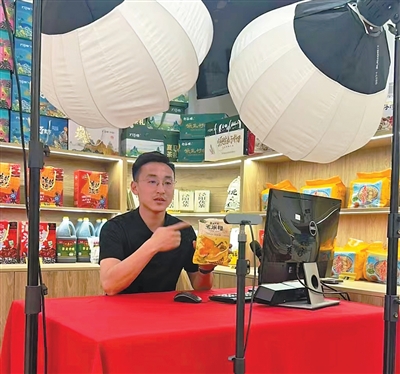
吉林通化县推进一二三产融合发展——锚定富民产业延链提质增效(发展各具特色的县域经济)
Ren Min Ri Bao· 2025-06-08 22:21
Core Insights - The article highlights the advancements in ginseng cultivation and processing in Tonghua County, Jilin Province, emphasizing the integration of technology and sustainable practices to enhance productivity and quality [1][3][5]. Group 1: Technological Advancements - The introduction of remote monitoring and integrated sensors allows for better management of ginseng fields, improving the standardization of cultivation practices [1]. - The construction of electronic fencing and enhancement of communication and power infrastructure in ginseng planting bases are part of the county's modernization efforts [1]. Group 2: Sustainable Practices - Comprehensive surveys of suitable ginseng forest land have been conducted to optimize resource use and enhance sustainability [3]. - The county is focusing on the protection and propagation of ginseng seed resources to ensure the quality of ginseng production [3]. Group 3: Value Addition through Processing - The shift from raw material sales to refined product offerings is evident, with over 600 types of ginseng products developed, including pharmaceuticals, beverages, health products, cosmetics, and food [5]. - The emphasis on deep processing techniques, such as freeze-drying, is aimed at maximizing the value derived from ginseng [4]. Group 4: Market Regulation and Brand Development - The implementation of a traceability system for ginseng products, where each ginseng root has its own "ID," enhances market regulation and consumer trust [6]. - Continuous efforts to strengthen market oversight and quality inspection are in place to elevate the brand value of ginseng from Tonghua County [6]. Group 5: Economic Impact - The total output value of the ginseng industry chain in Tonghua County is projected to reach 15.027 billion yuan in 2024, reflecting a year-on-year growth of 126% [7]. - The county aims to achieve growth in the primary sector, quality enhancement in the secondary sector, and expansion in the tertiary sector through the ginseng industry [7].
“小透明”出大彩!四川江油趟出改革强村新路
Zhong Guo Fa Zhan Wang· 2025-06-06 15:51
Core Insights - The article highlights the transformation of Baisha Village's agricultural economy through collective farming and innovative business models, leading to significant increases in income and economic development [1][2][3] Economic Growth - The collective economy of Baisha Village has grown from 100,000 yuan in 2020 to 1,172,600 yuan in 2024, with per capita net income exceeding 32,000 yuan [2] - The village has been recognized as an advanced model for integrated collective economic development in the province [2] Collective Farming Model - The village implemented a "land share + guaranteed dividends" model, consolidating 3,000 acres of farmland into a cooperative, which enhances food security and quality while aligning with villagers' interests [3][4] - Each villager is recognized as a member of the collective economic organization, with individual rights and collective control working in tandem [3] Agricultural Development Strategy - The village's agricultural strategy focuses on three pillars: traditional planting, economic crops, and brand development, aiming for stable and efficient growth [5] - The production base for high-quality grain and oil has been established, with projected output exceeding 9 million yuan in 2024 [5] Brand and Product Development - The introduction of automated rice processing lines has increased the annual rice production capacity to 2,000 tons, enhancing the brand value of "Baisha Yurun" [6] - The price of ordinary rice has risen from less than 3 yuan per pound to between 4 and 8 yuan, with "zinc-rich" rice reaching up to 30 yuan per pound [6] Integration of Industries - The village has successfully integrated primary, secondary, and tertiary industries, promoting modern agricultural practices and enhancing product quality [7][8] - A comprehensive brand strategy has been implemented, combining cultural storytelling with marketing efforts to boost sales and community engagement [8]
深圳国家远洋渔业基地签约首批项目 计划2026年底开工建设
2 1 Shi Ji Jing Ji Bao Dao· 2025-05-15 12:37
Core Insights - Shenzhen's deep-sea fishery industry experienced explosive growth in 2024, with a production volume of 154,000 tons, representing a year-on-year increase of 329% [1] - The Shenzhen National Deep-Sea Fishery Base signed its first major cooperation projects on May 15, 2025, marking a significant step in its development [1] Group 1: Project Development - The Shenzhen National Deep-Sea Fishery Base was approved in December 2021, with the site selected in October 2024 at Yantian Port and surrounding land [1] - The project plans to utilize approximately 3.1 hectares for the first phase, 6.2 hectares for the second phase, and 4.6 hectares for the third phase, currently in the preliminary research and demonstration stage [1] - The first phase of land transfer is expected to be completed by 2026, with construction aimed to start by the end of 2026 [1] Group 2: Strategic Partnerships - Strategic cooperation framework agreements were signed between Shenzhen Marine Development Bureau, Yantian District Government, and several companies, including China Water Group and Guangzhou Private Investment Co., Ltd. [1] - Several companies, including Aoxian (Shenzhen) Fishery Co., Ltd. and Guangdong Lianshen Marine Food Co., Ltd., have signed on as the first batch of enterprises to settle in the Shenzhen National Deep-Sea Fishery Base [1] Group 3: Economic and Market Positioning - The base is strategically located within a 2-kilometer radius of the Yantian District administrative center and core business district, providing natural advantages for high-end consumer markets [2] - The Shenzhen National Deep-Sea Fishery Base aims to emulate international fish markets such as Sydney Fish Market and Toyosu Fish Market, integrating various functions including smart deep-sea fishery equipment manufacturing, fishery financial services, and global seafood cross-border trading [2] - The marine economy's importance in Shenzhen's economic landscape is increasing, with plans to establish a global marine center city by 2035 [2]