乡村休闲旅游

Search documents
中国打造农业现代化大产业 八方面举措筑牢乡村全面振兴根基
Chang Jiang Shang Bao· 2026-02-09 01:55
Core Insights - The modernization of agriculture and rural areas is crucial for China's overall modernization, with 2026 marking the beginning of the "14th Five-Year Plan" and emphasizing the importance of "three rural issues" [2][3] Group 1: Policy Implementation - The Ministry of Agriculture and Rural Affairs has released the "Implementation Opinions" to execute the Central Document No. 1 for 2026, outlining 40 specific measures across eight key areas to promote new development in agriculture [2][3] - The 2026 Central Document No. 1 aims to establish agriculture as a modernized major industry, focusing on rural revitalization and leveraging the "Ten Thousand Projects" experience [2][3] Group 2: Agricultural Technology and Innovation - The implementation plan emphasizes enhancing agricultural technology and equipment support, proposing five specific measures to boost agricultural innovation and productivity [3][4] - The contribution rate of agricultural technology to production has increased from 54.5% in 2012 to over 64% in 2025, while the comprehensive mechanization rate of crop farming has risen from 57% to 76.7% in the same period [4] Group 3: Rural Industry Development - The document highlights the importance of cultivating and expanding county-level industries to promote rural prosperity, integrating technology, green practices, quality, and branding in agriculture [6][7] - The goal is to enhance the agricultural product processing and circulation industry, creating modern agricultural processing parks and improving the efficiency of agricultural value chains [6][7] Group 4: Enhancing Rural Livelihoods - The plan aims to increase farmers' income through stable employment opportunities and the development of new industries such as rural tourism and e-commerce, with rural residents' disposable income reaching 24,456 yuan in 2025, a 6% increase from the previous year [6][7] - The focus is on creating a fair mechanism for sharing the benefits of industrial development with farmers, ensuring a positive cycle of industry growth and income increase [7]

农业农村部发布冬季乡村休闲旅游精品线路景点
Ren Min Wang· 2026-01-25 22:32
Core Viewpoint - The Ministry of Agriculture and Rural Affairs has launched 53 winter rural leisure tourism routes and 144 premium scenic spots, focusing on the theme of "Rural Agreement China Year" to enhance rural tourism during the Spring Festival [1] Group 1: Tourism Routes and Scenic Spots - The newly released routes and scenic spots emphasize the Spring Festival theme and holiday rural leisure tourism products, including intangible cultural heritage experiences, skiing, and wellness activities [1] - The offerings showcase rural winter landscapes, folk customs, and local specialties, catering to diverse market demands such as family travel, parent-child travel, and cultural experience tourism [1] Group 2: Integration of Rural Industries - The promotion of these premium routes and scenic spots is aimed at systematically integrating high-quality rural leisure tourism resources [1] - This initiative highlights the achievements in the development of new industries and business formats in rural areas, supporting the deep integration of primary, secondary, and tertiary industries in rural development [1]
冬季乡村休闲旅游精品景点线路发布
Xin Lang Cai Jing· 2026-01-22 23:18
Core Insights - The Ministry of Agriculture and Rural Affairs has launched 53 winter rural leisure tourism routes and 144 premium scenic spots, themed around "Rural China Year" [1] - The initiative focuses on the Spring Festival and holiday rural leisure tourism products, showcasing unique local winter scenery, folk customs, and specialty products [1] - The promotion aims to integrate high-quality rural tourism resources, stimulate rural consumption potential, and enhance the experience of visitors during the Spring Festival [1] Group 1 - The newly released tourism routes include themes such as intangible cultural heritage experiences, skiing, and wellness tourism [1] - The initiative targets diverse market demands, including family travel, parent-child travel, and cultural experience tourism [1] - The project seeks to promote the deep integration of primary, secondary, and tertiary industries in rural areas, thereby enhancing the overall development of rural tourism [1] Group 2 - The initiative is designed to provide rich options for tourists to enjoy the unique charm of rural life during the Spring Festival [1] - The promotion of these routes and scenic spots is expected to effectively drive rural economic growth and consumption [1] - The focus on showcasing local culture and products aims to create a more engaging and authentic experience for visitors [1]
春节期间去哪玩?农业农村部发布乡村休闲旅游冬季精品景点线路
Yang Shi Wang· 2026-01-20 09:35
Core Viewpoint - The Ministry of Agriculture and Rural Affairs has launched 53 winter rural leisure tourism routes and 144 premium scenic spots, focusing on the theme of "Chinese New Year" to enhance rural tourism during the holiday season [1] Group 1: Tourism Routes and Scenic Spots - The newly released tourism routes include themes such as intangible cultural heritage experiences, skiing, and hot spring wellness, showcasing rural winter scenery and local customs [1] - The initiative aims to meet diverse market demands for family travel, parent-child travel, and cultural experience tourism, providing rich options for tourists during the Spring Festival [1] Group 2: Economic and Cultural Impact - This promotion is a concrete measure to implement the spirit of the 20th National Congress and the Central Rural Work Conference, integrating quality rural leisure tourism resources [1] - The initiative aims to promote the deep integration of primary, secondary, and tertiary industries in rural areas, effectively activating rural consumption potential and allowing visitors to experience the unique charm of rural Chinese New Year [1]
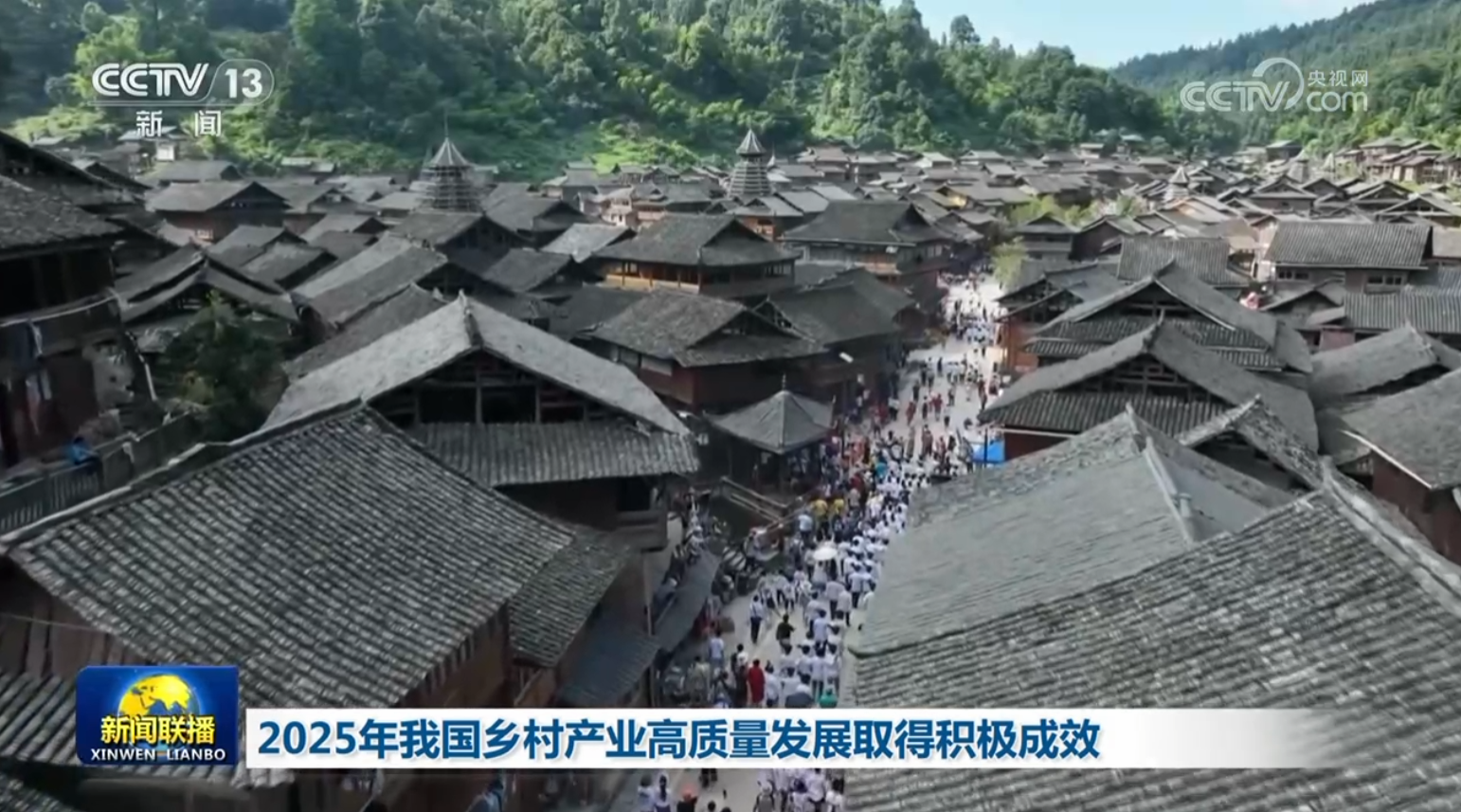
2025年我国乡村产业高质量发展取得积极成效
Yang Shi Wang· 2026-01-08 12:38
Core Viewpoint - By 2025, China's rural industry is expected to achieve significant progress in high-quality development, with a focus on enhancing the resilience and growth of rural industries [1] Group 1: Agricultural Processing and Revenue - National large-scale agricultural processing enterprises are projected to achieve approximately 18 trillion yuan in operating income, with the main agricultural product processing conversion rate reaching 75% [3] - From January to November, the national rural online retail sales increased by 9.8% year-on-year [3] Group 2: Development of Rural Industries - The resilience of rural industry development continues to strengthen, with a cumulative cultivation of 98,000 leading enterprises at the county level and above, over 180 industrial clusters with output value exceeding 10 billion yuan, nearly 100 industrial parks exceeding 10 billion yuan, and over 450 strong towns with output value exceeding 1 billion yuan [5] - A preliminary pattern of concentrated and clustered development of rural characteristic industries has begun to take shape [5] Group 3: Future Initiatives - This year, there will be a strong push to develop rural wealth-generating industries, with the implementation of a three-year action plan to promote the development of the agricultural product processing industry, expanding channels and methods for farmers to participate in industrial development, and promoting stable income growth for farmers [6]
培育乡村新产业新业态要打好“四张牌”
Xin Lang Cai Jing· 2025-12-30 23:17
Core Viewpoint - The modernization of agriculture and rural areas is crucial for China's overall modernization, and cultivating new industries and business formats in rural areas is an effective way to create new economic momentum and development models [1] Group 1: Regional Characteristics - Different regions in China have significant disparities in natural resources, location, industrial foundation, and human capital, necessitating a tailored approach to rural industrial development to avoid homogenization [2] - It is essential to assess local resources and capabilities accurately, highlighting strengths and addressing weaknesses to inform future industrial development directions [2] - Strategies should be categorized based on market principles, with government playing a precise role in policy implementation, such as developing specialty agricultural clusters in resource-rich areas [2] Group 2: Technological Empowerment - Emphasizing technological innovation is key to attracting advanced production factors and fostering new industries and business formats in rural areas [3] - Strengthening agricultural technology innovation and accelerating the transformation of technological achievements into productive forces is vital for enhancing agricultural productivity [3] - The development of smart agriculture and digital services is crucial for improving rural marketing capabilities and creating a comprehensive technology-application ecosystem [3] Group 3: Cultural and Tourism Integration - Deep decoding and revitalization of rural culture can enhance the integration of culture and industry, making rural business formats more relatable and appealing [4] - Creating rural cultural IP by preserving authentic local culture and innovating through digital arts and products can attract new consumer flows [4] - Promoting multi-industry integration in rural areas, such as agriculture, culture, and tourism, can develop diverse and engaging rural tourism experiences [4] Group 4: Policy Support and Services - Optimizing the rural business environment and innovating the combination of human, capital, and land resources is essential for achieving production function upgrades [5] - Establishing a talent service system for young entrepreneurs in rural areas can attract and retain talent, fostering a new generation of rural leaders [5] - Financial services should be improved to support rural industries, including the establishment of development funds and innovative financial products tailored to local needs [5][6]

贯彻落实党的二十届四中全会精神权威访谈丨加快农业农村现代化 扎实推进乡村全面振兴——访农业农村部党组书记、部长韩俊
Xin Hua She· 2025-12-28 02:10
Core Viewpoint - The article emphasizes the strategic importance of accelerating agricultural and rural modernization as a key component of China's overall modernization efforts, particularly during the 14th Five-Year Plan period [2][3]. Group 1: Significance of Agricultural and Rural Modernization - Agricultural and rural modernization is a major task for building a modern socialist country, directly impacting the overall progress and level of China's modernization [2]. - It serves as a foundational support to address various risks and challenges, stabilizing the agricultural sector to ensure food security and respond to external uncertainties [2][3]. - It is essential for meeting the people's needs for a better life, as rural issues are not only economic but also political, affecting the party's governance foundation [3]. Group 2: Current Conditions and Achievements - Significant achievements have been made in agricultural modernization since the 18th National Congress, including stable grain production at over 1.3 trillion jin, reaching a historical high of 14,298 billion jin this year [4][5]. - The consolidation of poverty alleviation results has been effective, with over 30 million people employed in poverty alleviation areas and continuous improvement in education, healthcare, and housing security [5]. - Agricultural modernization has advanced with a technology contribution rate exceeding 64%, and mechanization rates for major crops reaching 76.7% [5][6]. Group 3: Strategic Tasks for Implementation - The 20th Central Committee has outlined major strategic tasks to accelerate agricultural modernization and promote rural revitalization, emphasizing the need for strong party leadership and prioritizing agricultural development [7]. - Key initiatives include enhancing agricultural production capacity, implementing a new round of grain production capacity enhancement actions, and ensuring food security responsibilities are met [8]. - Establishing a normalized mechanism to prevent poverty and ensure stable support for rural areas is crucial, with a focus on dynamic adjustments and effective assistance strategies [9]. Group 4: Rural Development and Infrastructure - Efforts to improve rural living conditions and governance are ongoing, with initiatives to enhance infrastructure, public services, and environmental quality in rural areas [11]. - The integration of agriculture with secondary and tertiary industries is being promoted to boost rural economies and create stable income sources for farmers [11]. - Policies to support land tenure stability and the development of new agricultural business entities are being implemented to enhance the agricultural operating system [12].
【省农业农村厅】陕西发布16条冬季乡村休闲旅游行精品线路
Shan Xi Ri Bao· 2025-12-18 22:55
Core Viewpoint - The provincial agricultural and rural department has launched 16 winter rural leisure tourism routes to promote local tourism and enhance rural economic development [1] Group 1: Tourism Routes - The 16 winter tourism routes are selected from recommendations by agricultural and rural departments across various cities and districts [1] - The routes include 2 from Xi'an, 2 from Baoji, 1 from Xianyang, 1 from Tongchuan, 1 from Weinan, 1 from Yan'an, 1 from Yulin, 3 from Hanzhong, 2 from Ankang, and 2 from Shangluo [1] Group 2: Objectives and Benefits - The initiative aims to meet urban and rural residents' demand for winter leisure activities, including enjoying winter scenery, ice and snow fun, tasting local delicacies, and experiencing rural warmth [1] - The promotion of these routes is intended to develop integrated business models, enhance the quality and efficiency of rural industries, and support sustainable income growth for farmers [1]
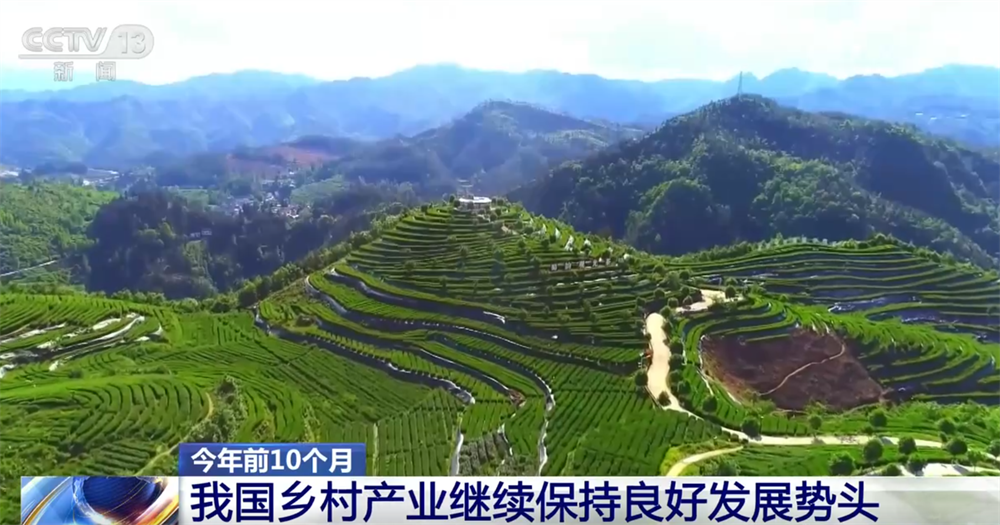
今年前10个月我国乡村产业继续保持良好发展势头
Yang Guang Wang· 2025-12-01 01:20
Core Insights - The rural industry in China has shown strong development momentum in 2023, with enhanced resilience and growth in various sectors [1][2] Group 1: Agricultural Processing Industry - From January to October, the value added of the agricultural and sideline food processing industry increased by 6.3% year-on-year [1] - The processing layout is continuously optimizing, with production capacity shifting towards production areas and major producing regions [1] - There are over 98,000 leading enterprises at the county level and above, with more than 80% involved in agricultural product processing, indicating improved operational levels and capacity to support farmers [1] Group 2: New Industries and Business Models - The integration of agriculture with tourism, culture, sports, and e-commerce has led to the vigorous development of new business models such as rural leisure tourism and rural e-commerce [1] - From January to October, the retail sales of consumer goods in rural areas reached 5.5 trillion yuan, a year-on-year increase of 4.6%, outpacing urban growth by 0.4 percentage points [1] - Online retail sales of agricultural products grew by 9.5% year-on-year, reflecting a strong demand in rural e-commerce [1] Group 3: Development of Specialty Industries - The government has supported the establishment of 40 advantageous specialty industrial clusters, 50 modern agricultural industrial parks, and 200 strong agricultural towns, fostering the development of 398 strong industrial villages [1] - A focus on "small but exquisite" and "special but beautiful" products is driving the growth of niche markets, transforming small specialties into significant industries [1][2]
新亮点、新业态“热”力十足助农增收 我国乡村产业蓬勃兴旺、韧性强
Yang Shi Wang· 2025-11-30 02:15
Group 1 - The core viewpoint is that China's rural industrial revitalization has maintained a good development momentum this year, with increasing industrial resilience [1][8] - From January to October, the added value of the above-scale agricultural and sideline food processing industry increased by 6.3% year-on-year, with production capacity continuously optimizing and concentrating in major production areas [1] - There are over 98,000 leading enterprises at the county level and above, with more than 80% involved in agricultural product processing, indicating a steady improvement in production and operational capabilities [1] Group 2 - New industries and business formats are thriving, with deep integration of agriculture with tourism, culture, sports, and e-commerce, leading to the robust development of rural leisure tourism and rural e-commerce [3] - From January to October, the retail sales of consumer goods in rural areas reached 5.5 trillion yuan, a year-on-year increase of 4.6%, which is 0.4 percentage points higher than urban areas [3] - The online retail sales of rural products increased by 7.5%, while the online retail sales of agricultural products grew by 9.5% year-on-year [3] Group 3 - The development of characteristic industries is accelerating, with support for the establishment of 40 advantageous characteristic industrial clusters, 50 modern agricultural industrial parks, and 200 strong agricultural towns [6] - A total of 398 strong industrial villages have been cultivated, promoting a number of "small but exquisite" and "special but beautiful" characteristic products [6] Group 4 - The Deputy Director of the Rural Industry Development Department of the Ministry of Agriculture and Rural Affairs stated that measures have been implemented to strengthen leading enterprises, supplement supply chains, promote new business formats, and build brands [8] - These efforts aim to expand the multiple functions of rural areas and explore their diverse values, contributing to the continued good development momentum of rural industries and further enhancing their vitality [8]