中美战略竞争

Search documents
中国反制后,3名美上将罕见承认美国已受阻,美国局势还在恶化
Sou Hu Cai Jing· 2025-05-31 11:06
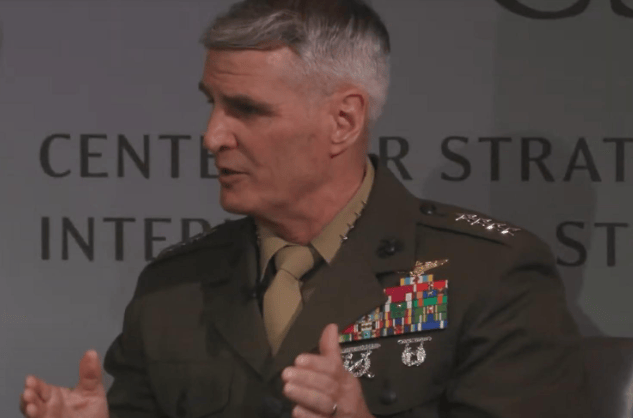
Group 1: U.S.-China Relations and Military Dynamics - The U.S. military leadership acknowledges that U.S. global strategy is significantly hindered by China's counteractions, indicating a shift in the balance of power [1][11] - The U.S. has implemented strict export controls on high-end chips to China, aiming to isolate China's high-tech industry and prevent its self-sufficiency in this critical sector [3][4] - China has responded to U.S. tariffs with equivalent countermeasures, leading to increased inflation in the U.S. due to reliance on Chinese low-end products [3][6] Group 2: Resource Dependency and Military Production - The U.S. military's dependency on Chinese rare earth elements is highlighted, with over 80% of its military supply chain reliant on these materials, which are crucial for advanced weaponry [6][9] - The U.S. military's production capabilities are under threat due to potential restrictions on rare earth exports from China, which could lead to material shortages and production halts [6][10] - The U.S. has proposed unrealistic solutions to its rare earth challenges, such as acquiring territories for resource access, which are impractical and violate international law [6][10] Group 3: Technological and Industrial Competitiveness - China's shipbuilding capacity is reported to be 200 times greater than that of the U.S., showcasing a significant gap in military production capabilities [7][9] - The U.S. Navy's shipbuilding projects are lagging, with significant delays in the construction of new vessels compared to China's rapid production timelines [7][9] - The U.S. military leadership expresses deep concern over China's advancements in both traditional and emerging military capabilities, indicating a loss of competitive edge [9][10] Group 4: Strategic Misjudgments and Future Directions - The U.S. has historically underestimated China's potential and resilience, leading to misguided policies that have exacerbated its current strategic challenges [10][11] - The U.S. military's resource allocation issues and inefficient budget usage contribute to its declining military effectiveness [10][11] - A call for the U.S. to abandon its hegemonic mindset and seek cooperative relations with China is emphasized as a necessary step for future stability [11]

经济学家宋清辉:全球战略焦点转向 中东市场举足轻重
Sou Hu Cai Jing· 2025-05-26 05:11
Group 1 - The core viewpoint emphasizes the strengthening of Hong Kong's role as a gateway for Middle Eastern investments into mainland China and the Asia-Pacific market, while also serving as a platform for mainland enterprises to invest in the Middle East [1][9] - The recent visits by Hong Kong's Chief Executive and U.S. President to the Middle East highlight the region's growing importance in global geopolitics and economic strategies, particularly amid U.S.-China competition [4][6] - Hong Kong aims to reduce reliance on traditional Western markets and seek new growth opportunities through enhanced engagement with the Middle East, thereby reinforcing its status as an international financial center [4][9] Group 2 - The Middle East is recognized as a crucial energy supplier, making it vital for both China and the U.S. to ensure stable energy supplies from the region [7] - The region's strategic location connects Asia, Africa, and Europe, making it a key node in the Belt and Road Initiative and global trade routes, which is essential for both countries' geopolitical strategies [7][8] - China's cooperation with the Middle East has expanded beyond energy trade to include infrastructure, high-tech, digital economy, and renewable energy, fostering a deeper strategic partnership [8]

长和速战速决,推进对美港口交易,中方已下令,暂停与李嘉诚合作
Sou Hu Cai Jing· 2025-04-02 03:25
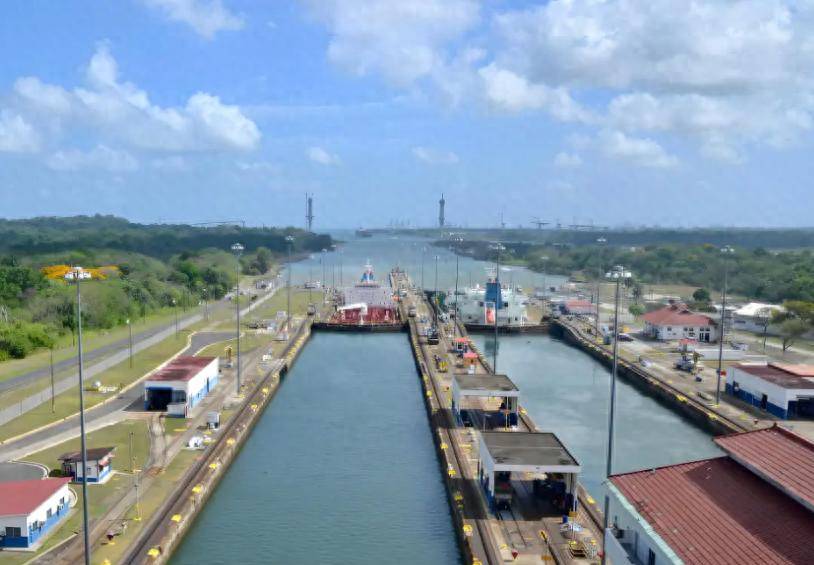
Group 1 - The core transaction involves the sale of port rights in 43 ports across 23 countries by Cheung Kong Holdings for $22.8 billion to a consortium led by BlackRock, raising geopolitical concerns between China and the U.S. [1] - The ports included in the sale are strategically located at both ends of the Panama Canal, which could impact Chinese shipping operations if BlackRock implements high entry fees for Chinese vessels [1][2] - The Chinese government has expressed concerns over the sale, indicating that state-owned enterprises should pause new collaborations with Li Ka-shing's companies, emphasizing the importance of national interests [2] Group 2 - Cheung Kong Holdings has paid $658 million in taxes and invested $1.7 billion in upgrading port facilities in Panama since acquiring operating rights in 1997 [2] - The urgency for Cheung Kong to complete the transaction is driven by political risks and public pressure, with plans to finalize the agreement by April 2 [2][3] - The transaction reflects broader U.S.-China strategic competition, highlighting the need for China to enhance its port network and influence in international rule-making to secure supply chain safety [4]