传统技艺传承

Search documents
“85后”唐卡画师着着:守正创新 让传统技艺之间多一些互动
Zhong Guo Xin Wen Wang· 2025-09-18 05:40
Core Viewpoint - The article highlights the efforts of a 38-year-old Thangka painter, Zhangzhe, in preserving and innovating traditional Thangka painting techniques while promoting cultural interaction and education in Sichuan Province's Ganzi Prefecture [1]. Group 1: Artist's Activities - Zhangzhe is actively teaching Thangka painting skills to students of various ages, from those born in the 2000s to individuals over 50 years old [1]. - The studio showcases various raw materials used for Thangka pigments, including realgar and vermilion, and features cultural products that reflect local traditions [1]. Group 2: Cultural Preservation and Innovation - Zhangzhe is working on the establishment of an intangible cultural heritage (ICH) training center, aiming to integrate over 30 local ICH items for collaborative development [1]. - The artworks created by Zhangzhe depict auspicious symbols and scenes from local life, as well as festive celebrations, emphasizing the connection between art and community [1].
【上新】故宫祥瑞,“宫”贺吉祥,限量上新
中国建设银行· 2025-08-07 08:20
Core Viewpoint - The article highlights the collaboration between the Palace Museum and China Construction Bank to launch limited edition commemorative jewelry inspired by the museum's collection, showcasing traditional craftsmanship and cultural heritage [2][6]. Group 1: Product Offerings - The Palace Museum has released limited edition commemorative jewelry pieces, each inspired by its collection, aimed at sharing the beauty of cultural artifacts and traditional craftsmanship with customers [2][6]. - The jewelry features designs by renowned Chinese artisans, including Yuan Changjun and Liu Yongseng, who are masters in traditional techniques such as cloisonné and goldsmithing [4][6]. - The products include symbolic elements like the Pi Xiu, which represents wealth and prosperity, and the butterfly, symbolizing good fortune and happiness [7][14]. Group 2: Cultural Significance - The jewelry pieces are designed to embody auspicious meanings, such as wealth accumulation and family harmony, reflecting traditional Chinese cultural values [8][11]. - The use of materials like jade and gold in the jewelry signifies wisdom, prosperity, and peace, aligning with the cultural significance of these elements in Chinese society [19]. - The designs incorporate traditional motifs and craftsmanship, aiming to preserve and promote the rich heritage of Chinese art and culture [6][18].



古法新生 一卷素纸护根脉——富阳千年造纸技艺的传承密码
Hang Zhou Ri Bao· 2025-07-21 03:02
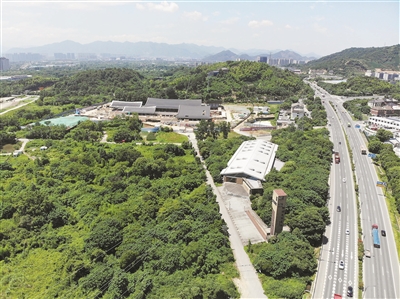
Core Viewpoint - The article highlights the historical significance and ongoing cultural revival of the ancient paper-making industry in Fuyang, particularly focusing on the archaeological site of the Sizhou paper workshop, which is recognized as the largest and earliest known paper-making site in China, showcasing the region's rich heritage and its potential for cultural tourism and economic development [3][5][6]. Group 1: Historical Significance - The Sizhou paper workshop site dates back to the Song Dynasty and has a total area of approximately 16,000 square meters, making it the largest, earliest, and most complete paper-making site discovered in China [5]. - Fuyang paper was historically significant, with its production accounting for one-fourth of the national total during its peak, earning the reputation of being the "best paper" in the capital [3][5]. Group 2: Archaeological Discoveries - The site was discovered during road construction in 2008, leading to a rescue excavation that revealed various artifacts, including drainage ditches and pottery, indicating the site's historical importance [4]. - The archaeological work has led to the site being recognized as a national key cultural heritage unit, with significant milestones in its preservation and study from 2009 to 2013 [5]. Group 3: Cultural Revival and Tourism Development - The Sizhou paper workshop archaeological park is set to cover 560 acres and aims to integrate cultural heritage with tourism, offering various experiences such as non-heritage tourism and educational programs [6]. - The Sizhou paper museum, with a planned area of 57,000 square meters, will serve as a center for paper culture display and industry development, enhancing the region's cultural tourism appeal [5][6]. Group 4: Modern Craftsmanship and Innovation - Traditional paper-making techniques are still practiced in Fuyang, with artisans like Zhu Zhonghua reviving ancient methods, including the restoration of the "Wujin paper" production process [7][8]. - The article emphasizes the importance of blending traditional craftsmanship with modern marketing strategies, as demonstrated by artisans like Li Wende, who have successfully integrated e-commerce and experiential learning into their practices [10][11].
工行大理分行“人才贷”赋能大理传统技艺出圈出彩
Zhong Guo Jin Rong Xin Xi Wang· 2025-07-01 11:44
Core Insights - The article highlights the innovative "Talent Loan" product launched by the Industrial and Commercial Bank of China (ICBC) Dali Branch, aimed at supporting the development of traditional crafts in Dali, Yunnan, such as pottery, wood carving, silverware, and Bai embroidery [1][7] - The "Talent Loan" has successfully provided financial support to artisans and small businesses, facilitating the transformation and upgrading of traditional crafts into viable industries [7] Group 1: Talent Loan Product - The "Talent Loan" product has a loan balance of 30 million yuan as of the end of May, specifically designed to support talent development in traditional crafts [1] - The loan features favorable interest rates, flexible terms, and simplified procedures, which significantly aid the transformation and market expansion of traditional handicraft industries [3][7] - The Dali Branch has successfully disbursed over 20 million yuan in credit loans to more than 20 silverware merchants in Xinhua Village, demonstrating the effectiveness of the "Talent Loan" in revitalizing local craftsmanship [3] Group 2: Impact on Traditional Crafts - The Dali Branch has provided a 3 million yuan "Talent Loan" to a silver jewelry processing factory in Xinhua Village, marking a significant step in supporting the local silverware forging craft [3] - A wood carving company in Jianchuan received a 2 million yuan loan, which helped expand its scale and support the training of successors in traditional wood carving techniques [4] - The financial support has enabled a pottery artisan to enhance his workshop facilities, leading to improved production efficiency and increased tourist engagement in traditional pottery making [5] Group 3: Cultural Preservation and Innovation - The "Talent Loan" not only addresses financial challenges but also plays a crucial role in preserving and promoting traditional cultural heritage through innovative financial solutions [7] - Artisans like Yang, who focus on Bai cultural elements in their creative products, benefit from the financial support, allowing them to continue their craft and innovate within their traditional practices [5][7]


用竹丝编织美好生活(我的家乡我建设)
Ren Min Ri Bao· 2025-05-11 22:30
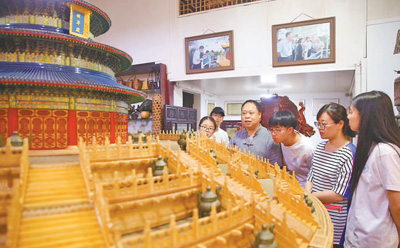
Core Viewpoint - The article highlights the efforts of Liu Yi, a bamboo weaving master, in preserving and promoting the traditional bamboo weaving craft in Xinchang, Zhejiang Province, through workshops, exhibitions, and community engagement [1][7]. Group 1: Bamboo Weaving Craft - Liu Yi has been dedicated to the bamboo weaving craft for over 30 years, teaching and creating intricate bamboo art pieces [2][6]. - The bamboo weaving history in Xinchang is rich, with Liu's father, Liu Guocai, starting his training at the age of 16 and later becoming the director of a bamboo weaving factory [4][6]. - The bamboo weaving industry in Xinchang once had around 2,000 practitioners, but the number has dwindled to about 200 due to the rise of plastic products and declining demand for traditional items [6]. Group 2: Art and Community Engagement - Liu Yi's workshop features impressive bamboo art, including a scaled-down replica of the Temple of Heaven, which took nearly a year to complete and involved extensive research and craftsmanship [3][6]. - Liu Yi has actively participated in exhibitions and awards since 2014, increasing the visibility of Xinchang bamboo weaving and attracting over 2,000 visitors to the non-heritage craftsman museum [7][8]. - The local government has established a bamboo weaving research center and community workshops to provide training and employment opportunities for local residents, with over 600 people participating in bamboo weaving training [8][9]. Group 3: Economic Impact - The bamboo resources in Xinchang are abundant, with over 200,000 acres of moso bamboo, providing a strong foundation for the bamboo weaving art [8]. - Workers in Liu Yi's workshop can earn approximately 150 yuan per day, and there are plans to expand the workforce and apply bamboo weaving to other design fields [8][9]. - Liu Yi is transforming his old house into a bamboo workshop to further engage the community and help villagers regain traditional skills, aiming to boost local income [9].