
充电基础设施

Search documents
崔东树:6月充电公桩总量达417万个 数量较上月增长9.1万个
智通财经网· 2025-08-17 02:19
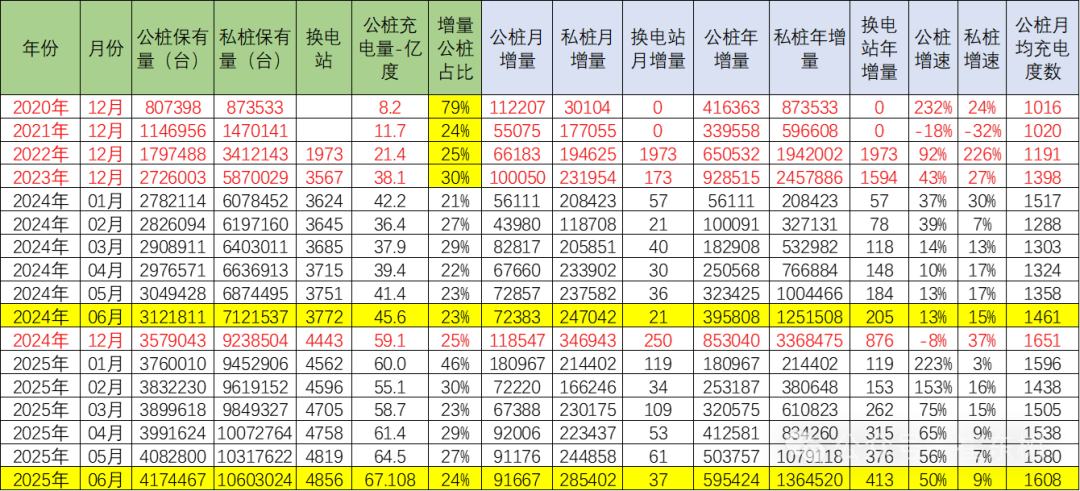
Core Insights - The rapid growth of China's charging infrastructure is highlighted, with public charging piles expected to reach 4.17 million by June 2025, showing a monthly increase of 91,000 and a year-on-year growth of 50% [1][5] - The ratio of public to private charging piles is approaching 1:1, indicating a balanced growth in charging infrastructure relative to electric vehicle sales [1][17] - Despite the growth, challenges remain in the charging infrastructure, including uneven distribution, outdated technology, and service quality issues [1][9] Charging Pile Overview - As of June 2025, there are 4.17 million public charging piles and 10.6 million private charging piles, with public piles showing a monthly increase of 91,000 and private piles increasing by 285,000 [1][5] - The average monthly charging per public pile is 1,608 kWh, up from 1,461 kWh in June of the previous year [1][5] - The charging utilization rate of public piles is three times that of private piles, indicating higher efficiency in public charging infrastructure [1][17] Growth Trends - In 2023, public charging piles increased by 930,000, with a year-on-year growth rate of 43%, while private piles grew by 2.46 million, marking a 27% increase [5] - The growth rate of public charging piles in 2024 is projected to be 850,000, with a slight decline in growth rate compared to 2023 [5] - The first half of 2025 is expected to see a continued increase in both public and private charging infrastructure, maintaining a balanced growth trajectory [1][5] Regional Analysis - Regions such as Guangdong, Jiangsu, and Zhejiang have shown significant growth in public charging infrastructure, while cities like Beijing and Shanghai are experiencing slower growth despite having a large existing base [9][8] - The distribution of charging piles is uneven, with developed cities having a higher concentration, leading to disparities in access and utilization [9] Industry Characteristics - The charging infrastructure industry is characterized by a mix of operators, including manufacturers, state-owned enterprises, and third-party service providers, each adopting different business models [10][11] - The market is becoming increasingly concentrated, with leading operators capturing a larger share of the market due to competitive advantages in funding, location, and technology [12][15] - The trend towards high-power DC charging stations is evident, with a growing demand for faster charging solutions to meet the needs of electric vehicle users [14][15]

政策解读丨支持能源领域民营经济高质量发展 促进经济社会全面绿色低碳转型
Zhong Guo Dian Li Bao· 2025-04-30 03:33
Core Viewpoint - The release of the "Notice on Promoting the Development of Private Economy in the Energy Sector" signals strong government support for private enterprises to engage in high-quality development and contribute to the green and low-carbon transformation of the economy and society [2] Group 1: Challenges Faced by Private Enterprises - Private enterprises face high entry barriers and an unfair competitive environment in the energy sector, particularly in traditional oil, gas, and nuclear power fields dominated by state-owned enterprises [3] - Financing difficulties, including high costs and stringent requirements for loans, hinder private enterprises' investment in energy projects [4] - Existing institutional mechanisms are inadequate to meet the demands of new energy business models, with a lack of unified standards and support for emerging sectors [5][6] Group 2: Measures to Support Private Enterprises - The notice emphasizes enhancing support for private enterprises' energy investments, including participation in infrastructure projects and easing financing pressures through various channels [7][8] - It encourages private enterprises to engage in new energy business models, such as distributed energy and smart microgrids, to leverage their innovative potential [9][10] - The notice outlines the need for fair competition in the energy market, including regulatory measures to prevent monopolistic practices and ensure transparency [11][12][13] Group 3: Implementation and Local Support - The notice stresses the importance of implementing policies effectively, including streamlining energy project approval processes and safeguarding the legal rights of private enterprises [14][15] - Local energy management departments are urged to tailor measures to support private enterprises based on regional conditions, fostering a conducive environment for their development [15]
【快讯】每日快讯(2025年4月29日)
乘联分会· 2025-04-29 08:37
点 击 蓝 字 关 注 我 们 本文全文共 3855 字,阅读全文约需 13 分钟 目录 国内新闻 1.工信部发布2025年汽车标准化工作要点 2.商务部支持汽车后市场发展 3.河南:出台全省新能源汽车产业集聚区发展规划 4.中国充电基础设施突破1374.9万台 商用车 5.零跑汽车新设未来科技公司 经营范围含AI软件开发 6.比亚迪柬埔寨乘用车工厂奠基 7.小米汽车与18家运营商达成充电补能网络合作 2.东芝与IAVX联合开发自动驾驶系统虚拟验证 8.江汽集团与塔什干签署合作协议 国外新闻 3.日本考虑调整汽车税 1.宝马新世代6款新车型将在两年内推出 4.佛瑞亚与Rightware合作 提供软件解决方案 1. 远程新能源商用车集团首单绿色银团贷款成功签约 1 工信部发布2025年汽车标准化工作要点 2. 全国首座重卡兆瓦级超充示范站落成 时间:2025.4.29 来源:第一电动 3. 2025上海车展:广汽领程正式发布/概念皮卡亮相 4月28日消息,工信部发布2025年汽车标准化工作要点,旨在健全标准体系、提升标准质效、强化实施应 用,以标准助力汽车产业转型升级和高质量发展。工作要点包括构建标准体系"四梁 ...