
军国主义复活

Search documents
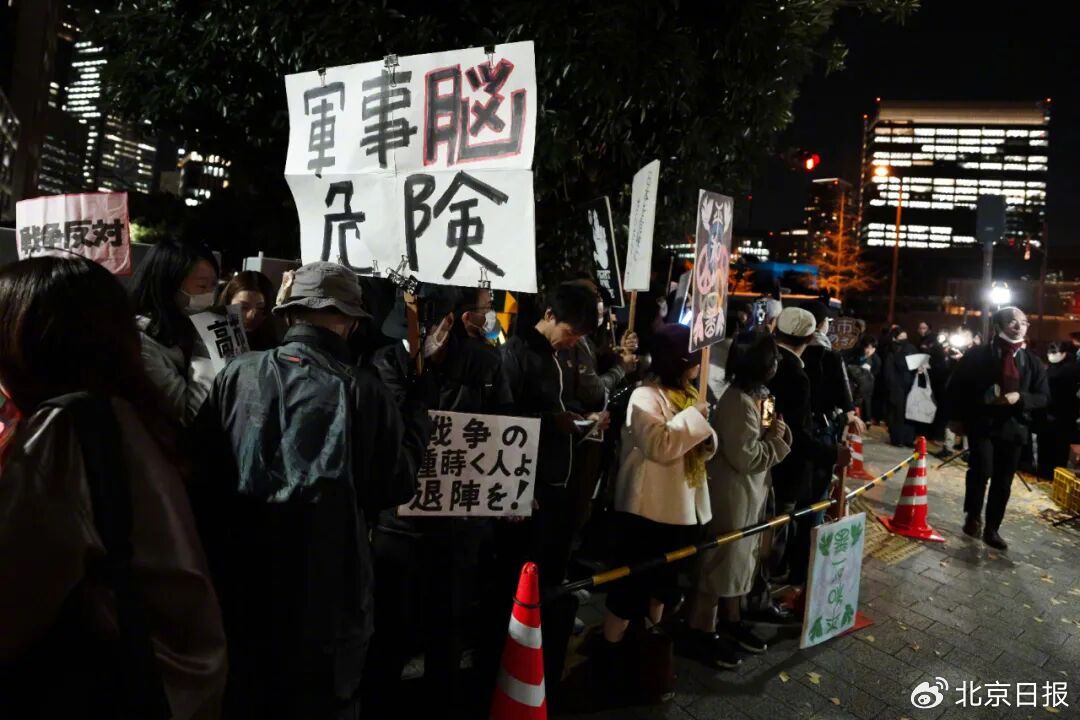
日本民众举行抗议集会 反对高市早苗政府扩军备武
Yang Guang Wang· 2025-12-29 00:26
Core Viewpoint - The article discusses the protests in Tokyo against Prime Minister Kishi Nobuo's significant increase in defense spending, highlighting concerns over historical accountability and the implications for regional stability [1] Group 1: Public Sentiment - Protesters argue that the increase in defense spending diverts funds from social welfare and constitutes preparation for war [1] - There is a call for the Japanese government to acknowledge historical mistakes and correct its rhetoric towards China [1] Group 2: International Reactions - International figures express concern over Kishi's statements, labeling them as dangerous and reminiscent of militarism from Japan's past [1] - Ken Stone, a leader of a Canadian peace organization, condemns Kishi's remarks regarding potential military intervention in Taiwan, emphasizing the need for collective condemnation [1] - Russian Foreign Minister Lavrov warns that Japan's recent militarization efforts could destabilize the region and urges careful consideration before any decisions are made [1]
日本赌国运的迷梦,早该醒醒了
Xin Lang Cai Jing· 2025-12-27 00:10
Core Viewpoint - The article discusses Japan's historical pattern of "strategic gambling" in its foreign policy, particularly under the leadership of Prime Minister Fumio Kishida, highlighting the risks of reviving militarism and the potential consequences of such actions on Japan's national fate [1][2][4]. Historical Context - Japan has a history of three significant military adventures that were seen as gambles for national fortune, starting with the First Sino-Japanese War in 1894, where Japan won a large indemnity of 230 million taels of silver [2]. - The second gamble occurred during the Russo-Japanese War, where Japan's victory was exaggerated, leading to a rise in militarism and a dangerous obsession with gambling on national fate [3]. - The third major gamble was during World War II, culminating in the attack on Pearl Harbor, which ultimately led to Japan's economic collapse and defeat [3][4]. Current Political Climate - The current Japanese government is perceived as provoking neighboring countries like South Korea and Russia while pushing for military expansion and potential nuclear capabilities [1][6]. - There is a resurgence of right-wing politicians in Japan who are attempting to revive militarism, fueled by historical grievances and a sense of existential crisis due to Japan's geographical and resource limitations [6][7]. International Relations - The article emphasizes that the current international environment does not allow for risky gambles on national fate, as global consensus favors peace and development [12][13]. - Japan's attempts to leverage U.S.-China tensions for its own benefit are seen as misguided, as the U.S. will not support reckless actions by Japan that could jeopardize its own interests [16][15]. Military and Strategic Implications - Japan's right-wing factions are attempting to manipulate public sentiment and historical narratives to justify a return to militarism, which poses risks not only to Japan but also to regional stability [7][18]. - The article argues that China has significantly strengthened its military capabilities, diminishing the feasibility of Japan's militaristic ambitions and reinforcing the need for a stable international order [18][19].

“核武装论”?!高市政府官员在冒天下之大不韪
Xin Lang Cai Jing· 2025-12-21 02:13
Group 1 - The Japanese government, under the leadership of Prime Minister Fumio Kishida, is facing backlash from various political parties and civil groups due to a government official's recent comments advocating for nuclear armament, which contradicts Japan's long-standing "Three Non-Nuclear Principles" [1][2] - The official's remarks have sparked concerns about a potential shift in Japan's defense policy, as there are indications that the Kishida administration is considering revising its security strategy to abandon the principle of not possessing or introducing nuclear weapons [2][3] - The rise of right-wing sentiments in Japan is seen as a threat to the post-war international order, with fears that the government may accelerate militarization and challenge the existing nuclear non-proliferation framework [2][3] Group 2 - The historical context of Japan's pacifist stance is being undermined by the current government's rhetoric, which is perceived as a revival of militarism and a departure from international legal obligations [3] - There is a growing alarm among various political factions and civil organizations in Japan regarding the implications of abandoning the "Three Non-Nuclear Principles," which could lead to increased military expansion and destabilization in the region [2][3] - The international community is urged to remain vigilant in response to Japan's potential shift towards nuclear armament, emphasizing the need for Japan to reflect on its historical responsibilities and adhere to its constitutional commitments [3]
短评丨“核武装论”?!高市政府官员在冒天下之大不韪
Xin Hua She· 2025-12-20 14:17
Group 1 - The core viewpoint of the articles revolves around the controversial statements made by a senior official in the government of Prime Minister Fumio Kishida, advocating for Japan to possess nuclear weapons, which has sparked significant backlash from various political parties and civil groups in Japan [1][2]. - Japan's historical stance, rooted in its post-war constitution, has been to adhere to the "Three Non-Nuclear Principles," which prohibit the development, possession, and introduction of nuclear weapons [1][2]. - The recent comments from the Kishida administration's official are seen as a serious challenge to Japan's established non-nuclear policy and the international nuclear non-proliferation framework, raising concerns about a potential shift towards militarization and the revival of militaristic ideologies in Japan [2][3]. Group 2 - There is a growing trend among certain factions in Japan to advocate for nuclear armament, reflecting a resurgence of right-wing conservative forces and a desire to escape the constraints of international order [2][3]. - The Kishida administration is reportedly considering revising its national security strategy, which may include abandoning the principle of not introducing nuclear weapons into Japan, indicating a potential shift in defense policy [2]. - The international community is urged to remain vigilant regarding Japan's nuclear ambitions, as any deviation from the "Three Non-Nuclear Principles" could lead to significant destabilization of the global nuclear non-proliferation regime [3].
日方称应拥有核武器,中方表态
Zhong Guo Ji Jin Bao· 2025-12-19 09:54
Group 1 - The article highlights concerns regarding Japan's military ambitions, particularly the suggestion by some Japanese officials that the country should possess nuclear weapons, reflecting a resurgence of militarism and a desire to escape international constraints [1] - The spokesperson from the Chinese Foreign Ministry emphasizes the need for Japan to reflect on its historical responsibilities, especially in the context of the 80th anniversary of the victory in the Chinese People's War of Resistance against Japanese Aggression and the global anti-fascist war [1] - The statement calls for Japan to adhere to international law and its own constitution, urging it to cease seeking excuses for military expansion and to respect international justice regarding nuclear issues [1]
日方称应拥有核武器,中方表态
中国基金报· 2025-12-19 09:18
Group 1 - The article discusses Japan's recent statements regarding the potential acquisition of nuclear weapons, reflecting a resurgence of militaristic ambitions among right-wing factions in Japan [2] - It emphasizes the need for Japan to reflect on its historical responsibilities, particularly in the context of the 80th anniversary of the victory in the Anti-Japanese War and the global anti-fascist struggle [2] - The article calls for Japan to adhere to international law and its own constitution, urging it to cease seeking excuses for military expansion and to respect international norms regarding nuclear armament [2]

日方高级官员称“日本应拥有核武器”,中方表态
第一财经· 2025-12-19 08:24
12月19日,外交部发言人郭嘉昆主持例行记者会。 针对有报道称日方高级官员表示日本应拥有核武器,外交部发言人郭嘉昆表示,一段时间以来,日方在 军事安全问题上错误言行不断。现在日方一些势力又放风要拥有核武器,反映出日本右翼保守势力复活 军国主义、摆脱国际秩序约束、加速"再军事化"的野心膨胀。 郭嘉昆说,今年是中国人民抗日战争暨世界反法西斯战争胜利80周年,日方必须深刻反省历史罪责, 恪守国际法和自身宪法,停止为扩军强武寻找借口,停止在拥核问题上试探国际正义的底线红线。 来源|央视新闻 编辑 |瑜见 ...

日方称应拥有核武器,中方表态
财联社· 2025-12-19 08:00
郭嘉昆说,今年是中国人民抗日战争暨世界反法西斯战争胜利80周年,日方必须深刻反省历史罪责,恪守国际法和自身宪法,停止为扩军强 武寻找借口,停止在拥核问题上试探国际正义的底线红线。 据新华社,针对有报道称日方高级官员表示日本应拥有核武器,外交部发言人郭嘉昆19日在例行记者会上答问时表示,一段时间以来,日方 在军事安全问题上错误言行不断。现在日方一些势力又放风要拥有核武器,反映出日本右翼保守势力复活军国主义、摆脱国际秩序约束、加 速"再军事化"的野心膨胀。 ...

外交部:日本军国主义复活危险动向已经引起地区国家和人民高度警惕
Xin Hua She· 2025-12-17 07:36
新华社北京12月17日电(记者邵艺博、朱超)外交部发言人郭嘉昆17日在例行记者会上表示,日本首相 高市早苗的涉台谬论,严重违反国际法和国际关系基本准则,公然挑战二战胜利成果和国际正义。日本 军国主义复活危险动向已经引起地区国家和人民高度警惕。捍卫战后国际秩序和人类良知正义,符合各 方共同利益,也是各国的必然选择。 郭嘉昆表示,我们注意到近期不少地区国家再次强调恪守一个中国原则,反对"台独",支持中国统一大 业,警惕和抵制军国主义复萌。日方应该认真倾听,切实悔过改错,而不是混淆视听,挑拨是非。 责任编辑:刘万里 SF014 新华社北京12月17日电(记者邵艺博、朱超)外交部发言人郭嘉昆17日在例行记者会上表示,日本首相 高市早苗的涉台谬论,严重违反国际法和国际关系基本准则,公然挑战二战胜利成果和国际正义。日本 军国主义复活危险动向已经引起地区国家和人民高度警惕。捍卫战后国际秩序和人类良知正义,符合各 方共同利益,也是各国的必然选择。 郭嘉昆表示,我们注意到近期不少地区国家再次强调恪守一个中国原则,反对"台独",支持中国统一大 业,警惕和抵制军国主义复萌。日方应该认真倾听,切实悔过改错,而不是混淆视听,挑拨是非。 ...
【人民日报】铁证昭彰,日本731部队罪行警示世人捍卫和平与正义
Ren Min Ri Bao· 2025-12-17 00:35
当前,日本政界右倾化趋势加剧,军国主义死灰复燃的风险令人警惕。日本首相高市早苗延续右翼 政策,企图让军国主义复活。这种历史修正主义行径危害深远:从法理层面,违背了《开罗宣言》《波 茨坦公告》等国际法律文件精神,破坏战后国际秩序的根基;从情感层面,严重伤害了包括中国在内的 受害国人民的感情;从地区安全层面,日本扩大武器出口,防卫政策由守转攻,成为危害和平稳定的风 险源。 (作者为侵华日军第七三一部队罪证陈列馆馆长金成民) 正视历史、深刻反省,是日本作为二战战败国应尽的国际义务,更是维护地区和平稳定的必要前 提。伯力审判与东京审判、纽伦堡审判等国际战争审判,是二战后建立世界秩序的重要基石,731部队 的反人类暴行早已被伯力审判在法律层面确立,日本东京地方法院2002年作出的一审判决,也已认定侵 华日军在侵华战争中违反国际法,使用细菌武器,造成中方大量人员伤亡的事实。这些司法定论与海量 铁证,都要求日本正视历史罪责。 从苦难中走出的中国人民深知和平的可贵。当下的中国已非积贫积弱之国,绝不允许日本右翼势力 开历史倒车,绝不允许军国主义死灰复燃。中方愿与所有爱好和平的人士一道,捍卫二战胜利成果、维 护国际秩序、守护世界 ...