
核武装论

Search documents
日本2026财年预算获批,军费突破9万亿,与“拥核”言论形成呼应
Sou Hu Cai Jing· 2025-12-26 10:16
Core Viewpoint - Japan's Cabinet has approved a record budget of 122.31 trillion yen (approximately 785 billion USD) for the fiscal year 2026, marking a significant increase from the previous year's 115.2 trillion yen, reflecting a shift towards expansionary fiscal policies under Prime Minister Fumio Kishida's government, particularly in defense spending and nuclear discussions [1][3]. Budget Structure - The budget allocates 39.1 trillion yen for social security due to aging issues and 31.3 trillion yen for debt servicing, while the initial defense budget exceeds 9 trillion yen, marking 14 consecutive years of growth [3][5]. - The government plans to issue 29.6 trillion yen in bonds to cover fiscal deficits and has proposed a budget of 18.1 billion yen to expand its arms export mechanism, indicating a clear strategy of prioritizing military expansion under the guise of economic development [3][5]. Military Expansion - The defense budget of 9 trillion yen focuses on offensive capabilities, including long-range strikes, drones, and cyber warfare, and aims to enhance Japan's "government security capability strengthening support" mechanism, which is crucial for arms exports [5][7]. - Kishida's administration has shifted Japan's military strategy from "defensive" to "preemptive," breaking post-war security frameworks and indicating a move towards offensive military capabilities [3][5]. Nuclear Discussions - Recent discussions around nuclear armament have gained traction, with officials advocating for Japan to possess nuclear weapons, contradicting the country's historical stance against nuclear armament [7][10]. - The government is reportedly considering revising the "Three Non-Nuclear Principles," which could pave the way for Japan to abandon its long-standing commitment to non-nuclear policies [7][10]. Fiscal Concerns - Japan's government debt has reached 240% of GDP, the highest among major economies, with 31.3 trillion yen in debt servicing consuming a significant portion of fiscal revenue, limiting funds available for social welfare [8][10]. - The reliance on extensive borrowing to maintain expansionary fiscal policies has led to a sell-off of long-term bonds, pushing 10-year bond yields to a 27-year high, raising concerns about potential fiscal collapse [8][10]. Regional Reactions - Japan's military expansion is provoking responses from neighboring countries, with China and Russia expressing concerns over regional stability and Japan's actions being viewed as a challenge to post-war international order [10]. - Domestic opposition, including voices from nuclear bomb survivor groups and political parties, is rising against the government's nuclear rhetoric, urging adherence to the "Three Non-Nuclear Principles" [10].

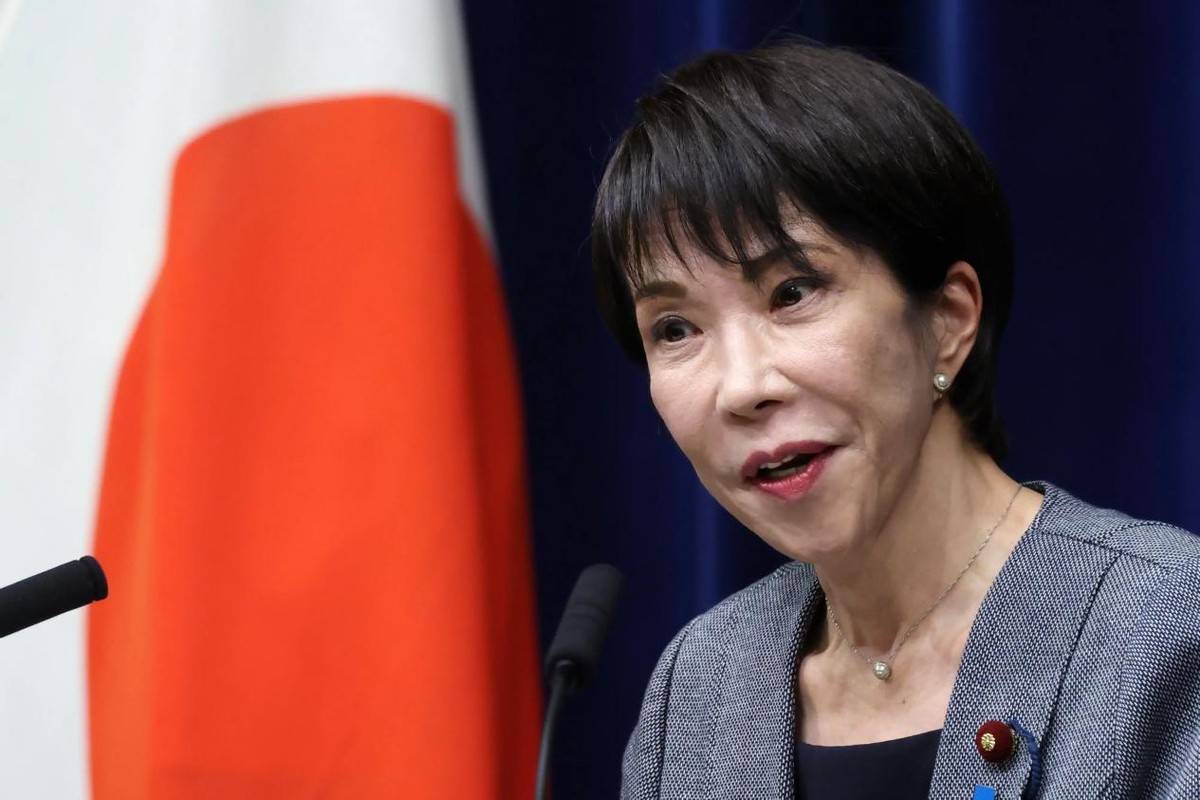
日本社会各界批评高市早苗政府强军扩武(国际视点)
Ren Min Ri Bao· 2025-12-22 22:27
Group 1: Government's Military Expansion - The Japanese government, under Prime Minister Fumio Kishida, is accelerating military expansion, with officials openly advocating for Japan to possess nuclear weapons [1][2] - The defense budget is set to reach 2% of GDP two years ahead of schedule, with a proposed defense budget of 9 trillion yen (approximately 81.8 billion USD) for the fiscal year starting in 2026 [3][4] - Japan's defense spending has increased for 13 consecutive years, with a 60% surge over the past five years, and the total defense budget for fiscal year 2025 is projected to exceed 11 trillion yen (approximately 100 billion USD) [4][5] Group 2: Domestic Reactions and Criticism - There has been significant backlash from various sectors in Japan, including former defense ministers and political leaders, condemning the push for nuclear armament as irresponsible [2][3] - Public protests have emerged against the government's military spending, with citizens expressing concerns over the neglect of social welfare and healthcare in favor of military expansion [6] - Critics argue that the government's military policies could lead to Japan's international isolation and worsen its security environment [2][7] Group 3: Military-Industrial Complex - The increase in defense spending has significantly benefited Japanese military contractors, with companies like Mitsubishi Heavy Industries and Kawasaki Heavy Industries seeing sales growth in the defense sector ranging from 25% to 87% [5] - The ongoing rise in military expenditure raises concerns about the emergence of a military-industrial complex in Japan, which could have long-term implications for the country's defense and foreign policy [5][6] Group 4: Arms Export Policy Changes - The ruling coalition is discussing the removal of restrictions on arms exports, which could allow Japan to export lethal weapons, fundamentally altering its long-standing defense principles [6][7] - The potential lifting of these restrictions has sparked fears of Japan becoming a source of weapon supply, which could exacerbate international conflicts [7]
短评|“核武装论”?!高市政府官员在冒天下之大不韪
Xin Hua She· 2025-12-21 01:59
Core Viewpoint - The recent statements by a senior official in the Takashi government advocating for Japan to possess nuclear weapons have sparked significant controversy and backlash, particularly from anti-nuclear groups and opposition parties, highlighting the tension surrounding Japan's post-war pacifist principles and its potential shift towards militarization [1][2]. Group 1: Government Statements and Reactions - A senior official in the Takashi government publicly suggested that Japan should consider acquiring nuclear weapons, which has led to protests from atomic bomb victim associations and demands for the official's removal by opposition parties [1]. - The Takashi administration's discussions about revising Japan's "Three Non-Nuclear Principles" indicate a potential shift in policy towards nuclear armament, which has raised alarms about the revival of militarism in Japan [2]. Group 2: Historical Context and Implications - Japan's post-war constitution established the "Three Non-Nuclear Principles," which prohibit the country from possessing, producing, or allowing nuclear weapons on its territory, making the recent comments a serious challenge to this established framework [1][2]. - The rise of right-wing sentiments and historical revisionism in Japan is seen as a threat to international nuclear non-proliferation efforts, with calls for Japan to adhere to its pacifist commitments to prevent a resurgence of militarism [3].
新华社短评丨“核武装论”?!高市政府官员在冒天下之大不韪
Xin Lang Cai Jing· 2025-12-20 14:58
Group 1 - The Japanese government, under Prime Minister Fumio Kishida, is facing backlash from various political parties and civil groups after a government official advocated for Japan to possess nuclear weapons, challenging the country's long-standing "Three Non-Nuclear Principles" [1][2] - The "Three Non-Nuclear Principles," established post-World War II, dictate that Japan will not manufacture, possess, or allow nuclear weapons to be brought into the country, and any deviation from this policy is seen as a significant threat to international nuclear non-proliferation efforts [1][2] - There is a growing concern that the current administration's rhetoric and actions may lead to a revival of militarism in Japan, as well as a potential abandonment of the "Three Non-Nuclear Principles," which could destabilize the international security landscape [2][3] Group 2 - The recent comments from the government official are perceived as a trial balloon for further undermining the "Three Non-Nuclear Principles," with implications for Japan's military expansion and its role in the international order [2] - The rise of right-wing sentiments in Japan is prompting calls for vigilance from various political factions and civil organizations, emphasizing the need to adhere to the "Three Non-Nuclear Principles" to prevent the recurrence of war [3]
短评丨“核武装论”?!高市政府官员在冒天下之大不韪
Xin Hua She· 2025-12-20 14:17
Group 1 - The core viewpoint of the articles revolves around the controversial statements made by a senior official in the government of Prime Minister Fumio Kishida, advocating for Japan to possess nuclear weapons, which has sparked significant backlash from various political parties and civil groups in Japan [1][2]. - Japan's historical stance, rooted in its post-war constitution, has been to adhere to the "Three Non-Nuclear Principles," which prohibit the development, possession, and introduction of nuclear weapons [1][2]. - The recent comments from the Kishida administration's official are seen as a serious challenge to Japan's established non-nuclear policy and the international nuclear non-proliferation framework, raising concerns about a potential shift towards militarization and the revival of militaristic ideologies in Japan [2][3]. Group 2 - There is a growing trend among certain factions in Japan to advocate for nuclear armament, reflecting a resurgence of right-wing conservative forces and a desire to escape the constraints of international order [2][3]. - The Kishida administration is reportedly considering revising its national security strategy, which may include abandoning the principle of not introducing nuclear weapons into Japan, indicating a potential shift in defense policy [2]. - The international community is urged to remain vigilant regarding Japan's nuclear ambitions, as any deviation from the "Three Non-Nuclear Principles" could lead to significant destabilization of the global nuclear non-proliferation regime [3].