军工复合体

Search documents
美国枪击惨剧的背后:军工复合体才是永不降半旗的赢家
Hu Xiu· 2025-09-14 12:03
Group 1 - The article highlights the irony of gun rights in the U.S., particularly focusing on the case of Charlie Kirk, who supports gun rights but was shot by an extreme right-wing individual [1] - It emphasizes the ongoing issue of gun violence in America, suggesting that the notion of gun freedom has become a dark joke in the current societal context [1] - The article reflects on the broader implications of gun culture in the U.S., questioning the effectiveness of gun rights advocacy in preventing violence [1]
【史海回眸】跨越两个世纪,美“战争部”演化为“军事巨兽”
Huan Qiu Shi Bao· 2025-09-11 23:14
Core Viewpoint - The recent decision by President Trump to rename the Department of Defense back to the "War Department" reflects a shift in messaging towards military readiness and determination, although the current structure and function of the department have evolved significantly from its historical origins [1][12]. Historical Context - The War Department was established in 1789, initially overseeing only the Army, and its powers were limited due to fears of military overreach in the new republic [3][4]. - The department's size fluctuated dramatically with wartime needs, exemplified by the significant increase in Army personnel during the War of 1812, which later saw drastic reductions post-war [3][4]. Military Operations and Challenges - The War Department faced logistical challenges during the Mexican-American War (1846-1848), leading to inefficient military operations and high non-combat casualties [4]. - In contrast, the Navy, separated from the War Department, received more funding and support, showcasing a disparity in military capabilities [4]. Structural Changes and Military Integration - Post-World War II, the U.S. military underwent significant restructuring to address inter-service rivalries, culminating in the establishment of a unified military command under the National Security Act of 1947 [6][7]. - The integration aimed to enhance joint operations among the Army, Navy, and newly independent Air Force, although initial leadership faced challenges in exerting authority over the services [7][9]. Emergence of the Defense Industry - The formation of the Department of Defense marked the beginning of a "military-industrial complex," which became a powerful entity with substantial budgetary demands, particularly during the Cold War [11]. - The complex has been criticized for perpetuating military engagements and justifying defense spending by continuously identifying new threats [11][12]. Current Implications - The renaming of the Department of Defense to the War Department does not signify a return to historical military strategies but rather reflects ongoing complexities in U.S. military policy and global military presence [12].


7月译著联合书单|游泳游泳:凌潜于水的文化史
Xin Lang Cai Jing· 2025-07-27 01:41
Group 1 - The book "The Rise of Religion and Capitalism" argues that contemporary economic views, particularly the belief in free markets, are deeply rooted in religious thought, contrasting with the traditional view of economics as a secular product of the Enlightenment [2] - It explores the historical connections between religion and economic thought, highlighting how Protestantism influenced modern economic ideas and how Calvinism shaped early capitalist values and behaviors [2] Group 2 - "Mediterranean Ten Cities" discusses how classical civilization, represented by ancient Greece and Rome, laid the foundation for contemporary Western culture and arts [4] - The author outlines the rich heritage left by classical civilization through ten cities, emphasizing the political ideologies born from the Greek city-states and the expansion of Greek culture across Europe and Asia [4] Group 3 - "Global Food Crisis: Industrialized Britain, Food Systems, and World Ecology" addresses the unprecedented global food crisis, linking it to unsustainable dietary choices and agricultural dependencies that threaten both human health and ecological balance [8] - The book traces the origins of this crisis back to late 18th-century Britain, where a diet rich in meat, wheat, and sugar became prevalent, leading to increased reliance on global resources [8] Group 4 - "The Possibilities of Development: Agricultural Modernization in the US and Mexico Before and After WWII" examines the historical similarities between the agricultural challenges faced by the southern United States and Mexico in the early 20th century [14] - It discusses how agricultural movements in both regions developed in parallel and influenced each other, particularly highlighting the impact of Roosevelt's New Deal policies on Mexican agricultural reforms [14] Group 5 - "The Legal Theater: A History of Legal Construction" explores the historical context of legal development in Western society, focusing on the roles of professors, legislators, and judges as key actors in the legal system [16] - The book traces the creative forces behind legal norms, including legal science, legislation, and judicial power, and their historical missions and functions [16] Group 6 - "The Milk Craze: Body, Science, and Hope" investigates the transformation of milk consumption in China from a fear of dairy to a strong preference for it, analyzing the cultural, social, and economic factors behind this shift [22] - The book discusses the historical relationship between milk production, consumption, and traditional health beliefs, as well as the impact of foreign milk products on the Chinese market [22] Group 7 - "The Great Transformation: The Political and Economic Origins of Our Time" describes the transition from pre-industrial to industrialized Europe, revealing significant ideological, social, and political changes during this period [32] - The author critiques the inherent flaws of self-regulating free markets and predicts the severe consequences of market economies on people, nature, and production organization [32]

嘴上都是和平 心里全是生意
Zhong Guo Xin Wen Wang· 2025-07-19 12:47
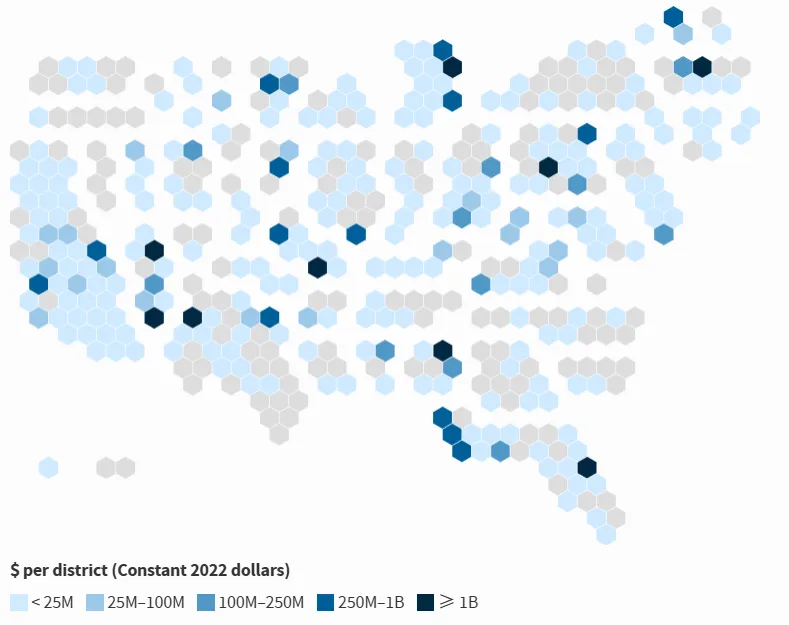
Group 1 - The core argument is that U.S. military aid to Ukraine is a profitable business for the American military-industrial complex, with most funds eventually returning to the U.S. [1][3] - Since February 2022, the U.S. has allocated approximately $182.8 billion in aid to Ukraine, with actual payments around $84 billion, and 90% of this money flows back to the U.S. [1][3] - The "Ukraine Security Assistance Initiative" allows Ukraine to directly contract with U.S. defense companies, leading to significant profits for these firms and job creation in various congressional districts [3][5] Group 2 - The "Presidential Drawdown Authority" (PDA) enables the U.S. president to transfer weapons from stockpiles to Ukraine, which clears inventory and creates new orders for defense contractors [6] - For instance, the U.S. provided "Stinger" missiles from its inventory, which had not been produced for over 20 years, and subsequently signed a $624.6 million contract to restart production [6] - The ongoing crisis is seen as a financial boon for U.S. defense companies, with increasing demand for military equipment from NATO countries, further enhancing the profitability of U.S. arms sales [7][9] Group 3 - The cost of manufacturing a Patriot missile system is approximately $1 billion, with individual missiles costing around $3.7 million [8] - The longer the conflict persists, the more financial gain the U.S. military-industrial complex realizes, as the demand for arms continues to rise [9]

欧美军工,有多赚钱?
Hu Xiu· 2025-05-15 00:26
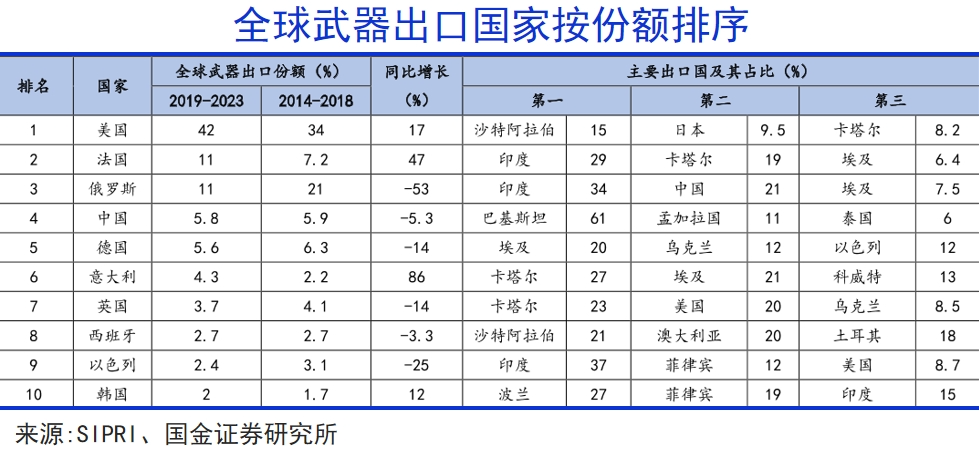
Core Viewpoint - The global arms trade is experiencing unprecedented growth, driven by ongoing conflicts and geopolitical tensions, with the U.S. military-industrial complex reaping significant profits from these situations [3][4][11]. Group 1: Military Industrial Complex - The U.S. military-industrial complex has a historical relationship with government interests, significantly influencing global conflicts and arms sales [8][10]. - Major U.S. defense contractors, including Lockheed Martin, Boeing, and Raytheon, have seen substantial revenue growth, with Lockheed Martin's defense revenue reaching $40.6 billion in 2023, accounting for 59% of its total revenue [26]. - The U.S. accounted for 42% of global arms exports from 2019 to 2023, a 17% increase from the previous period, with significant sales to countries like Saudi Arabia and Japan [12][13]. Group 2: European Arms Industry - The European arms industry is also experiencing a resurgence, with companies like Rheinmetall reporting a 73% increase in sales due to rising demand from Ukraine and Germany [28]. - European defense spending has surged, with NATO countries increasing military budgets to a total of $1.5 trillion, representing 55% of global military spending [36]. - The European arms market is expanding, with major companies like BAE Systems and Rheinmetall ramping up production to meet growing demand, leading to record backlogs of orders [37][38]. Group 3: China's Military Exports - China's military products have gained recognition in international markets, particularly during the recent India-Pakistan conflict, challenging the perception that China only follows Western military technology [41]. - Chinese defense exports are subject to strict government regulations, with a focus on enhancing the self-defense capabilities of recipient countries without compromising regional stability [56][57]. - The Aviation Industry Corporation of China reported defense revenues of $35.2 billion in 2023, representing 90% of its total revenue, indicating a strong position in the global arms market [26]. Group 4: Global Arms Trade Dynamics - The global arms trade is heavily influenced by ongoing conflicts, with the U.S. and European companies benefiting significantly from these situations [30][61]. - The arms trade is characterized by a complex interplay of political, economic, and security factors, with major players manipulating these dynamics for profit [24][61]. - The rise of military technology companies, such as Palantir, highlights the increasing importance of data analytics in modern warfare and defense strategies [21].