毒刺导弹

Search documents
1分钟20%涨停!10万亿 军工重磅利好突袭!
Zheng Quan Shi Bao Wang· 2026-01-08 03:48
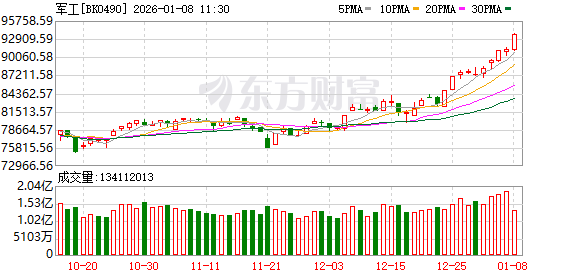
Core Viewpoint - The military sector in A-shares experienced a significant surge following President Trump's proposal to increase the U.S. military budget to $1.5 trillion by 2027, which is a 66% increase from previous levels, aimed at strengthening the military during turbulent times [2][5]. Group 1: Market Reaction - A-shares military stocks saw a broad rally, with the Wind military index rising over 4% by 11:00 AM on January 8, 2023 [3]. - Notable stocks included Shaoyang Hydraulic and Hahong Huaton, both reaching the 20% limit up, while several others like Jianglong Shipbuilding and Dongtu Technology surged over 10% [3][4]. Group 2: Budget Proposal Details - Trump's military budget proposal for 2027 is set at $1.5 trillion (over 100 billion RMB), with the 2026 budget at $901 billion [2][5]. - The proposal is part of a broader strategy to enhance U.S. military capabilities amid perceived global threats [6]. Group 3: Defense Industry Implications - Trump's comments on military spending come alongside threats to defense contractors regarding stock buybacks, indicating a push for reinvestment in military capabilities [7]. - The defense sector in the U.S. saw declines in stock prices for major contractors like Northrop Grumman and Lockheed Martin following Trump's statements [7]. Group 4: Future Outlook - Analysts from Dongfang Securities anticipate a new phase of equipment construction planning, highlighting the potential for growth in the military sector driven by both domestic and international demand [8]. - Guosheng Securities predicts a gradual recovery for the military industry starting in 2026, with an upward trend expected as new five-year plans are implemented [8].





1分钟20%涨停!10万亿,重磅利好突袭!
券商中国· 2026-01-08 03:33
Core Viewpoint - The article highlights a significant surge in the military industry stocks in the A-share market following U.S. President Trump's proposal to increase the military budget to $1.5 trillion by 2027, which represents a 66% increase from previous levels [2][6]. Group 1: Market Reaction - On January 8, military stocks in the A-share market experienced a broad rally, with the Wind military index rising over 4%. Notable stocks such as Shaoyang Hydraulic and Hahai Huantong reached the 20% limit up, while others like Jianglong Shipbuilding and Dongtu Technology surged over 10% [4][6]. - Specific stock performances included Shaoyang Hydraulic at 49.60 with a 20.01% increase, Hahai Huantong at 63.56 with a 19.99% increase, and several others achieving around 10% gains [5][6]. Group 2: U.S. Military Budget Proposal - Trump's proposal for the 2027 military budget aims to address current global instability, with a 2026 budget set at $901 billion. This increase is framed as a move to build a "dream army" for the U.S. [2][6]. - The proposal follows Trump's recent military actions and threats, including potential interventions in Venezuela and other regions, emphasizing a proactive military stance [7][8]. Group 3: Future Outlook - Analysts from Dongfang Securities anticipate that the military sector will see a resurgence as new equipment construction plans are clarified, with a focus on unmanned systems and deep-sea technology. The military sector is expected to benefit from both domestic and international demand [10]. - Guosheng Securities predicts a gradual recovery for the military industry, with an upward trend expected from 2026 to 2028 due to accumulated orders and new expectations from the upcoming five-year plan [10].




调控年末流动性,时隔三个月央行重启14天逆回购;特朗普行政令确认2028年登月目标并取消国家太空委员会;全国流感病毒检测阳性率下降|早报
Di Yi Cai Jing· 2025-12-19 00:15
Group 1 - The People's Bank of China has restarted the 14-day reverse repurchase operation after three months, injecting 1,000 billion yuan into the market, indicating a relatively loose liquidity environment [2] - The Chinese Ministry of Commerce has noted an increase in trade restrictions from the EU, with 12 trade remedy investigations and 3 foreign subsidy investigations initiated against China this year [5] - The Ministry of Commerce has approved some general license applications for rare earth exports, indicating progress in compliance and export control [6] Group 2 - The National Development and Reform Commission emphasizes the need to expand effective investment in emerging industries and optimize investment structures [7] - The inventory of passenger vehicles in China reached 3.79 million units at the end of November, an increase of 380,000 units from the previous month, indicating a seasonal stockpiling trend [9] - Shanghai has exported over 20,000 used cars from January to November, marking a growth of over 100% year-on-year, supported by a new comprehensive service platform for used car international trade [10][11] Group 3 - The establishment of a new joint venture, TikTok USDS Joint Venture LLC, aims to enhance data security and algorithm safety for TikTok's operations in the U.S. [19] - Sony has reportedly sold its Huizhou factory last year, dispelling rumors of its closure [20] - The average increase of 164% in the stock prices of 90 new "hundred yuan stocks" in A-shares highlights a significant investment opportunity in sectors like electronics and machinery [22]
嘴上都是和平 心里全是生意
Zhong Guo Xin Wen Wang· 2025-07-19 12:47
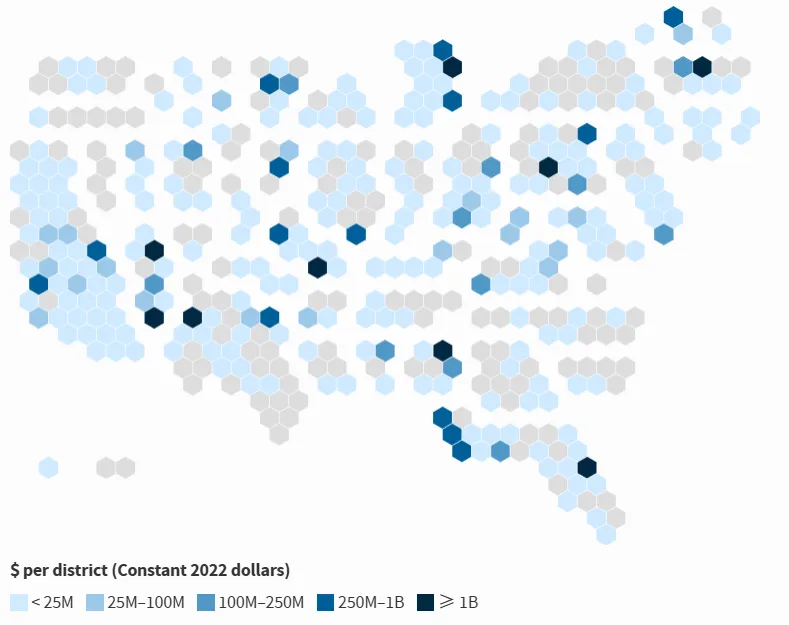
Group 1 - The core argument is that U.S. military aid to Ukraine is a profitable business for the American military-industrial complex, with most funds eventually returning to the U.S. [1][3] - Since February 2022, the U.S. has allocated approximately $182.8 billion in aid to Ukraine, with actual payments around $84 billion, and 90% of this money flows back to the U.S. [1][3] - The "Ukraine Security Assistance Initiative" allows Ukraine to directly contract with U.S. defense companies, leading to significant profits for these firms and job creation in various congressional districts [3][5] Group 2 - The "Presidential Drawdown Authority" (PDA) enables the U.S. president to transfer weapons from stockpiles to Ukraine, which clears inventory and creates new orders for defense contractors [6] - For instance, the U.S. provided "Stinger" missiles from its inventory, which had not been produced for over 20 years, and subsequently signed a $624.6 million contract to restart production [6] - The ongoing crisis is seen as a financial boon for U.S. defense companies, with increasing demand for military equipment from NATO countries, further enhancing the profitability of U.S. arms sales [7][9] Group 3 - The cost of manufacturing a Patriot missile system is approximately $1 billion, with individual missiles costing around $3.7 million [8] - The longer the conflict persists, the more financial gain the U.S. military-industrial complex realizes, as the demand for arms continues to rise [9]