
古建筑保护

Search documents
北方古城潮到发绿,多少人急急急急坏了
3 6 Ke· 2025-10-20 12:44
Core Points - The article discusses the impact of continuous rainfall on historical sites and cultural heritage in the ancient city of Xi'an and surrounding areas, highlighting the challenges faced by these structures due to climate change and extreme weather patterns [2][11]. Summary by Sections Weather Impact - Since early September, Xi'an has experienced 38 consecutive days of rain, with the average rainfall in Shaanxi province being 1.6 times higher than the normal level, marking the second-highest rainfall since 1961 [2][11]. - The persistent rain has led to concerns about the structural integrity of ancient buildings, as water can infiltrate through small cracks and cause significant damage over time [10][11]. Cultural Heritage Concerns - Notable cultural sites, such as the San Guan Temple in Shanxi, have faced damage due to the rain, with a famous statue known as "Little Potato" suffering visible deterioration [3][7]. - Several national-level cultural heritage sites, including the Qinglian Temple and the Jade Emperor Temple, have temporarily closed for maintenance due to high humidity and water damage [8][9]. Preservation Efforts - Ancient structures like the Xi'an city wall have been equipped with modern monitoring systems to manage water drainage and prevent damage [3][10]. - Despite these efforts, many older buildings and artifacts remain vulnerable, as they are not always protected by advanced technology [13][14]. Climate Trends - The article notes a trend of increasing average rainfall in China since 1951, with the last decade being the wettest on record [11][13]. - The changing climate has led to more extreme weather events, making it difficult for preservation efforts to keep pace with the damage caused by prolonged wet conditions [11][14].

京气神儿丨古都精灵,相伴相生600年
Ren Min Wang· 2025-10-10 13:18
Core Viewpoint - The article highlights the historical significance of the Beijing Swift, which has coexisted with the city for over 600 years, and emphasizes the innovative research combining swift studies with ancient architecture preservation [2]. Group 1 - The Beijing Swift has been a part of the city since the Ming Dynasty, nesting in iconic structures such as the Forbidden City and the Temple of Heaven [2]. - Researcher Yang Zixuan has been involved in a project since 2018 that focuses on the relationship between the swifts and the preservation of the central axis heritage of Beijing [2]. - The sounds of the swifts create a harmonious symphony that intertwines with the historical echoes of the central axis, reflecting a cultural legacy spanning over six centuries [2].
了不起的古建筑丨开封铁塔:我国现存最早最高琉璃砖塔
He Nan Ri Bao· 2025-09-23 23:56
Core Viewpoint - The Kaifeng Iron Pagoda, also known as the Youguo Temple Pagoda, is a significant historical and architectural landmark in China, representing the pinnacle of Northern Song dynasty glazed brick technology and serving as a symbol of resilience and cultural heritage in Kaifeng [1][4][18]. Historical Significance - The Iron Pagoda was originally built in 1049 during the Northern Song dynasty, replacing the earlier wooden pagoda that was destroyed by lightning [2][17]. - It is the only surviving glazed brick pagoda from the Song dynasty and is recognized for its architectural innovation and historical value [9][18]. Architectural Features - The pagoda stands at a height of 55.08 meters and features an octagonal, thirteen-story structure, showcasing advanced construction techniques and artistic design [4][9]. - The use of glazed bricks, a departure from traditional wooden structures, marked a significant achievement in Chinese architectural history [3][4]. Cultural Impact - The Iron Pagoda has been a focal point of cultural activities, including the traditional "Iron Pagoda Lantern Lighting" during the Mid-Autumn Festival, which highlights its role in local customs and celebrations [12]. - It has been included in various cultural heritage lists and is a popular tourist attraction, contributing to the local economy and cultural tourism [8][18]. Preservation Efforts - The pagoda has undergone multiple restorations, particularly after suffering damage from natural disasters and wartime destruction, with significant restoration efforts initiated in the 1950s [13][14]. - Recent assessments indicate ongoing structural concerns, prompting further scientific research and preservation initiatives to ensure its longevity [16][14].
河阳古民居的诗意画卷
Ren Min Ri Bao· 2025-08-08 22:01
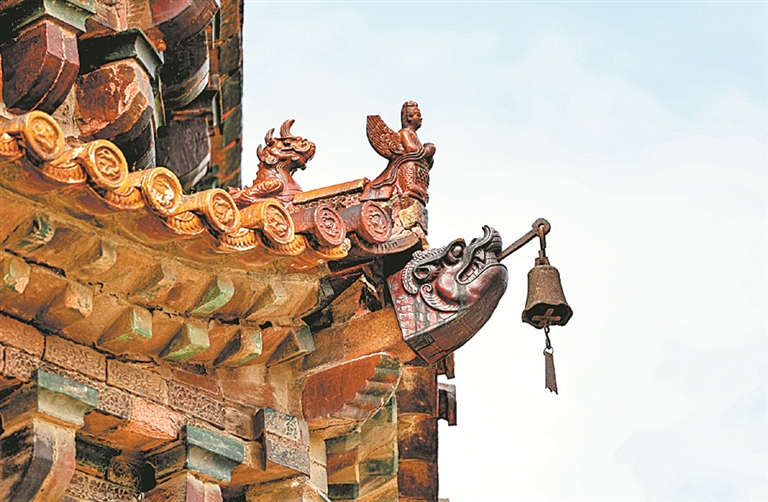
Core Viewpoint - The article highlights the cultural and historical significance of Heyang Ancient Village in Zhejiang, showcasing its architectural heritage, community life, and ongoing preservation efforts [2][3][4][5]. Group 1: Historical and Cultural Significance - Heyang Ancient Village is recognized as a historical and cultural site, with designations such as a national key cultural relic protection unit and a 4A-level tourist attraction [2]. - The village features ancient architecture from the Ming and Qing dynasties, including 10 clan-style ancient buildings and over 100 old residences, reflecting the poetic landscape of Jiangnan [2][3]. Group 2: Architectural Features - The village's layout, established during the Yuan Dynasty, includes a water system that circulates water through the village, contributing to its aesthetic and functional design [3]. - Architectural styles in Heyang blend elements from Suzhou, Huizhou, and northern China, showcasing a unique local flavor [3]. Group 3: Preservation Efforts - Restoration projects, such as the ongoing repairs of the He Gong Special Ancestral Hall, utilize advanced technologies like 3D laser scanning while preserving traditional craftsmanship [4]. - The management center has implemented a grid system for regular inspections and repairs, ensuring the maintenance of the village's historical buildings [5]. Group 4: Community Engagement - Local residents actively participate in preservation efforts, donating thousands of ancient artifacts to establish two folk museums that display traditional furniture, agricultural tools, and handicrafts [5]. - The village hosts various cultural activities and festivals, attracting tourists and fostering community engagement [5].

城市更新里的科技范儿(科技视点)
Ren Min Ri Bao· 2025-08-03 21:53
Urban Renewal and Historical Building Protection - The article discusses the challenges and innovations in urban renewal, focusing on the balance between space development and the preservation of historical buildings [1][4] - In Shanghai, the innovative "stepping walking" technology allows for the safe relocation of historical buildings, such as the 90-year-old Huayanli building, without damage [2][3] - The technology enhances safety margins, increases construction efficiency, and reduces costs compared to traditional methods [2][3] Technological Applications in Historical Preservation - The use of 3D scanning and drone photography provides precise data for the restoration of ancient buildings, ensuring scientific and accurate progress in preservation efforts [4] - In Lhasa's Barkhor Ancient City, over 1,300 buildings are preserved while integrating modern amenities, showcasing a blend of tradition and contemporary living [4][5] Safety Measures in Urban Infrastructure - In Hefei, the installation of gas leak alarms in commercial establishments enhances safety by automatically shutting off gas valves and notifying owners in case of leaks [6][7] - The Hefei city infrastructure safety project aims to address urban safety needs through a comprehensive monitoring network, utilizing advanced technologies for disaster prediction and response [7][8]
气候变化之下,古建筑如何“未病先防”
Ke Ji Ri Bao· 2025-07-25 02:02
Group 1: Climate Change Impact on Cultural Heritage - One-sixth of the world's cultural heritage is threatened by climate change, with extreme weather and ecological imbalance causing significant damage [1] - In Shanxi, 1,783 cultural relics were affected by unusual heavy rainfall in October 2021, including 61 sections of the World Heritage site Pingyao Ancient City, which suffered structural collapses [2][3] - Long-term climate changes can gradually damage cultural relics, with a 1°C increase in global average temperature leading to a 20%-25% reduction in wood strength and a 30% increase in stone weathering rates [3][4] Group 2: Challenges in Cultural Heritage Preservation - Approximately 10% of registered protected buildings in China have gradually disappeared since the 21st century, with about 2,000 heritage buildings lost each year [4] - The shift from passive restoration to proactive maintenance is necessary for cultural heritage protection, emphasizing the need for innovative technologies and risk awareness [5][6] - There is a shortage of professionals skilled in both technology and restoration theory, which hampers preventive protection efforts [7][8] Group 3: Resilience Protection Systems - A resilience protection system is needed for ancient buildings to adapt to external shocks and environmental changes [9][10] - This system should integrate monitoring and predictive analysis capabilities, enhancing both the resilience of cultural heritage and its surrounding environment [10][11] - Establishing a comprehensive lifecycle protection system is essential for the longevity and stability of ancient buildings, requiring collaboration across various sectors and the involvement of research institutions and universities [12]