和平利用核能

Search documents
乌兹别克斯坦将迈向和平利用核能的自主发电阶段
Shang Wu Bu Wang Zhan· 2025-10-22 17:36
Core Viewpoint - Uzbekistan is transitioning towards autonomous power generation based on the peaceful use of nuclear energy, highlighting its significant role as a global uranium producer with approximately 4% of the world's reserves and an annual extraction of 3,500 tons [1] Group 1: Nuclear Energy Development - The first nuclear power plant project in collaboration with Russia's Rosatom is significant, involving the construction of two large VVER-1000 reactors (1,000 MW each) and two smaller RITM-200N reactors (55 MW each) in Jizzakh region [1] - This project aims to enhance the stability of the electricity grid, with large units providing predictable base power and smaller units ensuring flexible power adjustment during peak hours, as well as backup power during unstable solar and wind energy operations [1] Group 2: Education and Talent Development - Uzbekistan plans to establish a comprehensive nuclear talent training system covering education from primary to higher education levels to accelerate the development of skilled professionals in the nuclear sector [1]
坚持和平利用核能——俄罗斯隆重纪念核工业成立80周年
Ke Ji Ri Bao· 2025-09-27 23:29
Core Insights - The event "World Nuclear Week" coincides with the 80th anniversary of Russia's nuclear industry and the annual Nuclear Industry Workers' Day on September 28 [1] - The forum's theme is "From New Technological Order to New Worldview," highlighting the evolution and future of nuclear technology [1] Group 1: Historical Context and Achievements - The Russian nuclear industry originated during World War II, with the Soviet Union deciding to develop nuclear energy on September 28, 1942, amidst the Stalingrad battle [2] - The establishment of the "Special Committee for the Utilization of Atomic Energy" on August 20, 1945, marks the beginning of Russia's nuclear industry [2] - Significant milestones include the world's first nuclear power plant, the Obninsk Nuclear Power Plant (1954), and the first nuclear-powered icebreaker, Lenin (1957) [2] Group 2: Current Developments and Innovations - The President of the Russian State Atomic Energy Corporation, Likhachev, presented advancements in small nuclear power generation and closed-loop nuclear systems at the forum [2] - The corporation is also involved in various sectors, including medicine, aerospace, quantum computing, and non-energy applications of nuclear technology in agriculture [2] Group 3: Nuclear Safety and Global Cooperation - President Putin emphasized the importance of nuclear safety and the physical protection of nuclear facilities, advocating for enhanced security measures across all stages of the nuclear cycle [3] - The public perception of nuclear energy is shifting towards viewing it as an environmentally friendly technology with significant opportunities [3] Group 4: Future Outlook and Global Trends - According to the International Atomic Energy Agency, global nuclear power capacity could increase by over 2.5 times to nearly 1000 gigawatts by mid-century [4] - The demand for peaceful nuclear energy is expected to be driven primarily by countries in the "Global South" and Eastern nations [4] - Russia aims to maintain its leadership in the nuclear sector by adhering to contract obligations and promoting the development of independent national nuclear industries among its partners [4]
外媒:伊朗与俄罗斯签署价值250亿美元协议,将在伊朗建造4座核电机组
Huan Qiu Wang· 2025-09-26 11:34
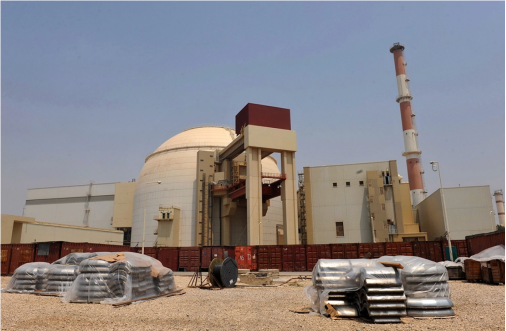
Group 1 - Iran has signed a $25 billion agreement with Russia's state nuclear energy company to construct four nuclear power units in Iran [1] - The Russian state nuclear energy company announced a memorandum of understanding for building small nuclear power plants in Iran, although specific figures were not disclosed [3] - Iran's Vice President Mohammad Eslami stated that Iran's nuclear program is completely transparent and that the country has no intention of abandoning its nuclear plans [3] Group 2 - The cooperation between Russia and Iran in the peaceful use of nuclear energy is expanding, with ongoing construction of the Bushehr nuclear power plant's second and third units [3]

普京:计划2030年建成
中国能源报· 2025-09-26 03:48
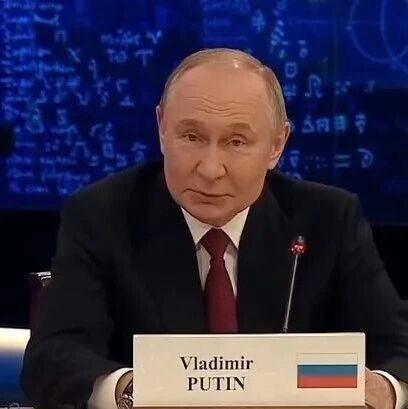
Core Viewpoint - Russia plans to build the world's first closed-loop nuclear power plant by 2030, which aims to recycle over 95% of nuclear waste generated by the plant, maximizing fuel utilization [1][3]. Group 1: Nuclear Power Development - The closed-loop nuclear power plant will significantly reduce nuclear waste by recycling the majority of it, indicating a shift towards more sustainable nuclear energy practices [1][3]. - Russia is developing new technologies for the peaceful use of nuclear energy and plans to start constructing small land-based and floating nuclear power plants soon [4]. Group 2: Safety and Regulatory Framework - Ensuring the safety of nuclear facilities is stated as Russia's "absolute priority," with a commitment to fulfilling all obligations in the nuclear sector regardless of political circumstances [4]. - Russia aims to create stable and long-term conditions for nuclear energy cooperation projects while balancing peaceful nuclear development and strengthening non-proliferation mechanisms [4].
美国战斗机紧急升空拦截四架俄罗斯战机!发生了什么?普京最新发声 事关核设施
Mei Ri Jing Ji Xin Wen· 2025-09-26 00:36
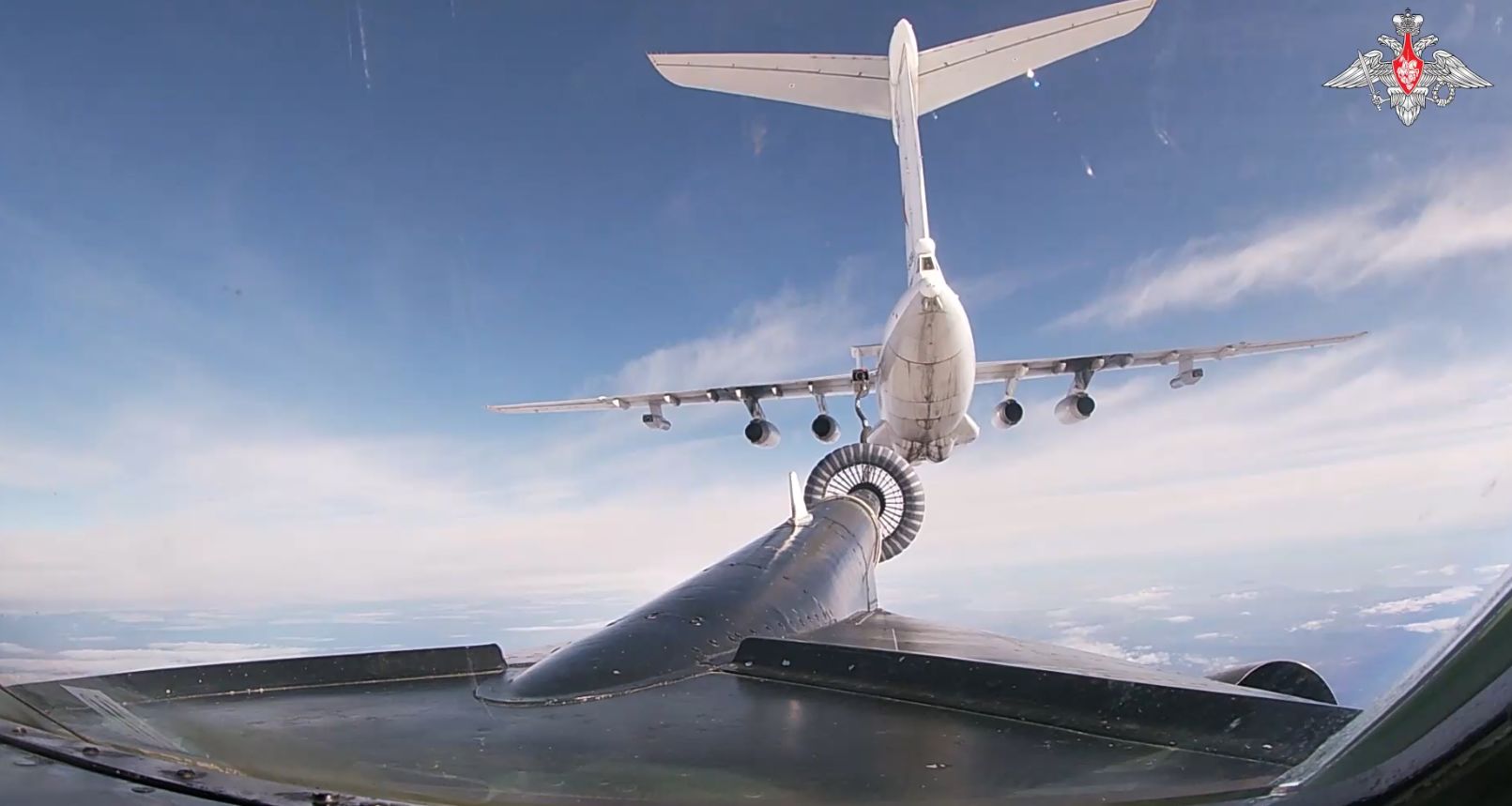
Group 1 - The North American Aerospace Defense Command (NORAD) reported that U.S. fighter jets intercepted four Russian aircraft near Alaska, including two Tu-95 strategic bombers and two Su-35 fighters, on September 24 [1] - NORAD stated that the Russian aircraft were operating in international airspace and had not entered U.S. or Canadian airspace, characterizing such activities as routine and not a threat [1] - This incident marks the ninth report of similar events by NORAD in 2023 [1] Group 2 - The Russian Ministry of Defense announced that its Tu-95MS strategic bombers completed over 14 hours of planned flights over neutral waters in the Barents Sea and the Sea of Okhotsk, with Su-35 and Su-30 fighters providing escort [1] - The Russian aircraft operations adhered to international airspace usage rules, and the report did not specify the exact dates and times of these missions [1] - Russian long-range aviation crews regularly conduct flights over neutral waters in the Arctic, North Atlantic, Pacific, Baltic, and Black Seas [1] Group 3 - The concept of a country's Air Defense Identification Zone (ADIZ) allows for limited control over foreign aircraft entering the zone, which is distinct from sovereign airspace [2] - The Alaskan ADIZ covers large areas of international airspace, and U.S. military aircraft have frequently intercepted Russian aircraft entering this zone [2]
伊朗副总统:伊方没有放弃核计划的打算
Yang Shi Xin Wen· 2025-09-25 16:36
Core Points - Iran's nuclear program is described as completely transparent, with no intention of abandoning it [1] - Iran and Russia are set to jointly construct new large and small nuclear power plants as per existing agreements [1] - Russia's state atomic energy corporation is expanding cooperation with Iran in the peaceful use of nuclear energy, continuing the construction of the Bushehr nuclear power plant's second and third units [1]
普京:确保核设施安全是俄罗斯的“绝对优先事项”
Yang Shi Xin Wen· 2025-09-25 16:19
Core Points - Russia is developing new technologies for the peaceful use of nuclear energy, with a focus on ensuring the safety of nuclear facilities as a top priority [1] - The country aims to create stable and long-term conditions for nuclear energy cooperation projects amidst a changing global technological landscape [1] - Russia plans to begin the construction of small land-based and floating nuclear power plants soon [1] - The country emphasizes its commitment to fulfilling all obligations in the nuclear field, regardless of the political situation [1] - Russia aims to avoid placing its nuclear partners in a position of dependency and seeks a balance between peaceful nuclear development and strengthening non-proliferation mechanisms [1]
国际原子能机构大会 呼吁维护全球核不扩散体系
Mei Ri Shang Bao· 2025-09-16 22:13
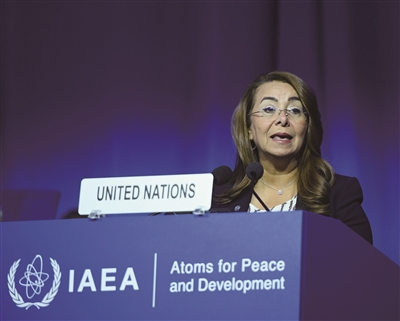
Core Points - The 69th General Conference of the International Atomic Energy Agency (IAEA) was held in Vienna, Austria, on September 15 [2] - The conference emphasized the peaceful use of nuclear energy and technology, as well as the importance of maintaining the global nuclear non-proliferation regime [2]
伊朗外交部长:以色列错误地声称其空袭旨在阻止伊朗发展核武器。实际上,作为《不扩散核武器条约》的签署国,伊朗一直致力于在联合国的监控下推进和平利用核能的计划。
news flash· 2025-07-08 14:32
Core Viewpoint - The Iranian Foreign Minister asserts that Israel's claims regarding airstrikes aimed at preventing Iran's nuclear weapon development are incorrect, emphasizing Iran's commitment to peaceful nuclear energy under UN supervision as a signatory of the Non-Proliferation Treaty [1] Group 1 - Iran is a signatory of the Non-Proliferation Treaty, indicating its commitment to preventing the spread of nuclear weapons [1] - The Iranian government is focused on advancing its nuclear energy program for peaceful purposes, monitored by the United Nations [1] - Israel's assertions about Iran's nuclear ambitions are characterized as erroneous by Iranian officials [1]
伊朗,突发!哈梅内伊露面!
券商中国· 2025-07-06 07:33
Core Viewpoint - The article discusses the recent escalation of conflict between Iran and Israel, highlighting the military actions taken by both sides and the implications for regional stability and international relations [4][8][10]. Group 1: Conflict Overview - Iran's Supreme Leader Khamenei made his first public appearance since the 12-day conflict with Israel, which began with Israeli airstrikes on June 13, resulting in significant casualties and damage [4][6]. - The conflict saw Iran launching multiple missile and drone attacks in retaliation, leading to a ceasefire agreement on June 24 [4][6]. - Reports indicate that Iran targeted five Israeli military facilities during the conflict, which Israel has not publicly acknowledged [8][9]. Group 2: Military Actions and Impact - During the 12-day conflict, Iran reportedly fired over 500 ballistic missiles and approximately 1,100 drones at Israel, with some missiles successfully penetrating Israeli defenses [9][10]. - Analysis suggests that around 16% of missiles managed to bypass Israel's defense systems during the first eight days of the conflict [10]. - The attacks resulted in 28 fatalities and damage to 2,305 homes, two universities, and a hospital in Israel [9]. Group 3: Internet and Communication Disruptions - Following the conflict, Iran experienced significant internet disruptions, with a switch to a national internal network on June 17, which was restored by June 21 [6][6]. - The Iranian Minister of Information and Communications announced that communication services had returned to pre-conflict levels after the ceasefire [6].