
核技术

Search documents
税高到留不住人!德国企业集体出逃,经济顾问怒斥政府
Sou Hu Cai Jing· 2025-12-09 13:09
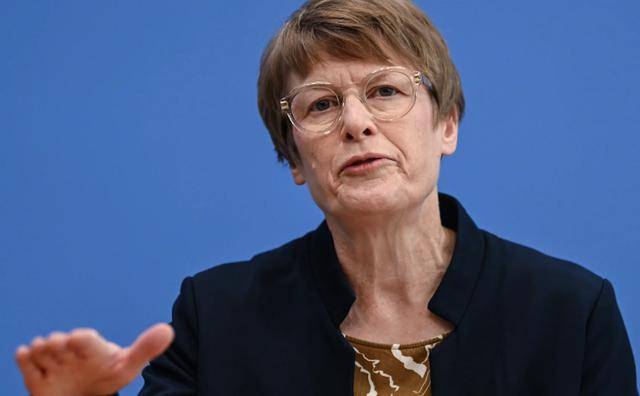
Core Viewpoint - The article highlights the dire state of the German economy, emphasizing the detrimental impact of government fiscal and pension policies, which threaten to exhaust public finances by 2029, leading to a potential crisis in funding for education, infrastructure, and industrial upgrades [1][2]. Group 1: Economic Challenges - Germany is facing multiple economic challenges, including production relocation, innovation stagnation, and talent outflow, which are undermining its status as Europe's economic engine [1]. - By 2029, social spending, interest payments, and defense expenditures are projected to consume all expected government revenues, forcing the government to rely on debt or tax increases to maintain operations [1]. - The looming prospect of significant tax increases has prompted many companies to consider relocating their production to regions with lower tax burdens, such as Eastern Europe and Southeast Asia [1]. Group 2: Employment and Talent Issues - The exodus of companies is expected to lead to a vicious cycle of reduced employment opportunities and sluggish economic growth, characterized by the sequence: tax increases → company departures → decreased tax revenue → further tax increases [1]. - High taxes and social security contributions are driving well-educated young talent to migrate to countries like Switzerland and the Netherlands, which offer better welfare and reasonable tax burdens [2]. Group 3: Innovation and Reform Stagnation - The article points out that innovation stagnation is a critical issue, with Germany's investment in high-tech sectors being insufficient due to past industrial successes and political hesitance [5]. - The share of R&D investment in GDP has been declining, indicating a lack of commitment to technological advancement [5]. - The current coalition government is struggling to implement necessary reforms in key areas like pensions and taxation due to internal conflicts and competing interests, hindering progress [5].

普京:俄核技术将用于建造月球基地
中国能源报· 2025-11-05 01:49
Core Viewpoint - Russia is advancing its military nuclear technology, particularly through the development of the "Burevestnik" nuclear-powered cruise missile and the "Poseidon" nuclear-powered underwater drone, which are expected to play a significant role in future military and space endeavors, including the construction of a lunar base [3][4]. Group 1: Military Advancements - President Putin emphasized the historical significance of the "Burevestnik" and "Poseidon" systems, noting that the flight range of "Burevestnik" exceeds that of all current missile systems globally [3]. - The new generation of weaponry is being developed based on the nuclear devices used in "Burevestnik," with future nuclear-powered missiles expected to be hypersonic [3]. - The components of "Burevestnik" and "Poseidon" will be integrated with advanced computing technology, which will also aid in the construction of a promising lunar base [3]. Group 2: Strategic Applications - The small nuclear power units used in the "Burevestnik" missile system are expected to facilitate mineral extraction in remote areas [3]. - The new operational principles and algorithms of the "Poseidon" system are anticipated to have a significant impact on the development of drones [3]. - Russia has commenced mass production of the "Zircon" missile and will begin combat testing of the "Sarmat" heavy intercontinental ballistic missile system this year, with plans for operational deployment by 2026 [3]. Group 3: Technological Innovations - The "Burevestnik" missile features a nuclear power unit comparable in power to that of a nuclear submarine reactor, yet its size is only one-thousandth of a submarine reactor [4]. - The "Poseidon" intercontinental underwater drone has undergone testing and is capable of high-speed underwater travel, with the ability to launch nuclear warhead-equipped torpedoes [4].
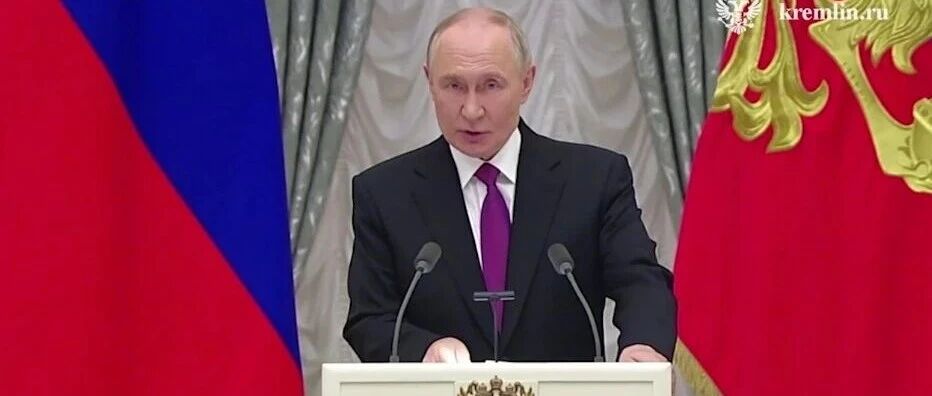
普京:俄军事核技术将用于建造月球基地
Yang Shi Xin Wen Ke Hu Duan· 2025-11-04 19:28
Core Points - Russian President Putin announced the historical significance of the development of the "Burevestnik" nuclear-powered cruise missile and the "Poseidon" nuclear-powered underwater drone [1][2] - The "Burevestnik" missile has a flight range that exceeds all current missile systems globally [1] - Russia is developing a new generation of weaponry based on the nuclear device used in the "Burevestnik," with future nuclear-powered missiles expected to be hypersonic [1] Group 1 - The components of the "Burevestnik" and "Poseidon" systems will be integrated with powerful computers [1] - Technologies applied in the "Burevestnik" and "Poseidon" will aid in constructing a promising lunar base and assist in mineral extraction in remote areas [1] - The new operational principles and algorithms of the "Poseidon" system will significantly impact the development of drones [1] Group 2 - Russia is not a threat to any country but is enhancing its nuclear capabilities [1] - The country has begun mass production of the "Zircon" missile [1] - Russia will start combat testing of systems equipped with the "Sarmat" heavy intercontinental ballistic missile this year, with operational deployment planned for 2026 [1]
俄新型核武亮相,西方反导系统可能“报废”?
Zhong Guo Xin Wen Wang· 2025-11-03 07:19
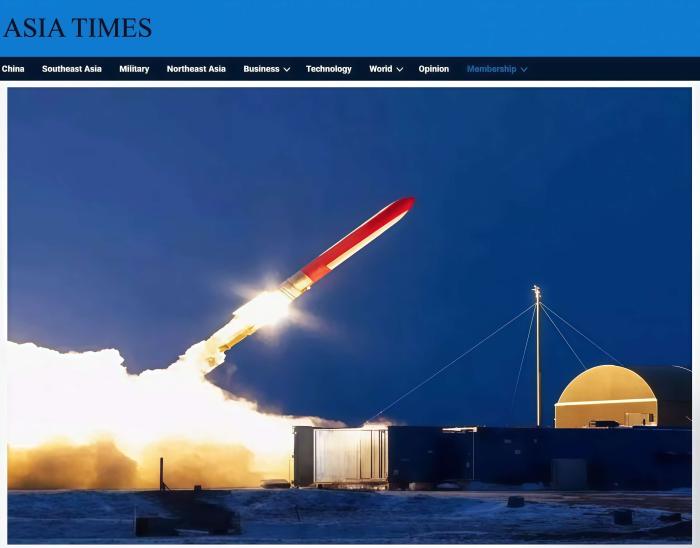
Core Viewpoint - Russia has successfully tested two new nuclear weapons, the "Zircon" nuclear-powered cruise missile and the "Poseidon" nuclear-powered unmanned underwater vehicle, raising concerns in the West about the effectiveness of their missile defense systems [1][3]. Group 1: "Zircon" Nuclear-Powered Cruise Missile - The "Zircon" missile is approximately 12 meters long and can carry a nuclear warhead with a yield of 50 kilotons, capable of long-duration flight [1]. - It can fly nearly 30,000 kilometers without interruption due to its nuclear power, operating at a low altitude of 25 to 100 meters to evade enemy air defense systems [3]. - The missile's potential flight path includes a low-altitude route over the Arctic, crossing the Atlantic, and ultimately reaching the North American west coast [3]. Group 2: "Poseidon" Nuclear-Powered Underwater Vehicle - The "Poseidon" is about 20 meters long and weighs around 100 tons, powered by a liquid metal-cooled reactor, capable of operating at depths of up to 1,000 meters and traveling over 10,000 kilometers [4]. - It is designed to be launched from a nuclear submarine and can autonomously conduct long-range attacks, potentially creating underwater nuclear explosions to devastate coastal infrastructure [4][6]. - The "Poseidon" can carry a nuclear warhead with a yield of up to 1 megaton, sufficient to destroy military ports and ships, and disrupt commercial shipping for an extended period [6]. - Due to its underwater capabilities, existing land-based and space-based missile defense systems are ineffective against the "Poseidon," leading to concerns about a new arms race in underwater defense [6].
金正恩会见核部门科技人员,表示“极大满意”
Zhong Guo Ji Jin Bao· 2025-09-28 14:27
Core Points - North Korea's leadership, under Kim Jong-un, is focusing on enhancing its nuclear capabilities and production capacity, emphasizing the importance of nuclear power for national security [1][2] - Kim Jong-un expressed great satisfaction with the advancements made in nuclear material production and weapon research, highlighting the strategic significance of these developments for the country's future [2] Group 1 - Kim Jong-un met with nuclear research personnel to discuss the production of nuclear materials and weapons, indicating a strong commitment to expanding nuclear capabilities [1] - The report included updates on the 2025 production capacity expansion plan for nuclear materials, showcasing the government's focus on strengthening its nuclear infrastructure [1] - Kim Jong-un reiterated that maintaining peace and security through nuclear deterrence is a fundamental stance of the country, marking it as a top priority [1] Group 2 - The leadership is prioritizing the enhancement and modernization of nuclear technology, with a commitment to providing necessary support for sustainable development in this sector [1] - Kim Jong-un praised the successful overcoming of critical challenges in enhancing national nuclear capabilities, reflecting a positive outlook on the country's strategic nuclear potential [2] - The advancements in nuclear technology are seen as a significant morale booster for the ruling party and a reliable guarantee for the safety and progress of the nation [2]
金正恩会见核部门科技人员,表示“极大满意”
中国基金报· 2025-09-28 14:17
Group 1 - The core viewpoint of the article emphasizes North Korea's commitment to enhancing its nuclear capabilities as a means of maintaining peace and security, with a focus on the production of nuclear materials and weapons [2][3] - Kim Jong-un expressed great satisfaction with the advancements made by the nuclear material production department and the nuclear weapons research institute, highlighting the successful overcoming of key challenges in enhancing national nuclear capabilities [3] - The article reports that Kim Jong-un stated the necessity of continuously strengthening and upgrading nuclear technology, with the party and government prioritizing support for sustainable development in the nuclear technology sector [2] Group 2 - Kim Jong-un acknowledged the growing strength of North Korea's nuclear technology and capabilities, viewing it as a significant encouragement for the party and a reliable guarantee for the safety of the nation [3] - The meeting included discussions on the 2025 capacity expansion plans for nuclear material production, indicating a strategic focus on increasing production capabilities [2] - The article outlines that the enhancement of nuclear capabilities is considered a top priority for North Korea in response to its security environment [2]
国际原子能机构大会 呼吁维护全球核不扩散体系
Mei Ri Shang Bao· 2025-09-16 22:13
Core Points - The 69th General Conference of the International Atomic Energy Agency (IAEA) was held in Vienna, Austria, on September 15 [2] - The conference emphasized the peaceful use of nuclear energy and technology, as well as the importance of maintaining the global nuclear non-proliferation regime [2]

Wedbush上调Oklo目标价至80美元
Ge Long Hui· 2025-08-12 12:55
Core Viewpoint - Wedbush has raised the target price for nuclear technology company Oklo from $75 to $80 while maintaining an "outperform" rating [1] Group 1 - The target price adjustment reflects a positive outlook on Oklo's performance in the nuclear technology sector [1] - Maintaining the "outperform" rating indicates confidence in Oklo's growth potential compared to its peers [1]