和平谈判

Search documents
委内瑞拉临时总统致敬牺牲者 强调国家“未被支配”
Xin Lang Cai Jing· 2026-01-09 05:16
Group 1 - The interim president of Venezuela, Rodriguez, honored martyrs who sacrificed their lives for national sovereignty and emphasized that Venezuela is "not dominated or oppressed" [1] - Rodriguez stated that the recent events have left a stain on the history of Venezuela-U.S. relations, but the country will not act out of hatred, asserting that the military is for defense, not war [1] - A gathering of youth in Caracas demanded the release of President Maduro and First Lady Flores, vowing to continue their struggle until their return [1] Group 2 - The U.S. Senate passed a resolution by a vote of 52 to 47, prohibiting President Trump from taking further military action against Venezuela without congressional authorization [2] - Brazilian President Lula held phone calls with leaders from Colombia, Mexico, and Canada to discuss the situation in Venezuela, reiterating Brazil's opposition to the use of force against South American countries and advocating for peaceful negotiations [2]
乌克兰将与美国谈判团队讨论“最棘手问题” 泽连斯基强调和平须有尊严
Xin Lang Cai Jing· 2026-01-07 12:43
Core Insights - Ukrainian President Zelensky announced that his team will engage with Donald Trump's envoy to discuss the "most difficult issues" following breakthrough progress in negotiations regarding security guarantees for Kyiv [1][2] - The negotiations are shifting focus to unresolved territorial issues and control over the Russian-occupied nuclear power plant, which is the largest in Europe, as U.S., Ukrainian, and European officials work to clear final obstacles before submitting an agreement to Moscow [1] - Zelensky emphasized that Ukraine will not shy away from difficult issues and will not be an obstacle to peace, asserting that peace must be dignified [1] Group 1 - Zelensky's team is set to discuss challenging issues with Trump's envoy after progress on security guarantees [1] - The focus of negotiations is moving towards territorial disputes and control of the nuclear power plant [1] - Zelensky stated that Ukraine will not avoid tough discussions and insists on dignified peace [1] Group 2 - Zelensky instructed his team to explore the possibility of a leaders' level meeting between Ukraine, other European countries, and the U.S. [2]
泽连斯基近期人事调整有何考量?
Xin Lang Cai Jing· 2026-01-04 20:03
Group 1: Personnel Changes - Ukrainian President Zelensky appointed Oleg Ivashchenko as the new head of the Defense Intelligence Agency, replacing Budanov [1] - Budanov was appointed as the head of the Presidential Office, while First Deputy Prime Minister Fedorov will take over as Minister of Defense [1][3] - Shmyhal was appointed as First Deputy Prime Minister and will also serve as the Minister of Energy [1] Group 2: Reasons for the Changes - The adjustments are seen as a response to priorities such as national security, strengthening defense capabilities, and enhancing negotiation communication with the US and Europe [2][3] - Zelensky emphasized that Ukraine will not accept a "weak peace agreement" or "the end of Ukraine," reflecting concerns over the ongoing negotiations and conflict [3] Group 3: Potential Impacts - Analysts believe that the collaboration between Budanov and Fedorov will increase the "combativeness" of the ruling team, potentially leading to a "militarization" of the Presidential Office [4] - Budanov's role may enhance Zelensky's control over the power structure and help form a new political force to address pressures from the US and domestic elections [4] - The appointment of Budanov, who is on Russia's blacklist, sends a strong signal to Russia that Ukraine will maintain a hardline stance, increasing uncertainty regarding a ceasefire [4]
新闻分析|泽连斯基近期人事调整所为何来
Xin Hua She· 2026-01-04 11:19
Group 1 - The core viewpoint of the article is that recent personnel adjustments made by Ukrainian President Zelensky, including the appointment of Budanov as the head of the presidential office and changes in the Ministry of Defense, are expected to have significant implications for the trajectory of the Russia-Ukraine conflict, peace negotiations, and domestic elections [1][2]. Group 2 - The adjustments in personnel are aimed at enhancing national security, strengthening defense capabilities, and improving communication with the US and Europe, reflecting the current priorities of Zelensky's administration [2]. - Analysts believe that the collaboration between Budanov and First Deputy Prime Minister Fedorov will increase the "combativeness" of the ruling team, potentially leading to a "militarization" of the presidential office and a more centralized military function [3]. - Budanov's appointment is seen as a signal to Russia that Ukraine will maintain a hardline stance, which may introduce more uncertainty into the prospects for a ceasefire [3].
爆料!俄罗斯深夜向美递交请求
中国基金报· 2026-01-02 14:50
Group 1 - Russia has formally requested the United States to cease its pursuit of the "Bella" oil tanker, which is under sanctions and was heading to Venezuela [2][3] - The request was delivered to the U.S. State Department and the White House's Homeland Security Council on New Year's Eve [3] - The "Bella" tanker has been under surveillance by the U.S. Coast Guard since December 21, when an attempt was made to board the vessel in the Caribbean [3][4] Group 2 - The U.S. has threatened to impose a maritime blockade on sanctioned oil tankers entering and exiting Venezuela, aiming to cut off the country's energy supply [5] - Experts suggest that Venezuela possesses the technical capabilities to counteract the U.S. blockade, indicating that the political calculations behind the U.S. actions may not succeed [5]

美欧官员通话讨论加强对乌克兰的安全保障
Xin Lang Cai Jing· 2025-12-31 18:05
Core Viewpoint - The discussions among U.S. Special Envoy Steve Witkoff, Jared Kushner, Secretary of State Rubio, and national security advisors from the UK, France, and Germany focused on the next steps for peace negotiations regarding Ukraine, including enhancing security guarantees and the "Ukraine Prosperity Plan" [1][1]. Group 1 - The call was described as productive, indicating a collaborative effort among key international figures on the Ukraine issue [1]. - The parties involved are planning to continue discussions into the new year, suggesting ongoing diplomatic engagement [1].
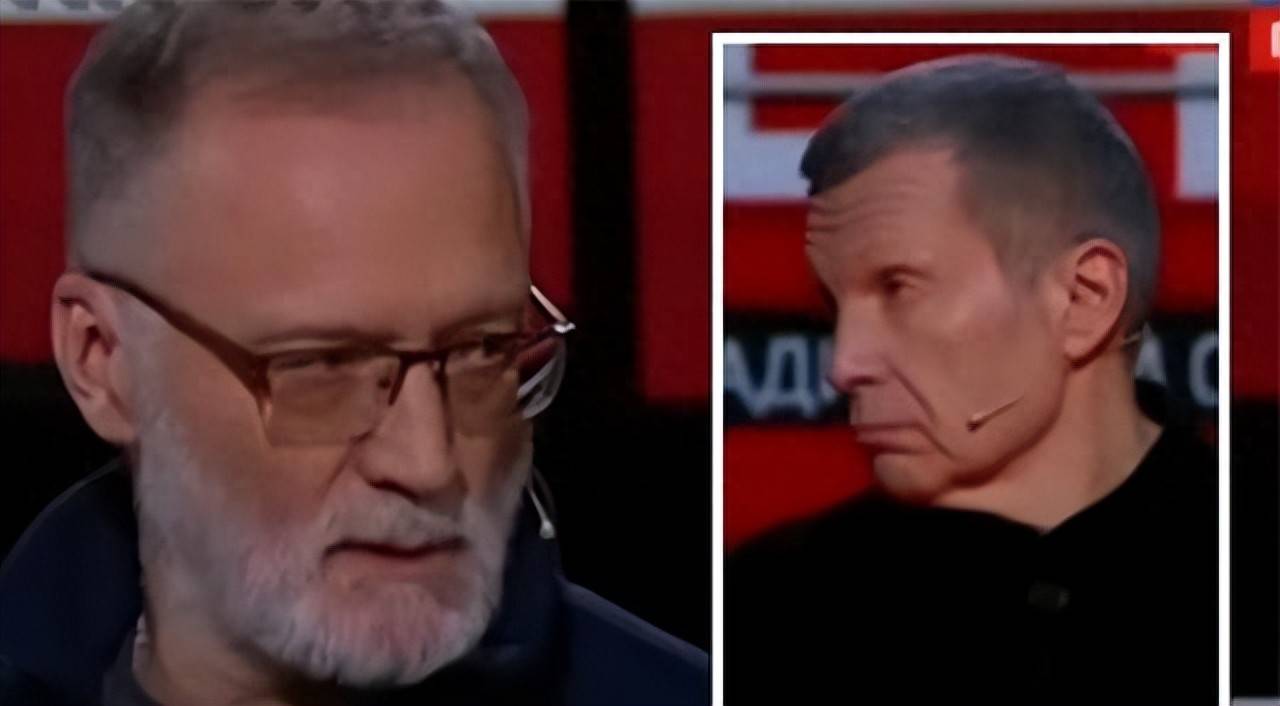
俄分析人士:若公投,大多数俄罗斯人会支持对欧洲和乌克兰核打击
Sou Hu Cai Jing· 2025-12-31 07:01
Group 1 - Russian political analyst Sergey Mikhayev suggested that a majority of Russians would support nuclear strikes against Europe and Ukraine if a national referendum were held, indicating a hardline stance that aims to pressure the West [1][5][7] - Mikhayev's comments coincided with a meeting between Trump and Zelensky discussing a peace framework, which raises concerns about the timing of such nuclear threats as a tactic to disrupt diplomatic efforts [3][7] - The Kremlin's strategy appears to be a dual approach of negotiating terms while simultaneously showcasing military strength, as evidenced by recent nuclear exercises and missile deployments in Belarus [5][6][7] Group 2 - Public opinion in Russia shows a significant shift, with only 25% supporting continued conflict and 66% favoring negotiations, indicating a growing war fatigue among the populace [2][5] - Mikhayev's rhetoric is seen as an attempt to rally domestic support and distract from internal dissatisfaction due to economic pressures and conscription issues [2][5][6] - The deployment of advanced missile systems in Belarus and the emphasis on nuclear deterrence are part of a broader strategy to assert military capability and influence European security dynamics [5][6]
俄分析人士称若公投,大多数俄罗斯人会支持对欧洲和乌克兰核打击
Sou Hu Cai Jing· 2025-12-29 17:54
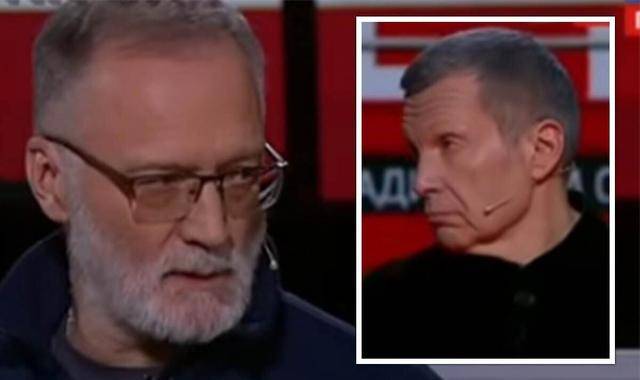
Group 1 - A Kremlin-loyal political analyst claimed that a majority of Russians would support nuclear strikes against Europe and Ukraine if a referendum were held, intensifying global alertness amid preliminary progress in U.S.-mediated peace talks [1][3] - The analyst, Sergey Mikhayev, described this extreme stance as reflecting the opinion of "most people" and urged efforts to instill fear of "disaster" to undermine the EU [1][3] - Mikhayev's statements align with the Russian state media's pattern of showcasing nuclear capabilities, with recent assessments indicating Moscow's advancement in deploying nuclear-capable hypersonic missiles in Belarus [3] Group 2 - Western and Ukrainian officials quickly condemned these remarks as provocative propaganda aimed at intimidation during a sensitive diplomatic period [5] - European leaders expressed renewed concern over reckless nuclear rhetoric, while security analysts noted that such broadcasts aim to prevent further aid to Kyiv and persuade the West that escalation would lead to global "disaster" [5] - Independent polling results starkly contrast Mikhayev's assertions, with a December survey showing only 25% of Russians supporting continued war, the lowest since 2022, and 66% favoring peace negotiations, the highest recorded [6]
匈牙利总理:欧盟动用俄被冻结资产无异于公开宣战
Yang Shi Xin Wen Ke Hu Duan· 2025-12-15 13:14
Core Viewpoint - The Hungarian Prime Minister Viktor Orbán emphasized the critical importance of the EU's upcoming decisions regarding the Russia-Ukraine conflict, stating that Europe is at a significant opportunity to support peace negotiations [1] Group 1: Hungary's Position - Hungary will not change its stance on not supporting the confiscation of frozen Russian assets, nor will it provide funding or weapons to Ukraine [1] - Hungary's government opposes the EU's approach of using frozen Russian assets to escalate the conflict, viewing it as a declaration of war that would provoke retaliation from Russia [1] Group 2: EU Actions - The EU Council announced on December 12 that it will indefinitely freeze Russian assets within the EU [1] - At the upcoming EU summit on December 18, leaders will discuss using frozen Russian assets as collateral for "compensation loans" to meet Ukraine's financial and military needs over the next two years [1] Group 3: Russian Response - The Russian Foreign Ministry spokesperson Maria Zakharova stated that the EU's illegal freezing of Russian assets will prompt swift retaliatory measures from Russia [1]
盟友反目?接连被特朗普点名批评后,欧洲将如何应对
第一财经· 2025-12-10 07:59
Core Viewpoint - The article discusses the escalating tensions between the United States and Europe, particularly in light of President Trump's criticisms of European governance and security issues, and the responses from European leaders [3][5][9]. Group 1: Trump's Criticism of Europe - President Trump criticized Europe as a "declining" region with "weak" leadership, particularly highlighting issues related to immigration management [3][5]. - Trump's comments included specific criticisms of European countries, such as labeling Sweden as "very unsafe" and questioning the effectiveness of Ukrainian President Zelensky in peace negotiations with Russia [7]. Group 2: European Response - European leaders, including European Council President António Costa, emphasized the need for mutual respect and cooperation between Europe and the U.S., urging Trump to recognize Europe as an ally [3][8]. - German Chancellor Merz rejected Trump's assertions, calling parts of the U.S. national security strategy "unacceptable," while EU foreign policy chief Kaja Kallas described the U.S. document as a "provocation" [9]. Group 3: Broader Context of U.S.-Europe Relations - The article notes that Trump's criticisms are part of a broader narrative from U.S. officials, including Vice President Vance, who previously stated that Europe's greatest threats are internal [9]. - The ongoing tensions raise questions about the future of U.S.-European alliances, with Trump suggesting that the status of these alliances may depend on specific circumstances [9].