海上封锁

Search documents
俄总统助理:西方试图瘫痪俄罗斯对外贸易
Yang Shi Xin Wen· 2026-02-17 08:53
Core Viewpoint - The statement from Russian officials indicates that Western actions against Russian merchant ships are perceived as attempts to cripple Russia's foreign trade, with NATO planning to blockade the Kaliningrad region and seize Russian vessels [1] Group 1: Russian Response to Western Actions - Russian officials assert that any attempt to impose a maritime blockade on Russia is completely illegal under international law [1] - The concept of a "shadow fleet" used by the EU against Russia is described as a "legal fiction" [1] - Moscow plans to respond initially through political, diplomatic, and legal mechanisms, with the Russian Navy prepared to eliminate threats if peaceful resolutions fail [1]
美国一航母打击群正被调往中东地区
第一财经· 2026-01-15 01:29
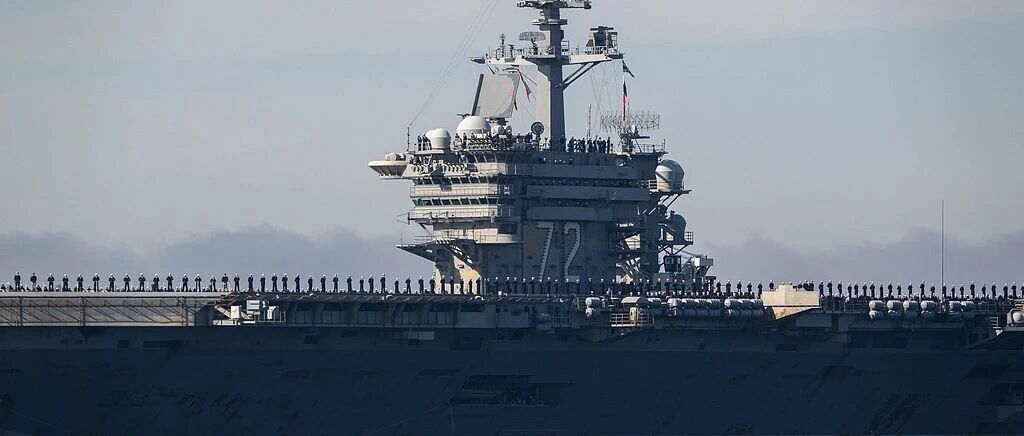
Group 1 - The "Abraham Lincoln" aircraft carrier strike group is being redeployed to the U.S. Central Command area, which is expected to take about a week to complete [2] - Currently, the U.S. Navy has only three aircraft carriers in deployment: the "Ford" carrier strike group is stationed in the Southern Command area for maritime blockade operations against Venezuela, the "Lincoln" carrier strike group is in the South China Sea, and the "Washington" carrier is resting at the Yokosuka base in Japan [3]

美媒:至少16艘油轮试图突破美国对委内瑞拉的海上封锁,其中4艘已离开委水域
Xin Lang Cai Jing· 2026-01-06 16:25
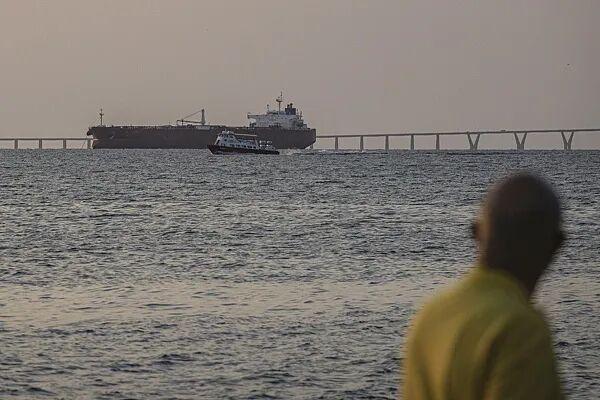
Core Viewpoint - At least 16 oil tankers attempted to breach the U.S. maritime blockade against Venezuela, with 4 tankers successfully leaving Venezuelan waters, utilizing methods such as disguising their real locations or turning off their transmission signals [1][3]. Group 1: Oil Tanker Movements - Satellite images indicate that the 16 oil tankers had been anchored in Venezuelan ports for several weeks before departing after the U.S. forcibly took control of President Maduro on March 3 [1]. - As of April 4, one of the oil tankers had traveled hundreds of kilometers away from Venezuela, heading northeast in the Atlantic Ocean, approximately 40 kilometers west of the Caribbean island of Grenada, and appeared to be unladen, allowing for a faster speed compared to the other three tankers [3]. - Twelve of the oil tankers have not transmitted any signals and have not been located in satellite images [3]. Group 2: U.S. Sanctions and Blockade - In December 2025, President Trump ordered a "comprehensive and thorough blockade" on all oil tankers subject to U.S. sanctions entering or leaving Venezuela, designating Maduro's government as a "foreign terrorist organization" [3]. - The U.S. aims to strengthen its military blockade until it regains all oil, land, and other resources previously taken by Venezuela, a move that has faced international condemnation [3].
多艘油轮突破美国封锁,离开委内瑞拉
中国能源报· 2026-01-06 04:33
Group 1 - At least 16 oil tankers attempted to break through the U.S. maritime blockade of Venezuela, with 4 successfully leaving Venezuelan waters [1] - The oil tankers used methods such as disguising their real locations or turning off their transmission signals to evade the blockade [1] - Satellite images indicate that these tankers had been docked in Venezuelan ports for weeks before departing after the U.S. took control of President Maduro [1] Group 2 - One of the oil tankers has traveled hundreds of kilometers away from Venezuela and is heading northeast in the Atlantic, located about 40 kilometers west of Grenada [1] - Another 12 tankers have not sent any signals and have not been located in satellite images [1] - Reports indicate that at least 4 tankers briefly stayed near the maritime border of Venezuela before leaving through a route north of Margarita Island [1]
多艘油轮突破美封锁离开委内瑞拉水域
Xin Hua She· 2026-01-05 15:46
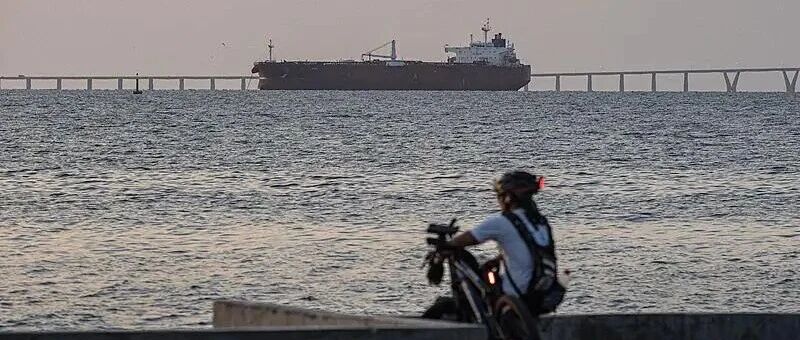
Core Viewpoint - At least 16 oil tankers attempted to breach the U.S. maritime blockade against Venezuela in the past two days, with satellite images indicating that 4 of these tankers have already left Venezuelan waters [1] Group 1 - A total of 16 oil tankers were involved in attempts to bypass the blockade [1] - Satellite imagery confirms that 4 oil tankers have successfully departed from Venezuelan waters [1]
爆料!俄罗斯深夜向美递交请求
Zhong Guo Ji Jin Bao· 2026-01-02 14:54
Group 1 - Russia has requested the U.S. to cease pursuit of the sanctioned oil tanker "Bella 1," which is heading to Venezuela [1] - The request was delivered to the U.S. State Department and the White House's Homeland Security Council on New Year's Eve [1] - The "Bella 1" has been tracked by the U.S. Coast Guard since December 21, when an attempt was made to board the vessel in the Caribbean [1] Group 2 - The crew of the "Bella 1" refused to comply with U.S. orders to return, leading to ongoing pursuit by the Coast Guard [1] - The U.S. government previously seized two tankers, "Captain" and "Century," in the Caribbean in December 2025 [1] - Russia's diplomatic intervention may complicate U.S. efforts to seize the tanker and could impact ongoing peace negotiations between Moscow and Kyiv [1] Group 3 - The U.S. has announced a maritime blockade against sanctioned tankers entering or leaving Venezuela, aiming to cut off the country's energy supply [1] - Experts suggest that Venezuela has the technical capabilities to withstand U.S. blockade efforts, indicating potential political motivations behind the U.S. actions [1]
爆料!俄罗斯深夜向美递交请求
中国基金报· 2026-01-02 14:50
Group 1 - Russia has formally requested the United States to cease its pursuit of the "Bella" oil tanker, which is under sanctions and was heading to Venezuela [2][3] - The request was delivered to the U.S. State Department and the White House's Homeland Security Council on New Year's Eve [3] - The "Bella" tanker has been under surveillance by the U.S. Coast Guard since December 21, when an attempt was made to board the vessel in the Caribbean [3][4] Group 2 - The U.S. has threatened to impose a maritime blockade on sanctioned oil tankers entering and exiting Venezuela, aiming to cut off the country's energy supply [5] - Experts suggest that Venezuela possesses the technical capabilities to counteract the U.S. blockade, indicating that the political calculations behind the U.S. actions may not succeed [5]

委内瑞拉国民议会通过反海盗法 违者可处20年监禁
Yang Shi Xin Wen· 2025-12-23 19:56
Core Viewpoint - The Venezuelan National Assembly has unanimously approved a law aimed at protecting navigation and trade from piracy, blockades, and other illegal international actions, responding strategically to current challenges faced by the country [1]. Group 1: Legislative Details - The law stipulates that individuals or entities involved in promoting, inciting, requesting, supporting, assisting, covering, financing, or participating in piracy or other illegal actions against commercial activities in Venezuela will face imprisonment of 15 to 20 years and fines [1]. - The legal basis for the law includes the United Nations Charter and the 1958 Geneva Convention on the High Seas, which defines piracy as any illegal violence, detention, or plunder against ships or aircraft in international waters [1]. Group 2: Context and Implications - The Venezuelan National Assembly views this law as a strategic response to safeguard the country's commercial routes and ensure the free flow of goods and services [1]. - This legislative action comes in the context of the United States implementing a "comprehensive maritime blockade" on oil transport vessels entering and leaving Venezuela, including the seizure of two oil tankers carrying Venezuelan oil [1].
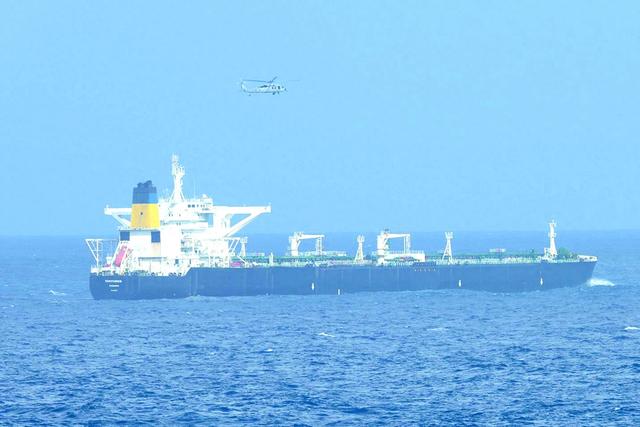
美追截第三艘“与委相关”油轮
Xin Lang Cai Jing· 2025-12-23 06:40
Core Viewpoint - The recent actions by the U.S. to intercept oil tankers near Venezuela signify a significant escalation in pressure against President Maduro's government, with multiple vessels being targeted in a short period [2][3][4]. Group 1: U.S. Actions - The U.S. Coast Guard intercepted the "Century" oil tanker on the morning of the 20th, which was carrying oil from a sanctioned Venezuelan oil company, despite not being on the U.S. sanctions list [4]. - The "Bella 1" tanker was pursued by U.S. personnel on the 21st while it was en route to Venezuela to load oil, but it was not carrying any cargo at the time of interception [3][4]. - The U.S. has identified other tankers transporting Venezuelan oil that may be targeted for interception, indicating a broader strategy to cut off Venezuela's oil exports [5][6]. Group 2: Venezuelan Response - President Maduro condemned the U.S. actions as "piratical acts" and indicated that the Venezuelan Navy would escort certain tankers, raising the potential for armed conflict at sea [3][7]. - Maduro's administration has been vocal about resisting U.S. pressures, claiming to be prepared for a "deep revolution" in response to perceived threats [7][8]. Group 3: International Reactions - Colombian President Petro opposed the U.S. maritime blockade, suggesting a multilateral agreement to combat drug trafficking instead of targeting Venezuela [8]. - Cuban Foreign Minister Rodríguez criticized the U.S. for violating international law and suggested that the true aim of the U.S. actions is to exploit Venezuela's natural resources through military aggression [8].
突发!美国,发动袭击!特朗普,重大威胁!
券商中国· 2025-12-19 12:56
Core Viewpoint - The article discusses the escalating tensions between the United States and Venezuela, highlighting President Trump's threats of potential military action against Venezuela and recent military operations by the U.S. Navy in the region [2][3][5]. Military Actions - On December 18, the U.S. Southern Command reported that the "Southern Sword" joint task force conducted strikes against two vessels identified as terrorist organizations, resulting in the deaths of five individuals [2][3]. - The U.S. military has been actively deploying naval forces in the Caribbean Sea under the pretext of drug enforcement, with multiple operations targeting alleged drug trafficking vessels since early September [3][5]. Air Operations - On December 18, at least five U.S. Navy F-18 fighter jets were tracked flying in the Caribbean, with some flight paths coming within 100 kilometers of Caracas, the capital of Venezuela [4]. - Additionally, two U.S. military aircraft equipped with long-range radar capabilities were present in the area, indicating heightened surveillance and potential operational coordination [4]. Venezuelan Response - Venezuelan President Maduro condemned the U.S. actions, labeling them as acts of piracy and calling for the American public to oppose U.S. military aggression and interference in South America [6][7]. - Maduro emphasized Venezuela's commitment to economic sovereignty and the continuation of international trade, despite U.S. sanctions and military threats [6]. Geopolitical Implications - Analysts suggest that the U.S. military's actions and the rhetoric surrounding them could set a dangerous precedent for regional stability and international maritime security, potentially impacting global oil markets [7].