
固态电池技术创新

Search documents
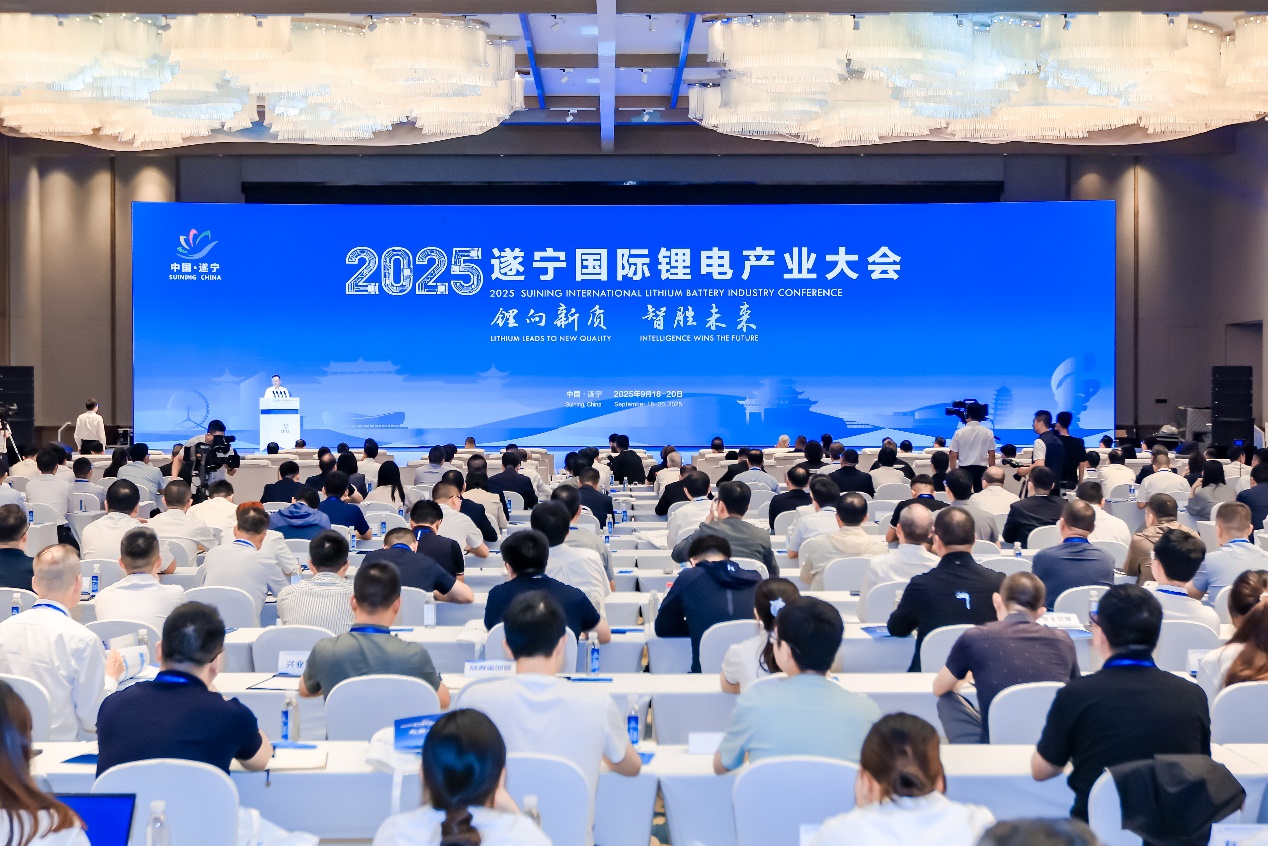
共探锂电产业高质量发展之路 2025遂宁国际锂电产业大会召开
Zhong Guo Qi Che Bao Wang· 2025-09-22 09:10
Core Insights - The penetration rate of new energy vehicles in China reached a historic high of 55.3% in August 2023, driven by the robust growth of the lithium battery industry [1] - The lithium battery industry is undergoing unprecedented restructuring as it transitions to a high-quality development phase, with a focus on enhancing safety, energy density, longevity, and cost efficiency [3][5] Lithium Battery Industry Development - The lithium battery industry has evolved from having an industrial advantage to a strategic advantage, establishing the most complete and dynamic supply chain globally [3] - From January to August 2023, China's production of power and other batteries reached 623.1 GWh, marking a year-on-year increase of 36.3% [3] - The industry is entering a critical phase of quality and efficiency improvement, with a shift from scale advantages to prioritizing quality and efficiency [3] Raw Material Supply and Challenges - The supply system for lithium battery resources has become more diversified and stable, with domestic lithium resource development expected to reach 300,000 tons (LCE) in 2024, a 28% increase year-on-year [5] - Despite being the largest producer and exporter of lithium batteries, the industry faces significant challenges, including lack of coordination in the supply chain and environmental concerns [5][6] Solid-State Battery Development - Solid-state batteries are a key focus for the lithium battery industry, with ongoing challenges in scaling up production due to technical issues such as interface problems and material stability [7][9] - The cost of solid-state battery materials is currently high, with solid electrolytes priced around 10 million yuan per ton, expected to decrease to 2-4 million yuan per ton by 2027 [9] Market Expansion Strategies - Lithium battery companies are seeking new growth avenues through exports and diversification into new markets, with exports of power and other batteries reaching 106.0 GWh from January to August 2023, a 23% increase [11][13] - Companies like Ruipu Lanjun are expanding into international markets, establishing subsidiaries in the U.S., Germany, and Southeast Asia, while also exploring new applications in sectors like eVTOL and robotics [13][14] Future Development Directions - The industry is encouraged to strengthen overall planning, enhance safety standards, and promote technological innovation, particularly in solid-state and sodium-ion batteries [15] - There is a call for international cooperation to align strategic resources and policies, guiding the global expansion of lithium battery enterprises [15]

南都电源:公司与太蓝、雅迪等签署战略合作协议
Zheng Quan Ri Bao Zhi Sheng· 2025-09-17 08:12
Core Viewpoint - The company Nandu Power has signed strategic cooperation agreements with TaiLan and Yadi to leverage their respective R&D platforms for joint technology development and commercialization of solid-state battery technology [1] Group 1: Strategic Cooperation - The agreements aim to integrate leading technological research capabilities through collaboration on key projects [1] - The parties will utilize their resource, industry, and production advantages to promote the large-scale application of solid-state batteries in energy storage and consumer sectors [1] Group 2: Technology Innovation - The focus will be on advancing solid-state battery technology innovation, application, and product iteration [1] - The collaboration will involve independent planning, industry-driven initiatives, and resource exchanges to enhance the synergy within the industry chain [1]


容百科技一项固态电池专利获授权 攻克了全固态电池高温循环稳定性难题
Zheng Quan Shi Bao Wang· 2025-08-14 02:05
Core Viewpoint - Rongbai Technology has recently received authorization for a patent focused on cathode composite coating technology, addressing the high-temperature cycling stability challenge in all-solid-state batteries [1] Group 1 - The patent number for the newly authorized invention is ZL202410843447.9 [1] - The innovation represents a significant breakthrough in material innovation for the company [1] - The technology specifically targets the stability issues associated with high-temperature cycling in all-solid-state batteries [1]

创新制造技术实现全固态电池量产——记山东省技术发明一等奖高比能、高安全性锂二次电池材料开发与应用
Zhong Guo Hua Gong Bao· 2025-08-04 06:05
Core Viewpoint - The project on high energy density and high safety lithium secondary battery materials, developed by China University of Petroleum (East China) and Shanghai Space Power Research Institute, has won the first prize in technological invention at the Shandong Provincial Science and Technology Awards due to its breakthroughs in lithium secondary battery materials [1] Group 1: Industry Context - The rapid development of sectors such as new energy vehicles and aerospace has raised higher demands for the energy density and safety of lithium secondary batteries [1] - China's strategic planning for new energy and major aerospace projects indicates that future battery energy density needs to exceed 500 watt-hours per kilogram, while current traditional lithium-ion batteries are nearing the theoretical limit of 350 watt-hours per kilogram [1] Group 2: Technological Innovations - The project team has developed a local metastable controllable construction technology to optimize ion transport channels, resulting in an oxide solid electrolyte with an ionic conductivity of 3.6 millisiemens per centimeter and an electrochemical window greater than 6.0 volts [2] - A new conjugated framework electrolyte system was created to stabilize the solid/solid interface, achieving a lithium ion transfer number of 0.839 and lithium stability exceeding 10,500 hours [2] - The team invented a stepwise interface construction technology for electrode sheets, which significantly reduced the interface resistance of solid-state batteries by 90%, achieving a volumetric energy density of 1,070 watt-hours per liter, nearly double that of commercial lithium batteries [3] Group 3: Achievements and Recognition - The project has authorized 30 invention patents and published 134 SCI papers, with team members receiving multiple honors including the National "Outstanding Youth" Fund and "Ten Thousand Talents Plan" for technological innovation leadership [3]
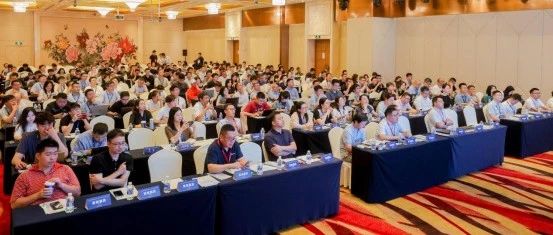
2025(第三届)中国固态电池技术发展与市场展望高峰论坛会议报道
鑫椤锂电· 2025-07-10 09:29
Core Viewpoint - The solid-state battery industry is experiencing significant growth, with production expected to reach 5.1 GWh in 2024 and 29.2 GWh by 2028, driven by technological advancements and the demand for sustainable energy solutions [1]. Solid-State Battery Technology Latest Developments - The engineering challenges of all-solid-state batteries include high interfacial resistance and sensitivity to air and moisture, with strategies such as controlling particle size and surface coating being explored to enhance performance [5][7]. - The industry trend is shifting towards solid-state batteries, which require external stress to address interfacial contact issues, and the adoption of soft-pack structures is recommended to avoid mechanical failures [7]. - Innovations in materials include the development of lithium-rich manganese-based cathodes and silicon-based anodes, with companies achieving significant production capabilities [9][11]. - Sulfide solid electrolytes have seen advancements, with companies achieving production scales of over 100 kg and plans for larger production lines by 2025 [13][15]. Solid-State Battery Processing Innovations - Companies are addressing technical challenges such as interfacial resistance and compatibility with conventional materials through various innovative processing techniques [23][25][27]. Market Application Prospects - Solid-state batteries are expected to have broad applications in power and energy storage sectors, with potential mass production starting in 2027 [29]. - In consumer electronics and low-altitude aircraft, solid-state batteries are favored for their lightweight and high energy density, making them suitable for drones and safety-critical devices [31]. Solid-State Battery Industry Chain Development - The localization of key materials is accelerating, with companies focusing on the industrialization of high-purity lithium sulfide for solid electrolyte production [33]. - Collaboration between enterprises and academic institutions is deepening, enhancing the development of materials for solid-state batteries [35]. Future Outlook and Challenges - Continuous innovation in solid-state battery technology is crucial for commercial application, with expectations for improvements in energy density, safety, and cycle life [38]. - The collaborative development of the solid-state battery industry chain is essential for its healthy growth, requiring coordination across all production stages [39]. - Challenges such as high material costs and complex production processes remain, with experts suggesting strategies like enhancing basic research and optimizing production methods to address these issues [40]. Conclusion - The successful forum highlighted the importance of collaboration and innovation in the solid-state battery sector, indicating a promising future for this technology in energy storage applications [44].
固态电池板块更新及推荐
2025-05-13 15:19
Summary of Solid-State Battery Sector Update and Recommendations Industry Overview - The solid-state battery sector is experiencing heightened interest due to technological innovations, particularly following the announcement of sulfide patents and industry conferences, which catalyze market movements and liquidity premiums [1][2][3] - The focus of solid-state battery technology is increasingly narrowing, with sulfide solid electrolytes viewed as the ultimate direction, complemented by halide doping [1][3][4] Key Developments in Technology - Solid-state battery applications are expanding from automotive power batteries to energy storage, consumer electronics, power tools, low-altitude aircraft, and robotics, indicating a rich demand side that supports growth [1][5] - Major automotive companies are making significant advancements in solid-state battery development, with Stellantis planning to test a 77 Ah solid-state cell by 2026, and Toyota targeting production of next-generation electric vehicles by 2025 [3][12] - Domestic automakers are also set to introduce semi-solid and solid-state batteries, with SAIC's Zhiji L7/LS7 models marking the beginning of large-scale shipments [3][13] Investment Focus Areas - Investment in the solid-state battery sector should concentrate on three main areas: materials (focusing on sulfide systems like Xiamen Tungsten and CATL), batteries (including major manufacturers and second-tier firms in consumer electronics), and equipment (focusing on dry process routes like Naconor and Mannesmann) [1][6][20] - High-nickel ternary cathode materials are expected to dominate in the medium term, while lithium-rich manganese-based materials are anticipated for the long term [4][7] Recent Trends and Future Outlook - The solid-state battery industry is projected to reach nearly 100 GWh in capacity planning, but the investment required for solid-state batteries is significantly higher than for liquid batteries, with costs estimated at over 500 million yuan per GWh [18] - The industry is expected to see a definitive growth year in 2025, although the trend of reducing equipment costs may take one to two years to materialize [18][19] Emerging Technologies and Products - Recent advancements in negative electrode materials have transitioned from traditional graphite to silicon-carbon and now to lithium metal, with CATL introducing self-generating lithium metal technology [8][16] - Solid-state battery technology is rapidly evolving, with brands like OnePlus and Vivo beginning to evaluate silver polymer or semi-solid battery products for performance [17] Noteworthy Companies and Recommendations - Companies such as New Energy, Better Battery, and Guoxuan have recently launched new products, with a consensus that sulfide is the ultimate form, while transitional routes will be more compatible with current lithium-ion systems [19] - Recommended companies to watch include those in the Qingneng, Weilan, and Tailan systems, as well as upstream material companies like Tian Nai Technology and Dao Shi Technology, and high-nickel ternary material companies like Xiamen Tungsten New Energy and Rongbai Technology [20][21]
