
安理会改革

Search documents
中方重申:日本根本没有资格要求成为安理会常任理事国
Zhong Guo Xin Wen Wang· 2026-01-22 00:10
Core Viewpoint - China asserts that Japan has no qualifications to demand a permanent seat on the UN Security Council, citing historical grievances and Japan's current political stance as reasons for this position [1][2]. Group 1: Historical Context - The UN Security Council is described as the core of the international collective security mechanism, essential for maintaining post-war international order and peace [2]. - The Tokyo Trials, which began in January 1946, are highlighted as a significant event that punished Japanese war criminals and upheld international justice [2]. - Japan's militarism is said to have not been fully addressed, with current right-wing elements in Japan attempting to revise historical narratives and deny past atrocities such as the Nanjing Massacre and the comfort women issue [2]. Group 2: Current Political Climate - Recent actions by Japanese leaders, including statements regarding Taiwan and nuclear armament, are viewed as indications of a resurgence of militarism, posing new threats to regional and global peace [2]. - The Chinese representative emphasizes that a country that does not acknowledge its historical crimes and challenges the post-war international order cannot be trusted to maintain international peace and security [2]. Group 3: Reform of the Security Council - China supports necessary and reasonable reforms of the Security Council to enhance its authority and efficiency, with a focus on increasing the representation and voice of developing countries [3]. - The need to address historical injustices faced by Africa is highlighted, with a call for special arrangements to prioritize African demands [3]. - There is a growing consensus among member states to enhance the representation of cross-regional groups, moving away from a lifetime selection model and being open to regional and rotating seats [3].
中方重申:日本根本没有资格“入常”,其对历史罪行不知悔改,公然践踏战后国际秩序,无法取信于国际社会
Xin Lang Cai Jing· 2026-01-21 23:41
Group 1 - The core viewpoint of the article is that Japan, due to its historical actions and lack of remorse, is deemed unqualified to assume the responsibilities of maintaining international peace and security, and therefore should not be allowed to become a permanent member of the UN Security Council [1]. Group 2 - The Chinese representative at the UN criticized Japan for not acknowledging its historical crimes and violating basic principles of international relations [1]. - The statement emphasizes that Japan's actions challenge the outcomes of World War II and undermine the post-war international order [1]. - The representative argues that Japan cannot be trusted by the international community due to its historical stance [1].

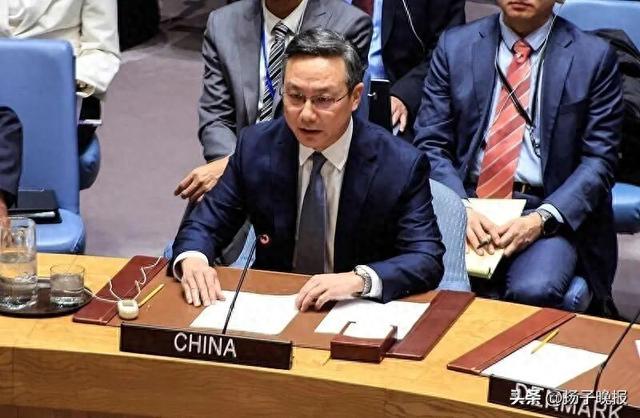
中方重申:日本根本没资格要求“入常”!
Xin Lang Cai Jing· 2026-01-21 23:39
Core Viewpoint - Japan is deemed unqualified to assume responsibilities for maintaining international peace and security, and to be a permanent member of the UN Security Council due to its historical actions and current political stance [2][3][6][7]. Group 1: Historical Context - The UN Security Council is described as the core of the international collective security mechanism, crucial for maintaining post-war international order and peace [2][6]. - The Tokyo Trials, which took place 80 years ago, served to punish Japanese war criminals and uphold international justice, acting as a strong warning against the resurgence of militarism and expansionist ambitions [2][6]. Group 2: Current Political Climate - Japanese right-wing forces are accused of beautifying their invasion history and denying historical atrocities such as the Nanjing Massacre and the forced conscription of "comfort women" and laborers [2][6]. - Current Japanese leaders have been noted for visiting the Yasukuni Shrine, a symbol of militarism, and for making provocative statements regarding Taiwan and nuclear policies, indicating a push towards re-militarization [2][6][7]. Group 3: China's Position - China, as a permanent member of the Security Council, expresses its commitment to defending the outcomes of World War II and the post-war international order, advocating for unity and constructive roles in maintaining international peace [3][7]. - China supports necessary and reasonable reforms of the Security Council to enhance its authority and efficiency, emphasizing the importance of increasing the representation and voice of developing countries [3][7].

中方重申:日本根本没有资格要求“入常”
Xin Hua She· 2026-01-21 23:05
Group 1 - The core argument presented is that Japan is unqualified to assume responsibilities for maintaining international peace and security, and thus lacks the credibility to seek a permanent seat on the UN Security Council [1][2] - The UN Security Council is described as the core of the international collective security mechanism, with a special mission to uphold the post-war international order and safeguard international peace and security [1] - Historical context is provided, highlighting the Far East International Military Tribunal and the Tokyo Trials, which served to punish Japanese war criminals and uphold international justice, warning against the resurgence of militarism [1] Group 2 - Japan's right-wing forces are accused of beautifying its invasion history and denying historical atrocities, such as the Nanjing Massacre and the forced recruitment of "comfort women" [1][2] - The statement emphasizes that a country that does not repent for historical crimes and challenges the outcomes of World War II cannot be trusted to maintain international peace and security [2] - China expresses its willingness to work with all peace-loving nations to defend the outcomes of World War II and the post-war international order, while supporting necessary reforms to enhance the representation and voice of developing countries in the Security Council [2]
中方重申:日本根本没有资格“入常”
Yang Shi Xin Wen Ke Hu Duan· 2026-01-21 20:11
Core Viewpoint - The Chinese representative at the UN criticized Japan for its historical actions and stated that Japan is unqualified to be a permanent member of the Security Council due to its failure to acknowledge past crimes and its challenge to the post-war international order [1] Group 1 - The Chinese representative emphasized that Japan's lack of remorse for historical crimes undermines its credibility in maintaining international peace and security [1] - The statement highlighted that Japan's actions violate fundamental principles of international relations [1] - It was asserted that Japan's behavior challenges the outcomes of World War II and the established post-war international order [1]
中方:日本根本没资格“入常”
证券时报· 2025-11-19 09:03
Group 1 - The core viewpoint of the article emphasizes that Japan's recent statements regarding Taiwan are seen as a serious violation of China's sovereignty and a challenge to international justice, undermining the post-war international order [1][2] - The article highlights that this year marks the 80th anniversary of the victory in the Second Sino-Japanese War and the liberation of Taiwan, underscoring Japan's historical aggression and colonial rule during World War II [1] - It is noted that Japan continues to face criticism for its failure to acknowledge its wartime atrocities, including the denial of events such as the Nanjing Massacre and the issue of "comfort women," which reflects a broader trend of historical revisionism [1][2] Group 2 - The article points out that Japan's Prime Minister, Fumio Kishida, has invoked the concept of a "survival crisis," raising concerns about a potential return to militarism, which is viewed as a threat to peace [2] - China warns Japan to cease its interference in domestic affairs and to refrain from provocative actions regarding Taiwan, stating that any military intervention would be considered an act of aggression [2] - The article asserts that China will firmly exercise its right to self-defense as granted by the UN Charter and international law to protect its sovereignty and territorial integrity [2]
中方:日本根本没资格“入常”!
Xin Hua She· 2025-11-19 06:05
Core Viewpoint - The Chinese permanent representative to the United Nations, Fu Cong, stated that Japan has no qualifications to demand a permanent seat on the UN Security Council [1] Group 1 - Fu Cong criticized Japanese Prime Minister Fumio Kishida's remarks regarding Taiwan as extremely erroneous and dangerous, asserting that they grossly interfere in China's internal affairs [1] - He emphasized that Japan's actions violate the principles of one China and the spirit of the four political documents between China and Japan [1] - Fu Cong described Japan's stance as a provocation against international justice and a disruption of the post-war international order, undermining fundamental principles of international relations [1]
中国代表:安理会改革要维护政府间谈判主渠道地位
Xin Hua She· 2025-11-19 03:01
Core Viewpoint - The Chinese representative at the United Nations emphasized the importance of intergovernmental negotiations as the only authorized platform for discussing Security Council reforms, highlighting its role in building consensus among member states [1] Group 1 - Intergovernmental negotiations have played an irreplaceable role in promoting consensus and reducing differences among member states over the years [1] - A few countries are openly challenging the authority of intergovernmental negotiations for their own political needs, which undermines the consensus of member states [1] - The Chinese government firmly opposes any attempts to force member states to take sides or abandon in-depth discussions on Security Council reforms [1]
中国代表:日本根本没有资格要求成为安理会常任理事国
21世纪经济报道· 2025-11-19 00:26
Core Viewpoint - The Chinese representative to the United Nations, Fu Cong, stated that Japan has no qualifications to demand a permanent seat on the UN Security Council due to its recent actions and statements regarding Taiwan [1]. Group 1 - Fu Cong criticized Japanese Prime Minister Fumio Kishida's remarks on Taiwan as extremely erroneous and dangerous, constituting a gross interference in China's internal affairs [1]. - The comments made by Japan are seen as a serious violation of the One China principle and the spirit of the four political documents between China and Japan [1]. - Fu Cong emphasized that Japan's actions represent a provocation against international justice and a disruption of the post-war international order, undermining the basic norms of international relations [1].
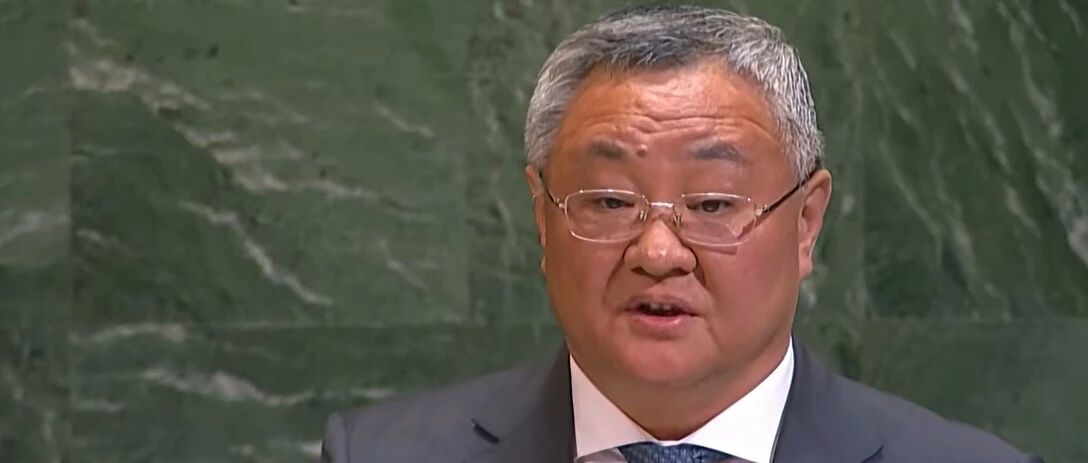
中国代表:日本根本没有资格要求成为安理会常任理事国
Xin Hua She· 2025-11-18 23:30
Core Viewpoint - China's permanent representative to the United Nations, Fu Cong, stated that Japan has no qualifications to demand a permanent seat on the UN Security Council [1] Group 1: Japan's Position - Fu Cong criticized Japanese Prime Minister Fumio Kishida's remarks regarding Taiwan as extremely erroneous and dangerous, asserting that they grossly interfere in China's internal affairs [1] - He emphasized that such actions violate the principles of one China and the spirit of the four political documents between China and Japan [1] Group 2: International Relations - The comments made by Japan are viewed as a provocation against international justice and a disruption of the post-war international order [1] - Fu Cong highlighted that Japan's stance undermines the basic principles of international relations and blatantly contradicts its commitment to a peaceful path [1]