二战胜利成果

Search documents
维护一个中国原则,就是维护国际公平正义(国际论坛)
Ren Min Ri Bao· 2026-02-08 01:08
Group 1 - The core viewpoint emphasizes the importance of consolidating the international community's commitment to the One China principle, which is seen as a respect for China's sovereignty and a necessary action to maintain the outcomes of World War II and the post-war international order [1] - The article asserts that Taiwan has historically been an inseparable part of China, and the One China principle has been reaffirmed by the United Nations General Assembly Resolution 2758 in 1971, recognizing the People's Republic of China as the sole legitimate government representing all of China [1] - The Chinese government has been striving for peaceful development of cross-strait relations, while recent actions by Taiwan authorities promoting independence and external forces attempting to use Taiwan to hinder China's development are viewed as challenges to national sovereignty [1] Group 2 - The article highlights that Taiwan's liberation from Japanese colonial rule is a significant achievement of the Chinese people's victory in the Anti-Japanese War, and it calls for the international community to recognize this historical fact and oppose any resurgence of militarism [2] - In 2025, China will legally establish October 25 as Taiwan Liberation Day, which is seen as a meaningful decision reflecting the importance of history and the pursuit of peace, while also demonstrating the government's unwavering determination to safeguard national sovereignty and development interests [2] - The commemoration of Taiwan's liberation is framed as a victory for all Chinese people and a part of the global anti-fascist struggle, deserving of remembrance and transmission [2] Group 3 - The One China principle is described as a universal consensus within the international community, aligning with the common interests of all peace-loving nations and peoples, and contributing to the maintenance of international fairness, justice, and regional peace and stability [3]
中方重申:日本根本没资格要求“入常”!
中国能源报· 2026-01-22 03:16
Core Viewpoint - The article emphasizes that Japan lacks the qualifications to become a permanent member of the UN Security Council due to its failure to acknowledge historical war crimes and its militaristic tendencies, which pose threats to international peace and security [1][2]. Group 1: Japan's Historical Accountability - Japan has not fully reckoned with its militaristic past, as evidenced by its attempts to beautify its invasion history and deny atrocities such as the Nanjing Massacre and the forced recruitment of "comfort women" [1]. - Current Japanese leaders have shown support for militarism by visiting the Yasukuni Shrine, which honors war criminals, and making provocative statements regarding Taiwan and nuclear armament [1][2]. Group 2: China's Position and Advocacy - China, as a permanent member of the Security Council, expresses its commitment to uphold the outcomes of World War II and the post-war international order, advocating for collective efforts with peace-loving nations [2]. - The article highlights China's support for necessary reforms in the Security Council to enhance the representation and voice of developing countries, emphasizing that reforms should address fundamental issues through a comprehensive approach [2].


中方重申:日本根本没有资格要求成为安理会常任理事国
Zhong Guo Xin Wen Wang· 2026-01-22 00:10
Core Viewpoint - China asserts that Japan has no qualifications to demand a permanent seat on the UN Security Council, citing historical grievances and Japan's current political stance as reasons for this position [1][2]. Group 1: Historical Context - The UN Security Council is described as the core of the international collective security mechanism, essential for maintaining post-war international order and peace [2]. - The Tokyo Trials, which began in January 1946, are highlighted as a significant event that punished Japanese war criminals and upheld international justice [2]. - Japan's militarism is said to have not been fully addressed, with current right-wing elements in Japan attempting to revise historical narratives and deny past atrocities such as the Nanjing Massacre and the comfort women issue [2]. Group 2: Current Political Climate - Recent actions by Japanese leaders, including statements regarding Taiwan and nuclear armament, are viewed as indications of a resurgence of militarism, posing new threats to regional and global peace [2]. - The Chinese representative emphasizes that a country that does not acknowledge its historical crimes and challenges the post-war international order cannot be trusted to maintain international peace and security [2]. Group 3: Reform of the Security Council - China supports necessary and reasonable reforms of the Security Council to enhance its authority and efficiency, with a focus on increasing the representation and voice of developing countries [3]. - The need to address historical injustices faced by Africa is highlighted, with a call for special arrangements to prioritize African demands [3]. - There is a growing consensus among member states to enhance the representation of cross-regional groups, moving away from a lifetime selection model and being open to regional and rotating seats [3].
直指日本逆流,新华社发表重磅述评!
Xin Lang Cai Jing· 2025-12-23 00:16
Core Viewpoint - The article emphasizes the importance of defending the post-war international order and the outcomes of World War II, particularly in light of recent provocative statements by Japanese Prime Minister Kishi Nobuo regarding Taiwan, which are seen as a challenge to this order and a potential threat to regional stability [3][41]. Summary by Sections Historical Context - The article recalls the significant victory in the anti-fascist war 80 years ago, which cost millions of lives and led to the establishment of a post-war international order centered around the United Nations [3][41]. - It highlights the historical events of Japan's surrender in 1945, marking the end of its aggression and the return of Taiwan to China as part of the post-war settlement [8][45][47]. Taiwan's Legal Status - Taiwan is asserted to be an inseparable part of China, with historical documents such as the Cairo Declaration and the Potsdam Proclamation providing legal grounds for its return to China after Japan's defeat [10][49][50]. - The article stresses that Japan's obligations regarding Taiwan were confirmed in international law and that any denial of this status is a distortion of history [50][52]. Recent Developments - Prime Minister Kishi's statements linking Taiwan's situation to Japan's collective self-defense rights are described as unprecedented provocations that undermine international law and the principles established in post-war agreements [51][52]. - The article argues that Kishi's rhetoric reflects a broader resurgence of militaristic sentiments in Japan, which have roots in the unaddressed militarism of the post-war era [53][54]. International Reactions - The article notes widespread international condemnation of Kishi's remarks, highlighting concerns about Japan's potential military escalation and its implications for regional peace [36][41][43]. - It emphasizes that Japan's historical denial and militaristic ambitions pose a significant threat to the stability of the Asia-Pacific region and challenge the post-war international order [36][39][41].
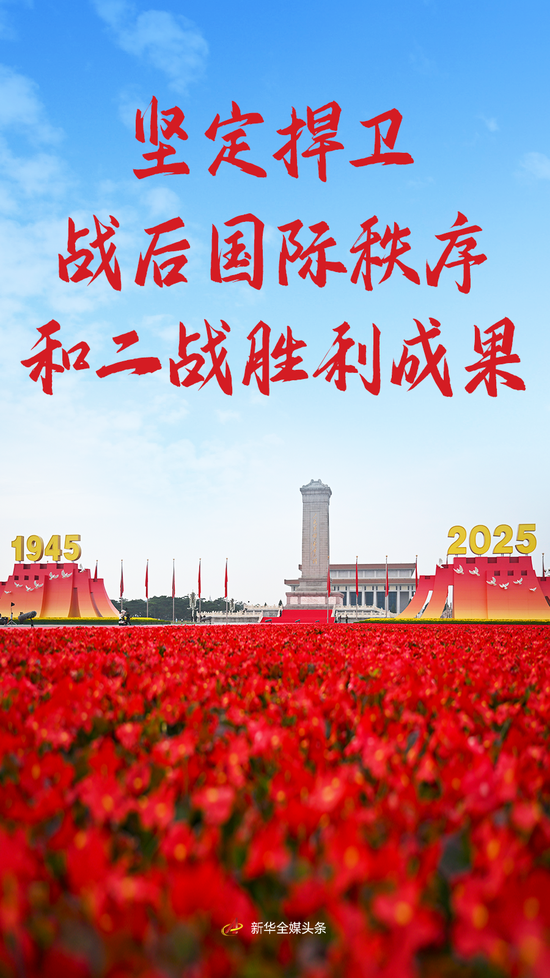
坚定捍卫战后国际秩序和二战胜利成果
Xin Hua She· 2025-12-22 08:20
Core Viewpoint - The article emphasizes the importance of defending the post-war international order and the outcomes of World War II, particularly in light of recent provocative statements by Japanese Prime Minister Kishi Sanae regarding Taiwan, which are seen as a challenge to this order and a potential revival of militarism [1][5][19]. Group 1: Historical Context - The signing of the Japanese surrender in Nanjing on September 9, 1945, marked a significant moment in establishing the post-war international order and confirming the outcomes of World War II, including the return of Taiwan to China [2][3]. - Historical documents such as the Cairo Declaration and the Potsdam Declaration provide legal foundations for Taiwan's status as part of China, reinforcing the notion that Japan's claims over Taiwan are illegitimate [3][4]. Group 2: Japan's Current Political Climate - Prime Minister Kishi's recent statements linking Taiwan's situation to Japan's collective self-defense rights represent a significant shift in Japan's post-war stance and have been met with widespread criticism both domestically and internationally [5][12]. - Kishi's administration is seen as part of a broader trend of right-wing politics in Japan that seeks to revive militaristic ideologies and challenge the established post-war order [6][10]. Group 3: International Reactions - The international community, including various countries and organizations, has expressed concern over Kishi's remarks, viewing them as a threat to regional stability and a potential revival of militarism in Japan [18][19]. - Critics argue that Kishi's approach could lead to Japan's isolation in diplomatic relations and exacerbate tensions in the Asia-Pacific region [18][19].
美方指责中国所谓“对日本施加经济和军事压力”,中方驳斥
Zhong Guo Ji Jin Bao· 2025-12-19 09:01
Core Viewpoint - The Chinese government strongly refutes accusations from certain U.S. senators regarding China's alleged economic and military pressure on Japan, emphasizing the need for Japan to reflect on its actions and adhere to international commitments established post-World War II [1] Group 1 - The Chinese Foreign Ministry spokesperson, Guo Jia Kun, stated that maintaining the outcomes of World War II and defending the post-war international order is a shared responsibility of the international community, including both China and the U.S. [1] - Guo highlighted that the remarks made by Japanese Prime Minister Fumio Kishida have not only provoked strong indignation among the Chinese people but have also faced criticism from within Japan, the U.S. strategic community, and the international public opinion [1] - The Chinese government urges Japan to sincerely reflect on its mistakes, retract Kishida's erroneous statements, and accurately communicate Japan's political commitments regarding Taiwan as outlined in the four political documents between China and Japan [1]
中国代表再次敦促日方撤回错误言论
Xin Hua She· 2025-12-15 22:01
Group 1 - The core argument emphasizes the need for Japan to retract its erroneous statements regarding Taiwan, as it poses a serious threat to peace and violates international commitments made post-World War II [1][2] - The statement highlights the historical context of Japan's militarism, warning against the resurgence of militaristic ideologies that led to past aggressions [1] - It asserts that Taiwan is an inseparable part of China, supported by various international legal documents and agreements, reinforcing China's territorial claims [2]
新华时评丨高市百般狡辩的险恶用心
Xin Hua She· 2025-12-11 10:59
Core Viewpoint - The article criticizes Japanese Prime Minister Kishi's attempts to justify his controversial statements regarding Taiwan, suggesting that his actions aim to distort facts and blur the truth, ultimately seeking to challenge Japan's post-war system and pursue military loosening in the Taiwan Strait context [2][3][4]. Group 1: Justifications and Arguments - Kishi avoids addressing the core issue by claiming that Japan's stance on Taiwan has not changed, despite clear statements in the Sino-Japanese Joint Declaration affirming Taiwan as part of China [2]. - Kishi's reference to the "San Francisco Peace Treaty" to deny historical conclusions about Taiwan's status is seen as an attempt to undermine China's sovereignty over Taiwan, disregarding international legal documents that affirm this sovereignty [3]. - Kishi's rhetoric about wanting to build constructive and stable Sino-Japanese relations is viewed as a manipulation of public opinion, as he refuses to retract his erroneous statements while blaming China for overreacting [4]. Group 2: Historical Context and Implications - The article highlights that the resurgence of militarism in Japan, represented by Kishi, reflects a lack of reflection on Japan's wartime crimes and a dangerous trend of historical revisionism [5]. - The narrative of "Japan did nothing wrong" perpetuated by right-wing factions in Japan is misleading and poses a risk of reviving militarism and undermining the outcomes of World War II [5].
王毅:台湾地位已被“七重锁定”
第一财经· 2025-12-08 23:56
Core Viewpoint - The article emphasizes that Taiwan has historically and legally been a part of China, and any claims or actions suggesting otherwise are seen as violations of China's sovereignty and international agreements [1][2][3]. Group 1: Historical Context - Taiwan has been recognized as Chinese territory since ancient times, with key historical documents such as the Cairo Declaration (1943) and the Potsdam Declaration (1945) affirming this stance [2]. - The Chinese government restored its sovereignty over Taiwan on October 25, 1945, following Japan's defeat in World War II [2]. - The United Nations General Assembly Resolution 2758 (1971) reaffirmed the representation of the People's Republic of China as the legitimate government of China, which includes Taiwan [2]. Group 2: Legal and Political Assertions - The article outlines that the legal status of Taiwan has been "locked" by multiple international agreements, asserting that any moves towards Taiwanese independence are seen as a threat to China's territorial integrity [3]. - Japan's acknowledgment of the People's Republic of China as the sole legitimate government of China, as stated in the 1972 Sino-Japanese Joint Communiqué, reinforces the position that Taiwan is an inseparable part of China [2][3]. Group 3: Current Implications - The article criticizes current Japanese leadership for making statements that could be interpreted as military threats regarding Taiwan, which is viewed as a serious challenge to peace in Asia and the world [1][3]. - It calls for a collective responsibility among peace-loving nations to uphold the principles of the United Nations Charter and prevent any resurgence of militarism or imperial ambitions from Japan [3].
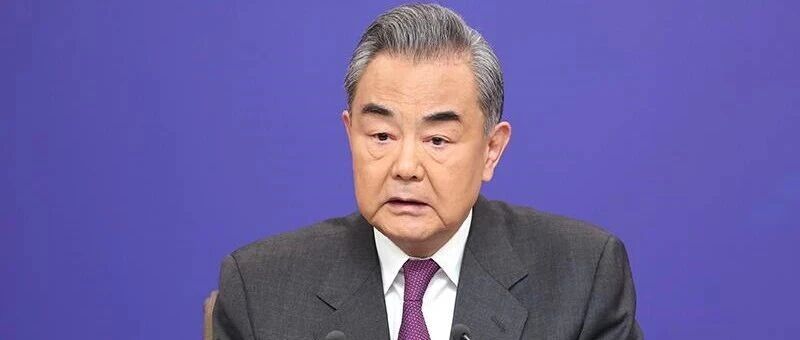
外交部:中国海警依法在有关海域活动 有关方面不必大惊小怪
证券时报· 2025-12-05 09:32
Group 1 - The Chinese Foreign Ministry emphasizes that the Chinese Coast Guard operates in relevant waters according to domestic and international law, urging others not to overreact or misinterpret these activities [2] - The Ministry calls on the U.S. to recognize the sensitivity of the Taiwan issue, criticizing U.S. media for providing a platform for "Taiwan independence" rhetoric, which violates the One China principle and sends incorrect signals to separatist forces [3] - The Ministry highlights the importance of the 80th anniversary of the victory in the Chinese People's Anti-Japanese War and the Soviet Union's Great Patriotic War, stating that China and Russia will firmly oppose any attempts to revise the history of colonial aggression [4] Group 2 - China and Russia express a commitment to coordinate efforts to counter Japan's extreme right-wing forces that threaten regional peace and stability, as well as attempts at re-militarization [5]