战争经济

Search documents
俄罗斯没钱了
Hu Xiu· 2025-08-16 00:09
Core Viewpoint - The ongoing war in Russia has led to severe economic consequences, including widespread business bankruptcies, labor shortages, and increasing debt levels among the population, despite seemingly positive employment statistics. Group 1: Economic Impact - In the first half of 2024, 141,000 legal entities declared bankruptcy, with over 70% from manufacturing, construction, and trade sectors [6] - 43% of construction companies have halted operations due to funding chain disruptions caused by the lack of building materials from Austria and Germany [8] - By the end of 2024, 66% of the labor population had personal debts totaling 38.5 trillion rubles, with a 10.5% overdue loan rate in Q1 2025 [9] Group 2: Military Spending - In 2024, Russia's direct defense spending surged to 10.8 trillion rubles, tripling since 2021, with military industrial subsidies accounting for a significant portion of economic department expenditures [17] - The total military expenditure for 2025 is projected to be at least 16.55 trillion rubles, averaging over 453 billion rubles daily [20] - The military personnel costs alone for 2025 are estimated to exceed 19.7 trillion rubles, indicating a substantial financial commitment to sustaining military operations [27] Group 3: Casualties and Compensation - As of November 2024, confirmed soldier fatalities reached 77,143, with estimates suggesting actual numbers could exceed 90,000 due to reporting delays [34] - The average compensation for each deceased soldier's family is approximately 14.5 million rubles, leading to a projected expenditure of at least 1.044 trillion rubles in 2025 for compensations alone [39] Group 4: Inflation and Economic Stability - Despite a reported inflation rate of 8.8% in 2025, essential food prices have surged significantly, with bread and milk prices increasing by 12-15% and vegetables by over 20% [78] - The introduction of a "war tax" on businesses and individuals has been implemented to address government deficits, indicating a shift in fiscal policy to manage economic strain [82][84] Group 5: Future Economic Outlook - GDP growth predictions for 2025 range from 1% to 2%, with potential stagnation or contraction in subsequent years, significantly below global growth rates [92] - The prolonged conflict and its associated economic burdens are expected to diminish public morale and support for the war, potentially leading to a critical juncture in the conflict [95][97]

德国酝酿新建旅级战斗队
Ren Min Wang· 2025-07-28 01:22
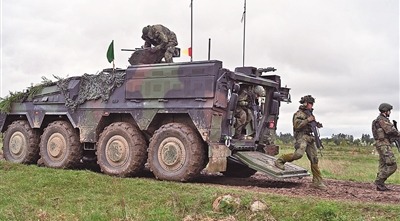
Core Insights - Germany is planning a significant military procurement initiative, with a total order value expected to reach €25 billion (approximately $29.2 billion) for tanks and armored vehicles [3][4] - The procurement aims to enhance the capabilities of the Bundeswehr and prepare for the establishment of new brigade-level combat teams [4][5] Procurement Plans - Germany intends to purchase 1,000 Leopard-2 main battle tanks and 2,500 Boxer wheeled armored vehicles, with production involving KNDS and Rheinmetall [4] - The German parliament is expected to approve the procurement plan within the year, which is part of a broader commitment to strengthen NATO forces [4][5] Military Expansion - The Bundeswehr currently operates eight brigade-level combat teams and is preparing to establish a ninth, requiring an increase of 50,000 to 60,000 active soldiers to meet NATO's enhanced deterrence and defense goals [5] - The planned expansion includes the formation of at least seven brigade-level combat teams, with a target operational readiness by 2029 [5][8] Funding and Economic Impact - Germany is initiating its largest-ever debt plan to support military upgrades, including a special fund of €500 billion, with defense spending projected to rise to 5% of GDP over the next decade [7] - The transition to a "war economy" model aims to boost industrial capacity and provide financial resources for economic development [7] Challenges and Constraints - The military expansion faces challenges such as limited industrial capacity, with Rheinmetall having a backlog of €62.6 billion in orders, and difficulties in recruiting personnel [8] - Public opinion shows a generational divide regarding military service, with younger demographics less supportive of military engagement [8]