服务型政府

Search documents
荣昌爆火启示录:一座四五线小城如何接住224万游客的泼天富贵?
Sou Hu Cai Jing· 2025-05-17 15:15
Core Insights - The article highlights the unexpected success of Rongchang, a lesser-known district in Chongqing, which attracted 2.24 million visitors during the May Day holiday through innovative strategies like opening government canteens to the public [1][2][4] Group 1: Government Initiatives - The opening of government canteens provided thousands of additional seats for tourists, alleviating pressure on local restaurants and enhancing the overall dining experience [2][4] - The initiative was a strategic move to manage the overwhelming influx of visitors, demonstrating effective crisis management and public service [2][7] Group 2: Economic Impact - Rongchang's approach transformed short-term tourist traffic into long-term brand recognition, showcasing local specialties like pig products and traditional crafts [5][11] - The district's model of "government support + community collaboration" effectively turned visitors into brand ambassadors, enhancing the region's reputation [7][12] Group 3: Visitor Experience - The unique offerings, such as free public transport and trial tastings of local delicacies, created a memorable experience for tourists, encouraging them to share their experiences [7][12] - The trust in government-operated canteens for hygiene and quality contributed to their popularity among visitors, contrasting with concerns about private dining establishments [12][14] Group 4: Long-term Strategy - The article emphasizes the importance of balancing limited resources in small cities with the need for exceptional visitor experiences, suggesting that the key to sustainable tourism lies in creating lasting impressions [9][14] - Rongchang's success serves as a case study for other small cities, illustrating that leveraging local culture and community engagement can yield significant economic benefits [11][14]


从“管控”到“赋能” ,杭州政府撬动科技进步的5点举措
3 6 Ke· 2025-05-06 04:04
Group 1: Government Transformation in Hangzhou - Hangzhou is transitioning from a traditional regulatory government to a service-oriented government, driven by the need to enhance administrative efficiency and adapt to high-quality economic development strategies [3][4][5] - The transformation is motivated by three main factors: a sense of crisis due to the rise of the internet economy, the city's development goals of becoming an "innovation city," and a strong commercial culture that supports government service roles [4][5][6] Group 2: Governance Philosophy - The governance philosophy of "no disturbance unless necessary, and prompt response when needed" signifies a shift from management to service, allowing for a clearer boundary between government and market operations [6][7] - This philosophy encourages innovation by minimizing unnecessary administrative intervention while ensuring that the government is responsive to market needs [7][8] Group 3: Implementation Mechanisms - Hangzhou has implemented three key mechanisms to realize its governance philosophy: power and responsibility lists, categorized regulation, and a negative list that defines areas where government intervention is prohibited [9][10] - As of June 28, 2024, Hangzhou has over 1.95 million registered business entities, reflecting increased market vitality due to effective government measures [9] Group 4: Administrative Efficiency - The "most run once" reform has significantly improved administrative efficiency by allowing citizens and businesses to handle multiple affairs online, thus reducing bureaucratic hurdles [10][19] - The integration of services through a single-window approach has streamlined processes, enhancing the overall service experience for businesses and citizens [20][21] Group 5: Policy Transparency and Predictability - Policy transparency and predictability are core pillars of Hangzhou's service-oriented government, providing a stable environment for businesses to operate and plan for the future [15][16] - The government has set clear development goals for the digital economy, aiming to establish a robust ecosystem by 2025, including a target of 5000 trillion floating-point operations per second in computing power [16][18] Group 6: Innovation Ecosystem - Hangzhou is fostering an innovation ecosystem by encouraging social participation in building intelligent computing centers and supporting both leading and small enterprises in technological advancements [17][18] - The city is also promoting a collaborative model for innovation, focusing on the development of multi-modal general models and specialized models for various industries [17]
文旅观察:假期各地党政机关大门对外开放有何深意?
Zhong Guo Xin Wen Wang· 2025-05-03 07:31
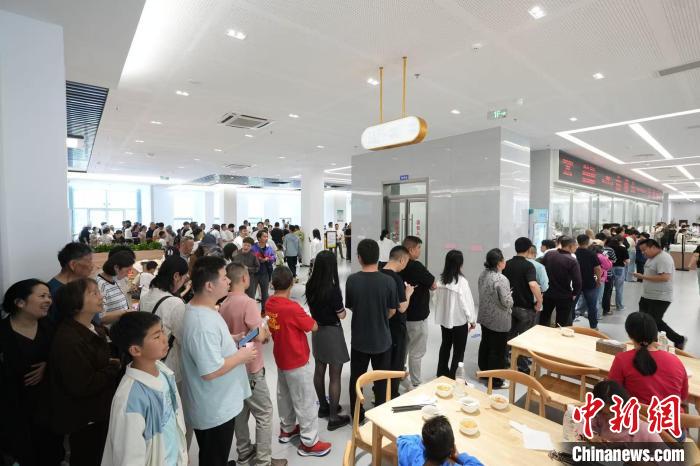
Core Insights - The article discusses the significance of local government initiatives during the "May Day" holiday, where various regions in China opened their government facilities to the public, providing services such as free parking and meals at government canteens [1][3][6] Group 1: Government Initiatives - Local governments in regions like Zhejiang, Jiangsu, Chongqing, Hubei, and Shaanxi implemented measures to open their doors to tourists, offering free parking, drinking water, and access to government canteens [1][3] - The opening of government facilities is seen as a shift towards a service-oriented government, enhancing public trust and promoting urban-rural integration [3][6] Group 2: Tourist Experience - The government canteen in Quzhou became a popular destination during the holiday, with meals priced at 18 yuan, attracting long queues and positive feedback from visitors [5][6] - The initiative not only improved the tourist experience but also helped shape a positive city image, drawing more visitors and invigorating the local cultural tourism industry [5][6] Group 3: Resource Optimization - Opening government facilities helps optimize tourism resource allocation, alleviating pressure on nearby attractions and dining establishments during peak times [6] - This approach enhances the overall quality of tourism by making dining and parking more convenient for visitors, thereby supporting the growth of related industries such as dining, accommodation, and retail [6] Group 4: Long-term Economic Impact - The long-term benefits of these initiatives include promoting cultural tourism integration and driving urban economic development, as tourists are encouraged to spend more time and money in the city [6][7] - Recommendations for other cities, such as Hangzhou, include adopting similar practices to improve public service accessibility and reduce resource wastage [7]